Highlights

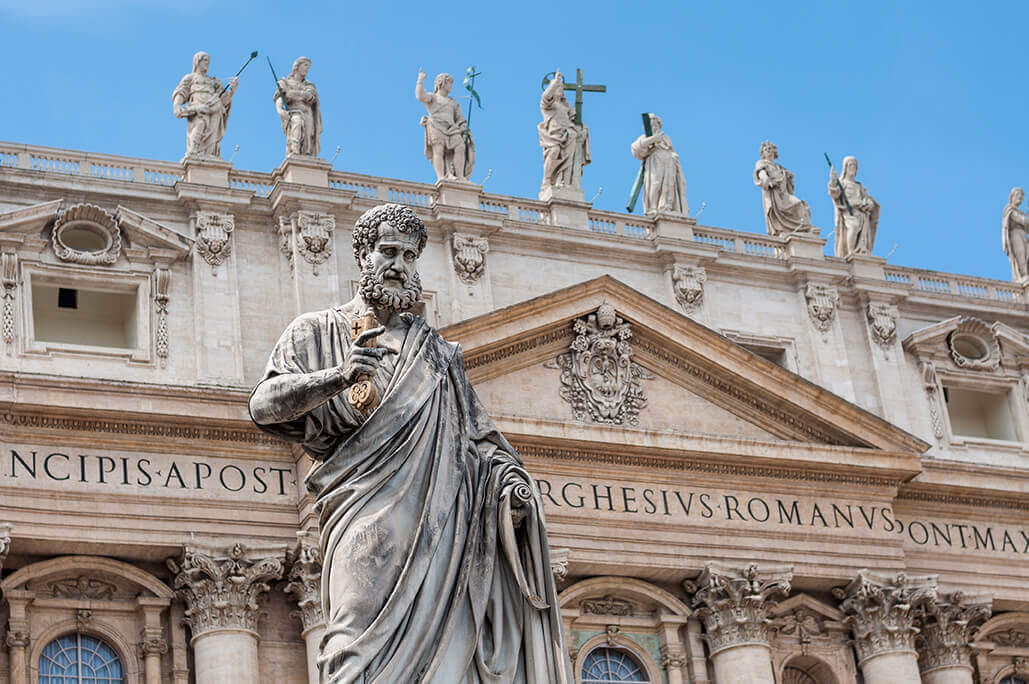
Under the marble floor of St Peter's Basilica are two very different levels. The first, the Vatican Grottoes, is the papal crypt where dozens of popes are buried. It is free to visit, open every day during Basilica hours, and most first-time visitors mistake it for "the tomb of Saint Peter."
The Vatican Necropolis — also called the Scavi, Italian for "excavations" — is one level deeper. It sits between three and eleven metres below the nave of the Basilica, and it is an ancient pagan and early-Christian cemetery that was buried, on purpose, by Constantine's builders in the fourth century when they raised the first basilica directly over the shrine of Peter. The official page calls it "one of the world's most important archaeological sites."
Access is limited to a small guided tour that runs several times a day, twelve people maximum, and it culminates at the tomb of the Apostle.

The route is short in metres and long in centuries. You descend from the Excavations Office, pass through a preserved streetscape of pagan mausolea — family tombs of imperial freedmen, both cremations and inhumations, twenty-two burial buildings holding an estimated one thousand graves — and then move through the early Christian sector, marked by a shift in tomb style and iconography, until you reach the aedicule directly under the papal high altar.
At that point you are standing beside the Trophy of Gaius, a small monument that Christian tradition placed over Peter's grave from the mid-second century onward. To one side is the plastered surface known as Wall G, dense with Latin graffiti that names Christ and Peter, and above it a Greek fragment on the "red wall" that reads Pétr[os] enì — Peter is here. Behind the wall is a niche where nineteen small transparent cases hold bones. Pope Paul VI announced on 27 June 1968 that, in his judgment, these were the remains of the Apostle himself.
You are told the archaeology matter-of-factly, without theology, and the room is silent. It is the closest a visitor gets to the founding claim of the Catholic Church.

Excavations ran from 1939 to 1949 under Pope Pius XII, in near-total secrecy, following the accidental discovery of an early Christian sarcophagus during preparations for the burial of Pius XI. The findings were re-examined for two more decades before Paul VI made the 1968 identification announcement. It remains one of the most consequential archaeological digs of the twentieth century, undertaken entirely inside the working Basilica, without disturbing the papal altar above.
Access is granted by the Excavations Office (Ufficio Scavi) of the Fabric of St Peter, not by the Vatican Museums, and not by any private operator. Groups are capped at twelve, tours run several times per day, and demand consistently exceeds supply. In peak season (April–October) confirmed bookings can require several weeks' lead time.
Two paths:
The current official price on the Basilica's booking portal is €20 per adult, €14 reduced (ages 10–17), guide included. Older references to a €13 rate come from a legacy page; the current price is the one to plan around. The Basilica visit before or after your Scavi appointment is separate and free.
The Excavations Office entrance is on the left colonnade of St Peter's Square, at Via Paolo VI, the same side as the Paul VI Audience Hall. Present yourself and your reservation confirmation at least ten minutes before your booked time; late arrivals are not admitted, and there are no refunds for missed slots. Security check, ID check, then the group is led down to the Necropolis level.
Tour duration is approximately one hour. On exit, you emerge inside the Basilica itself, near the Confessio — the recessed area in front of the high altar. From there you can visit the free Grottoes, browse the Basilica floor at your own pace, or continue to the Dome climb.
No. The Grottoes are the papal crypt directly under the Basilica floor and are free to enter during Basilica hours. The Vatican Necropolis is one level deeper, an ancient pagan and early-Christian cemetery, and can only be visited on a booked guided tour that ends at St Peter's tomb.
No. Advance booking through the Ufficio Scavi is mandatory. In peak season, expect several weeks of lead time for confirmed slots.
Approximately one hour, guided in the language you booked, in a group of no more than twelve.
Italian, English, French, German, Spanish, Portuguese, Dutch, Polish, Romanian, Russian, Ukrainian, Hungarian, Slovak, Czech, and Japanese, plus Italian Sign Language (LIS). Availability depends on guide rota, so specify your preference at booking.
Currently €20 per adult and €14 reduced for ages 10–17 via the official Basilica booking portal, guide included.
Only from age 10 and up. Under-tens are not admitted on the tour.
No. Photography and video are prohibited throughout the Necropolis. This is a condition of access.
No. There are steps at the entrance and exit and uneven flooring inside, and the site is not wheelchair accessible.
Shoulders and knees covered as at all Vatican religious sites. Humidity inside is around 98%, so lightweight breathable clothing works better than heavy layers.
The official Basilica FAQ recommends visitors with claustrophobia don't take the tour — passages are narrow and ceilings low in places.
Yes, and this is what most visitors do. The Necropolis tour exits into the Basilica itself. Buy a Dome ticket beforehand or on the day at the on-site office and continue upward once you're done underground.
Directly beneath the high altar of St Peter's Basilica, marked above ground by Bernini's Baldachin. On the Necropolis tour you reach the aedicule from the ancient cemetery side; the papal altar sits several metres above.
The Scavi tour pairs naturally with the free Basilica, the Dome climb, and the Vatican Museums (Sistine Chapel included). Practical starting points: St Peter's Basilica guide, Vatican Museums opening hours 2026, Vatican dress code. For guided tours of the Basilica or the Museums with a licensed English-speaking guide, see our tour options.