
Most Vatican visits go one of two ways. Either the planning starts the morning before, the queue at Viale Vaticano turns out to be two hours, and half the day is gone before anyone gets inside. Or the planning was so thorough that the actual visit feels like a checklist and nothing catches you off guard. This is a guide for the middle: the seven things we tell friends before they go, the ones that don’t make the top of Google.
None of these are secret exactly. They’re just the details that get lost between the official Vatican page (dense) and the top-ranking travel articles (identical to each other). Everything below is from official sources, our own guides at the entrance every week, or both.
1. The free Sunday is real, and it’s the wrong day to go
Every last Sunday of the month, the Vatican Museums open free from 09:00 to 14:00. That’s a genuinely useful policy: no ticket, no reservation, walk up and go in. What the guides skip is the queue.
That line forms at Viale Vaticano before 07:00. By 08:30 it stretches around the block. If you’re not inside the barrier by around 09:15 you’re looking at two hours or more before you clear security, which means most of your free-entry window goes to standing outside. On top of that the Sistine Chapel becomes densely crowded from about 10:30, because every free entrant is heading straight for it.
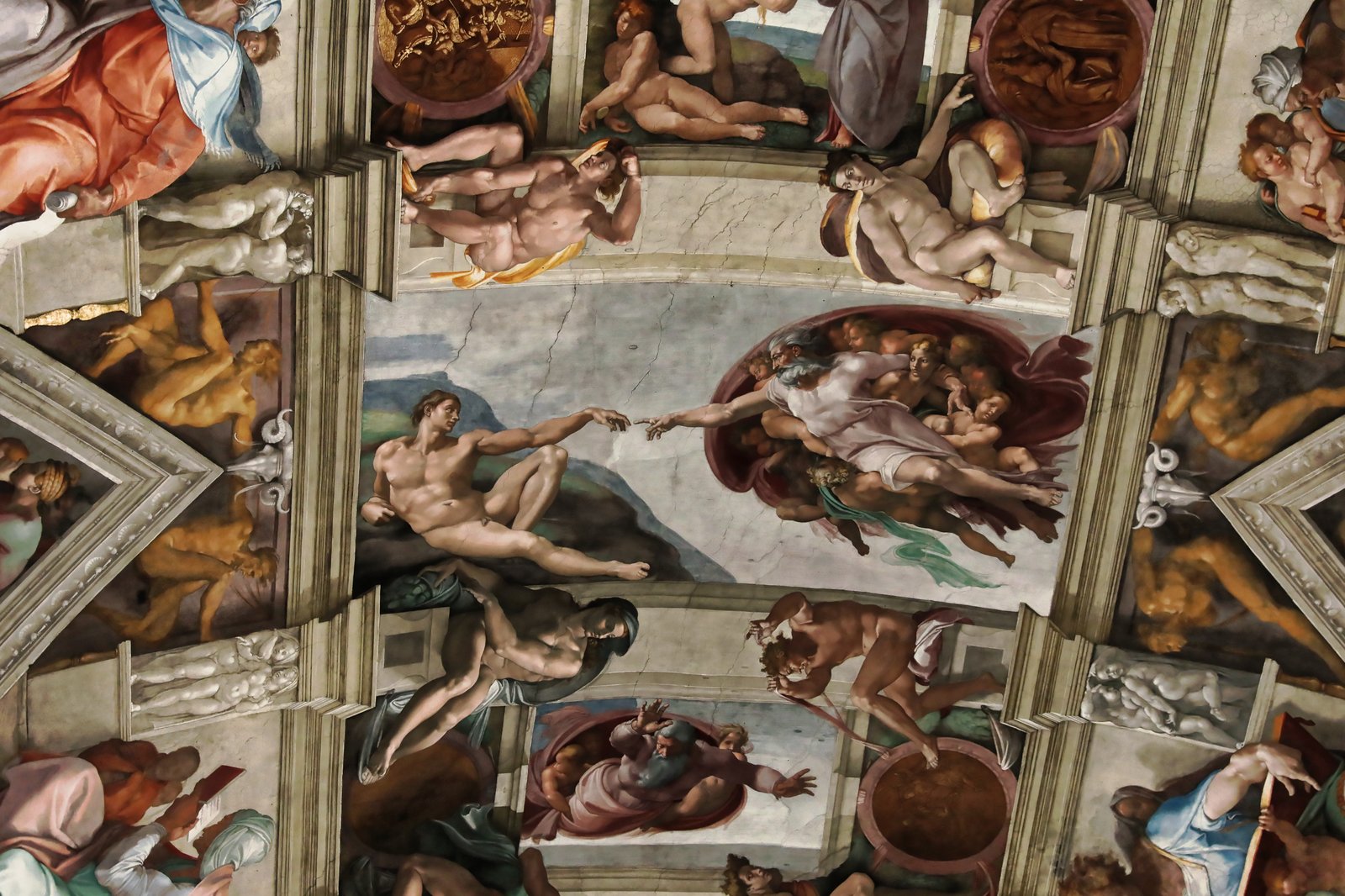
Use it if you’re staying nearby and can be there by 07:30, or genuinely can’t spend money on tickets. Skip it if your Rome time is limited. A normal weekday morning ticket at 08:00 opening puts you in front of the Creation of Adam with room to look at it.
2. Friday evenings, May to October, are the emptiest time of the week
From late April through late October each year, the Museums stay open on Friday evenings until 23:00, with last entry at 21:30. Same regular ticket, online booking required.
Almost nobody goes. Coach groups have finished for the day. Schools closed hours ago. Between 20:00 and 22:00 you can stand in the Sistine Chapel with fewer people around you than at any point on a normal morning. If you have one evening in Rome and want the closest thing to a private-tour experience without the private-tour price, book the last entry slot on a Friday and let the crowd from the earlier ticket window ebb out.
The only inconvenience is dinner timing: you eat late, either before or after. Both work if you’re staying in the Prati neighbourhood right next to the Museums.
3. St Peter’s Basilica is free (and it’s not the Vatican Museums)
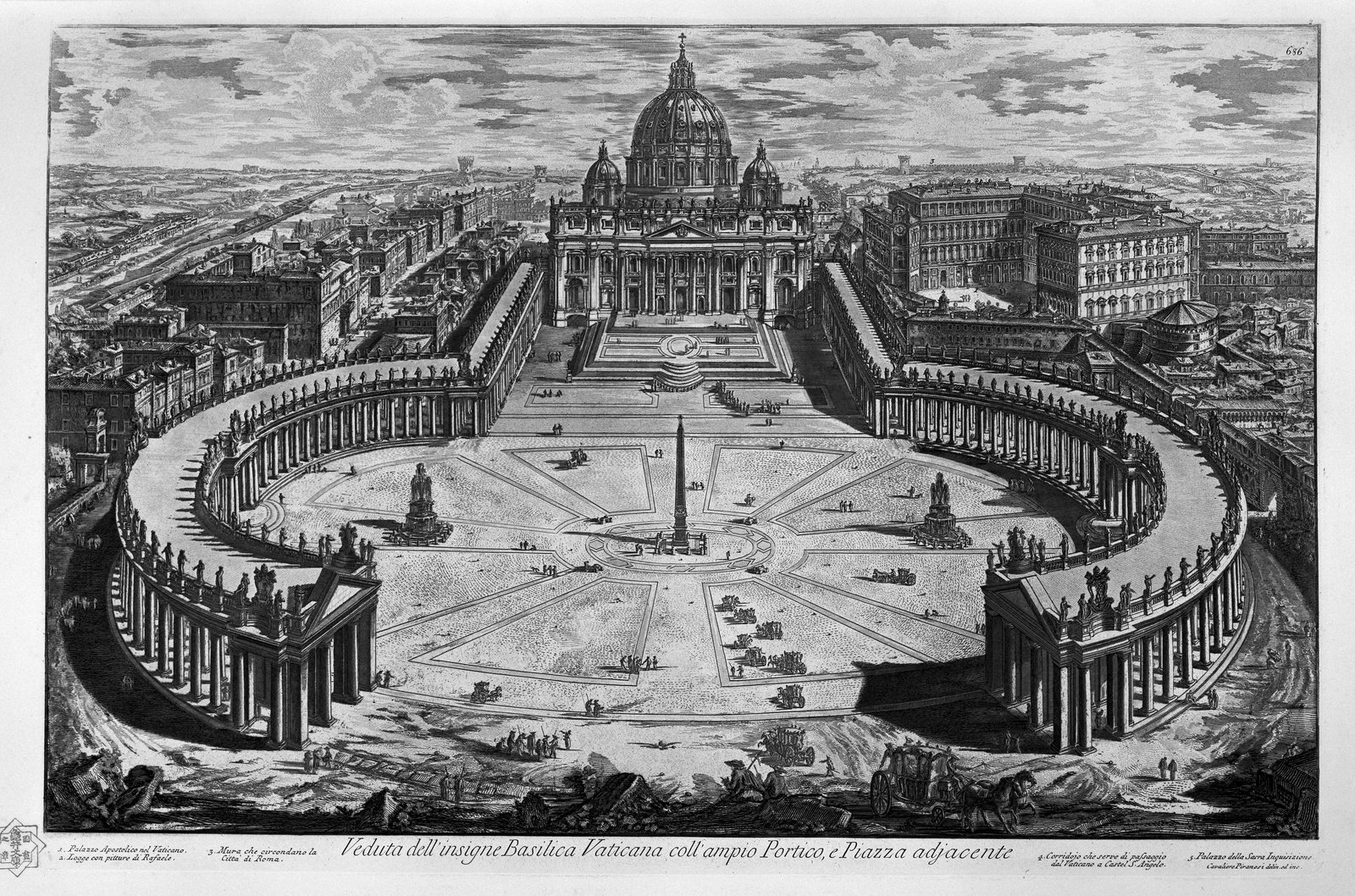
This one catches out more first-time visitors than any other. St Peter’s Basilica has no ticket, no admission fee, and no reservation required. You walk into St Peter’s Square, cross the colonnade, pass through security, and you’re inside. Free.
Vatican Museums, meanwhile, are a completely separate site. Different entrance (on the opposite side of the Vatican wall), different ticket, different hours. You can’t wander from one into the other. One official shortcut for regular visitors runs via a group-only exit inside the Museums that dumps you near the Basilica entrance, and it’s not something you can use walking around solo.
What’s tempting to buy but usually isn’t necessary: paid “St Peter’s skip-the-line” tickets. That Basilica line is a security queue, not a ticket queue. The paid slot buys you a guaranteed entry time (useful in July and August when the security wait hits ninety minutes at midday), but there’s no admission fee saved because there wasn’t one to begin with. If you show up at 07:00 opening or after 16:30, the queue is short enough that a paid slot mostly isn’t worth it.
4. No photos in the Sistine Chapel. None. Not even a phone.
The Sistine Chapel photo ban is total. No cameras, no video, no phone shots, no selfies. Attendants call it out over the PA system every few minutes and enforce it individually: someone will walk over and ask you to put your phone away if it’s out.
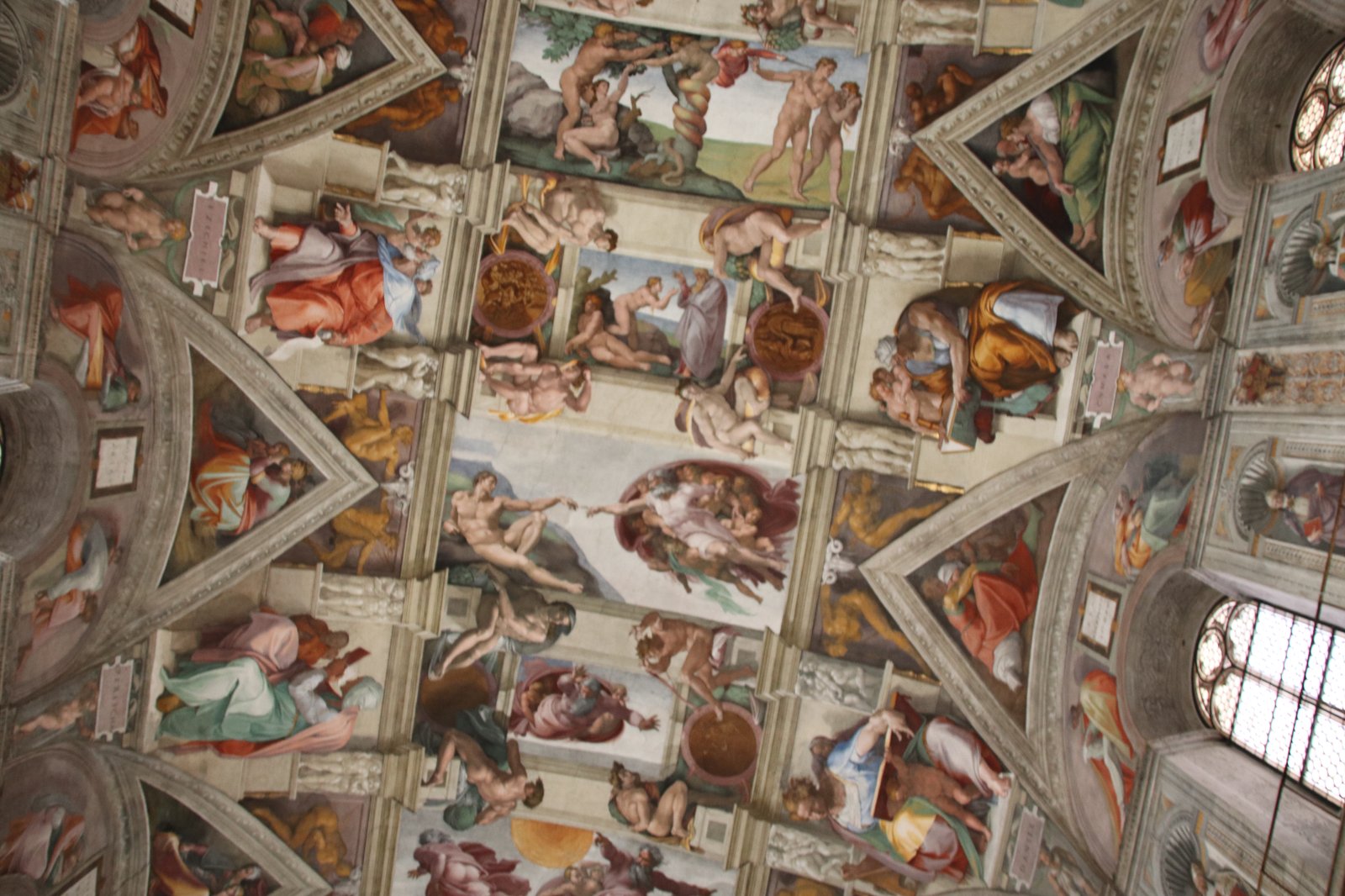
The rule exists partly for preservation (Nippon Television Network of Japan funded the 1980-1994 restoration for roughly $4.2 million in exchange for three-year-per-phase photo rights that have since lapsed) and partly for crowd flow: silent, phone-free rooms move quicker. It works.
What you can do: photograph everywhere else in the Museums without flash. The Gallery of Maps, the Raphael Rooms, the Pinacoteca. All fine. Just make sure your camera is packed away before you enter the Sistine, and expect a firm reminder if you forget.
5. The dress code is enforced literally, not vibes-based
Every guide mentions the dress code. Not many spell out what actually gets you sent back to buy a scarf. In practice, here’s what security stops at the door:
- Bare shoulders. Tank tops, spaghetti straps, sleeveless dresses. Both sites.
- Shorts above the knee. Bermuda-length shorts (to the knee) pass at the Museums, but men in shorts are commonly refused at St Peter’s Basilica as a matter of enforcement convention.
- Miniskirts and short dresses. If it doesn’t cover you sitting down, it doesn’t get in.
- Hats inside the Museums. Take them off before security. Straw hats, baseball caps, sun hats.
In practice, the Basilica is stricter on the trousers question: for men, long trousers are the only safe choice; for women, trousers or a below-the-knee skirt. There are vendors selling €5-€15 cover-up scarves on the streets around the Vatican, but you lose your entry slot in the meantime, and on a summer afternoon that can mean rebooking two hours later. Pack a light scarf or thin cardigan and the whole issue goes away.
6. Anything bigger than a small handbag goes in the cloakroom
The Museums’ cloakroom (guardaroba) is mandatory, not optional. Anything larger than a small handbag gets taken from you at security: rucksacks, day packs, camera bags, shopping bags, laptop sleeves, umbrellas over a certain size. Photographic tripods and stands are prohibited outright. No cloakroom option, they don’t come in at all.
This cloakroom is free but has its own small queue on the way in and (more painfully) on the way out. If you’re doing the Museums and then walking to St Peter’s Basilica for the afternoon, either travel with only a small over-the-shoulder bag or plan an extra 15 minutes at the end to collect a checked backpack.
Inside the Basilica, backpacks and large bags aren’t allowed at all. No cloakroom option there, just small bags. If you’re combining both sites in one day, the small-bag rule wins: it’s the more restrictive of the two.
7. The Vatican Grottoes are free: the Necropolis is a different thing entirely
Two things below St Peter’s Basilica have similar names and totally different rules.
The Vatican Grottoes are the crypt directly beneath the Basilica floor, where many of the Popes are buried. Free to enter, no ticket, just walk down the stairs inside the Basilica during regular Basilica hours. If you didn’t know this was open you could easily walk past the entrance without seeing it.
The Vatican Necropolis (also called the Scavi tour) is the ancient burial ground beneath the Grottoes, where St Peter’s actual tomb is thought to sit. Access is by a small guided tour only: twelve people at a time, booked in advance through the Excavations Office (scavi@fsp.va), and often needs to be requested weeks or months out. It’s one of the most extraordinary experiences in Rome and not remotely on the tourist trail.
If you want to see where Peter is buried, the Necropolis is the tour to book. If you’re happy to see the papal tombs and the underground level generally, the Grottoes are open and free, and most day visitors miss them.
Planning a visit
All of the above assumes you’re going. If you want a guide who can walk you through the Sistine ceiling scene by scene, or Bernini’s Baldachin without the crowd noise, browse our Vatican tours: small groups, licensed English-speaking guides, skip-the-line entry. For skip-the-line tickets without a guide, our Vatican Museums tickets page has the options. And for the timing and closure specifics for your trip dates, our Vatican Museums hours guide lays out the 2026 calendar. See also our dress code page and the wider Vatican FAQ.