
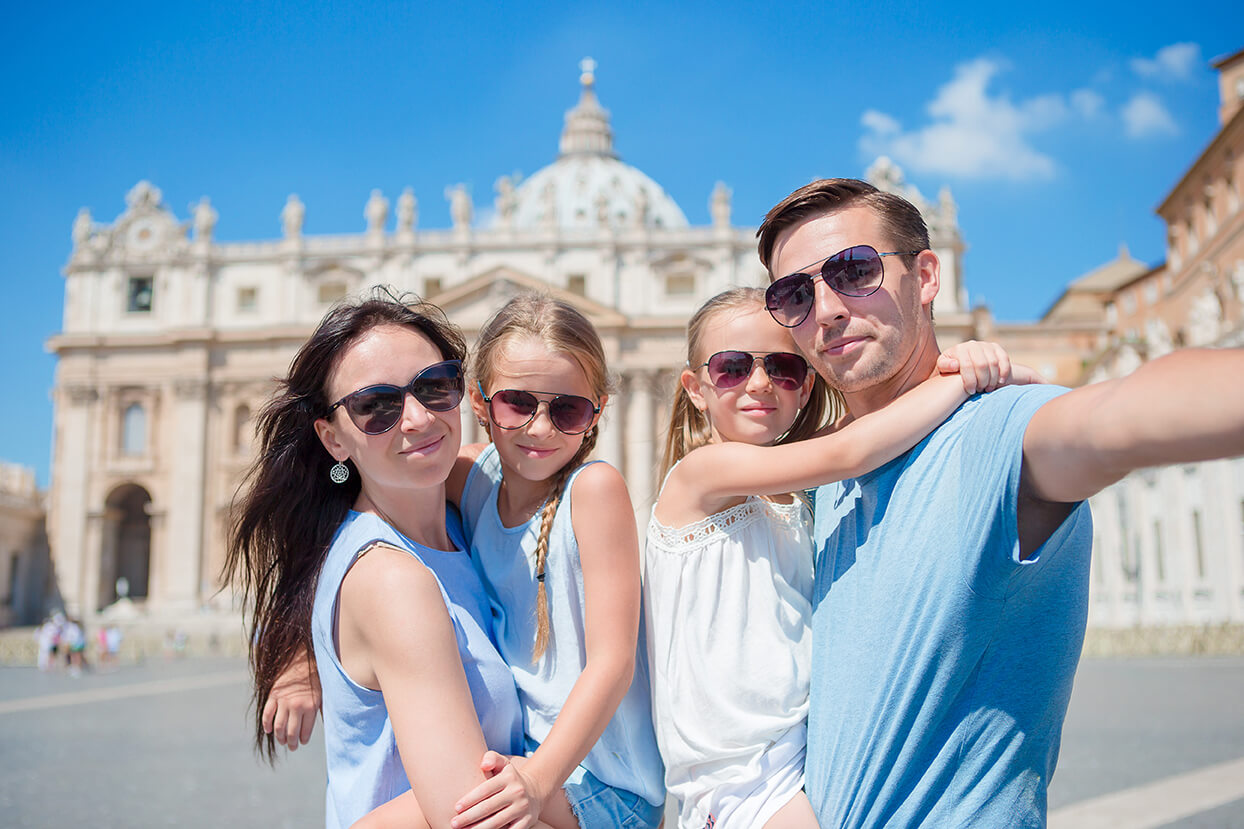
You do not need a ticket to stand in St Peter’s Square on Christmas Eve. You need warm layers, a plan for where to stand, and a realistic sense of what you will and will not see. Thousands of people do exactly this every year: they walk down from their hotel or apartment after dinner, join the crowd gathering beyond the barriers, and watch the night unfold on a screen rather than in person. It is not the same experience as holding a ticket to the Mass itself, and no honest guide should pretend otherwise. But it is a real one, and for a lot of visitors it turns out to be the more memorable of the two.
What “without tickets” actually means here
First, a correction to a common assumption: entry to the Pope’s liturgical celebrations, including Midnight Mass, is free. The Vatican’s own booking page for the laity states that tickets for General Audiences and papal celebrations are “always free of charge,” requested through the Prefecture of the Papal Household’s booking portal. So if you arrive without one, you have not been priced out of anything. You simply did not request one in time, did not know the process existed, or decided the planning overhead was not worth it for a trip built around other things. That is a completely normal way to end up outside the barriers rather than inside them, and it changes nothing about how good an evening you can still have.
What you get without a ticket is the square itself, not a seat near the altar. There is a meaningful difference between the two, and it is worth being clear-eyed about before you commit an entire evening to standing outside in December.
The atmosphere beyond the barriers
Rome empties out a little on the evening of the 24th. Shops close early, restaurants fill up for family dinners, and the streets around the Vatican quiet down before the crowd starts building again later at night. People converge on the square in waves rather than all at once: families with children who will not last past nine, tour groups filing photos for the folks back home, solo travellers who wandered over on a whim after seeing lights on the dome from across the river. By the time the crowd has properly gathered, the mood is closer to a vigil than a concert. People talk in low voices. Some hold candles. Nobody is pushing to get anywhere, because there is nowhere further forward to go.
That last point matters more than it sounds. Once the ticketed sections fill and the barriers close, the square outside them becomes its own self-contained space. You are not queuing for anything. You have already arrived at where you are going to be for the night.
Screens, sightlines, and what you can realistically expect to see
Large screens are standard practice at major papal events in the square, and Christmas Eve draws enough of a crowd that the outdoor viewing experience leans heavily on them rather than on a direct line of sight to the Basilica steps. From most positions beyond the barrier line, the screen will be your Mass. The obelisk at the centre of the square blocks a straight view down the nave axis from several angles, and the crowd itself, once it thickens, adds another few feet you cannot see over. None of this ruins the evening. It does mean you should set your expectations around watching, not glimpsing.
The two obelisk fountains flanking the centre line offer slightly raised footing if you can find space near one early. Arrive with low expectations of finding a spot right against the barrier and you will not be disappointed if you end up further back with a screen between you and the altar.
Timing: earlier than you might assume
Midnight Mass has not actually started at midnight in Rome for well over a decade. The shift began in 2009 under Pope Benedict XVI, when the celebration moved to 10:00 p.m. “so that the 82-year-old Pope Benedict XVI would not have too late a night,” and the start time has crept earlier still in the years since, “as has been the case in the Vatican since 2009, first at 10:00 pm, then subsequently earlier in the evening.” We cannot confirm a specific hour for this coming Christmas Eve, and neither can most of the people you will meet in the square, so build slack into your evening rather than pinning it to a single number you read somewhere. What you can plan around is the shape of the night: an early-evening build-up, a gradual quieting as the service begins, and a crowd that starts to disperse well before what most people would consider a proper midnight.
Arrive with at least ninety minutes of buffer before whatever start time you have heard. Crowds outside the barriers thicken from the edges inward, and the difference between arriving at a relaxed pace and arriving in a rush is usually the difference between finding a spot you like and taking whatever is left.
Who runs security in the square that night
One detail catches people off guard: St Peter’s Square sits entirely inside Vatican territory, yet ordinary crowd control there is normally handled by Italian police rather than Vatican security. Per the Lateran Treaty, “the area of St. Peter’s Square up to the foot of the steps leading to the Basilica, is subject to the authority of Italian police for crowd control even though it is a part of the Vatican state.” That arrangement shifts, however, once the Holy See is holding a special function of its own, such as a papal Mass: Italian police withdraw beyond the colonnade for the duration, and jurisdiction inside passes to the Vatican’s own authorities. Practically, this means the policing presence you see managing the outside crowd on Christmas Eve is not quite the same one running things once the liturgy is underway a few dozen metres away. It is a small piece of trivia, but it explains why the atmosphere at the very edge of the square can feel a step more formal than the open, milling crowd further back.
What the Basilica interior is doing that night
The Basilica itself is enormous even by the Vatican’s own standards, built to hold “60,000 standing and 20,000 seated,” and papal liturgies here or in the square have historically drawn “audiences numbering from 15,000 to over 80,000 people.” Christmas Eve will not fill every one of those places, but it draws a genuinely large gathering, which is part of why the outside crowd forms in the first place: plenty of people arrive knowing they will not get inside and choose the square anyway. For everyday visiting purposes, note that the Vatican Museums keep separate hours entirely from the Basilica and are closed on the 25th and 26th of December for the holiday itself, though there is no listed separate closure for the 24th. If your trip includes museum time, plan that for earlier in the week rather than assuming Christmas Eve itself will accommodate it.
A practical alternative for the evening
If a ticketed Mass matters to you specifically, the honest move is to apply through the Prefecture of the Papal Household well ahead of your trip rather than hoping for a spot on the day. If it does not, and you would rather spend Christmas Eve doing something with a guaranteed outcome, a daytime visit earlier that week removes all the uncertainty around timing, sightlines, and standing room. You get the Basilica’s interior properly lit, a guide who can point out what you are looking at rather than a screen relaying it from a distance, and none of the December cold that settles into the square after dark. Neither choice is wrong. One is a vigil you share with a crowd of strangers under an open sky; the other is a closer look at the building itself, on your own schedule.
Whichever way you plan your Christmas Eve, it is worth locking in the Basilica visit itself well before you arrive, especially in a week as busy as this one. Our guided Vatican tours cover St Peter’s Basilica with a licensed guide who can walk you through it at a proper pace, no screens or standing crowds required.