
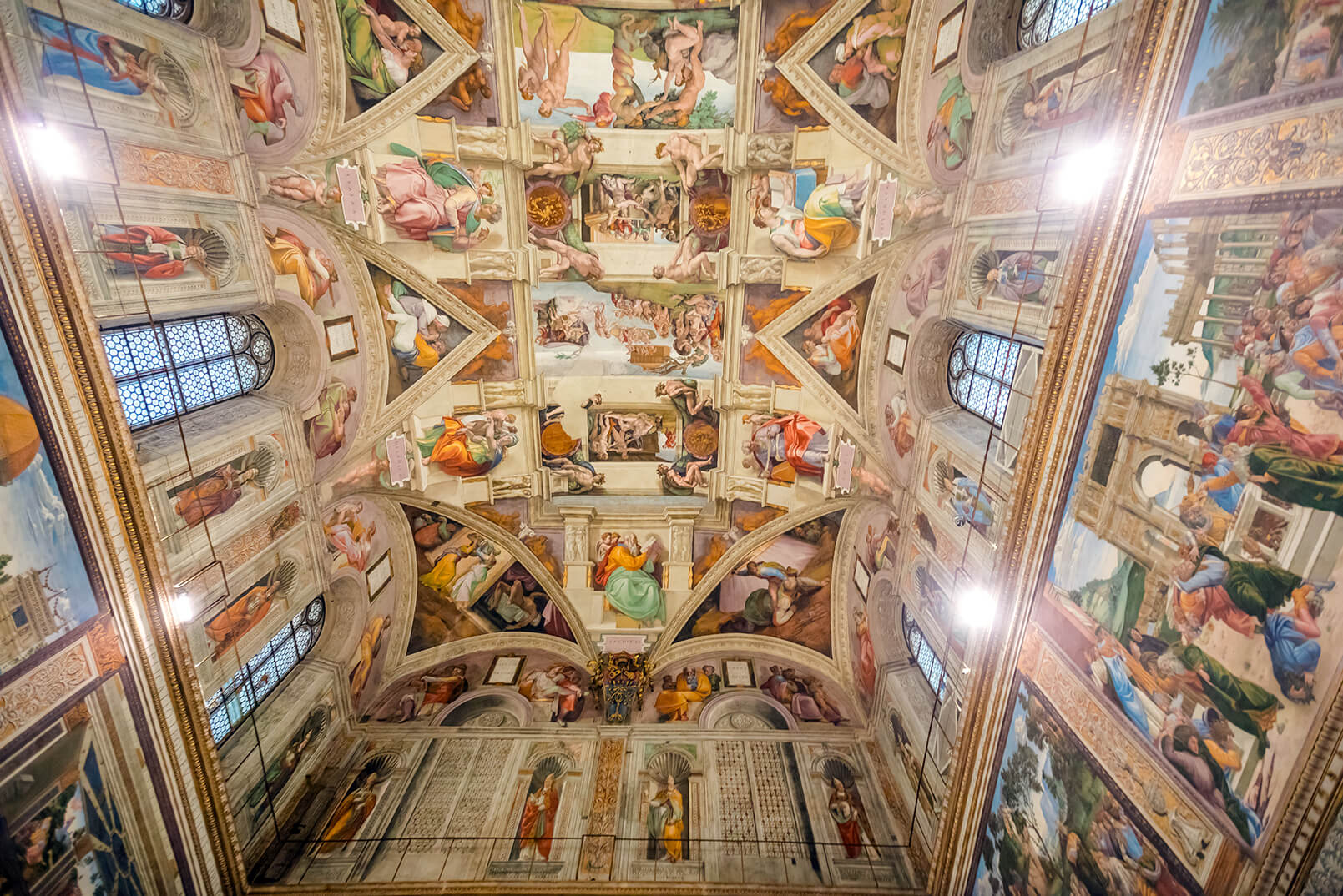
Rome empties out in January. Christmas lights come down, the last of the New Year visitors fly home, and the city settles into a grey, quiet stretch that runs almost to Carnival. For most travellers that sounds like a reason to skip Rome entirely. For anyone who actually wants to look at the Sistine Chapel ceiling rather than shuffle beneath it, it is the best argument in the calendar.
Why the post-holiday lull matters
Vatican Museums crowding follows the rhythm of school terms and package-tour season, and January sits in the dead zone between them. By January, the Christmas and New Year rush has cleared out, Easter is still months away, and the big coach-tour season from spring through early autumn hasn’t started. No official monthly attendance breakdown is published, so nobody, including us, can hand you a precise January number. What can be said with confidence is structural: this is the one month with no major school holiday overlap in most of Europe or North America, no Easter pilgrims, and weather cold enough to deter the casual day-tripper who might otherwise wander in.
That structural gap is why January turns up again and again in advice from people who visit the Museums regularly, guides included. It isn’t a guarantee. It’s a pattern worth building a trip around.
What the cold is actually doing for you
Rome in January isn’t brutal by northern-European standards, but it is properly cold and often damp, and that keeps a certain kind of visitor away entirely. The tourists who come for gelato in St Peter’s Square and a stroll through the Borgo don’t tend to book a January flight. The ones who do come in January are disproportionately people with a specific reason to be there: art history students, researchers, locals taking advantage of the last-Sunday free opening, and travellers who deliberately picked the month for exactly this reason. Fewer casual visitors means fewer bodies in the corridors between the entrance and the Sistine Chapel, which is where the bottleneck usually forms.
What the Sistine Chapel actually feels like
On a packed spring afternoon the Sistine Chapel is loud, warm, and dense enough that finding a spot to stand and look up for more than a few seconds takes some manoeuvring. Guards move people along the walls to keep the flow going. Conversation is a low continuous murmur punctuated by “silenzio” from the attendants. None of that is a complaint about the room itself, which is extraordinary regardless, but it does shape how much time you get with the ceiling versus how much time you spend navigating other people.
A quieter room changes that arithmetic. With fewer people between you and the altar wall, you can walk the length of the chapel, stop under the Creation of Adam, then move to stand beneath the Last Judgement and actually take in Michelangelo’s composition without a shoulder in your eyeline. The frescoes don’t change with the season. What changes is how much of the room is yours for those few minutes.
The practical shape of a January visit
Vatican Museums hours don’t shift for winter. Monday to Saturday the Museums run 8:00 a.m. to 8:00 p.m., with final entry at 6:00 p.m. Arriving close to opening still gets you ahead of whatever midday flow does build up, January or not.
Two dates need flagging on the calendar. The Museums are closed on 1 January and 6 January, both public holidays in Italy, so don’t plan a visit around either date. The last Sunday of the month keeps its usual slot regardless: 9:00 a.m. to 2:00 p.m., final entry 12:30 p.m., with free admission. January’s last Sunday isn’t one of the dates the Vatican suspends that opening for (those exceptions are Easter, 29 June, and the days around Christmas), so it runs as normal. Free admission plus a quiet month sounds appealing, but it also draws Rome’s own weekend crowd, students and residents included, so it isn’t automatically the emptiest day of the month. A regular weekday morning is the safer bet if space is the priority.
Tickets and what they cover
A standard adult ticket costs €20.00 at the door, or €20.00 plus a €5.00 booking fee if you reserve online in advance, which is worth doing even off-season since walk-up entry isn’t guaranteed. Reduced tickets are €10.00, plus the same €5.00 if booked online. One ticket covers both the Museums and the Sistine Chapel, valid only on the day it’s issued, and it can’t be refunded once purchased, so a settled travel plan matters more than the season does. Free admission is available on the last Sunday of the month, for children under seven, for visitors with a certified invalidity of at least 67%, and for ICOM/ICOMOS cardholders and certain academic categories.
Book only through the Vatican Museums’ own site or a licensed reseller. Third-party resale scams circulate year-round, and a quiet month is not a reason to relax on that front.
What January won’t give you
Be honest with yourself about the trade-offs. Rome’s weather in January is a genuine unknown quantity to us without a verified source at hand, but it is winter in central Italy, so pack for cold and rain rather than the sun you’d expect in June. Some outdoor experiences around the city lose their appeal in the cold regardless of how empty the Museums are. And a quiet month doesn’t mean an empty one. The Sistine Chapel is one of the most-visited rooms on earth even at its calmest; the Vatican Museums as a whole drew 6.8 million visitors in 2024, ranking second worldwide among art museums after the Louvre. January thins that number. It doesn’t erase it.
Making the most of a quiet month
If January works with your travel plans, treat it as an opportunity rather than a compromise. Book your entry time for as close to opening as your schedule allows, keep the last Sunday in mind only if a free ticket matters more to you than elbow room, and remember that both January closures fall early in the month, so a visit planned for the third or fourth week avoids them without any extra thought.
If you’d like your entry sorted before you land rather than gambling on a walk-up queue in the cold, you can book Sistine Chapel tickets in advance and go straight to a month when the ceiling has some room to breathe.