
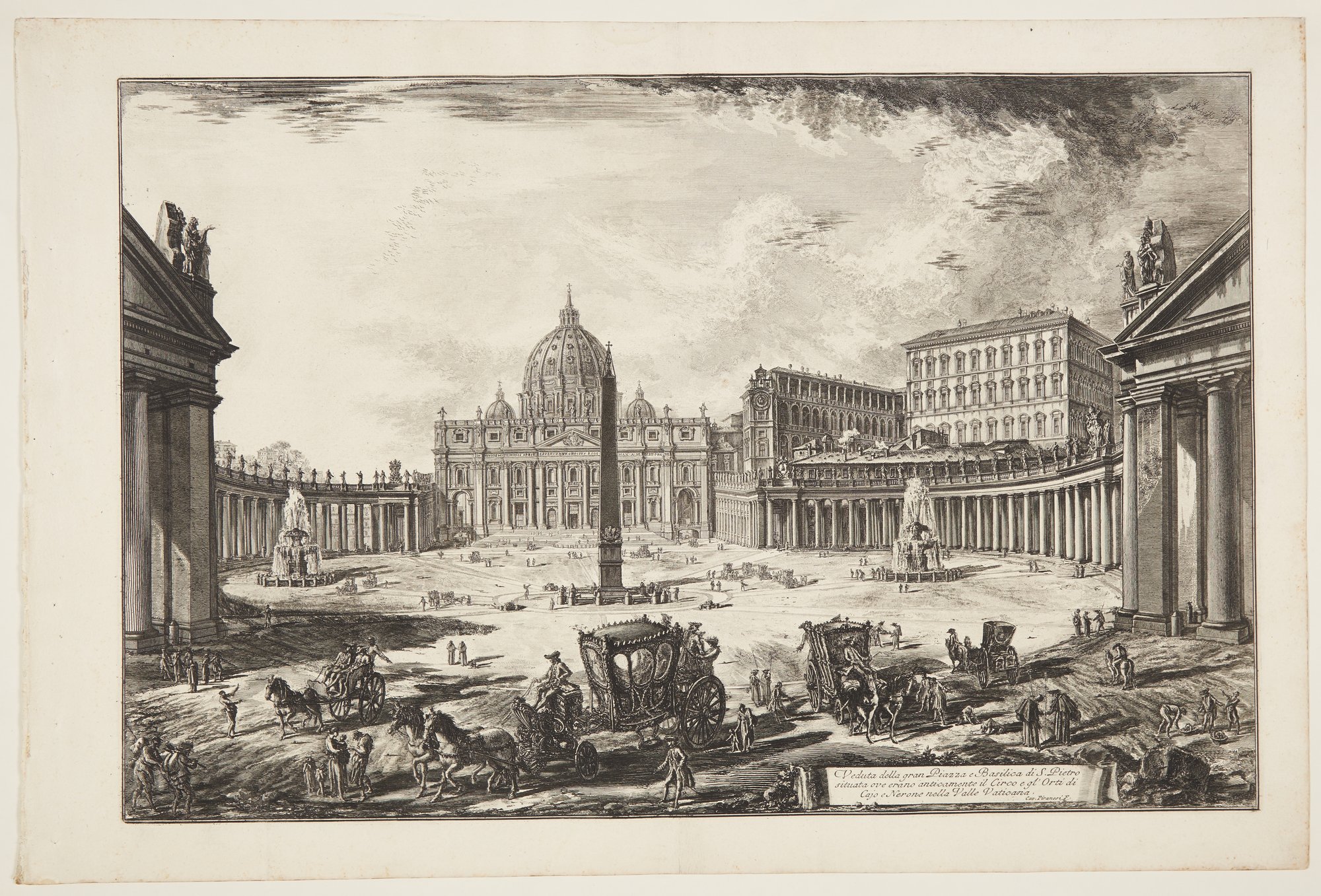
Every new Swiss Guard recruit swears the oath on 6 May, arm raised, three fingers extended for the Trinity. Almost nobody watching in the Cortile di San Damaso stops to ask why that date and no other. The answer is a single morning in 1527, when a mutinous army broke into the Vatican and a small company of Swiss mercenaries chose to die rather than let it reach the pope.
An army the emperor could no longer pay
The troops who came over the walls that morning were not marching under papal orders or even, by that point, very coherent imperial ones. They were the army Charles V had raised in Italy: German Landsknechts, many of them Lutheran and openly hostile to Rome, alongside Spanish infantry under Charles III, Duke of Bourbon. Pay had stopped months earlier. Bourbon, broke and unable to control men who had not been fed properly in weeks, pointed the mutiny south toward the one city everyone assumed still had money in it. Rome, under Pope Clement VII, had misjudged how close the army actually was and how little discipline held it together.
Clement’s diplomacy had helped create the mess in the first place. He had shifted his alliance away from the emperor and toward France the previous year, a decision that left him without the funds to buy the marching army off or the standing to talk Bourbon’s officers into turning back. Rome’s own walls, roughly nineteen kilometres of them, needed a garrison far larger than the city could field on short notice. A relief force under Francesco Maria I della Rovere, Duke of Urbino, never reached the city in time; Francesco Guicciardini, the historian serving as the pope’s lieutenant-general, could not get della Rovere’s army moving fast enough to matter. By the first days of May, Bourbon’s army was camped outside the walls with nothing left to lose and a starving winter’s worth of resentment behind it.
Before dawn, in the fog
The assault opened in heavy mist on the morning of 6 May, against the Vatican’s weakest stretch of wall near the Janiculum and the Borgo district hugging St Peter’s. Ladders went up against defences that had never been built to withstand a professional siege army. Bourbon himself climbed toward the wall to rally the advance and was shot and killed almost immediately, struck by a single ball whose source nobody could ever confirm with certainty. His death did nothing to stop the attack. If anything, an army with no commander and no back pay had even less reason to hold back once it was inside.
The line on the Vatican steps
Roughly 189 Swiss Guardsmen stood between the breach and the pope that day, under their captain, Kaspar Röist. There was no possibility of holding the walls once the imperial troops were through them in numbers, so the Guard fell back toward St Peter’s itself and formed a line on the basilica steps and around the obelisk that then stood beside the old church. Their job was never to win. It was to buy minutes, and minutes were exactly what Clement VII needed to get out.
Chroniclers of the sack put the toll at 147 Guardsmen killed on that ground, cut down defending a retreat corridor barely wide enough for two men to run through side by side. Pikes and halberds against an army with firearms and superior numbers left little room for a different outcome. Röist himself was wounded in the fighting and, in an added cruelty that outlived the battle by hours, was killed later that same day when troops broke into his own house near the basilica. His wife reportedly witnessed the killing. What the surviving accounts agree on is simpler than any individual detail: the line did not break early, and it did not break by choice. It held until the pope was gone.
Down the Passetto
While the line held, Clement VII ran. His escape route was the Passetto di Borgo, a raised fortified corridor built into the wall connecting the Vatican palace directly to Castel Sant’Angelo, a covered passage a pope could use without ever setting foot on an open street. Forty-two surviving Guardsmen escorted him along it. It is worth standing at either end of that wall today and doing the arithmetic: without a corridor built more than two centuries earlier for exactly this kind of emergency, there is no guarantee Clement reaches the fortress at all. Castel Sant’Angelo’s gate closed behind him with the mutineers still fighting their way through the Borgo below.
What the city paid for the delay
The fortress held. Rome did not. What followed over the coming weeks is remembered as one of the worst sacks any European capital suffered in the Renaissance: churches stripped, archives burned, residents killed or ransomed in the streets while the mutinous army, unpaid and now unrestrained, took the city apart to cover what it was owed. Estimates of the dead across the sack run into the thousands, on top of a plague outbreak that followed the crowding and the corpses left in the streets. Clement remained besieged in Castel Sant’Angelo for weeks before negotiating his surrender in early June, agreeing to a huge ransom and the loss of several territories to buy his own release. Rome’s population and its standing as the centre of Renaissance patronage took a generation to recover; some historians treat 1527 as the effective close of the Roman High Renaissance, a harder ending than any single artist’s death.
None of it changes what the 147 bought that first morning: a pope who reached the fortress alive, rather than one captured or killed in the open square in front of his own basilica. Clement’s later decisions, including commissioning Michelangelo’s Last Judgement for the Sistine Chapel roughly six years afterward — though the fresco itself wasn’t finished until 1541, under his successor Paul III — happened only because that morning went the way it did.
Why the oath still falls on 6 May
Every year since, new recruits to the Pontifical Swiss Guard are sworn in on that anniversary rather than on some administrative date convenient to the calendar. The ceremony happens in the Cortile di San Damaso, inside the Apostolic Palace, and it deliberately echoes 1527: the same oath, the same raised hand, a new company standing where an older one stood its ground. It is not a ceremonial nod to a distant war. It is the Guard telling each incoming class exactly what the uniform has cost before, in case anyone was tempted to treat it as decorative.
Seeing the ground today
Old St Peter’s, the building the Guard actually died defending, no longer exists; the basilica standing in the square now was largely rebuilt over the following century. But the ground itself has not moved. Stand in the square facing the facade and you are standing roughly where the fighting reached its worst point, with the Passetto still visible running along the wall toward Castel Sant’Angelo to your right. A guide walking that route with you can point out where the wall was breached, trace the Passetto’s line from ground level, and put the 6 May oath in front of you before you ever reach the basilica doors. It is a five-minute detour from the standard route into the museums, and it changes what the Guardsmen posted outside the Bronze Doors look like for the rest of your visit. If you want that context built into your visit rather than picked up secondhand, our guided Vatican tours cover this stretch of the site along with the museums and the basilica interior.