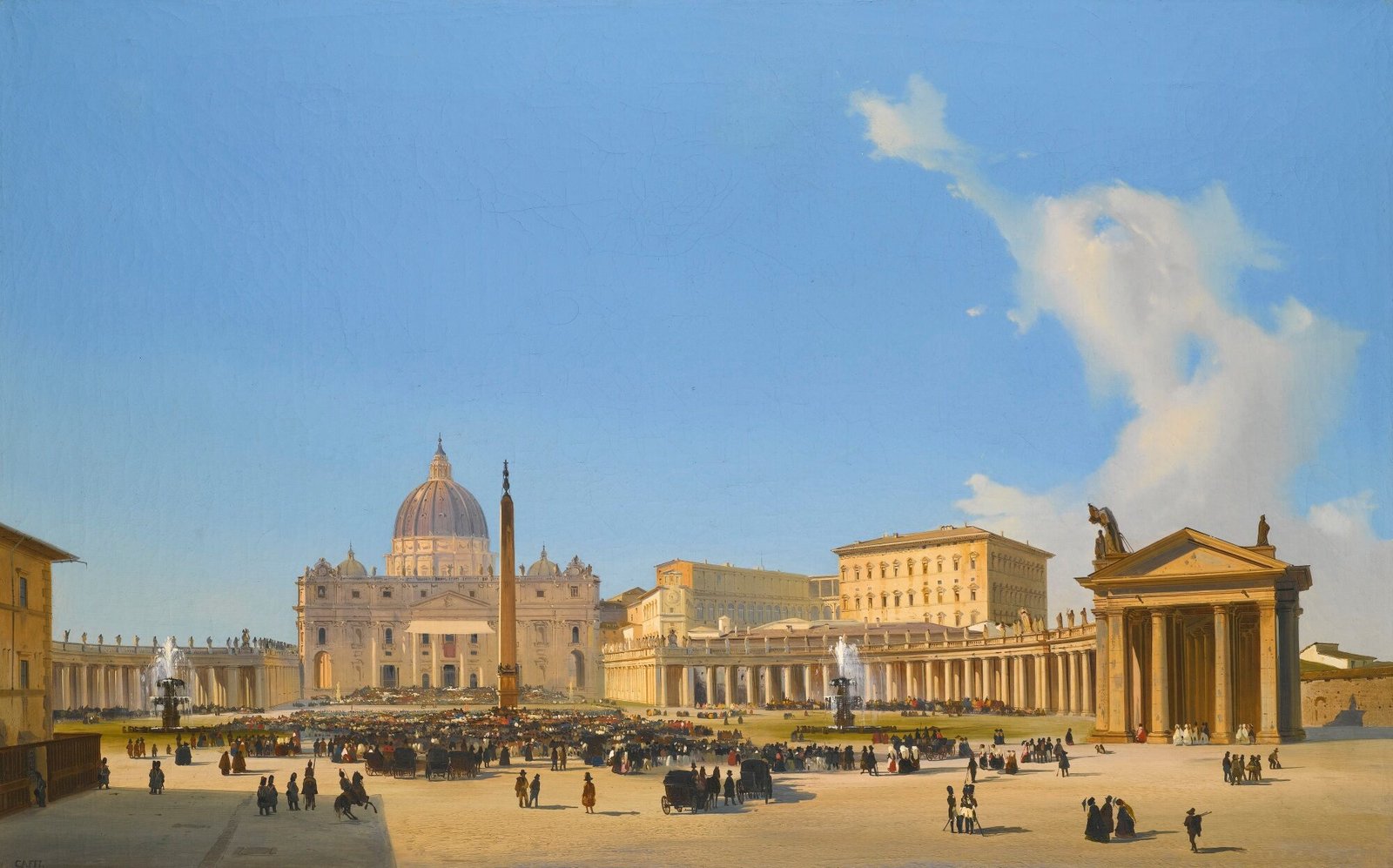
Someone builds a Wednesday morning around the general audience, flies into Rome, and finds the square empty. It happens more often than people expect, and not because anything went wrong. Behind the empty piazza is a calendar with real, recurring gaps, and knowing the pattern lets you check before you commit a whole trip to a single Wednesday.
The one gap you can set a calendar by
Every July, without exception, the Wednesday general audience stops. This is not a rumour or a one-year fluke. Vatican Press Office bulletins confirm it as standing practice going back years, stating plainly in one from July 2022: “Wednesday General Audiences, as usual, are suspended for the entire month of July. They will resume on 3 August.” That phrase, “as usual,” is doing the work. It describes a custom, not a one-off announcement.
2026 followed the same pattern. Pope Leo XIV suspended audiences for the whole of July while resting at Castel Gandolfo, then resumed on Wednesday 5 August. OSV News reported it directly: “Pope Leo will also resume his weekly Wednesday general audiences in August, after suspending them for the month of July.” Rather than a quiet return, August 2026 filled with a public Mass at a different location each week: Assisi on the 6th, Castel Gandolfo on the 15th, Rimini on the 22nd, and a Mass at “Church of Our Lady of the Lake” on the 29th, described in the same report as “a public Mass every week of August.”
What the official calendar shows for 2026
News coverage is one thing; the Vatican’s own paperwork is another, and it agrees. Their audience index for 2026 lists every catechesis by date, and between 24 June and 5 August it lists nothing at all. No placeholder, no explanatory note, just a jump straight from late June to the resumption entry: “General Audience of 5 August 2026 – Catechesis. The Documents of the Second Vatican Council. III. Constitution Sacrosanctum Concilium. 5. The prayer of the Church.” A blank month on a Vatican-run index is close to an official statement in its own right, and it matches exactly what the press bulletins describe.
July isn’t the only gap
Two shorter stretches in the same 2026 index are worth flagging, mostly so nobody assumes the calendar runs weekly the other eleven months. After 8 April, the next listed audience jumps to 29 April, skipping both 15 and 22 April entirely. That 29 April entry carries the title “The Apostolic Journey in Algeria, Cameroon, Angola and Equatorial Guinea,” which spells out the cause directly: an overseas trip disrupted the usual sequence. A second, shorter gap sits between 18 February and 4 March, with nothing on 25 February and no explanation offered there either. Read these as reminders that the weekly rhythm bends around the pope’s travel, not as confirmed causes for each missing date.
Health can cancel an audience on short notice
There is precedent, from the previous pontificate, for illness cancelling scheduled audiences with almost no warning. During Pope Francis’s hospitalisation in February 2025, the Vatican pulled a run of scheduled events, general audiences included, citing what was reported as “his complex clinical picture requires an adequate time of treatment in the hospital.” That example belongs to the Francis era, not Leo XIV; nothing under the current pope has been cancelled for health reasons so far. Still, it’s worth knowing the calendar can shift for reasons that have nothing to do with July custom or travel, and that those shifts can land with very little notice.
How to actually check before you book
No dedicated “audience cancelled this week” page exists, official or otherwise, as far as we could find. Your best free option is the same index mentioned above: vatican.va publishes each week’s audience once it happens, so a missing entry for the coming Wednesday, combined with knowing whether you’re inside the July window, tells you most of what you need. Check it a few days out rather than months ahead, since the page only fills in as each week actually occurs, and a March booking checked in March won’t reflect an August calendar. Travelling in July, plan on the audience being off entirely rather than checking week by week for an exception that won’t come. Outside July, treat a missing entry three or four days before your Wednesday as reason enough to have a backup plan ready, not proof of a cancellation.
Tickets cost nothing, whichever week you land in
One thing stays fixed regardless of the calendar: audience tickets are free. Vatican.va is explicit that they are “always free of charge,” and since January 2025 they’ve been booked through the Prefecture of the Papal Household’s official portal rather than the old fax-request system it replaced. That portal is where you’d confirm a Wednesday is actually going ahead in the first place, since a live booking flow generally won’t let you reserve a slot that doesn’t exist. Anyone offering to sell you an audience ticket is worth being wary of, whatever week it is; the price alone tells you something is off.
If the audience falls through, the morning isn’t wasted
A cancelled Wednesday still leaves a free morning in a city that doesn’t run on the papal calendar. Vatican Museums hours sit on their own schedule regardless: 8:00am to 8:00pm Monday to Saturday, last entry at 6:00pm, plus a free morning on the last Sunday of the month from 9:00am to 2:00pm with last entry at 12:30pm. They’re closed on the other Sundays and on a handful of fixed dates, including 29 June and 14–15 August, so check those against your travel dates too. Arriving early still matters either way. Getting in well before the public rush, the same instinct that gets people to the audience gate ahead of time, is what keeps the Sistine Chapel from turning into a wall of shoulders an hour later.
When the Wednesday doesn’t come together, a guided visit through the Museums and St Peter’s fills the same window without depending on anyone’s public schedule. Our Vatican tours page lists the current options, so a change of plan costs you nothing but a click.