This guide covers how to get in, which ticket actually suits your visit, when to go if you want to avoid the worst of the crowds, and what to look for once you are standing underneath the ceiling.
Book skip-the-line Vatican & Sistine Chapel tickets →

Sistine Chapel at a glance
- Where: inside the Vatican Museums, entrance on Viale Vaticano, not St. Peter’s Square.
- Ticket: there is no separate ticket. A Vatican Museums ticket includes the chapel.
- Time needed: 15 to 30 minutes in the chapel, around three hours for the full museum route.
- Quietest times: the first morning slot from 8:00, or the last two hours before closing.
- Dress code: shoulders and knees covered, checked at the entrance.
- Photography: not allowed inside the chapel, fine elsewhere in the museums.
How to get Sistine Chapel tickets
There is no standalone Sistine Chapel ticket. Access comes with every Vatican Museums ticket, and you have three main routes in:
- Skip-the-line entry tickets. Timed-entry tickets that take you past the main queue. Best if you want to explore on your own and set your own pace.
- Guided tours. A licensed guide walks you through the museums to the chapel and explains what you are looking at along the way. Best for a first visit.
- VIP early entrance or after-hours tours. You go in before or after public hours, when the chapel is at its quietest. Best if crowds are your main worry.
Compare Vatican ticket options →
Is skip-the-line worth it?
From April through October, yes. The queue to buy tickets at the door regularly runs one to two hours in full sun. A skip-the-line ticket sends you straight to the security check at your booked time instead. For most visitors it is the easiest money they will spend on the trip.
Best time to visit the Sistine Chapel
Best time of day
The first entry slot in the morning, roughly 8:00 to 9:00, is the calmest, and so are the last two hours before closing. The busiest stretch is the middle of the day, from about 11:00 to 14:00.
Best day of the week
Tuesday, Wednesday and Thursday tend to be quieter than Monday, when many other Rome sites close and traffic shifts here, and quieter than Saturday. The museums are shut on most Sundays. The exception is the last Sunday of the month, which is free and, for that reason, extremely busy.
How long to spend
Most people stay 15 to 30 minutes in the chapel itself and around three hours in the Vatican Museums overall. The walk from the entrance to the chapel runs through several galleries you will not want to hurry.
What you’ll see inside the Sistine Chapel
The ceiling (1508–1512)
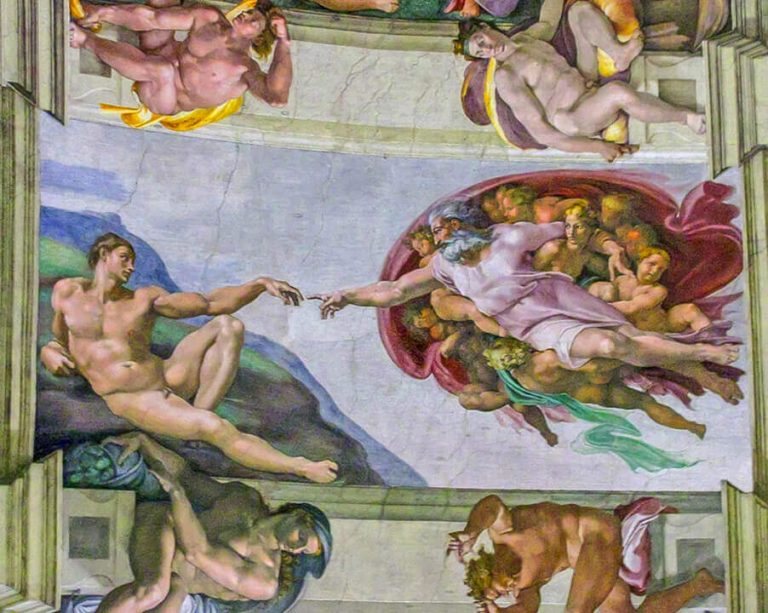
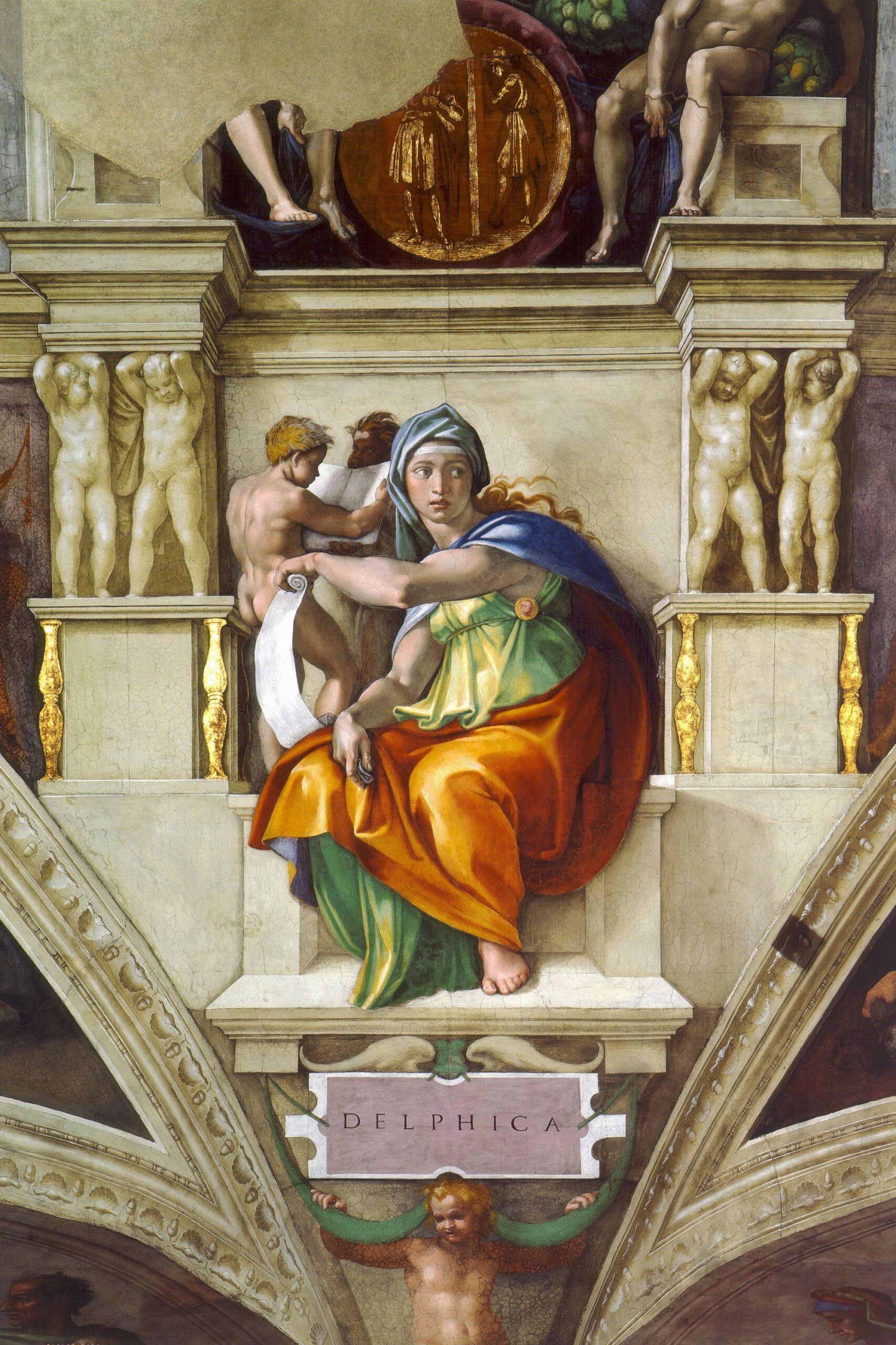
Michelangelo painted more than 300 figures across the 40-metre ceiling, and he did most of it alone. The central panels run through the Book of Genesis and build to the Creation of Adam, where God’s finger reaches toward Adam’s and stops just short.
The Last Judgement (1536–1541)
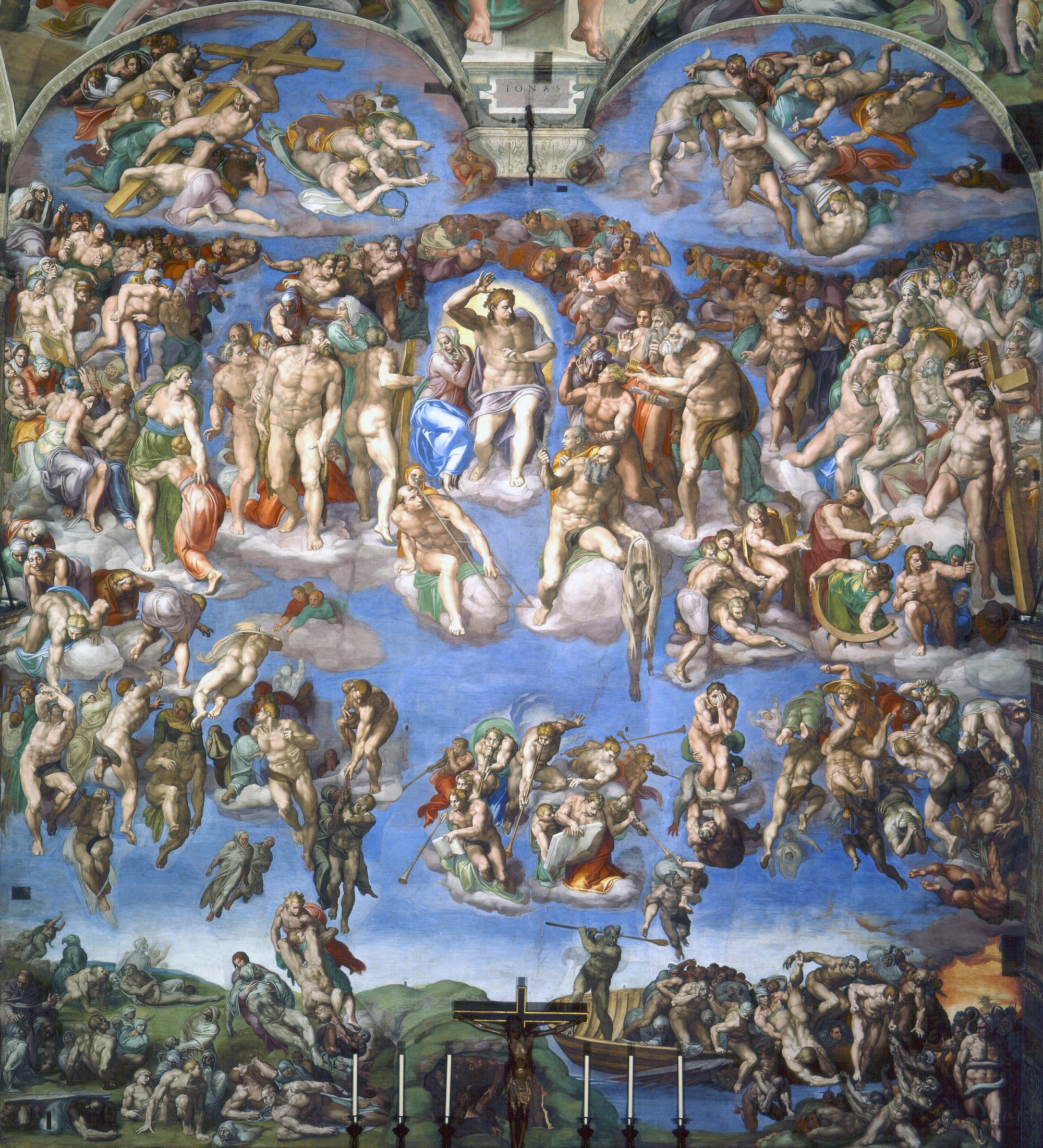
The whole altar wall belongs to Michelangelo’s later masterpiece. It shows Christ at the moment of final judgement, ringed by saints, with the blessed rising and the damned falling away. He painted it nearly 25 years after the ceiling, and the darker, more restless mood reflects a Rome that had changed around him.
The side walls
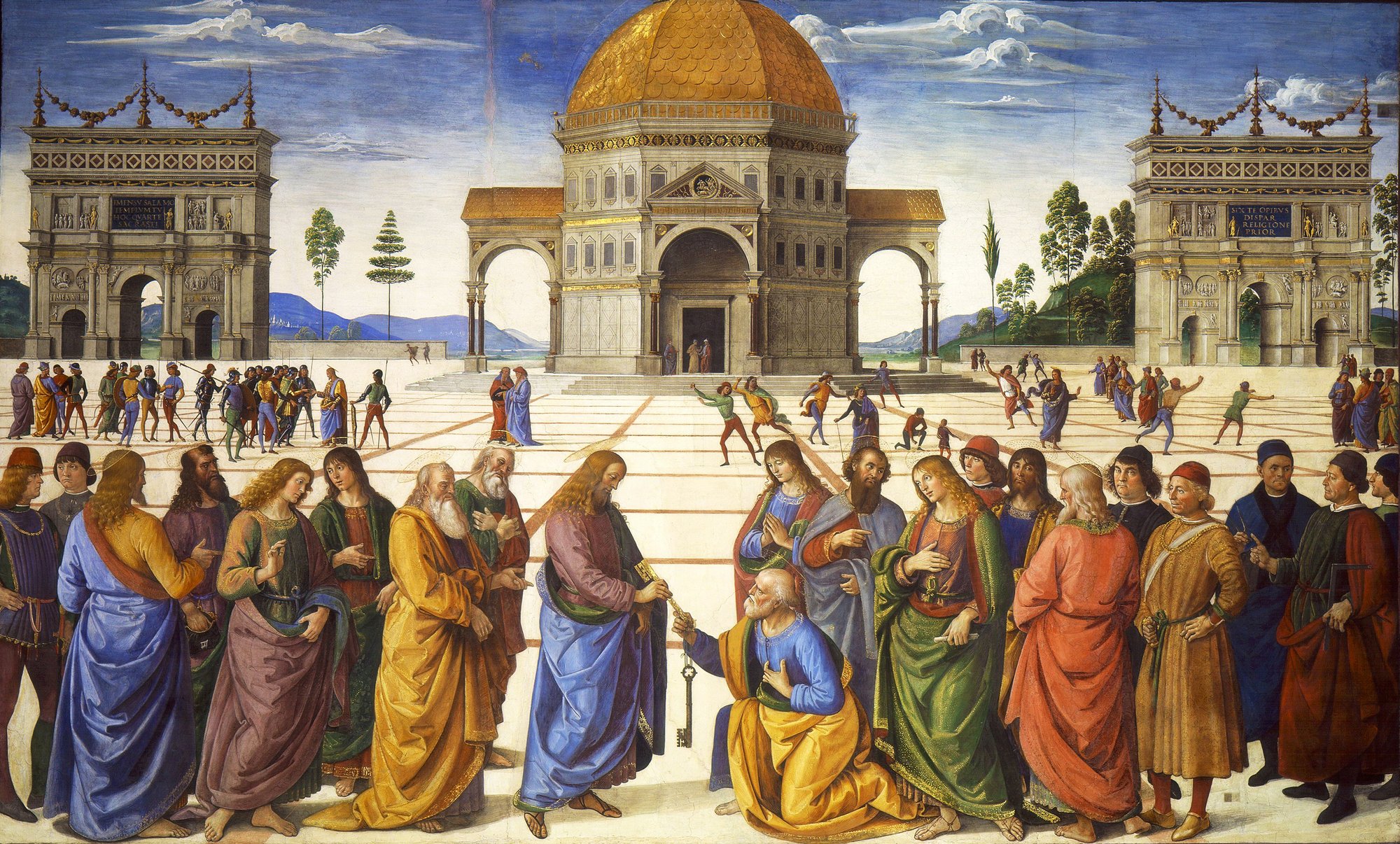
People miss the walls, which is a shame. The frescoes below the windows are the work of Botticelli, Perugino, Ghirlandaio and Rosselli, painted a generation before Michelangelo arrived. They set the life of Moses against the life of Christ, panel for panel.
The Conclave connection
This is also the room where the College of Cardinals meets to elect a new pope. When you stand inside, you are standing where the white-smoke decision is actually made.
A short history of the Sistine Chapel
The chapel takes its name from Pope Sixtus IV, who had the older Cappella Magna rebuilt between 1473 and 1481. Its proportions follow the measurements the Old Testament gives for the Temple of Solomon, roughly 40 metres long by 13 wide, and the work was overseen by Giovanni dei Dolci.
The first decoration came in 1481 and 1482, when some of the best painters in Italy frescoed the side walls. Perugino, Botticelli, Ghirlandaio and Cosimo Rosselli set out the lives of Moses and Christ, panel against panel. Michelangelo arrived a generation later. He painted the ceiling for Pope Julius II between 1508 and 1512, then came back in 1536 to cover the altar wall with the Last Judgement, finishing in 1541 under Pope Paul III.
The room has kept the same role ever since. It is the pope’s own chapel, and it is where the cardinals gather in conclave to elect his successor.
The people behind the chapel
- Pope Sixtus IV rebuilt the chapel in the 1470s and gave it his name.
- Giovanni dei Dolci oversaw the construction.
- Perugino, Botticelli, Ghirlandaio and Cosimo Rosselli painted the first fresco cycle on the side walls in the 1480s.
- Pope Julius II commissioned Michelangelo’s ceiling.
- Michelangelo painted both the ceiling and the Last Judgement, and remains the artist the chapel is known for.
Know before you go
Location and entrance
You reach the Sistine Chapel through the Vatican Museums entrance on Viale Vaticano, not through St. Peter’s Square. Leave time to walk the galleries, because the chapel sits near the end of the standard route.
Dress code
Shoulders and knees have to be covered, and this is checked at the museum entrance rather than at the chapel. In summer, carry a scarf or a light shawl so you are not turned away.
Photography
Photography is not allowed inside the Sistine Chapel, and the guards enforce both the no-photo rule and silence. You can take photos freely in the other galleries.
Accessibility
The chapel and the route to it are wheelchair accessible by lift, and free wheelchair loan is available at the entrance.
Frequently asked questions about Sistine Chapel tickets
Do I need a separate ticket for the Sistine Chapel?
No. The Sistine Chapel is inside the Vatican Museums, so your Vatican Museums ticket already includes it. There is no Sistine Chapel-only ticket.
Can I visit the Sistine Chapel without the Vatican Museums?
Not on the standard route. Public access runs through the museums. The one exception is certain guided tours that use a connecting passage to St. Peter’s Basilica at the end of the visit.
How much do Sistine Chapel tickets cost?
Entry to the Vatican Museums, which includes the Sistine Chapel, starts at the official €20 full-price admission, with a €5 supplement for advance skip-the-line booking. Children under 7 enter free, and reduced rates apply to some other categories. Guided and VIP tours cost more; see our booking pages for current options and prices.
Do I need to book Sistine Chapel tickets in advance?
In peak season, from April to October, yes. Timed-entry slots sell out, and buying at the door can mean an hour or more in the queue. Booking ahead lets you choose your entry time and walk straight to the security check.
Is the Sistine Chapel included in a guided Vatican tour?
Yes. Every standard Vatican Museums guided tour finishes in the Sistine Chapel.
Can I take photos in the Sistine Chapel?
No. Photography of any kind is prohibited inside the chapel, though it is fine in the surrounding galleries.
How long should I spend in the Sistine Chapel?
Most people stay 15 to 30 minutes. You can linger longer if you like, within opening hours.
What is the best time to avoid crowds?
Go in at opening, around 8:00, or in the last two hours before closing. VIP early-entrance and after-hours tours skip the crowds altogether.
Is there a dress code for the Sistine Chapel?
Yes. Shoulders and knees must be covered, the same rule as the rest of the Vatican.
Is the Sistine Chapel accessible for visitors with disabilities?
Yes. The chapel and the museum route to it are step-free by lift, and the Vatican Museums lend wheelchairs free of charge at the entrance.