
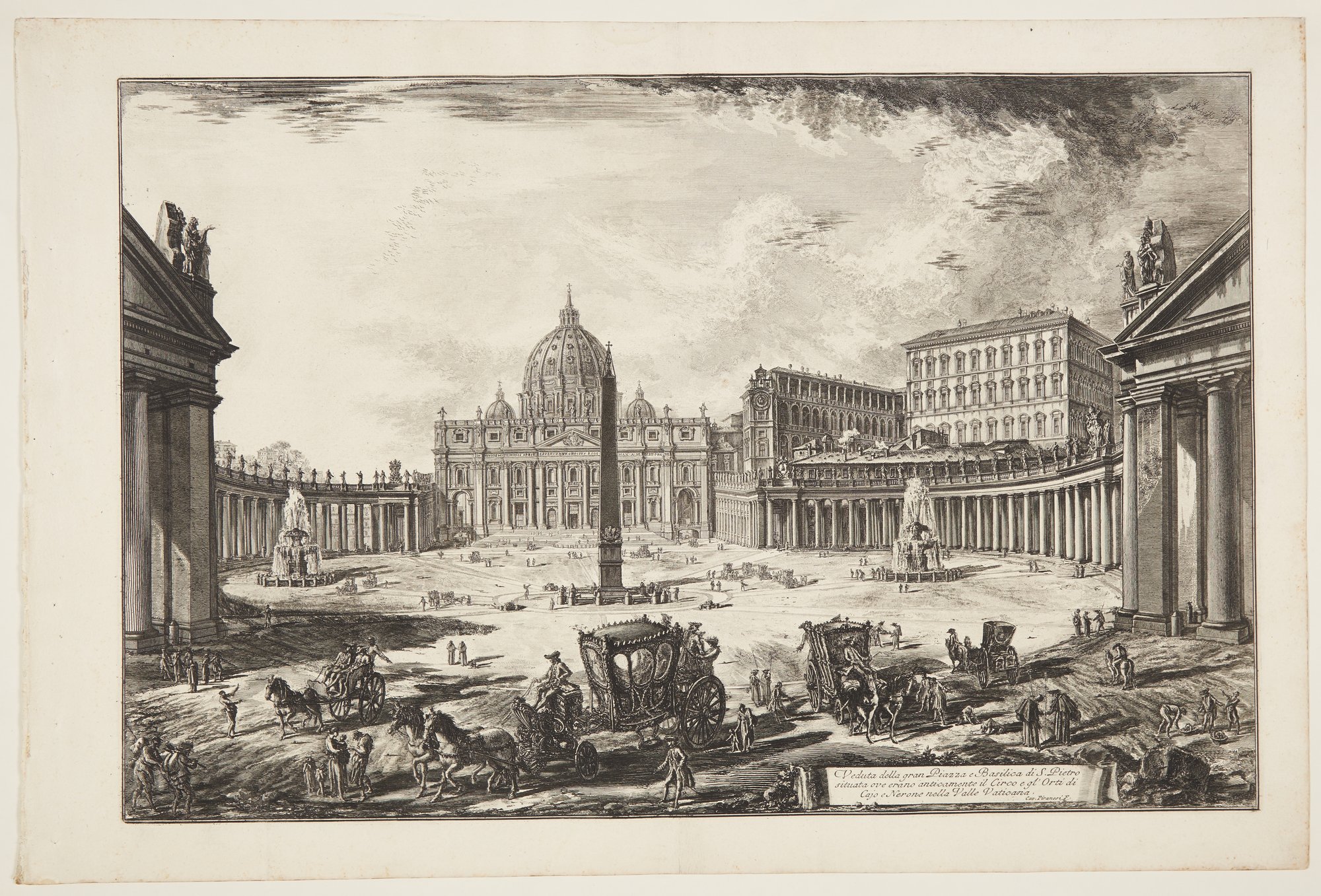
Before you reach the Basilica doors, everyone walks through a checkpoint set up in the open air of St Peter’s Square. It looks informal compared to an airport line, folding tables and a metal detector arch under the colonnade, but it is the only real gate between the piazza and the church, and it decides how fast your morning goes. Get the basics right beforehand and the whole thing takes less time than buying a coffee. Get them wrong and you can lose twenty minutes arguing with an officer who has heard every excuse already.
Who actually staffs it
This is not a Vatican operation. As the Basilica’s own site puts it: “Access to the Basilica begins with the security checks by the Italian State Police: the stations are located in the right hemicycle of Saint Peter’s Square looking towards the Basilica.” That is a meaningful detail. St Peter’s Square itself is Vatican territory, but the Lateran Treaty hands Italian police ordinary crowd-control authority there, which is why State Police rather than Vatican personnel staff this checkpoint. The Vatican Museums entrance, a short walk away, carries no such carve-out. Two checkpoints, two different forces, and neither page names who staffs the other one.
What won’t get past the check
The Basilica’s rules for visitor conduct are short and specific. They prohibit using phones inside, smoking, eating or drinking, and bringing animals or bulky objects. None of that reads like an airport prohibited-items poster; there’s no itemised list of blades, liquids or lighters published for this particular checkpoint. What the guidance does say, clearly, is that anything bulky is a problem before you even reach the metal detector. If your bag looks like it belongs in an overhead locker rather than on your shoulder, expect a conversation with the officer on duty.
Bag size: there’s no number, only advice
Visitors often ask for a centimetre limit the way airlines publish one for carry-on luggage. No such number exists here. Basilica guidance reads instead: “we recommend traveling light and bringing only small backpacks or small personal bags.” That phrase is doing a lot of work. It tells you the standard is judgement, not measurement, so a slim day bag clears without comment while a full-size hiking pack invites a second look. Pack for the day the way you would for a museum, not for a flight, and you’ll rarely think about this once you’re through the tables.
Dress code enforced at the same tables
Officers at the checkpoint also act as the first line of the dress code, and the Basilica states it plainly: “Entry to the Basilica is permitted only with appropriate clothing for a place of worship. Excessively short clothing, sleeveless tops, or hats are not allowed.” Cover your shoulders, skip anything cut above the knee, and take hats off before you’re waved forward. A related standard, worded a little differently, governs the Vatican Museums next door, banning “sleeveless and/or low-cut garments, shorts above the knee, miniskirts and hats.” Bring a light scarf if you’re travelling in summer clothes. It solves the shoulders problem in ten seconds, and it works at both checkpoints without you having to remember which wording applies where.
How it differs from the Museums entrance
Walk about fifteen minutes north to the Vatican Museums and the published rules get far more granular. Its own advice page routes knives and scissors, plus metal tools generally, into a free cloakroom rather than past the door. It routes medium and large umbrellas into that same cloakroom, walking sticks aside, along with tripods, video cameras and banners. It also states flatly that “it is forbidden to bring any type of firearm and/or dangerous material into the Museums,” and names telescopic selfie sticks specifically as forbidden. Visitors are even asked to “remove inadmissible items from their hand baggage beforehand, and to inform staff in advance.” Nothing on the Basilica’s own pages runs to that level of detail. Whether that gap reflects a genuinely gentler check at the Square or simply a shorter published list is something no official source states, so treat it as a difference in paperwork rather than a guarantee of an easier line.
Why checkpoint speed shapes your whole visit
The Basilica is open, per its current hours, “from june 1st: from 7.00 am to 8:00 pm,” but the closing hour is softer than it sounds. A line buried in the announcement of that schedule is worth reading twice: “Last entry will be permitted by 7:15 p.m., subject to visitor flow and waiting times for security checks.” In other words, the checkpoint itself can shrink your window on a busy evening, cutting off entry before 7:15 if the queue is still moving through. Vatican Museums hours run on a fixed clock instead, admitting visitors Monday to Saturday until 6:00 p.m. against an 8:00 p.m. closing, with no equivalent note about security delays pushing that cutoff earlier.
A five-minute checklist
Sort the dress code out before you leave your hotel, not after you’re turned away at the tables. Carry a bag you’d call small without arguing the point. Finish any coffee or snack before you join the line, since food and drink aren’t allowed inside once you’re through. Leave the umbrella and the tripod at the hotel too; neither is named in the Basilica’s own rules, but both fit the description of a bulky object staff can turn away on sight. If you’re aiming for a late-afternoon visit, build in slack ahead of 7:15 p.m. rather than treating it as a deadline you can arrive at exactly. None of this takes long to plan, and it turns the checkpoint into thirty seconds of formality instead of the reason your visit gets cut short.
If you’d rather have someone handle the timing and the entry logistics for you, our St Peter’s Basilica tickets and tours page lists guided options that get you to the doors with a plan already in place.