
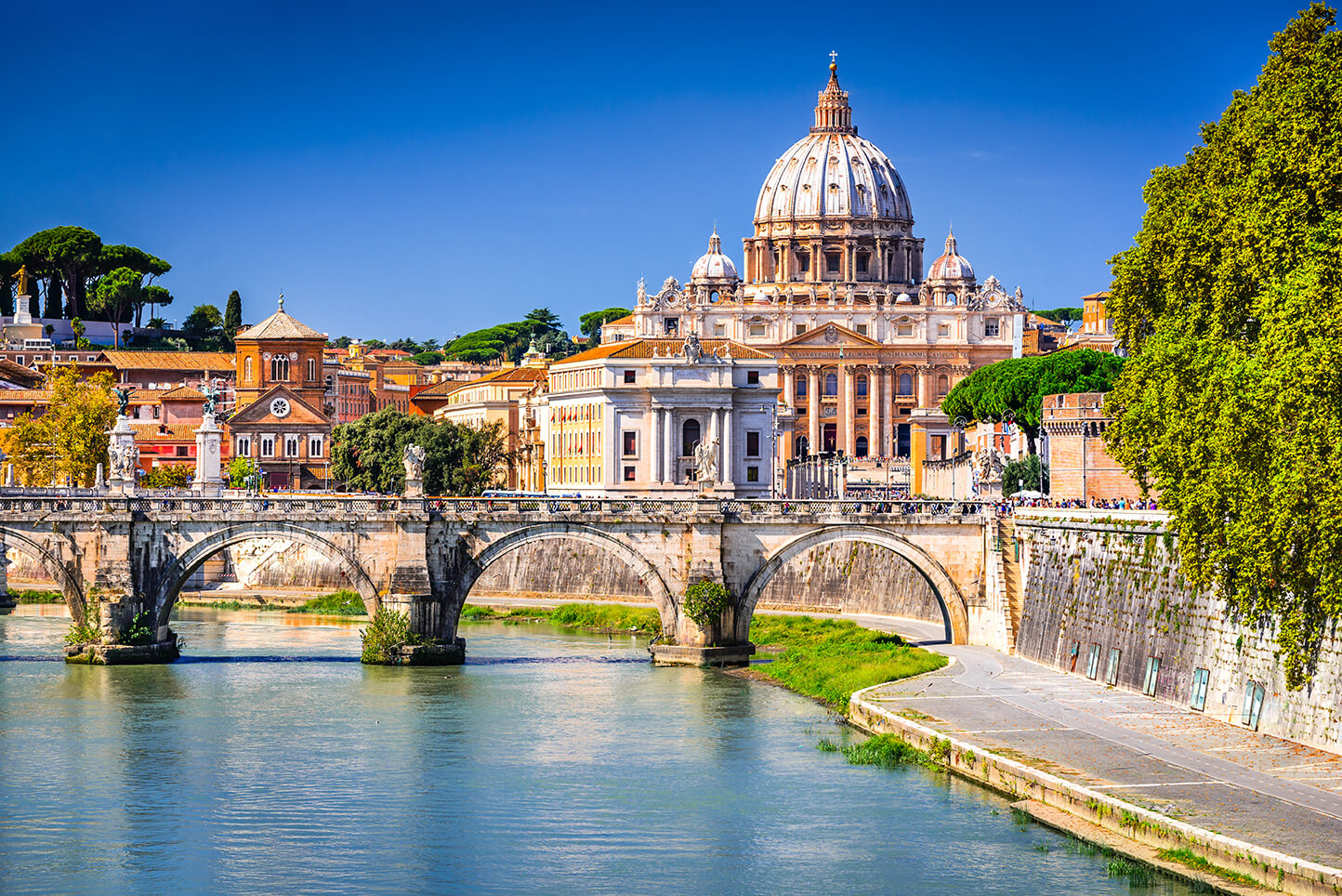
“Go in the morning” is the one piece of Vatican advice every guidebook repeats, and for the Museums it holds up. For the Basilica on its own, that advice is borrowed from a building with a different problem. St Peter’s has no ticket booth to beat. Entry is free and self-guided. The thing that actually slows you down is a police checkpoint, and the crowd that forms there moves on a schedule that has nothing to do with sunrise.
A different queue than the one you’re picturing
Skip-the-line advice for the Museums works because you’re racing other people to a ticket window. That variable simply doesn’t exist here. According to the official site, “access to the Basilica begins with the security checks by the Italian State Police,” with the stations set up “in the right hemicycle of Saint Peter’s Square looking towards the Basilica,” and “at least four other gates available” for those controls. There is no admission fee to dodge and, for a plain visit without a guide, no booking to race against. A timed slot exists only for the Digital Audio Guide product, not for walking in unaccompanied.
One fact changes the whole timing question once you sit with it. You’re not trying to beat a sellout, since nothing sells out. You’re trying to avoid standing behind whoever else decided to show up at the same hour you did, which is a very different problem to plan around, and it has almost nothing to do with what time the sun comes up.
What the 7am opening actually buys you
Current hours run “from 7.00 am to 8:00 pm” every day, with no shortened Wednesday schedule listed on the official page. Arrive at opening and the security line genuinely is short, but not for the reason most people assume. It isn’t early risers beating a crowd. It’s a structural gap: organised tour groups cannot register before 9:30am on weekdays, or 1:30pm on Sundays and Vatican holidays. A guide simply cannot walk a party of thirty through the portico desk before that desk itself opens for business. So the first ninety minutes after 7am belong almost entirely to individual visitors, and at that hour there aren’t many of those either. This is the one case where the reflexive morning advice happens to be right, though for a narrower reason than “crowds build steadily all day.” Enter at 7:15 and you’re beating a registration clock, not a sunrise.
Where the standard advice falls apart
Once the 9:30am registration window opens, it stays open until 5:30pm, with last registration accepted at 5pm. Any group of more than four people has to register at the Tour Desk in the portico, at €1.50 per visitor, capped at thirty visitors per guide. That’s a seven-hour stretch during which new groups can join the queue at almost any point, which is exactly why “afternoon is worse” doesn’t hold as a blanket rule. Nine-thirty is a floor for group traffic, not a ceiling, and it stays open for most of the operating day. Blaming a single half of the day misses where the real problem sits: the middle. By mid-morning, independent visitors are past the opening lull, and groups that registered near the desk’s early hours have already fed into the security queue behind them. Both streams peak around the same stretch of the clock, roughly late morning into early afternoon, and that overlap, not the calendar’s morning-versus-afternoon split, is the part worth avoiding if your schedule allows it. Nobody plans around a registration desk when they’re picking a visit time, which is exactly why this gap goes unnoticed.
The late-afternoon window nobody plans around
Here’s the part that runs against the usual script. Since new groups can’t register past 5pm on weekdays, or 3pm on Sundays, no fresh block of thirty visitors is joining the security line after that cutoff. Doors stay open until 8pm, though, so the stretch from roughly 5:30pm onward is structurally quieter on the group side, even while most visitors have already written off the afternoon as the busy half of the day. It won’t be empty. Individual footfall doesn’t vanish at 5:30. But it’s a genuinely different crowd mix from the one you’d meet at noon, worth weighing against a 7am alarm if you’d rather sleep in. Late risers, in other words, aren’t automatically punished here the way they are at the Museums.
How to actually plan around it
If your priority is the shortest possible wait and you don’t mind an early start, arrive at the security checkpoint by 7:30am, ninety minutes before groups can even register. Rewind that clock and skip mornings entirely if you’d rather sleep. If early rising isn’t realistic, don’t default to “early afternoon” out of habit. Aim instead for 5:30pm or later, after the last tour group has already checked in for the day. Roughly 10am to 2pm is the stretch worth avoiding if you have any flexibility at all, since that’s when independent and organised traffic overlap the most. None of this requires a booking for basic entry. It’s purely a question of which gate you’re standing behind, and when.
The Wednesday wrinkle
General Audiences resumed on 5 August 2026 after a full suspension through July, and they typically fall on Wednesday mornings when the calendar allows. There’s no official statement confirming whether or how an audience in the square reroutes the security line that day, so treat a Wednesday morning visit as an unknown rather than a fixed rule. Seating, barriers, and the flow of people arriving for the audience could plausibly change how the checkpoint queue behaves, but nothing on the record spells out how, and guessing wouldn’t help you. If your trip lands on a Wednesday and the timing matters to you, it’s worth checking that week’s audience schedule before locking in a 7am start, or simply building in extra time as a buffer rather than assuming the usual pattern holds.
None of this replaces knowing your own itinerary. If you’d rather have someone else handle the timing and the entrance logistics, our St Peter’s Basilica tickets and tours page lays out the guided options that skip the guesswork entirely.