
Ask a guide who designed St Peter’s Basilica and you will get a tidy answer: Bramante started it, Michelangelo gave it the dome, Bernini finished the square out front. What the tidy answer skips is that before Bramante designed anything, he tore something down. The building he demolished was not derelict. It was the church Constantine had built over the tomb of St Peter, standing on that spot for roughly twelve centuries, and plenty of people at the time thought wrecking it was closer to vandalism than architecture.
What was actually standing there
Construction of the old basilica began, per Wikipedia, “by orders of the Roman Emperor Constantine I between 318 and 322,” and took around forty years to finish. By the time Bramante got near it in the early 1500s, it had been the physical seat of the papacy for close to twelve centuries, longer than the entire span from the Norman Conquest to today by more than two hundred years. It was enormous by the standards of its own century: five aisles, “over 350 feet (110 m) long,” a roof rising “at over 100 feet (30 m) at the center.” Mosaics, altars and the tombs of popes going back to the church’s earliest years filled it. This was not a building anyone was proposing to knock down lightly, and for a while, nobody did.
The pope who did not want to demolish it
The push to rebuild came from Julius II, elected pope in 1503, a man with a reputation for grand and impatient projects. What gets left out of the shorthand version of this story is that Julius did not start out wanting a demolition. Wikipedia records that he “had every intention of preserving the old building” when the rebuilding project began. His original brief was closer to renovation and expansion: a grander tomb chapel for himself, a modernised eastern end, the old nave largely intact. Somewhere between that brief and 1506, the plan changed into something far more total, and the architect holding the pen when it changed was Bramante.
The nickname his contemporaries actually used
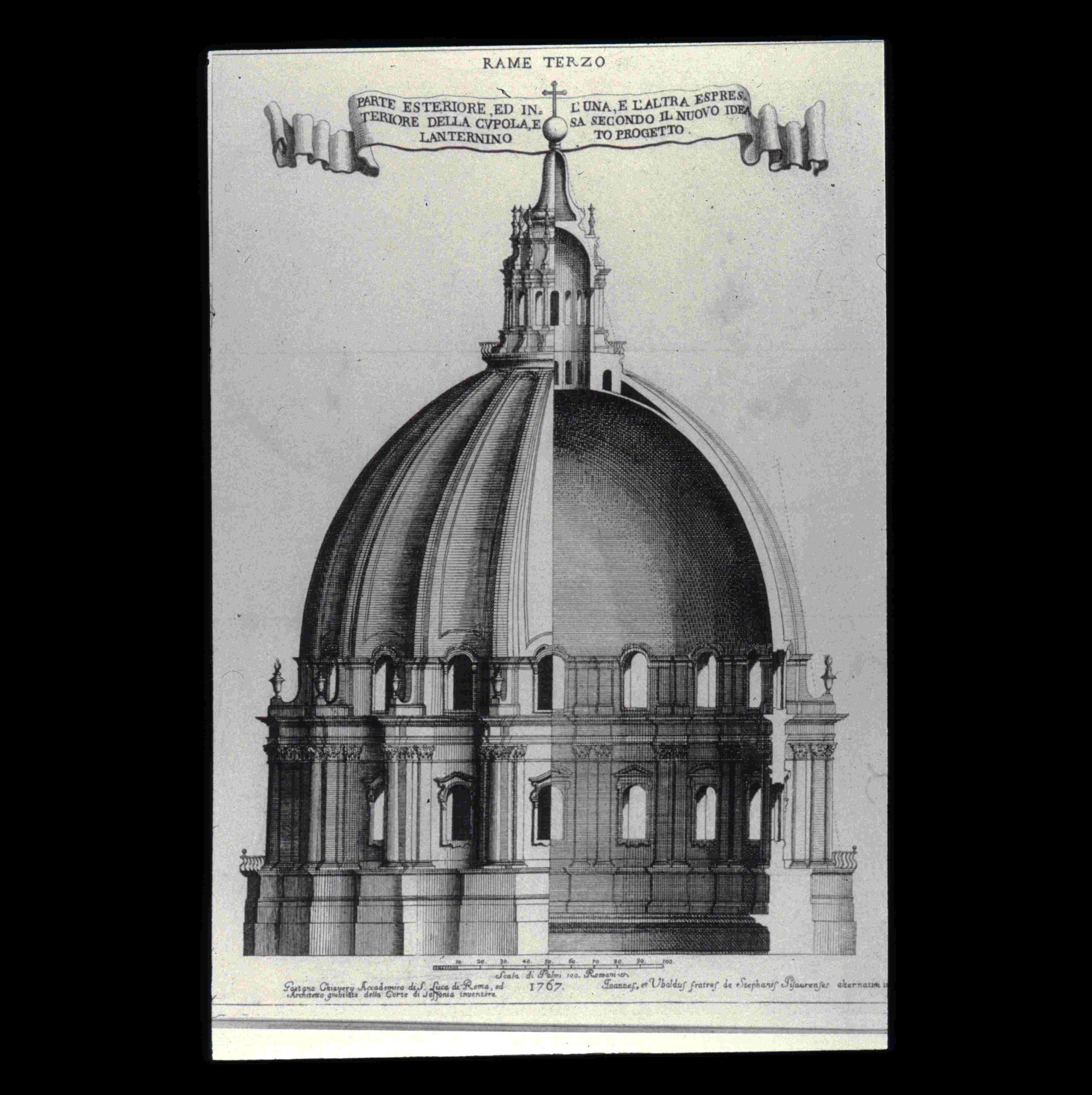
Donato Bramante was already a respected architect when Julius brought him to Rome, and his design for the new basilica, a vast Greek-cross plan under a central dome, is genuinely one of the boldest architectural proposals of the Renaissance. None of that stopped his own contemporaries from despising what it cost. Wikipedia states plainly that “Donato Bramante, the chief architect of modern St. Peter’s Basilica, has been remembered as Maestro Ruinante,” a pun that turns his own name into the Italian for a wrecker, a ruiner. It stuck. It is still the detail most worth knowing about him: the man given the single largest architectural commission of his century was known, in his own lifetime, for what he tore apart to get it.
Italian sources go further. According to the Italian Wikipedia entry on Bramante, the demolition of the apse and transept of the old basilica, which began in 1506, provoked “polemiche permanenti fuori e dentro la Chiesa,” permanent controversies inside and outside the Church. This was not a one-week scandal that blew over. It was an argument that kept resurfacing for years, among clergy and laypeople alike, about whether the pope’s architect had any business demolishing the church built over the apostle’s own grave.
A satire that put Bramante on trial in the afterlife
The clearest sign of how raw the demolition felt is that it became material for satire while Bramante was barely a decade dead. Andrea Guarna, writing in Milan in 1517, published a dialogue titled Simia in which Bramante arrives in the afterlife and is met by Saint Peter, who confronts him directly over the destruction of the old basilica. Bramante’s answer, in Guarna’s telling, is not contrition. He proposes rebuilding Paradise itself. It is a joke, but it is a pointed one: even sympathetic contemporaries pictured Bramante as a man who would flatten anything, holy ground included, if it let him build something bigger. That the joke needed no explanation to land tells you the demolition was common knowledge and still an open wound a generation later.
Why “ruinante” is not entirely fair to him
It would be too easy to write Bramante off as reckless. The old basilica was not structurally sound, and the case against its walls predates him by decades. Leon Battista Alberti, the architect and theorist who died in 1472, had already flagged the problem in terms that read almost like a building inspector’s report: “I have noticed in the basilica of St. Peter’s in Rome a crass feature: an extremely long and high wall has been constructed over a continuous series of openings, with no curves to give it strength, and no buttresses to lend it support.” Alberti was describing a wall that had stood for a millennium on top of what amounted to a row of holes, with none of the arching or bracing a structural engineer would want. That is a real defect, not an invented excuse, and it existed long before Bramante arrived. What his critics objected to was not that the building had problems. It was the totality of the response, and the speed of it, applied to a church that held the tombs of the men who had led the faith since antiquity.
What actually got lost
The old basilica held the tombs of a long line of early and medieval popes, and Wikipedia notes that “the majority of these tombs were destroyed during the 16th and 17th centuries’ demolition of Old St. Peter’s Basilica.” Only a handful of monuments were carefully removed and preserved rather than lost, among them the tombs of Innocent VIII and Sixtus IV, both carved by Antonio del Pollaiuolo in the 1490s and still visible in the present basilica today. Set that against everything that was not saved, and the scale of what vanished starts to come into focus: not just an old building, but a physical, continuous record of the papacy stretching back toward its origins, most of it broken up for spare stone and lime rather than catalogued and rehoused.
It is worth being precise about the timeline too, because the popular image of Bramante swinging a wrecking ball through a single doomed church in one campaign is not quite right either. The demolition Bramante began in 1506 targeted the apse and transept; the rest of the old nave lingered for another century. As Wikipedia puts it, “the church was gradually demolished over 100 years, its last original part being demolished in 1605 and construction of the new church began the following year.” Bramante set the process in motion and gave it its reputation. He did not personally finish it, and he did not live to see the building he started; he died in 1514, decades before the new basilica was anywhere close to complete.
Why this history is more than trivia
None of this is an argument against visiting St Peter’s, or against admiring what eventually replaced the old church. Michelangelo’s dome, Bernini’s baldachin and colonnade, the sheer scale of the finished building, these are genuine achievements that reward the time you spend inside. But the standard tour-guide framing, Bramante the visionary architect, tends to erase the fact that his vision required erasing something else first, something that a great many Romans and clergy at the time did not want erased. Walking into the current basilica, you are standing where a 1,200-year-old church once stood, on ground that held the graves of dozens of early popes, most of which did not survive the rebuilding. Knowing that changes what the building is: not simply a triumph of High Renaissance architecture, but the product of a genuinely contested decision, argued over in its own century as much as any modern demolition of a landmark would be argued over now.
If you want to see what actually replaced the old basilica, and hear where the surviving fragments of the earlier church, like the Pollaiuolo tombs, ended up inside the present one, our St Peter’s Basilica tickets and tours page covers the guided options for getting inside and finding them.