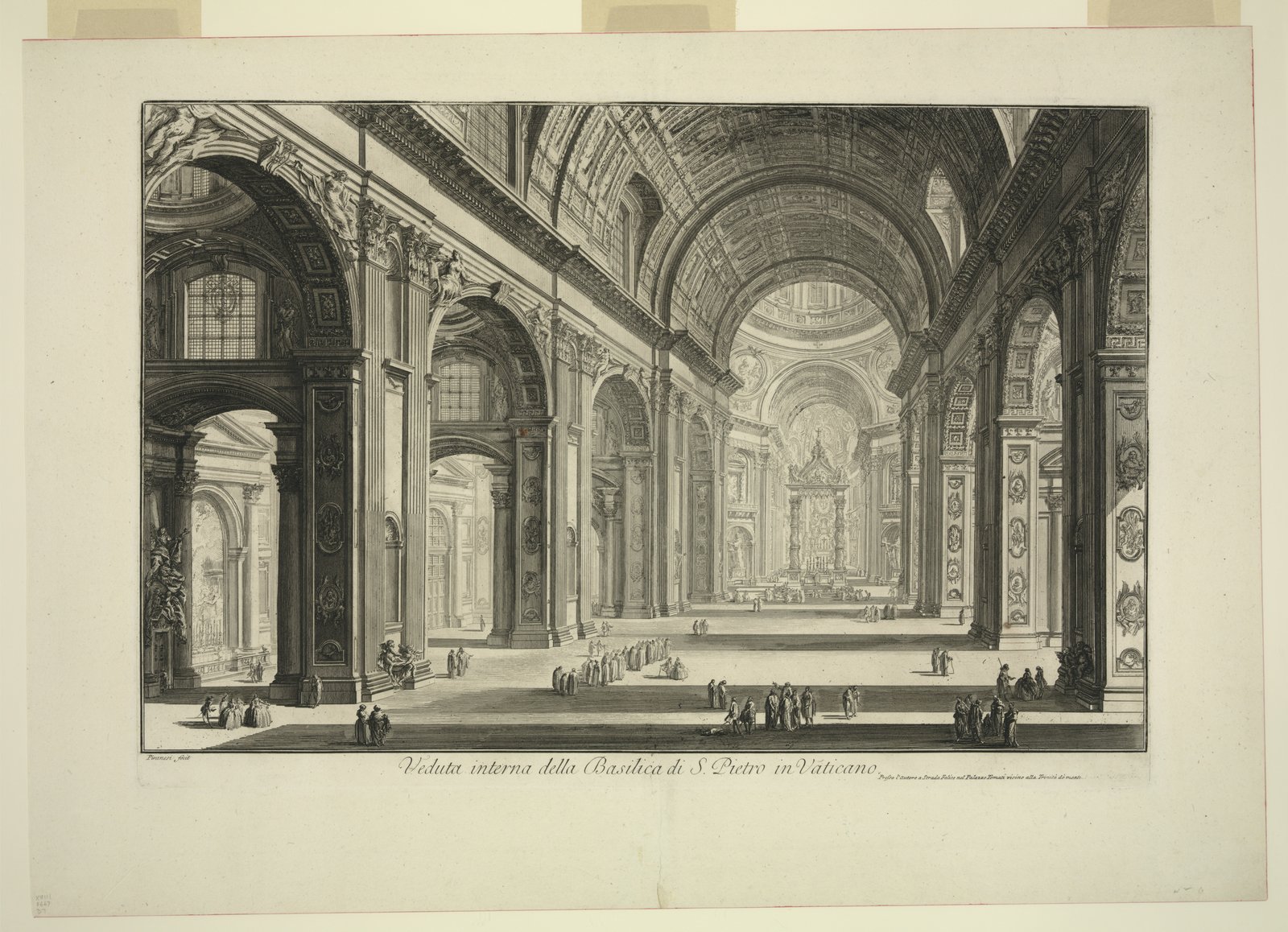
Everyone who writes about Rome eventually claims that a rainy day is the secret to seeing the Vatican Museums without the crowds. That claim is neat, it sounds insider-y, and it is largely wrong. Everyone with a five-day Rome itinerary who watches the forecast the night before also thinks it, and they all pivot their indoor day to the wet one. What actually happens, at least by observation on repeated visits: on a rainy Wednesday in November the Museums are as full as any other Wednesday in November, sometimes more so.
Rain does change the visit. It just does not do the specific thing travel guides promise. Here is what the rain actually gives you at the Vatican, and what to plan around when the forecast turns.
Where the rain does not help
Inside the Museums it hardly matters. Route is the same, the timed slots are the same, the queue behind the ticket-office doors is drawn from the same crowd of pre-booked and walk-up visitors. Once you are through security, the corridor from the Pinacoteca down to the Sistine Chapel has the same choreographed flow as any dry day. Bottleneck around the Gallery of Maps between 10:00 and 13:00 is unchanged.
Free last-Sunday-of-the-month entry, especially, does not empty out in rain. That queue still stretches around the block by 08:30. Free-entry visitors are largely locals and budget travellers who committed regardless of the sky, and they will queue in the wet for the ticket-free morning either way. Do not treat rain as an unlock for a free Sunday visit.
Where the rain does help
Outside the Museums. On the Piazza San Pietro at 15:00 in November rain, half the usual crowd has taken cover in the Basilica or scattered to a nearby café. Colonnade under the two curving arms is the natural shelter and is comfortably busy but not packed. Open middle of the piazza, the space you almost never see empty in tourist photographs, is walkable — you can stand at Bernini’s oval and see the facade with room around you.
Vatican Gardens, which run on booked tours only, are similarly quieter in wet weather. Third-party operators reschedule or refund tours cancelled for “poor weather,” but light-to-moderate rain does not stop the walking-tour version, and that is when the Gardens are most themselves — the geometry of the Italian formal garden reads more clearly against a grey sky than against summer glare.
And the walk from Ottaviano metro to the Museums, which in July is a slow-moving column of hats and phones, is a five-minute proper walk in November rain.
The Sistine Chapel is the driest room in the city
Somewhere in the middle of a rainy visit, you will walk into the Sistine Chapel and notice that the air is different. That is not imagination. The Chapel’s climate-control system, installed by Carrier in 2014 and designed for the specific problem of protecting Michelangelo’s frescoes from visitor breath and body moisture, holds the room in a “highly controlled microclimate” that manages temperature, humidity, air velocity, and even CO₂ together. Carrier’s own description: “highly controlled temperature and humidity levels […] minimize noise and limit air motion around the frescoes.”
Which means that on a day when outdoor humidity is 90 per cent and rising, the Sistine is running around 55 per cent, at about 22°C, with air moving so slowly you cannot feel it on your face. It is arguably the most environmentally stable room you will spend time in that entire day. There is a small pleasure in noticing this — you are standing in a five-hundred-year-old ceiling that outlasts the weather outside because a modern HVAC system was designed specifically to make that possible.
The travertine problem
Bernini’s colonnade and Piazza San Pietro are paved in a vast field of sanpietrini basalt cobblestones (usually estimated in the millions) with radial travertine strips fanning out from the obelisk. All of that is beautiful and, in rain, dangerous. Travertine glazes over when wet more sharply than the basalt around it, and the smooth radial strips become genuinely slippery (worn basalt is not much better once really wet, but the travertine goes first). If you are visiting with anyone elderly or unsteady, do not cross the piazza at the diagonal — walk along one of the arcaded flanks under the colonnade where the surface is protected and grippier. Basilica staff put out sandwich-board wet-floor signs inside the narthex and portico on rainy days for the same reason.
Nobody dies from this. Plenty of people twist an ankle.
The umbrella rule
The Vatican Museums cloakroom regulations are specific about what you carry inside. From the Museums’ own cloakroom regulations: “Full-length (non-folding) or medium and large sized umbrellas must be stowed in the cloakroom.” The cloakroom is free but on a busy morning has its own small queue on the way in and a slower queue on the way out.
Practical translation: bring a collapsible pocket umbrella that fits in a small handbag. A full-length golf umbrella will be checked, and you will retrieve it in the wrong order, at the wrong time, and probably from behind the wrong window. Not a disaster, but the collapsible option removes an entire class of small friction.
Does Rome flood?
Tiber ran through Rome as a genuine flood risk for two millennia and destroyed a lot of the city in 1870. Response after that flood was the construction of the enormous embankment walls (the muraglioni) that still line both banks. Since then, central Rome — including the ground St Peter’s stands on, which sits above the historic Tiber flood line — has been protected against the Tiber overtopping. Recent decades have seen more frequent extreme rainfall in Rome, and hydrologists occasionally warn that another major flood is a question of when rather than if, but on any normal rainy day, and even on an unusually heavy one, the ground beneath St Peter’s is not at flood risk (the adjacent low-lying Borgo and Trastevere sit within the historical Tiber flood footprint and were inundated as recently as 1915).
What you get instead on a heavy rainy day is localised street ponding on the low-lying streets immediately east of the Vatican — Via della Conciliazione and the Borgo medieval grid by observation, though it varies by drain-clearance and storm intensity. That kind of ponding clears within an hour of the rain stopping. There is no Venice-style acqua alta phenomenon in Rome.
The honest rainy-day plan
If your Vatican day happens to be a rainy one, do not expect an empty Museums. Do expect:
- A quieter Piazza San Pietro, especially in the middle of the afternoon when tour groups have dispersed and only the umbrella-carrying stragglers remain.
- A friendlier Vatican Gardens tour, particularly on the walking-tour version. Bring waterproof shoes, not just a jacket.
- The Sistine Chapel at its most environmentally stable, which is a small perceptual pleasure once you know why.
- Slippery travertine on the Piazza. Walk under the colonnade rather than across the middle.
- Collapsible umbrella only if you want to keep it with you inside the Museums. Otherwise expect a cloakroom detour on both ends.
For the 2026 opening calendar including which Wednesdays are free-entry Sundays and which weekdays are closed for religious holidays regardless of weather, see the Vatican Museums opening hours 2026 guide. If the rain shifted you off a planned Wednesday visit, our post on why Wednesday mornings are a bad time to visit the Museums explains the Papal Audience knock-on effects that compound with any weather.
Rain does not make the Vatican empty. It makes it different. The difference is worth looking at, once you stop expecting the wrong thing from it.