Category: Uncategorized

  • When the Wednesday General Audience Is Cancelled

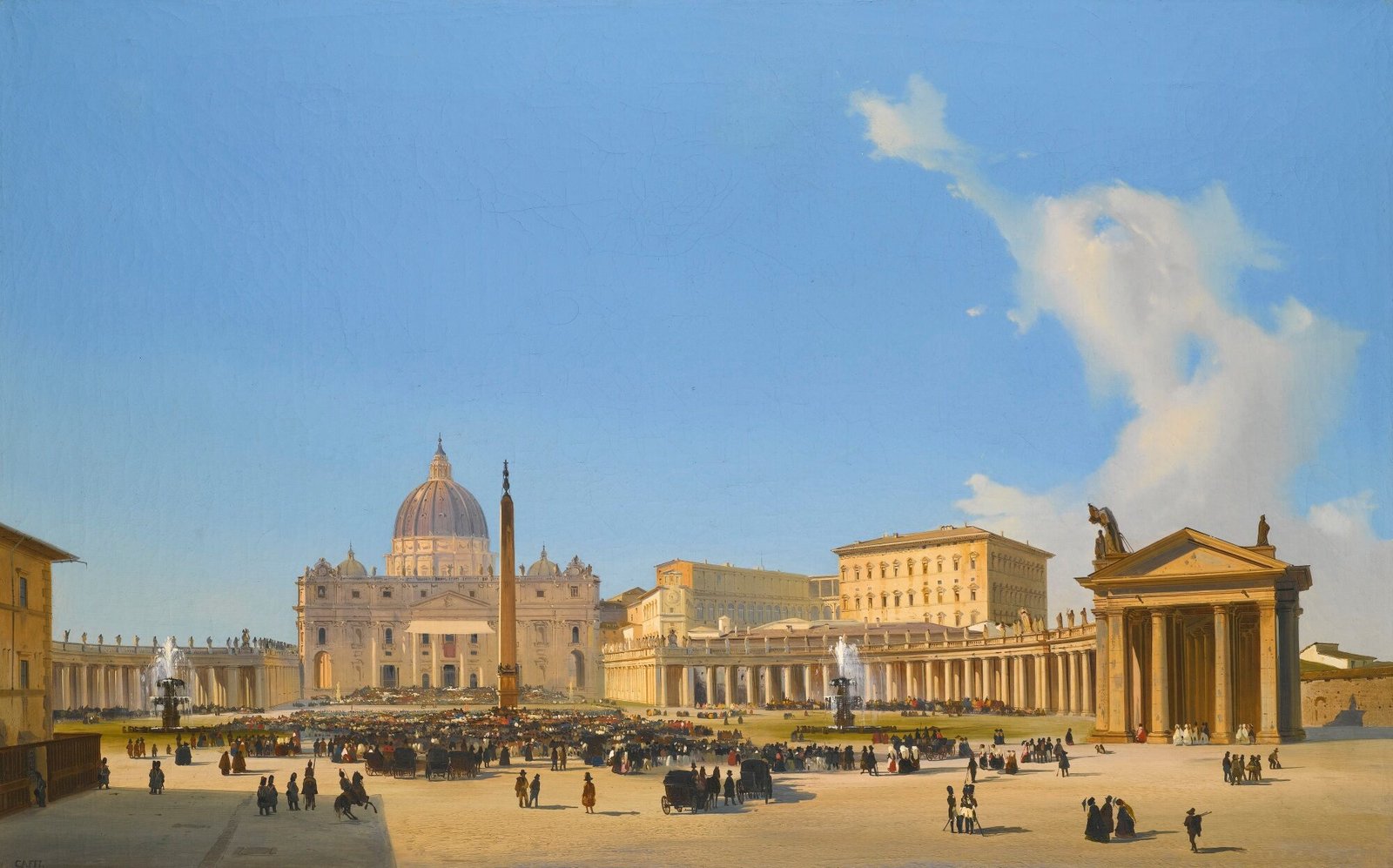
    Ippolito Caffi's painting of crowds gathered for a papal audience at St Peter's Square
    Crowds gathering for a papal audience at St Peter’s, painted by Ippolito Caffi in the 19th century. The scene, and the disappointment of finding it cancelled, is older than any of us. Public domain via Wikimedia Commons.

    Someone builds a Wednesday morning around the general audience, flies into Rome, and finds the square empty. It happens more often than people expect, and not because anything went wrong. Behind the empty piazza is a calendar with real, recurring gaps, and knowing the pattern lets you check before you commit a whole trip to a single Wednesday.

    The one gap you can set a calendar by

    Every July, without exception, the Wednesday general audience stops. This is not a rumour or a one-year fluke. Vatican Press Office bulletins confirm it as standing practice going back years, stating plainly in one from July 2022: “Wednesday General Audiences, as usual, are suspended for the entire month of July. They will resume on 3 August.” That phrase, “as usual,” is doing the work. It describes a custom, not a one-off announcement.

    2026 followed the same pattern. Pope Leo XIV suspended audiences for the whole of July while resting at Castel Gandolfo, then resumed on Wednesday 5 August. OSV News reported it directly: “Pope Leo will also resume his weekly Wednesday general audiences in August, after suspending them for the month of July.” Rather than a quiet return, August 2026 filled with a public Mass at a different location each week: Assisi on the 6th, Castel Gandolfo on the 15th, Rimini on the 22nd, and a Mass at “Church of Our Lady of the Lake” on the 29th, described in the same report as “a public Mass every week of August.”

    What the official calendar shows for 2026

    News coverage is one thing; the Vatican’s own paperwork is another, and it agrees. Their audience index for 2026 lists every catechesis by date, and between 24 June and 5 August it lists nothing at all. No placeholder, no explanatory note, just a jump straight from late June to the resumption entry: “General Audience of 5 August 2026 – Catechesis. The Documents of the Second Vatican Council. III. Constitution Sacrosanctum Concilium. 5. The prayer of the Church.” A blank month on a Vatican-run index is close to an official statement in its own right, and it matches exactly what the press bulletins describe.

    July isn’t the only gap

    Two shorter stretches in the same 2026 index are worth flagging, mostly so nobody assumes the calendar runs weekly the other eleven months. After 8 April, the next listed audience jumps to 29 April, skipping both 15 and 22 April entirely. That 29 April entry carries the title “The Apostolic Journey in Algeria, Cameroon, Angola and Equatorial Guinea,” which spells out the cause directly: an overseas trip disrupted the usual sequence. A second, shorter gap sits between 18 February and 4 March, with nothing on 25 February and no explanation offered there either. Read these as reminders that the weekly rhythm bends around the pope’s travel, not as confirmed causes for each missing date.

    Health can cancel an audience on short notice

    There is precedent, from the previous pontificate, for illness cancelling scheduled audiences with almost no warning. During Pope Francis’s hospitalisation in February 2025, the Vatican pulled a run of scheduled events, general audiences included, citing what was reported as “his complex clinical picture requires an adequate time of treatment in the hospital.” That example belongs to the Francis era, not Leo XIV; nothing under the current pope has been cancelled for health reasons so far. Still, it’s worth knowing the calendar can shift for reasons that have nothing to do with July custom or travel, and that those shifts can land with very little notice.

    How to actually check before you book

    No dedicated “audience cancelled this week” page exists, official or otherwise, as far as we could find. Your best free option is the same index mentioned above: vatican.va publishes each week’s audience once it happens, so a missing entry for the coming Wednesday, combined with knowing whether you’re inside the July window, tells you most of what you need. Check it a few days out rather than months ahead, since the page only fills in as each week actually occurs, and a March booking checked in March won’t reflect an August calendar. Travelling in July, plan on the audience being off entirely rather than checking week by week for an exception that won’t come. Outside July, treat a missing entry three or four days before your Wednesday as reason enough to have a backup plan ready, not proof of a cancellation.

    Tickets cost nothing, whichever week you land in

    One thing stays fixed regardless of the calendar: audience tickets are free. Vatican.va is explicit that they are “always free of charge,” and since January 2025 they’ve been booked through the Prefecture of the Papal Household’s official portal rather than the old fax-request system it replaced. That portal is where you’d confirm a Wednesday is actually going ahead in the first place, since a live booking flow generally won’t let you reserve a slot that doesn’t exist. Anyone offering to sell you an audience ticket is worth being wary of, whatever week it is; the price alone tells you something is off.

    If the audience falls through, the morning isn’t wasted

    A cancelled Wednesday still leaves a free morning in a city that doesn’t run on the papal calendar. Vatican Museums hours sit on their own schedule regardless: 8:00am to 8:00pm Monday to Saturday, last entry at 6:00pm, plus a free morning on the last Sunday of the month from 9:00am to 2:00pm with last entry at 12:30pm. They’re closed on the other Sundays and on a handful of fixed dates, including 29 June and 14–15 August, so check those against your travel dates too. Arriving early still matters either way. Getting in well before the public rush, the same instinct that gets people to the audience gate ahead of time, is what keeps the Sistine Chapel from turning into a wall of shoulders an hour later.

    When the Wednesday doesn’t come together, a guided visit through the Museums and St Peter’s fills the same window without depending on anyone’s public schedule. Our Vatican tours page lists the current options, so a change of plan costs you nothing but a click.

  • Feast of Saints Peter and Paul: Rome’s Local Holiday and the Vatican

    19th-century painting by Ippolito Caffi showing crowds gathered for a papal audience at St Peter's, the kind of crowd the June 29 feast still draws today
    Ippolito Caffi’s painting of crowds waiting for a papal audience at St Peter’s — much the same square fills for the June 29 Mass today. Public domain via Wikimedia Commons.

    Rome closes for very few days a year, and June 29 is one of them. Shops pull down their shutters, offices empty out early, and the city marks the Solemnity of Saints Peter and Paul, its two patron saints, with the hush usually reserved for mid-August. Walk through the centre that morning and it can feel like a Sunday dropped into the middle of the week. Cross into Vatican City and the closure follows you: the Vatican Museums shut their doors for the same feast, while St Peter’s Basilica and the square outside it become the busiest place in Rome.

    A Roman holiday the Vatican shares

    June 29 is a civic and religious holiday for the city of Rome, tied to the feast of its two patron saints. It is also, officially, a closure day on the Vatican Museums’ own calendar: the two institutions mark the same date rather than running on separate clocks. This is the detail worth knowing before building a June itinerary: a date that reads as a dead day for sightseeing in the historic centre is also a dead day for the Sistine Chapel and the Raphael Rooms, once you cross the line at St Peter’s Square.

    Why the Museums are closed

    The Vatican Museums publish a short, fixed list of annual closures: January 1 and 6, February 11, March 19, April 6, May 1, June 29, August 14 and 15, November 1, and December 8, 25 and 26, according to the Museums’ own hours page. June 29 — the Solemnity of Saints Peter and Paul — is on that list by name, not an exception to it. The Museums do not run their standard Monday-to-Saturday hours that day; the Sistine Chapel, the Raphael Rooms and the rest of the galleries are shut, the same as on Christmas Day or the Feast of the Assumption. If a Sistine Chapel visit is booked for June 29, it needs to move to a different date.

    A Mass that reshapes St Peter’s Square

    What does happen on June 29 is liturgical, and it happens outdoors. The Solemnity of Saints Peter and Paul brings a papal Mass in St Peter’s Square, celebrated this year by Pope Leo XIV, elected in May 2025 as the successor to Peter the feast itself commemorates. Tens of thousands of people can gather for it, filling the piazza in front of the basilica the way they do for Easter or a canonisation. That crowd builds around the square and the basilica doors; it has nothing to do with the Vatican Museums, which are simply closed for the day rather than disrupted by the Mass.

    Pallium day, reworked since 2015

    Traditionally, June 29 is also when newly created metropolitan archbishops receive the pallium, a woollen band worn over the shoulders that marks their office. As one account of the feast puts it, “newly created metropolitan archbishops receive from the pope the primary symbol of their office, the pallium.” For decades that meant kneeling in front of the pope in St Peter’s on the day itself. Pope Francis reworked that arrangement in January 2015: from then on, “the pallia will be blessed on the feast of Saints Peter and Paul in Saint Peter’s Basilica; the metropolitan archbishops, however, will receive those pallia in a separate ceremony within their home dioceses from the hands of the Apostolic Nuncio.” The blessing stayed in Rome; the actual conferral moved to each archbishop’s own cathedral, months or years apart from June 29 itself. Exactly how the ceremony runs under Pope Leo XIV wasn’t something we could pin down to a primary source at the time of writing, so treat the specifics as worth checking closer to any visit built around the feast.

    What it means for basilica access

    From June 1, St Peter’s Basilica runs longer hours: “from june 1st: from 7.00 am to 8:00 pm,” according to its own hours page, with the dome open 7:00am to 6:00pm through late October. The basilica’s official schedule does not spell out a separate closure or restricted window for June 29 itself. What it can’t fully capture is what a papal Mass for tens of thousands of people does to the practical business of getting inside a working church that morning: queues reroute around barriers, seating areas for the Mass occupy ground normally open to visitors, and security screening slows to match. None of that is published in advance as a fixed rule, so the honest answer is to expect a disrupted morning near the basilica on the feast, not to expect a specific hour-by-hour schedule.

    Crowd mechanics: where to go when

    Here is the practical split. The Vatican Museums, entered from Viale Vaticano on the north side of the walls, are closed for the day — there is no version of June 29 where a Sistine Chapel visit happens as planned, so move that booking to the day before or after rather than hoping for an exception. St Peter’s Basilica stays open on its own schedule and is the part of the visit to treat with caution for a different reason: if the plan is to see the basilica interior rather than attend the Mass, mid-afternoon, once the liturgy has wrapped up and the crowd has thinned, tends to work better than a 9am arrival. Anyone actually curious about the ceremony itself should simply go and watch from the square; it is a public Mass, not a closed event, and standing at the edge of a crowd that size is its own kind of Rome experience.

    Timing around the free Sunday

    One more wrinkle worth knowing about: the Vatican Museums open free of charge on the last Sunday of most months, and the Museums’ own hours page flags the feast as a factor in that calendar, noting that the free Sunday “does not coincide with Easter Sunday, 29* June Sts. Peter and Paul.” In practice this means the free-entry Sunday can be adjusted in months where it would otherwise land on or near the feast. If a visit is built specifically around that free admission, it is worth a direct check of the current month’s schedule before travelling, rather than assuming the last Sunday works the same way every year.

    Planning the day

    The short version: June 29 shuts down civic Rome and the Vatican Museums together, so a Sistine Chapel or Raphael Rooms visit booked for that day needs to move — to the day before, the day after, or any date that isn’t one of the Museums’ fixed closures. St Peter’s Basilica and the square outside it are the other complication, where a papal Mass for the city’s patron saints redraws the morning’s foot traffic for a few hours; save a basilica visit for the afternoon if the Mass itself isn’t the point. Plan the Museums around the feast rather than on it, and June 29 becomes a logistics note rather than a wasted trip. For a Museums entry that skips the ticket-office queue on whichever day the visit lands, it’s worth booking ahead through Vatican Museums tickets before you go.

  • Is the Vatican Still Busy From the Jubilee Year in 2026?

    The Cortile della Pigna in the Vatican Museums, a courtyard on the standard visitor route
    The Cortile della Pigna, one of the open courtyards on the Vatican Museums route. Photo via Shutterstock.

    Every few weeks someone books a Vatican tour and asks the same thing: is it still Jubilee-level busy in there? On paper, that’s a fair question to ask. A Holy Year draws pilgrims by the tens of millions, and a surge that size doesn’t feel like it should switch off overnight. But the Jubilee did close, on a fixed date, months ago. What follows isn’t a guess about crowd counts nobody has published. It’s a look at what actually changed at the gates once the Holy Door shut, using the Vatican’s own published operating details rather than a vague memory of how packed things felt last spring.

    When the Jubilee actually ended

    The 2025 Holy Year ran from Christmas Eve 2024 to Epiphany. St Peter’s Basilica opened its Holy Door on 24 December 2024 and closed it on 6 January 2026, a fixed date rather than a gradual wind-down. If you’re reading this in October 2026, the Jubilee has been over for more than nine months. That gap matters more than it sounds. A pilgrimage year with a hard closing date isn’t a slow fade-out; it’s a scheduled event that stopped happening, and staffing, hours, and access all changed along with it.

    For scale, the official tally puts total participation at 33,475,369 pilgrims from 185 countries across the Jubilee, averaging roughly 90,000 pilgrims in Rome each day of the Holy Year. More than 545,000 pilgrims passed through in the opening fortnight alone, and the first month topped 1.3 million. Those figures explain why the “still busy” assumption took hold in the first place: a surge that size leaves an impression that lingers well past the event itself. They also describe a period with a defined end, one that closed the better part of a year ago.

    No extended hours, no special provisions

    One of the clearest signals that operations have returned to standard is what the Vatican Museums’ own hours page says right now. It lists Monday to Saturday opening from 08.00 a.m. to 08.00 p.m., with last entry at 6:00 p.m. and a rule that visitors must leave the halls 30 minutes before museum closing time. A separate, shorter free-admission schedule applies on the last Sunday of each month: 09.00 a.m. to 02.00 p.m., last entry 12:30 p.m.

    Nothing on that page flags Jubilee-era adjustments, extended evening slots, or any special 2026 provision tied to Holy Year overflow. This is the ordinary, year-round Vatican Museums timetable, the one that was in place before the Jubilee and the one you’ll walk into now. If the Museums were still absorbing pilgrimage-scale demand, this is exactly where it would show up first, since extended hours are the standard lever for handling a known surge. It simply isn’t there, which tells you as much as any headline number would.

    Closure days are back to the regular list

    Closure dates tell a similar story. Museums staff shut the galleries on Sundays (aside from that one free last Sunday a month), plus a fixed list of Italian and Vatican holidays: 1 and 6 January, 11 February, 19 March, 6 April, 1 May, 29 June, 14 and 15 August, 1 November, and 8, 25 and 26 December. This is the standard annual closure pattern the Museums run every year, Jubilee or not, unchanged from before the Holy Year began. There’s no sign of a compressed or extended calendar built around lingering pilgrimage demand.

    Tickets are priced the same as they were before the Jubilee

    Prices haven’t moved either. An official rate sheet lists full adult admission at €20.00 without online booking, and a reduced rate of €10.00 without online booking, with a €5.00 surcharge added to either tier for skip-the-line online booking. No 2026 price change notice appears on the official pages, and no Jubilee-era surcharge was layered on top of the base rate. Venues under sustained demand pressure tend to raise prices or add booking surcharges to manage flow. Neither has happened here.

    St Peter’s Basilica: same hours, same dome schedule

    St Peter’s Basilica publishes its own hours separately from the Museums, and they read the same way. From 1 June, the Basilica opens from 7:00 am to 8:00 pm. Climbing the dome, which tends to be the actual bottleneck on a hot day, runs on a summer season from 29 March 2026 to 25 October 2026 with 7am to 6pm access; the prior winter season ran 7:30am to 5pm. Again, nothing here reads as a Jubilee holdover. It’s the seasonal pattern the Basilica has followed for years, with the calendar simply naming the current 2026 dates.

    Papal audiences: a summer break, not a crowd symptom

    Under Pope Leo XIV, whose pontificate began on 8 May 2025, the Vatican’s own audience calendar shows no general audiences in July 2026 and only one in August, on the 5th. That’s easy to misread as some kind of post-Jubilee scaling-back. It isn’t. Popes have paused general audiences over the summer for years, well before this Jubilee, and the pattern here matches that long-standing rhythm rather than anything new. A gap in the audience calendar in July says nothing about how many people are walking through the Museums that same week.

    So what actually changed once the Jubilee closed

    Here’s the honest version, without inventing numbers nobody has released. No official Vatican statement directly addresses whether Jubilee-level attendance has continued into 2026, and no current daily or monthly visitor figures for the Museums or Basilica are publicly available to compare against the Holy Year peak. Anyone telling you they know today’s exact queue length or ticket-sales count is guessing, and we won’t pretend otherwise.

    What can be checked is the operating structure around the visit, and every piece of it points the same direction. Hours are the pre-Jubilee standard. Closure days match the usual annual list. Ticket prices sit at their long-standing rate with no surcharge added for demand. Basilica and dome access follow their normal seasonal schedule, unchanged from before the Holy Year. None of these are decorative details; they’re the tools an institution reaches for when it needs to manage sustained overcrowding, and none of them show signs of a site still under Jubilee-scale pressure.

    None of this means the Vatican Museums sit empty. August in Rome brings its own crowds regardless of any Holy Year, and popular slots like mid-morning entry or the first hour after opening still fill up on ordinary weeks. What’s changed is the nature of that demand: it’s now ordinary tourist volume, not a pilgrimage event layered on top of it. A visitor arriving at opening time on a Wednesday or Thursday, holding a booked slot rather than joining a walk-up queue, will get through the same door that 90,000-a-day Jubilee pilgrims once queued for, minus the Jubilee. Wait times shrink when the extra layer of pilgrimage traffic simply isn’t there anymore.

    It also helps to remember why the confusion persists. A single record-breaking year tends to reset people’s mental baseline for what “normal” looks like at a major site, and it takes a while for that baseline to reset back. Nothing in the Vatican’s published schedule was built to sustain 90,000 extra visitors a day indefinitely, because it was never meant to. Once the Holy Door closed, the infrastructure that supported it, from extended access windows to any informal crowd-management measures, had no reason to stay in place.

    Planning a visit now

    If the lingering “is it still packed” worry has been holding up your planning, the calendar itself gives the answer: the Holy Door closed on 6 January 2026, and every operational detail since then, from hours to prices to the dome schedule, reads as a site back on its standard rhythm rather than one still absorbing a historic pilgrimage. Book for the season you’re actually visiting in, not for the Jubilee crowds you remember reading about. For a guided visit built around the current, non-Jubilee pattern rather than last year’s numbers, our Vatican tours work from today’s opening times and entry windows, not the ones from the Holy Year.

  • April in Rome: Why Easter Timing Makes or Breaks Your Vatican Visit

    The Cortile della Pigna in the Vatican Museums, a courtyard on the standard visitor route
    The Cortile della Pigna, one of the open courtyards on the Vatican Museums route. Photo via Shutterstock.

    April has a reputation as the best month to see Rome before summer heat sets in, and most years that reputation holds. What it does not hold is a fixed shape. Easter moves every year, sometimes landing in late March, sometimes stretching into the third week of April, and the date shift drags an entire cluster of closures, free-entry days and pilgrim crowds along with it. Book the “same” April week two years running and you can get two very different visits.

    Easter is not a fixed date, and that matters more than you’d think

    Easter Sunday can fall anywhere between 22 March and 25 April, calculated from the first full moon after the spring equinox. Recent and upcoming dates make the swing obvious: 2025 fell on 20 April, 2026 falls on 5 April, 2027 falls on 28 March (not in April at all), 2028 falls on 16 April, 2029 falls on 1 April, and 2030 lands on 21 April. A trip planned for “mid-April” could sit right before Easter, right after it, or nowhere near it, depending purely on the year you happen to be travelling.

    Why it matters for a Vatican visit specifically: the Museums build parts of their calendar around Easter, not around the calendar month. Holy Week draws large numbers of pilgrims to St Peter’s Square regardless of what else is happening that week, and the Museums themselves adjust opening patterns around the date. Treating April as one predictable month, the way you might treat a beach destination’s dry season, is the mistake worth avoiding here.

    Your free Sunday might not happen this year

    Vatican Museums policy gives free admission on the last Sunday of every month, with one specific exception. Their official hours page states it plainly:

    “From Monday to Saturday 08.00 a.m. – 08.00 p.m. (final entry 06.00 p.m.) Every last Sunday of the month (provided this does not coincide with Easter Sunday, 29* June Sts. Peter and Paul, 25 December Christmas Day, 26 December Feast of St. Stephen and 31 December Feast of St. Sylvester) 09.00 a.m. – 02.00 p.m. (final entry 12.30 p.m.) Free entry”

    Notice that Easter Sunday sits at the top of that exclusion list. In most years the last Sunday of April is an ordinary free-entry morning, capped hours from 09:00 to 14:00 with final entry at 12:30. In a year where Easter Sunday happens to land on the last Sunday of the month, that free window simply does not exist. It is worth checking which Sunday counts as the “last Sunday” for your travel year before building an itinerary around it, since a free morning also tends to draw the heaviest crowds of any regular opening day, Easter or not.

    Closure lists get rewritten every year around the moving date

    This is the clearest evidence that the Museums treat Easter as a recalculated event rather than a fixed date on the wall calendar. Their current official closure list, titled “Vatican Museums Openings/Closures 2026,” reads:

    “Closures Sunday (except the last Sunday of each month, if not in conjunction with the Feast of 29* June, Saints Peter and Paul) 1 and 6 January 11 February 19 March 6 April 1 May 29* June 14 and 15 August 1 November 8, 25 and 26 December”

    Six April 2026 is Easter Monday, since Easter Sunday 2026 falls on 5 April. Rather than label it “Easter Monday,” the Museums publish the numeral date, and that number moves on each year’s version of the page because Easter moves. A traveller working from a saved screenshot or an old blog post could easily assume the Museums are open on a date that is a scheduled closure this year, or the reverse. Checking the current year’s published calendar, not a remembered date from a previous trip, is the only reliable approach.

    Standard hours, so you know what normal looks like

    Outside the exceptions above, Vatican Museums hours run Monday to Saturday from 08:00 to 20:00, with final entry at 18:00. Visitors are required to leave the halls thirty minutes before closing, so plan your last gallery accordingly rather than arriving at 19:45 expecting a full circuit of the Sistine Chapel. If your April trip lands on a Sunday that is not the last one of the month, keep in mind the Museums are simply closed, which catches out more visitors than the Easter question ever does. Sundays deserve a second look on any Rome itinerary for exactly this reason.

    Tickets, prices, and where not to buy them

    A full entry ticket costs €20.00 without online booking, or €20.00 plus a €5.00 booking fee for the “Skip the Line” option. Reduced tickets run €10.00 without booking, or €10.00 plus €5.00 booked online; reduced school tickets are €5.00, or €5.00 plus €2.00 online. Every entry ticket “entitles the visit to the Museums and Sistine Chapel solely on the day on which the ticket is issued,” and none of these fares are refundable, so a date change forced by a shifting Easter week means buying a fresh ticket rather than adjusting the old one.

    Where you buy matters too. Officially: “The only official site for purchasing tickets online is https://tickets.museivaticani.va. Please beware of potential scams and websites that use domains similar to the official one, which may charge significantly higher prices.” Around Easter, when demand for Rome accommodation and attractions spikes, look-alike ticket sites tend to surface more often in search results. Confirming the seller before entering card details takes thirty seconds and saves a genuine headache later.

    Other dates worth checking, not just Easter

    Easter is the moveable feast that reshapes April specifically, but it is not the only date on the Museums’ calendar that shifts or catches visitors off guard. Castel Gandolfo’s museum complex runs partial or full closures in mid-to-late August, and the Necropolis excavation office beneath St Peter’s closes on Sundays and on Vatican holidays such as the mid-August Ferragosto break, a list published and reissued every year rather than fixed. None of that touches an April trip directly, but it confirms a pattern worth remembering: this site’s closures are tied to specific published dates rather than vague seasonal guidance, and those dates get updated annually. Whatever month you are travelling in, pulling the current calendar beats relying on what worked last year.

    A short checklist before you lock in an April date

    Four things are worth confirming, ideally a few weeks before booking flights. First, find out where Easter Sunday falls in your travel year rather than assuming it matches a previous trip. Second, check whether your intended dates include the last Sunday of April, and whether that Sunday coincides with Easter Sunday, which cancels the free-entry morning. Third, pull the current year’s official closures list rather than relying on last year’s, since the moveable dates get recalculated annually rather than staying put. Fourth, book Sistine Chapel and Museums access ahead of Holy Week specifically, since pilgrim volume around Easter pushes queue times up independent of the general April crowd pattern.

    None of this requires special access or insider knowledge. It requires checking a published calendar against the actual year you are travelling, which is the one step a lot of April trip planning skips entirely.

    Booking around the swing

    April rewards planning precisely because it is not one predictable month, it is a window that reshuffles around a date nobody fixes years in advance. Once you have confirmed where Easter falls and cross-checked the current closures list, the practical next step is locking in Vatican tickets for a date and time slot that actually matches the calendar you are travelling into.

  • Vatican Museums in October: The Shoulder Season That Isn’t Secret Anymore

    The Cortile della Pigna in the Vatican Museums, a courtyard on the standard visitor route
    The Cortile della Pigna, one of the open courtyards on the Vatican Museums route. Photo via Shutterstock.

    Search “visiting the Vatican Museums in October” and you’ll get a wall of near-identical advice: shoulder season, cooler weather, thinner crowds, book now while everyone else is still planning a June trip. Some of that holds up. The part about thin crowds does not, and repeating it without qualification sends people into the Sistine Chapel expecting elbow room they won’t get.

    What “shoulder season” actually means here

    Shoulder season is a real pattern at plenty of destinations: the weeks between peak summer and the drop into deep winter, when hotel rates ease and flights get cheaper. October in Rome fits that description for hotels and airfares. It does not automatically fit it for the Vatican Museums, because the thing driving Museum crowds isn’t temperature. It’s who’s off school and who’s in town for work.

    That distinction gets flattened in most write-ups, and it’s the reason the “little-known secret” framing keeps circulating even though nobody at the Vatican has ever published anything to support it. Checked directly against the Museums’ own hours page and homepage, neither one frames any month as quieter, recommended, or off-season. That framing is entirely a travel-blog invention.

    Half-term breaks complicate the picture

    October carries school holidays across a chunk of Europe. France’s autumn break, the Toussaint, sits around mid-October most years — one zone’s break has historically started near the 18th, per the general pattern documented for French school calendars. Britain runs its own half-term in the same window. Neither country publishes its exact 2026 dates far enough in advance for a guide like this to quote a specific day with confidence, and we’re not going to pretend otherwise. What can be said is structural, not date-specific: October reliably overlaps with a school holiday for two of Europe’s largest source markets for Rome tourism, and that overlap has nothing to do with the weather cooling down.

    Families travelling on half-term don’t spread evenly across the month either. They cluster hard around the actual break dates, which means a Tuesday in early October can run noticeably lighter than a Saturday in the third week, even though both fall under the same “shoulder season” label.

    Conference tourism nobody mentions

    Rome runs a steady calendar of conferences, trade fairs, and congresses through the autumn, the kind of business travel that fills hotels without ever showing up in a “best time to visit” listicle. We don’t have a verified source for a specific October 2026 events calendar, so no claim here about particular dates or numbers. But anyone who has walked past a business hotel near Termini in October and seen lanyards and roller bags stacked in the lobby knows this segment exists, and it adds bodies to the city that have nothing to do with school terms or beach weather. Combine that with half-term families and you get a month that reads as “off-peak” on a spreadsheet of average temperatures and reads as fairly full on the ground.

    What genuinely does ease off

    None of this means October is a bad time to go, or secretly as bad as August. A few things really do work in your favour. The heat that makes July and August miserable for standing in an outdoor queue is gone by October, which matters more than it sounds for a visit that starts with waiting outside the Museums walls. Cruise-ship day-trippers, a major summer contributor to Rome’s crowds, taper off as the season winds down. And there’s no red “GIORNO DI CHIUSURA” — closure day — anywhere on the official October 2026 calendar, so the only closed days that month are the standard non-final Sundays: the 4th, 11th, and 18th.

    The honest version of the shoulder-season pitch is comparative, not absolute: October beats July on heat and cruise traffic, and it beats December on daylight and opening hours. It doesn’t beat a random Tuesday in January, and nobody should book it expecting that.

    Building an October visit around the actual pattern

    If crowd density is your main concern, work with the calendar rather than the season label. Aim for weekday mornings outside the obvious half-term windows if you can shift your trip by a few days either way. Museums hours don’t change for autumn: Monday to Saturday it’s “08.00 a.m. – 08.00 p.m.”, with final entry at 6:00 p.m. and a requirement to “leave the halls 30 minutes before museum closing time.” Getting there at opening still buys you a head start on whatever volume the day brings, half-term or not.

    October’s last Sunday, the 25th, is free-entry day: “09.00 a.m. – 02.00 p.m.”, final entry 12:30 p.m. Free admission on a day that already overlaps the tail end of half-term season is a combination worth naming plainly: skip it if avoiding queues is the priority, and go for it only if the free ticket matters more to you than space.

    Dome hours shrink right as the month ends

    One October-specific detail worth flagging for anyone pairing the Museums with St Peter’s: the dome’s extended summer schedule, “7am – 6pm”, runs from 29 March through 25 October 2026, then drops back to winter hours of “7.30am – 5pm” the very next day. A trip planned for the last week of October should check which side of the 25th it falls on before assuming the longer window applies. Guided tour and dome registration for the Basilica runs “Monday to Saturday, from 9:30 a.m. to 5:30 p.m.”, with Sunday and Vatican-holiday registration limited to a shorter 1:30–3:30 p.m. slot.

    Tickets themselves don’t shift by season. A standard adult ticket is “€ 20.00 (without online booking)”, or “€ 20.00 + 5.00 (with booking on the official Vatican Museums website)” for skip-the-line entry, with reduced tickets at €10.00 plus the same €5.00 booking fee if bought online.

    Set the right expectation before you land

    The useful version of “October is shoulder season” isn’t a promise of empty galleries. It’s a modest, real advantage over the true peak months, undercut by two crowd sources — European half-term travel and conference-driven business tourism — that the generic advice leaves out entirely. Go in October for the weather and the shorter cruise-ship footprint. Don’t go expecting to have the Sistine Chapel to yourself, because the calendar doesn’t back that up, whatever the last blog post you read implied.

    If you’d rather not gamble your entry time on how a given October week happens to land, you can book a fixed slot through our Vatican tours and skip guessing which Tuesday is the quiet one.

  • January in Rome: The Quietest Month to See the Sistine Chapel

    Michelangelo's Sistine Chapel ceiling, photographed with the room clear of crowds
    Michelangelo’s ceiling as it looks with space to actually stand still and look up — the kind of view January makes easier to get.

    Rome empties out in January. Christmas lights come down, the last of the New Year visitors fly home, and the city settles into a grey, quiet stretch that runs almost to Carnival. For most travellers that sounds like a reason to skip Rome entirely. For anyone who actually wants to look at the Sistine Chapel ceiling rather than shuffle beneath it, it is the best argument in the calendar.

    Why the post-holiday lull matters

    Vatican Museums crowding follows the rhythm of school terms and package-tour season, and January sits in the dead zone between them. By January, the Christmas and New Year rush has cleared out, Easter is still months away, and the big coach-tour season from spring through early autumn hasn’t started. No official monthly attendance breakdown is published, so nobody, including us, can hand you a precise January number. What can be said with confidence is structural: this is the one month with no major school holiday overlap in most of Europe or North America, no Easter pilgrims, and weather cold enough to deter the casual day-tripper who might otherwise wander in.

    That structural gap is why January turns up again and again in advice from people who visit the Museums regularly, guides included. It isn’t a guarantee. It’s a pattern worth building a trip around.

    What the cold is actually doing for you

    Rome in January isn’t brutal by northern-European standards, but it is properly cold and often damp, and that keeps a certain kind of visitor away entirely. The tourists who come for gelato in St Peter’s Square and a stroll through the Borgo don’t tend to book a January flight. The ones who do come in January are disproportionately people with a specific reason to be there: art history students, researchers, locals taking advantage of the last-Sunday free opening, and travellers who deliberately picked the month for exactly this reason. Fewer casual visitors means fewer bodies in the corridors between the entrance and the Sistine Chapel, which is where the bottleneck usually forms.

    What the Sistine Chapel actually feels like

    On a packed spring afternoon the Sistine Chapel is loud, warm, and dense enough that finding a spot to stand and look up for more than a few seconds takes some manoeuvring. Guards move people along the walls to keep the flow going. Conversation is a low continuous murmur punctuated by “silenzio” from the attendants. None of that is a complaint about the room itself, which is extraordinary regardless, but it does shape how much time you get with the ceiling versus how much time you spend navigating other people.

    A quieter room changes that arithmetic. With fewer people between you and the altar wall, you can walk the length of the chapel, stop under the Creation of Adam, then move to stand beneath the Last Judgement and actually take in Michelangelo’s composition without a shoulder in your eyeline. The frescoes don’t change with the season. What changes is how much of the room is yours for those few minutes.

    The practical shape of a January visit

    Vatican Museums hours don’t shift for winter. Monday to Saturday the Museums run 8:00 a.m. to 8:00 p.m., with final entry at 6:00 p.m. Arriving close to opening still gets you ahead of whatever midday flow does build up, January or not.

    Two dates need flagging on the calendar. The Museums are closed on 1 January and 6 January, both public holidays in Italy, so don’t plan a visit around either date. The last Sunday of the month keeps its usual slot regardless: 9:00 a.m. to 2:00 p.m., final entry 12:30 p.m., with free admission. January’s last Sunday isn’t one of the dates the Vatican suspends that opening for (those exceptions are Easter, 29 June, and the days around Christmas), so it runs as normal. Free admission plus a quiet month sounds appealing, but it also draws Rome’s own weekend crowd, students and residents included, so it isn’t automatically the emptiest day of the month. A regular weekday morning is the safer bet if space is the priority.

    Tickets and what they cover

    A standard adult ticket costs €20.00 at the door, or €20.00 plus a €5.00 booking fee if you reserve online in advance, which is worth doing even off-season since walk-up entry isn’t guaranteed. Reduced tickets are €10.00, plus the same €5.00 if booked online. One ticket covers both the Museums and the Sistine Chapel, valid only on the day it’s issued, and it can’t be refunded once purchased, so a settled travel plan matters more than the season does. Free admission is available on the last Sunday of the month, for children under seven, for visitors with a certified invalidity of at least 67%, and for ICOM/ICOMOS cardholders and certain academic categories.

    Book only through the Vatican Museums’ own site or a licensed reseller. Third-party resale scams circulate year-round, and a quiet month is not a reason to relax on that front.

    What January won’t give you

    Be honest with yourself about the trade-offs. Rome’s weather in January is a genuine unknown quantity to us without a verified source at hand, but it is winter in central Italy, so pack for cold and rain rather than the sun you’d expect in June. Some outdoor experiences around the city lose their appeal in the cold regardless of how empty the Museums are. And a quiet month doesn’t mean an empty one. The Sistine Chapel is one of the most-visited rooms on earth even at its calmest; the Vatican Museums as a whole drew 6.8 million visitors in 2024, ranking second worldwide among art museums after the Louvre. January thins that number. It doesn’t erase it.

    Making the most of a quiet month

    If January works with your travel plans, treat it as an opportunity rather than a compromise. Book your entry time for as close to opening as your schedule allows, keep the last Sunday in mind only if a free ticket matters more to you than elbow room, and remember that both January closures fall early in the month, so a visit planned for the third or fourth week avoids them without any extra thought.

    If you’d like your entry sorted before you land rather than gambling on a walk-up queue in the cold, you can book Sistine Chapel tickets in advance and go straight to a month when the ceiling has some room to breathe.

  • Watching Midnight Mass Crowds From Outside St Peter’s Square

    Evening light over St Peter's Square with the colonnade and basilica facade lit at dusk
    Evening falls on St Peter’s Square much as it does on Christmas Eve, when the crowd outside the barriers grows steadily after dark. Photo via Shutterstock.

    You do not need a ticket to stand in St Peter’s Square on Christmas Eve. You need warm layers, a plan for where to stand, and a realistic sense of what you will and will not see. Thousands of people do exactly this every year: they walk down from their hotel or apartment after dinner, join the crowd gathering beyond the barriers, and watch the night unfold on a screen rather than in person. It is not the same experience as holding a ticket to the Mass itself, and no honest guide should pretend otherwise. But it is a real one, and for a lot of visitors it turns out to be the more memorable of the two.

    What “without tickets” actually means here

    First, a correction to a common assumption: entry to the Pope’s liturgical celebrations, including Midnight Mass, is free. The Vatican’s own booking page for the laity states that tickets for General Audiences and papal celebrations are “always free of charge,” requested through the Prefecture of the Papal Household’s booking portal. So if you arrive without one, you have not been priced out of anything. You simply did not request one in time, did not know the process existed, or decided the planning overhead was not worth it for a trip built around other things. That is a completely normal way to end up outside the barriers rather than inside them, and it changes nothing about how good an evening you can still have.

    What you get without a ticket is the square itself, not a seat near the altar. There is a meaningful difference between the two, and it is worth being clear-eyed about before you commit an entire evening to standing outside in December.

    The atmosphere beyond the barriers

    Rome empties out a little on the evening of the 24th. Shops close early, restaurants fill up for family dinners, and the streets around the Vatican quiet down before the crowd starts building again later at night. People converge on the square in waves rather than all at once: families with children who will not last past nine, tour groups filing photos for the folks back home, solo travellers who wandered over on a whim after seeing lights on the dome from across the river. By the time the crowd has properly gathered, the mood is closer to a vigil than a concert. People talk in low voices. Some hold candles. Nobody is pushing to get anywhere, because there is nowhere further forward to go.

    That last point matters more than it sounds. Once the ticketed sections fill and the barriers close, the square outside them becomes its own self-contained space. You are not queuing for anything. You have already arrived at where you are going to be for the night.

    Screens, sightlines, and what you can realistically expect to see

    Large screens are standard practice at major papal events in the square, and Christmas Eve draws enough of a crowd that the outdoor viewing experience leans heavily on them rather than on a direct line of sight to the Basilica steps. From most positions beyond the barrier line, the screen will be your Mass. The obelisk at the centre of the square blocks a straight view down the nave axis from several angles, and the crowd itself, once it thickens, adds another few feet you cannot see over. None of this ruins the evening. It does mean you should set your expectations around watching, not glimpsing.

    The two obelisk fountains flanking the centre line offer slightly raised footing if you can find space near one early. Arrive with low expectations of finding a spot right against the barrier and you will not be disappointed if you end up further back with a screen between you and the altar.

    Timing: earlier than you might assume

    Midnight Mass has not actually started at midnight in Rome for well over a decade. The shift began in 2009 under Pope Benedict XVI, when the celebration moved to 10:00 p.m. “so that the 82-year-old Pope Benedict XVI would not have too late a night,” and the start time has crept earlier still in the years since, “as has been the case in the Vatican since 2009, first at 10:00 pm, then subsequently earlier in the evening.” We cannot confirm a specific hour for this coming Christmas Eve, and neither can most of the people you will meet in the square, so build slack into your evening rather than pinning it to a single number you read somewhere. What you can plan around is the shape of the night: an early-evening build-up, a gradual quieting as the service begins, and a crowd that starts to disperse well before what most people would consider a proper midnight.

    Arrive with at least ninety minutes of buffer before whatever start time you have heard. Crowds outside the barriers thicken from the edges inward, and the difference between arriving at a relaxed pace and arriving in a rush is usually the difference between finding a spot you like and taking whatever is left.

    Who runs security in the square that night

    One detail catches people off guard: St Peter’s Square sits entirely inside Vatican territory, yet ordinary crowd control there is normally handled by Italian police rather than Vatican security. Per the Lateran Treaty, “the area of St. Peter’s Square up to the foot of the steps leading to the Basilica, is subject to the authority of Italian police for crowd control even though it is a part of the Vatican state.” That arrangement shifts, however, once the Holy See is holding a special function of its own, such as a papal Mass: Italian police withdraw beyond the colonnade for the duration, and jurisdiction inside passes to the Vatican’s own authorities. Practically, this means the policing presence you see managing the outside crowd on Christmas Eve is not quite the same one running things once the liturgy is underway a few dozen metres away. It is a small piece of trivia, but it explains why the atmosphere at the very edge of the square can feel a step more formal than the open, milling crowd further back.

    What the Basilica interior is doing that night

    The Basilica itself is enormous even by the Vatican’s own standards, built to hold “60,000 standing and 20,000 seated,” and papal liturgies here or in the square have historically drawn “audiences numbering from 15,000 to over 80,000 people.” Christmas Eve will not fill every one of those places, but it draws a genuinely large gathering, which is part of why the outside crowd forms in the first place: plenty of people arrive knowing they will not get inside and choose the square anyway. For everyday visiting purposes, note that the Vatican Museums keep separate hours entirely from the Basilica and are closed on the 25th and 26th of December for the holiday itself, though there is no listed separate closure for the 24th. If your trip includes museum time, plan that for earlier in the week rather than assuming Christmas Eve itself will accommodate it.

    A practical alternative for the evening

    If a ticketed Mass matters to you specifically, the honest move is to apply through the Prefecture of the Papal Household well ahead of your trip rather than hoping for a spot on the day. If it does not, and you would rather spend Christmas Eve doing something with a guaranteed outcome, a daytime visit earlier that week removes all the uncertainty around timing, sightlines, and standing room. You get the Basilica’s interior properly lit, a guide who can point out what you are looking at rather than a screen relaying it from a distance, and none of the December cold that settles into the square after dark. Neither choice is wrong. One is a vigil you share with a crowd of strangers under an open sky; the other is a closer look at the building itself, on your own schedule.

    Whichever way you plan your Christmas Eve, it is worth locking in the Basilica visit itself well before you arrive, especially in a week as busy as this one. Our guided Vatican tours cover St Peter’s Basilica with a licensed guide who can walk you through it at a proper pace, no screens or standing crowds required.

  • Christmas Week Inside the Vatican Museums: What Actually Changes

    Michelangelo's Pietà inside St Peter's Basilica
    Michelangelo’s Pietà, inside St Peter’s Basilica. Photo via Shutterstock.

    Christmas week is not one schedule. It is eight or nine different days stitched together, and the Vatican Museums treat each of them differently. Some are shortened. Two are shut entirely. One turns free. If you are planning a visit anywhere between 24 December and New Year’s Day, the calendar matters more than the queue.

    Here is what actually changes, day by day, based on the Museums’ own 2026 closure calendar and hours page — not the generic “check before you go” advice you’ll find everywhere else.

    24 December: a half-day, not a closure

    Christmas Eve is not a closure day, though plenty of visitors assume it is and skip planning for it altogether. The Museums open at the usual 8:00 but run on a compressed schedule: last entry at 13:00, everyone out by 15:00. The official legend on the 2026 calendar reads “APERTURA • OPENING TIME 8.00 • 13.00 / CHIUSURA • CLOSING TIME 15.00.” Staff need the afternoon to prepare for the following two closed days, and Rome itself starts winding toward Midnight Mass by early evening.

    Practically, this means a morning visit only. If you book, aim for the earliest slot you can get and treat 13:00 as a hard cutoff for getting in the door — not for finishing your visit. Remember too that visitors “are required to leave the halls 30 minutes before museum closing time,” so the Sistine Chapel will be clearing out well before 15:00.

    25 and 26 December: fully closed

    Christmas Day and the Feast of St Stephen are both marked red on the official calendar — “GIORNO DI CHIUSURA • CLOSURE DAY.” No tickets, no early entry, no exceptions. The Museums’ standing closures list confirms it plainly: “8, 25 and 26 December.” If your itinerary has you in Rome on either date, this is the day to walk St Peter’s Square instead, or take in the Christmas Eve unveiling of the Nativity scene, which is traditionally revealed on 24 December even though the tree beside it usually goes up earlier in the season.

    St Peter’s Basilica is a separate building from the Museums with its own management, and its published hours page currently lists a single year-round schedule rather than holiday-specific times. Whether access is restricted around the Christmas Eve and Christmas Day liturgies wasn’t detailed on that page at the time of writing, so if the Basilica is central to your Christmas Day plan, it’s worth checking closer to the date rather than assuming normal hours apply straight through a papal Mass.

    27 December: the free Sunday nobody plans around

    This is the one date in the whole week that works in visitors’ favour. Vatican Museums admission is free on the last Sunday of every month, and the only exclusions are Easter Sunday, the Feast of Sts Peter and Paul, Christmas Day, St Stephen’s Day and New Year’s Eve. December 27, 2026 falls on a Sunday and lines up with none of those exclusions, so the free-entry rule applies in full: “09.00 a.m. – 02.00 p.m. (final entry 12.30 p.m.).”

    Free and shortened hours together mean this day draws a genuinely different crowd than a normal Sunday. Expect the queue for security to start early and move slowly, since walk-up demand on a free day is far higher than on a paid one and there’s no online booking fee to thin it out. If you want the free entry without the worst of the crush, arrive well before 9:00 and plan to be inside the Sistine Chapel section before mid-morning.

    28–30 December: back to a normal week

    Monday through Wednesday of that final week revert to the standard schedule: “From Monday to Saturday 08.00 a.m. – 08.00 p.m. (final entry 06.00 p.m.).” Nothing unusual is marked on the calendar for these three days, and this is genuinely the calmest stretch of Christmas week for anyone trying to see the Sistine Chapel without shuffling shoulder to shoulder. Tourist numbers in Rome stay high through the holidays, but with a full day of opening hours instead of a compressed one, the crowd has more time to spread out across the galleries rather than bottleneck at a single closing rush.

    This is also the window when a Wednesday papal general audience most often falls, and audiences pull a portion of the crowd toward St Peter’s Square in the morning rather than into the Museums. Whether a Wednesday audience happens on 30 December in 2026 hadn’t been confirmed on the official calendar at the time of writing, so treat it as a possibility worth checking closer to your travel dates rather than something to build a whole plan around.

    31 December: another short day

    New Year’s Eve mirrors Christmas Eve exactly on the official calendar. It’s marked in the same blue shorthand as 24 December: open at 8:00, last entry 13:00, exit by 15:00. If you’re spending New Year’s in Rome and want the Museums as part of the day before the evening’s celebrations, morning is your only real window, and the same 30-minutes-before-closing hall clearance applies.

    1 January: closed again

    New Year’s Day sits on the Museums’ fixed annual closures list alongside 6 January, and the 2026 calendar marks both dates red. A calendar specific to 2027 hadn’t been published as of this writing, so this is the recurring pattern rather than a confirmed line item for that exact date — but it has held every year without exception, and there’s no reason to expect 1 January to open. Plan New Year’s Day around the city rather than the Vatican, and treat 2 January as your next open day if the Museums are on your list.

    The Nativity scene and the square itself

    Even on the two fully closed days, St Peter’s Square stays open to the public, and this is where the season’s centrepiece actually lives. The life-size Nativity scene, a tradition dating back to 1982 under Pope John Paul II, is traditionally unveiled on Christmas Eve, while the tree that stands beside it — donated by a different European country or region each year — usually goes up in early December, well ahead of the crowds arriving for the holiday week itself. Neither the exact unveiling date nor the donor country for 2026 had been announced at the time of writing, which is typical; both are usually confirmed only a few weeks out.

    Worth knowing separately: the official calendar states that the Vatican Gardens and the Via Triumphalis Necropolis are always closed on Sundays and public holidays. That rule sits apart from the main Museums’ schedule above and catches out visitors who book a garden tour assuming it follows the same calendar as the galleries.

    Booking around the gaps

    The two closed days split the week cleanly into a before and an after. Visitors flying in for Christmas itself often assume they’ve lost their only shot at the Museums; in reality, the 27th, 28th, 29th and 30th give a four-day run with either free entry or full hours, and the 24th and 31st still offer a genuine half-day if that’s what your schedule allows. The one detail worth building your whole trip around is the 30-minute hall clearance before closing — on the shortened days that means your practical visiting window is closer to 8:00–14:30 than 8:00–15:00, especially if the Sistine Chapel is your priority and you don’t want to be rushed through it.

    Tickets bought directly avoid the booking fee, but during a week this compressed, the fee buys certainty rather than convenience — a locked entry slot on a day when a chunk of the normal opening hours has already been cut. If you’d rather not gamble on walk-up availability during the shortened days or the free Sunday, our Vatican Museums tickets page covers entry options for each of these dates so you can match the slot to the hours that actually apply that day.

  • Does the Vatican Museums Close for Easter Sunday?

    St Peter's Basilica facade seen from St Peter's Square, where the Pope gives the Urbi et Orbi blessing on Easter Sunday
    St Peter’s Basilica facade and square, where the Easter Sunday Mass and Urbi et Orbi blessing take place instead of a Vatican Museums visit.

    Short answer: the Vatican Museums are closed on Easter Sunday, every year, without exception. If you searched for this because you are planning a Rome trip around the holiday, the short version is simple. Skip the Museums that day and go to St Peter’s Square instead, where the Pope celebrates Easter Mass and delivers the Urbi et Orbi blessing. Below is why the closure happens. You will also find what replaces a museum visit that morning, plus how to plan the rest of your Easter week around it.

    Why the Museums are closed on Easter Sunday

    The Vatican Museums close every Sunday as a matter of standing policy. There is one narrow exception written into their own hours page: “Sunday (except the last Sunday of each month, if not in conjunction with the Feast of 29 June, Saints Peter and Paul)” opens for free admission from 9:00 a.m. to 2:00 p.m., with final entry at 12:30 p.m. That sounds like it might leave a loophole for Easter, since Easter sometimes falls on the last Sunday of March or April. It does not. That official rule spells it out directly: the free entry applies “provided this does not coincide with Easter Sunday, 29 June Sts. Peter and Paul, 25 December Christmas Day, 26 December Feast of St. Stephen and 31 December Feast of St. Sylvester.” Easter Sunday is named specifically as an exclusion, not inferred from the general Sunday rule. So even in a year when the calendar lines up, the museum stays shut.

    This holds every year, regardless of the date

    Easter is a moveable feast, landing anywhere between late March and late April depending on the lunar calendar. That variability is exactly why it matters that the Vatican names it explicitly rather than leaving it to fall under the ordinary last-Sunday rule. Whether Easter lands on 23 March or 25 April, the answer to “is the Vatican Museums open on Easter Sunday” is the same: no. This is not a fact tied to one particular year’s calendar, and you do not need to re-check it against a specific date before booking.

    What the regular hours look like the rest of the week

    Outside of Easter Sunday itself, the Museums run generous hours. Monday through Saturday the doors are open 8:00 a.m. to 8:00 p.m., with final entry at 6:00 p.m. Visitors are required to “leave the halls 30 minutes before museum closing time,” so plan your Sistine Chapel visit accordingly if you are coming late in the day. Good Friday and Holy Saturday, the two days immediately before Easter, follow these standard weekday hours and are open for visits, which makes them a sensible substitute if your itinerary has any flexibility.

    Fixed annual closures to know about separately

    Beyond the weekly Sunday closure, the Museums shut on a set list of fixed dates every year: “1 and 6 January, 11 February, 19 March, 6 April, 1 May, 29 June, 14 and 15 August, 1 November, 8, 25 and 26 December.” None of these ever coincide with Easter Sunday, since Easter moves independently of the fixed civil and liturgical calendar. Treat the Easter closure and this fixed-date list as two separate rules rather than one — you will need to check both if your trip touches early April, since 6 April sits close to typical Easter dates in some years.

    What to do instead: the Easter Mass and Urbi et Orbi blessing

    Easter Sunday morning in Rome has its own draw, and it happens a short walk from where the Museums entrance sits. Pope Leo XIV celebrates Easter Mass in St Peter’s Square, followed by the Urbi et Orbi blessing from the Basilica’s central loggia. According to the Vatican’s own events calendar, this is listed for 2026 as the Easter Message and “Urbi et Orbi” blessing, Central Loggia of the Vatican Basilica, at 12:00 p.m. on 5 April 2026.

    According to the Pontifical North American College’s visitors page, which tracks logistics for pilgrims attending, “NO tickets are needed to attend Mass with the Holy Father! The Mass will be in St. Peter’s Square on April 5, 2026, at 10:15 AM, followed by the Pope’s Urbi et Orbi blessing at 12 noon.” Both events are free and open to the public. Arrive early: security screening for the square fills up well before the Mass starts, and the PNAC guidance recommends being in position two to three hours ahead for Mass, or by 11:30 a.m. if you only intend to catch the midday blessing.

    What about St Peter’s Basilica itself that day

    The Basilica is a separate building from the Museums, with separate hours, and it is generally accessible on Easter Sunday around the Mass and blessing events. Its published general hours run from 7:00 a.m. to 8:00 p.m. starting 1 June, but there is no specific “Easter Sunday hours” line on the official page, since the square and Basilica access get reorganised that morning around the papal events themselves. Do not assume you can walk straight into the Basilica at a normal hour on Easter Sunday the way you might on an ordinary Tuesday; access will be shaped by the Mass schedule, and exactly when normal visiting hours resume that afternoon is not something the Vatican publishes in advance. If a Basilica visit matters to you specifically, build in a buffer day.

    Booking around the closure

    Once you know Easter Sunday is off the table, the practical move is to shift your Museums visit to the days flanking it. Good Friday and Holy Saturday both keep standard hours, and Easter Monday reopens as usual, though expect heavier demand that week generally since it overlaps with school holidays across much of Europe. If you book directly, use the Vatican’s own channel: “The only official site for purchasing tickets online is https://tickets.museivaticani.va. Please beware of potential scams and websites that use domains similar to the official one.” Prices on that portal change periodically, so check current figures there rather than relying on a number you saw elsewhere.

    If you would rather not deal with time-slot juggling during the busiest week of the Roman Catholic calendar, a guided visit with a fixed entry time on one of the open days removes most of the guesswork, and you can check current Vatican Museums hours and entry options before you settle on a date.

  • Holy Week at St Peter’s Basilica: What Closes Between Palm Sunday and Easter

    Michelangelo’s Pietà in its marble setting inside St Peter’s Basilica
    Michelangelo’s Pietà, inside St Peter’s Basilica. Photo via Shutterstock.

    Holy Week is the one stretch of the year when St Peter’s Basilica genuinely changes shape around you. Most weeks, the building runs on a predictable rhythm: security screening, nave, dome queue if you’ve booked it, done. Between Palm Sunday and Easter Sunday, that rhythm gets interrupted by a series of papal ceremonies, some inside the basilica and some in the square outside it, and each one pulls a chunk of the building off-limits to ordinary visitors for a few hours at a time.

    Nobody has published an official hour-by-hour schedule for Holy Week 2027 yet, and this piece won’t pretend otherwise. What follows is the pattern: which days carry a ceremony, roughly where in the building it happens, and what that means for whether you can just walk in.

    The dates, and why they’re not yet official

    Easter Sunday 2027 falls on 28 March, which puts Palm Sunday on 21 March, Holy Thursday on 25 March, Good Friday on 26 March and Holy Saturday on 27 March. Those dates come from the standard Gregorian calculation used to fix Easter every year, not from a Vatican announcement. As of this writing the Vatican has not released a 2027 liturgical calendar confirming times or locations for any of these ceremonies. Treat the dates as reliable and the details below them as the usual pattern rather than a confirmed timetable.

    One thing that is confirmed: the current pope is Leo XIV, whose election and installation dates are listed on vatican.va as “8,18.V.2025”. Any Holy Week ceremony you read about for 2027 will be presided over by him unless the Vatican announces otherwise closer to the date.

    Palm Sunday: Mass outdoors, basilica mostly unaffected

    Palm Sunday Mass is traditionally celebrated in St Peter’s Square rather than inside the basilica, which is good news if you’re trying to visit the interior that morning. The ceremony draws a large outdoor crowd and closes off sections of the square itself, but it doesn’t require shutting the nave to sightseers the way an indoors papal liturgy does. If you’re in Rome on 21 March 2027, expect the square to be busy and partly fenced for the Mass, with the basilica interior likely operating close to its normal hours once the outdoor service wraps up. This is the pattern in an ordinary year; nothing about 2027 specifically has been confirmed.

    Holy Monday to Spy Wednesday: the quiet run-up

    The days between Palm Sunday and the Triduum are usually the calmest stretch of Holy Week for a visitor. There’s no major public ceremony scheduled inside the basilica on these three days in a typical year, which makes them a reasonable window to plan a basilica visit if you want to avoid the disruption later in the week.

    One wrinkle worth flagging honestly: the basilica’s general access pattern includes a closure “every Wednesday morning when the General Papal Audience is in the Square,” according to stpetersbasilica.info, a third-party visitor-information site rather than an official Vatican source. Whether that Wednesday closure still applies during Holy Week itself, when the Wednesday in question is Spy Wednesday rather than an ordinary week, is not something we could confirm either way. If your visit lands on the Wednesday before Easter, check that morning’s status before you plan around it.

    Holy Thursday: the Chrism Mass changes the morning

    Holy Thursday morning traditionally hosts the Chrism Mass, an indoor liturgy inside the basilica itself, attended by clergy from across the Diocese of Rome. Because it’s held in the nave rather than the square, this is the point in Holy Week where general tourist access to the interior is most directly affected, and the closure applies to the morning specifically rather than the whole day. The evening brings the Mass of the Lord’s Supper, typically celebrated elsewhere in Rome rather than at St Peter’s, so the disruption to the basilica itself tends to cluster around the morning hours.

    Good Friday: the Passion liturgy closes the interior for the afternoon

    Good Friday is the day most likely to catch a visitor by surprise, because the basilica’s own published closure list for 2026 doesn’t include a specific Good Friday entry, and there’s no separate Vatican notice confirming exactly when the interior shuts. What we do know from the general pattern of the Triduum is that Good Friday carries the Passion liturgy inside the basilica during the day and the Via Crucis, the Way of the Cross, at the Colosseum in the evening, presided over by the pope. A liturgy of that scale inside the nave is not compatible with sightseeing happening around it, so expect the interior to be off-limits to tourists for at least part of the afternoon, even without an official notice spelling out the exact hours.

    If Good Friday is the only day you have in Rome, this is the day to build the most slack into your plan. Check the basilica for an updated notice as the date gets closer rather than assuming normal hours will hold.

    Holy Saturday: the long empty stretch

    Holy Saturday during the day is liturgically quiet. No public Mass is celebrated; the Church observes the day as a kind of held breath between the Passion and the Resurrection. For a visitor this usually means the basilica interior is walkable through the day much as on a normal Saturday, with the disruption arriving after dark for the Easter Vigil, a long nighttime service that again occupies the nave rather than the square. If you want to see the basilica interior without a ceremony in progress anywhere in Holy Week, Holy Saturday daytime is the best bet, though it’s still worth confirming hours haven’t shifted for the season.

    Easter Sunday: the fullest square of the year

    Easter Sunday itself centres on Mass in St Peter’s Square followed by the Urbi et Orbi blessing, delivered from the basilica’s central loggia to the crowd below. This is the single busiest day of the Holy Week stretch by a wide margin, and it’s also worth remembering that the Vatican Museums’ own free-admission rule for the last Sunday of the month is explicitly suspended that day, “provided this does not coincide with Easter Sunday,” per the Museums’ official hours page. Anyone hoping to combine Easter Sunday with a Museums visit should assume normal paid admission rules apply, not the free-Sunday exception.

    The basilica interior on Easter Sunday morning is realistically not the place to plan a leisurely visit. Between the Mass, the crowd management around the square, and the Urbi et Orbi crowd afterward, tourist access to the nave is at its most restricted of the entire year on this specific day.

    What’s confirmed and what isn’t

    It’s worth being blunt about the gap between what’s documented and what’s assumed here, because a lot of Holy Week content online blurs the two. Confirmed, from the basilica’s own site: entry is free, security screening is run by the Italian State Police rather than the Swiss Guard, with checkpoints “located in the right hemicycle of Saint Peter’s Square looking towards the Basilica” plus “at least four other gates available for Italian State Police controls.” Confirmed, from the same source: summer opening hours run “from 7.00 am to 8:00 pm” starting 1 June. Not confirmed anywhere we could find: official basilica hours for the October–March off-season that Holy Week 2027 falls within, or an official 2027 liturgical calendar with exact ceremony times. A third-party site lists off-season hours as 7:00am to 6:30pm, but that figure hasn’t been corroborated by the Vatican’s own pages, so treat it as indicative rather than fixed.

    Planning around it

    The practical takeaway is fairly simple even without a published 2027 schedule. Palm Sunday and Holy Saturday daytime are your best odds for a normal basilica visit. Holy Thursday morning and Good Friday afternoon carry the highest chance of the interior being closed to sightseers. Easter Sunday morning isn’t really a basilica-touring day at all; it’s a square-and-blessing day. None of this is Vatican-published for 2027 yet, so build in a buffer day if your trip is anchored around seeing the interior rather than the ceremonies themselves, and check the basilica’s posted hours again closer to your travel dates.

    If you’d rather not track ceremony schedules and closure notices yourself, our St Peter’s Basilica tickets and tours page is a straightforward way to lock in a visit slot and let someone local handle the timing questions for you.