Category: Uncategorized

  • Bernini’s Baldachin: The 29-Metre Bronze Story Under St Peter’s Dome

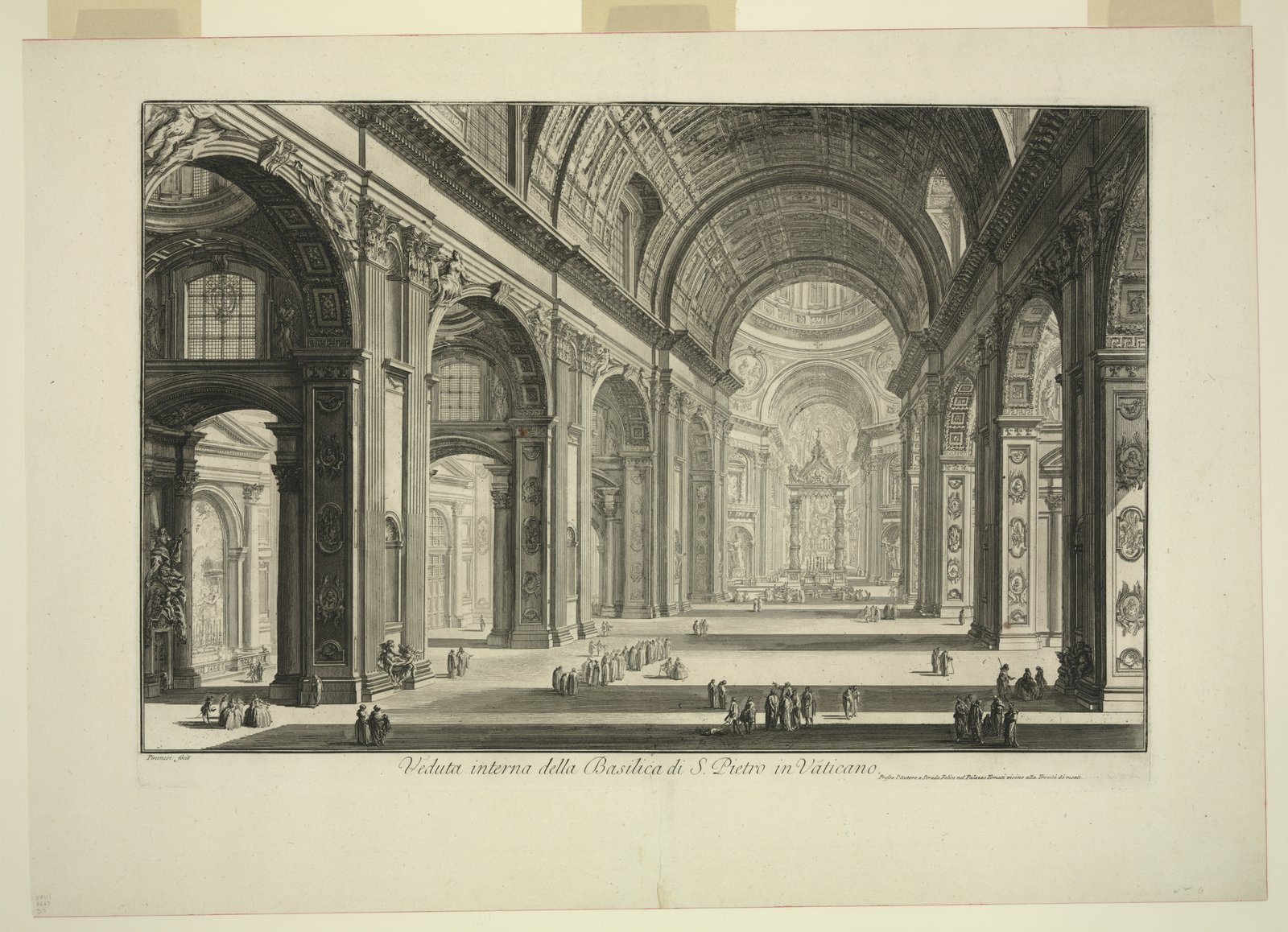
    Giovanni Battista Piranesi's 18th-century engraving of the interior of St Peter's Basilica, showing Bernini's Baldachin under Michelangelo's dome
    Interior of St Peter’s Basilica, 18th-century engraving by Giovanni Battista Piranesi. Held at the Library of Congress. Via Wikimedia Commons (public domain).

    Stand in the nave of St Peter’s Basilica, walk halfway toward the altar, and stop. Directly ahead, framed by four immense marble piers and drenched in light from the drum of Michelangelo’s dome, sits a black-and-gold bronze canopy on four twisting columns. It is 28.74 metres tall, which is the height of an eight-storey building. It stands directly over the traditional burial site of the apostle Peter. It is one of the most looked-at pieces of sculpture in the world, and almost nothing you have heard about it is accurate.

    The commission

    In August 1623, the College of Cardinals elected Maffeo Barberini as Pope Urban VIII. Within weeks, the new pope had commissioned a young sculptor called Gian Lorenzo Bernini to design a permanent altar canopy for the new basilica — a structure grand enough to fill the crossing beneath the dome, and personal enough to be legible as a Barberini monument. Bernini was twenty-four (turning twenty-five that December) and had never worked in bronze on this scale.

    Preparatory work for the foundations was under way in the months around Urban VIII’s election that summer. Fabrication of the bronze superstructure ran from 1624 to 1633. The Baldachin was inaugurated on 28 June 1633, the vigil of the feast of Saints Peter and Paul; the four crowning angels and the last decorative details were finished the following year. Ten years, one sculptor, and a room-sized furnace running near-continuously in the workshops behind the piers.

    Where the bronze did not come from

    Any decent guide to Rome will tell you that Urban VIII stripped the bronze from the Pantheon’s portico to build the Baldachin. There is a satirical Latin epigram attached to the statue of Pasquino that captures this: Quod non fecerunt barbari, fecerunt Barberini (“what the barbarians did not do, the Barberini did”). Every guidebook quotes it. Every guide who does not stop there is quietly incomplete.

    Urban did strip the Pantheon. In 1625 and 1626 his workmen removed the bronze girders and trusses from the portico ceiling, and they melted the metal down in furnaces at the Vatican. Modern reconstruction of the accounting suggests that roughly 150 to 180 tonnes of Pantheon bronze was recovered. Of that mass, around 98 per cent went to cannons for Castel Sant’Angelo, not to the Baldachin. Most of the Baldachin bronze was purchased fresh, imported principally from Venice. The Pantheon supplied at most a small fraction of the metal in the canopy overhead, and possibly none of the visible bronze at all.

    Say it out loud in the nave when a tour group nearby is being told the guidebook version. Small pleasures.

    The columns

    The four twisted bronze columns are the most quoted feature of the Baldachin and the most misread. They are Solomonic columns — a specific historical form, not a decorative flourish. In Bernini’s day, Rome held a set of ancient marble twisted columns believed to have been brought from the Temple of Solomon in Jerusalem by Constantine, and installed as a screen around Peter’s shrine in the old fourth-century basilica. Modern archaeology dates those columns to the second or third century AD, cut from Greek marble; they are not Solomonic in origin. But Bernini’s contemporaries believed the columns were, and the Baldachin quotes their form to make the point that this new altar stands in a direct line of continuity with the earliest Christian veneration of Peter.

    Eight of the original twelve marble columns still survive in the basilica. Six sit in pairs in niches roughly halfway up the four crossing piers, framing the Baldachin, beneath the medallions of the Four Evangelists; the most venerated of them, the Colonna Santa, is displayed in the Treasury Museum. Once you have noticed them the whole crossing rearranges itself: Bernini’s four bronze columns are quotations, and the marble originals are visible in exactly the same room.

    The bees, the laurels, and the pedestals

    Look at the columns closely and you will see two decorative bands climbing the twist. Bees, three to a shield arranged in a triangle, are the Barberini family arms. Laurel branches climb between them. On the underside of the canopy, above where the pope stands when he celebrates Mass at the Papal Altar, a golden sun with a radiant face marks the exact centre. These are not neutral Christian symbols. They are personal Barberini emblems worked into a work of sacred art, and they were controversial in their own time.

    The eight marble pedestals at the column bases carry a stranger sequence. A woman’s face on the Barberini shield changes its expression from panel to panel. Popular tradition, going back at least to the nineteenth century, reads this as the stages of childbirth — culminating in the eighth panel where a smiling infant appears. The most common version of the story has Urban’s niece in difficult labour and Bernini vowing the Baldachin’s completion for a safe delivery. No primary source documents this. Serious art historians treat it as folklore. The imagery is real; the childbirth reading is tradition, not fact.

    What sits behind and below

    Do not stop at the Baldachin. Twenty-three years later, in 1657, Bernini began work on the Cathedra Petri — the Altar of the Chair — in the apse directly behind the Baldachin. It is a gilt-bronze reliquary throne enclosing the ancient wooden chair traditionally identified with Peter, supported by four Doctors of the Church, and it is lit from behind by an alabaster window carrying the dove of the Holy Spirit in radiating bronze rays. It was completed in 1666. Bernini deliberately aligned the two works so that from the central nave the viewer’s eye travels along a single sight-line: dove, chair, canopy. It is a staged Counter-Reformation image of papal authority thirty years in the making, and most first-time visitors walk past it without noticing the alignment.

    Directly below the Baldachin is the Confessio, a sunken chapel with a kneeling statue of Pius VI and ninety-nine oil lamps. Below the Confessio is the Vatican Necropolis, and within the necropolis is the Trophy of Gaius — the second-century aedicula that early Christians already venerated as Peter’s grave. On 26 June 1968, Pope Paul VI announced that relics identified as Peter’s had been recovered from a niche in the “Graffiti Wall” beside the aedicula, based on the work of the epigrapher Margherita Guarducci. Doctrinal certainty and archaeological consensus do not fully overlap, but the site’s veneration as Peter’s tomb is documented from the second century onward, and that alone is a reasonable answer to why an altar canopy stands directly above it.

    Restoration and how it looks today

    Between February and October 2024 the Baldachin underwent its first serious restoration since 1758. Funded by roughly €700,000 (about $760,000) from the Knights of Columbus, the work cleaned the surface of two centuries of soot, oxidation, and candle grime. Pope Francis unveiled the restored canopy on 27 October 2024, ahead of the 2025 Jubilee. Photographs taken before and after are startling: the gilding on the crown and angels reads as gold again, not brown. There is no scaffolding in place today.

    How to see it well

    Entry to St Peter’s Basilica is free. It opens at 07:00 daily and closes at 20:00 as of June 2026. The single security queue outside can run ninety minutes at midday in summer, and there is no way to skip it without an official reserved-entry slot or a bundled tour. Once you are inside, walk straight down the central nave. Whatever spatial effect Bernini and his patrons designed for this room, it is best received on foot rather than through a lens.

    Three ways to see the Baldachin better than most visitors do:

    • Arrive at 07:00 on a weekday. The security queue at that hour is under fifteen minutes, and the nave is close to empty until about 08:15. This is the only window during the day when you can walk the length of the aisle without another photograph being taken in front of you.
    • Climb the Dome. The cupola ticket (about €10 stairs only, €15 with the elevator to roof level) takes you around an interior gallery at the base of the drum. From that walkway you look almost straight down onto the crown of the Baldachin — the four angels, the orb, and the gilt cross — with the marble compass of the crossing floor beyond. It is the best view of the top of the canopy that exists.
    • Come back after the Cathedra sight-line has clicked. Once you have noticed the alignment (dove behind chair behind canopy), you cannot un-notice it. A second visit is a different one from the first.

    For a full walkthrough of the Basilica visit — including the Dome climb, the Necropolis (Scavi) tour that lets you stand next to the second-century aedicula directly below the Baldachin, and the reservation options that skip the outside security queue — see our St Peter’s Basilica tickets and tours guide. For the Scavi specifically, our St Peter’s Tomb tickets and tours page has the booking mechanics for the Ufficio Scavi.
  • Wednesday Morning Is a Bad Time to Visit the Vatican Museums

    Wednesday Morning Is a Bad Time to Visit the Vatican Museums

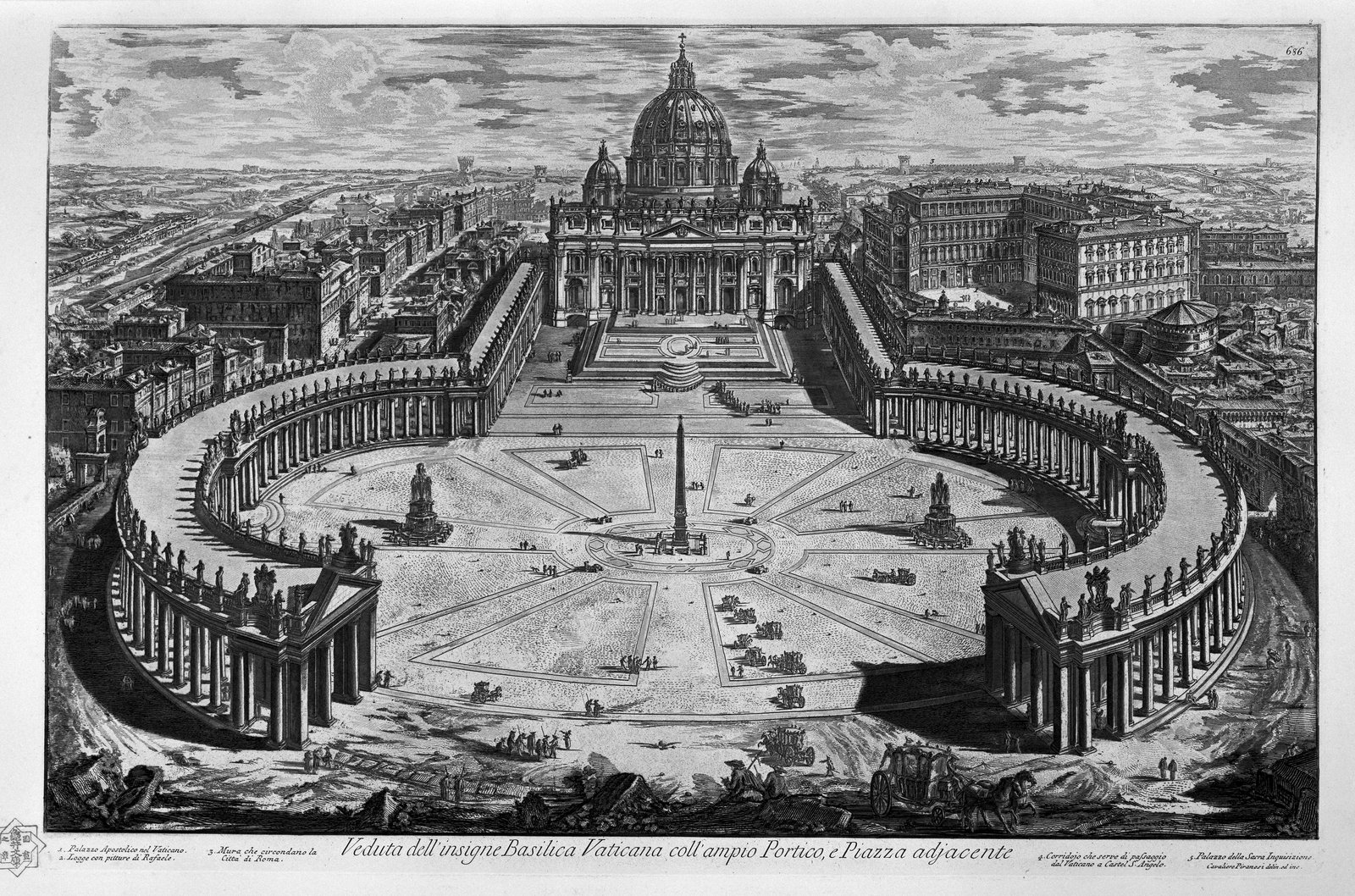
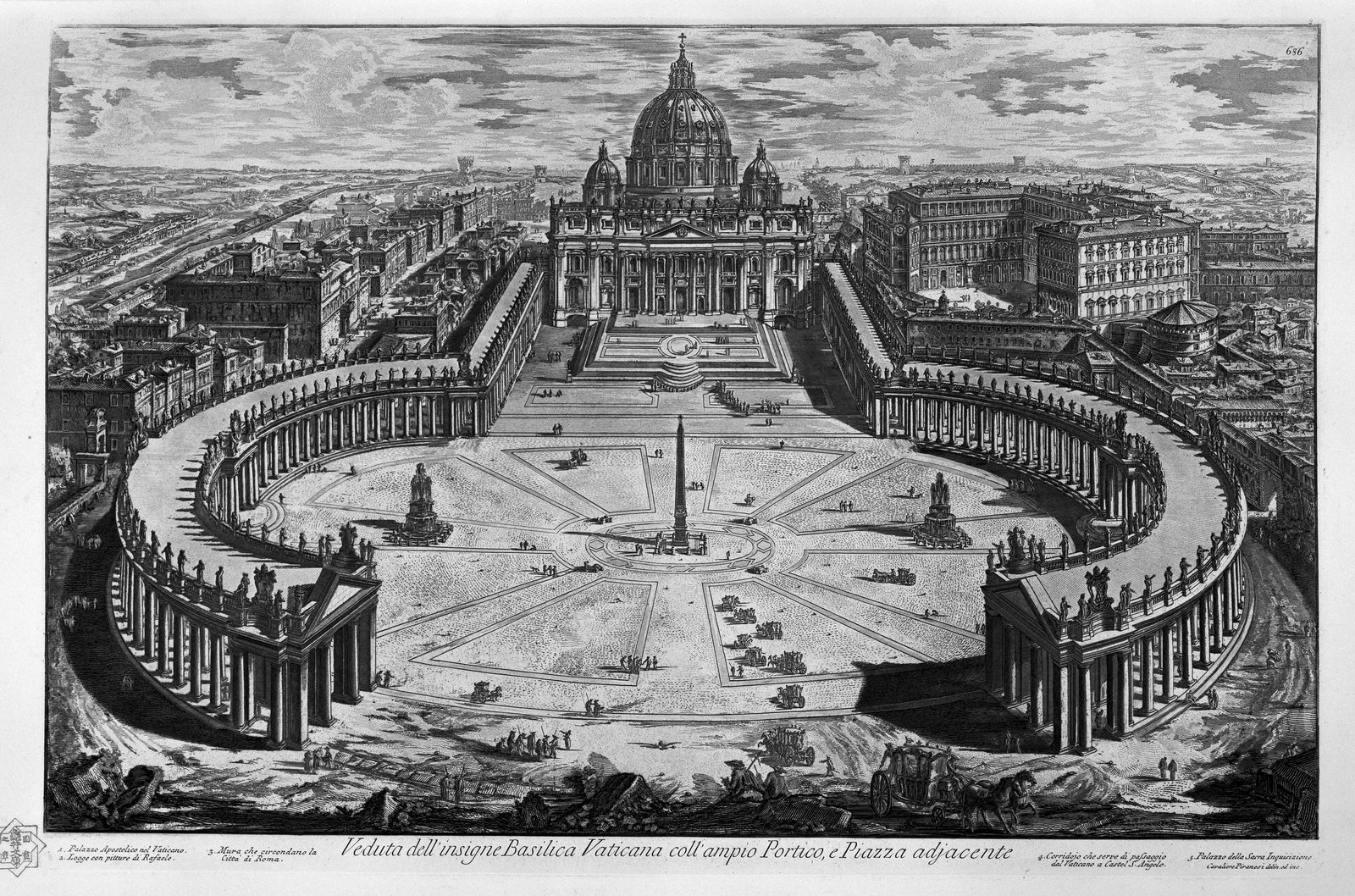
    Giovanni Battista Piranesi's 18th-century engraving of St Peter's Square — the site of the Wednesday Papal Audience whose crowd spills into every Vatican queue nearby
    St Peter’s Square, engraved by Giovanni Battista Piranesi in the 18th century. Via Wikimedia Commons (public domain).

    Vatican Museums are technically open on Wednesday morning. So is the metro. So are the restaurants. And yet Wednesday morning is the single worst time in the week to attempt a visit, and almost nobody tells first-time tourists this.

    It comes down to a public event that happens roughly two hundred metres from the Museums entrance, held by an institution that does not employ any of the Museums staff, on a schedule the Museums cannot alter. That event is the Papal Audience. It runs weekly, it draws twenty to thirty thousand people on a normal week, and its knock-on effects reshape every logistics decision you thought you had made.

    The Papal Audience, briefly

    Every Wednesday when the pope is in Rome and not travelling, he holds a General Audience for the public. Between October and Easter these are held indoors, in the Paul VI Audience Hall behind the left arm of the colonnade of St Peter’s Square. From late spring through early autumn they are held outdoors on the piazza itself, with Pope Leo XIV arriving in the Popemobile at around 09:30 and the audience proper beginning at 10:00 and running until close to 11:00. Note that audiences are typically suspended for most of July and part of August, when the pope moves to Castel Gandolfo.

    Tickets are free. You collect them the day before from the Prefecture of the Papal Household, or you skip the ticket queue and simply stand at the back of the square. Because the tickets are free and the venue is one of the most famous public spaces in Europe, the audience routinely fills toward capacity. Eight to ten thousand in the Paul VI Hall on a quiet winter Wednesday, twenty to thirty thousand on a typical summer Wednesday in the square, and Easter-adjacent Wednesdays regularly fill the piazza to its 50,000 capacity.

    The knock-on effect on the metro

    Ottaviano-San Pietro, the Line A stop closest to the Vatican, is a compact underground station with two narrow exits onto Viale Giulio Cesare. On a normal weekday morning it moves foot traffic without complaint. On a Wednesday between about 07:30 and 08:45, the platform is packed with pilgrims heading to the audience, and the exit escalators back up onto the street.

    If you have booked the 08:00 slot at the Vatican Museums — the slot that gives you the compound advantage of a fresh security queue and an empty Sistine an hour later — you are in exactly that platform crowd. What is normally a five-minute walk from platform to street becomes fifteen. What is normally a ten-minute walk from the metro to the Museums becomes twenty, because the sidewalks on Via Ottaviano are lined with tour groups being briefed by their guides.

    Nobody who has taken the metro on any other weekday morning is prepared for this. You will arrive at the Museums entrance at 08:20 instead of 07:55, and your first-slot ticket has already lost half of its edge.

    The knock-on effect on the walk from St Peter’s Square

    If you decided to save the metro fare and walk from your hotel via the Tiber, you will normally cross the piazza to reach Viale Vaticano. On a Wednesday you cannot. Italian police and the Gendarmeria Vaticana cordon the piazza for ticketed audience access from about 07:00, and route pedestrians around via Borgo Pio — a five-to-ten-minute detour one block north of Via della Conciliazione.

    This is the least-known constraint of a Wednesday morning. Google Maps will confidently route you across the piazza. Google Maps will be wrong from a Tuesday night until a Wednesday around midday, and there is no announcement.

    The knock-on effect on guided tour groups

    Most licensed guided tours that combine the Vatican Museums with St Peter’s Basilica use a group-only exit at the front-right corner of the Sistine Chapel — a staircase controlled by museum staff that drops directly into the narthex of St Peter’s, bypassing the walk back around the walls and the security queue at the piazza-side entrance.

    On Wednesday mornings, this shortcut is closed. That passage is used by Vatican staff and by cardinals arriving for the audience, and it is not available to tour groups. Which means every guide running a Museums-plus-Basilica tour on a Wednesday morning must add the twenty-minute walk and the queue back into the itinerary. Adding those forty minutes either eats into the Basilica time, or the tour that ran from 09:00 to 12:30 on a Tuesday now runs 09:00 to 13:00 on a Wednesday. Many guides simply do not run the combined tour on Wednesdays before noon, and you will find fewer options in your booking search on that day.

    The knock-on effect on the dress-code check

    Anyone who has attended a Papal Audience has been through a stricter dress-code screening than the one at the Museums door. Shoulders and knees covered is enforced with a much thicker sign at the entrance to the piazza, and the Vatican gendarmerie who wave you through are noticeably less flexible than the Museums attendants inside.

    As a result, on Wednesday mornings the mood at every Vatican-adjacent security point is a fraction sharper. Bags that would be waved through the Museums scanner on a Tuesday get opened and looked into. A guard who might overlook a phone at the Sistine door on a normal day will not overlook it after standing an hour on the piazza in the sun watching the audience crowd disperse. It is not a formal policy change. It is a shift in mood that any experienced local guide will tell you is real.

    When to go instead

    The best mornings, in order of preference:

    • Tuesday, 08:00 slot. Empty Sistine at 09:00, unfatigued security staff, no piazza closure, and if your hotel is on the far side of the river, a clean walk across.
    • Thursday, 08:00 slot. Equivalent to Tuesday, with the additional benefit that the previous day’s audience crowd has fully cleared and any residual queuing has normalised.
    • Friday evening, 19:00 or 20:00 slot, from late April through late October. In-season Fridays keep the Museums open until 23:00 with last entry at 21:30. These late slots used to be under-booked; as of 2026 they regularly sell out two to three weeks ahead in high season, so book early. By 21:30 the Sistine is closer to empty than it will be at any other time all week.
    • Saturday morning, 08:00 slot. Busier than Tuesday and Thursday, but still an order of magnitude better than any Wednesday.

    Mornings to avoid in order of severity:

    • Wednesday morning (all reasons above).
    • Every last Sunday of the month, when entry to the Museums is free but the queue is genuinely two hours long by 10:00.
    • Any weekday between 25 December and 6 January — the Vatican closes for several public and religious holidays in that window and the days it does open are packed with visitors who found out too late that the day they picked was one of the closed ones.

    The one Wednesday exception

    If you specifically want to attend the Papal Audience, Wednesday morning is the only time you can. In that case the choice is straightforward: pick the audience over the Museums for that day, then visit the Museums the following morning. Trying to do both on the same Wednesday is a recipe for a rushed audience, a late Museums arrival, and a Sistine Chapel visit at exactly the time of day the room is at its most crowded and least contemplative.

    You can also, technically, do the Museums on a Wednesday afternoon. Those knock-on effects taper off after about 11:30, and by 13:00 the Museums are close to their normal Wednesday load. It is a workable Plan B if Wednesday is the only day you have. Trade-off: you lose the first-slot compound advantage, which is the specific thing that makes an early visit worth booking in the first place.

    Plan around it

    For a full week-by-week breakdown of when the Vatican Museums are open and closed — including the twenty-plus religious feast days and public holidays when they close entirely — see the Vatican Museums opening hours 2026 guide. If you have already booked a Wednesday morning slot and cannot reschedule, the VIP early-entrance guided tour begins before the standard 08:00 opening and effectively bypasses the piazza-crowd problem entirely.

    Or move your visit to Tuesday. That single change is worth more than any ticket upgrade.

  • The Sistine Chapel Silence Rule: How It’s Actually Enforced

    The Sistine Chapel Silence Rule: How It’s Actually Enforced

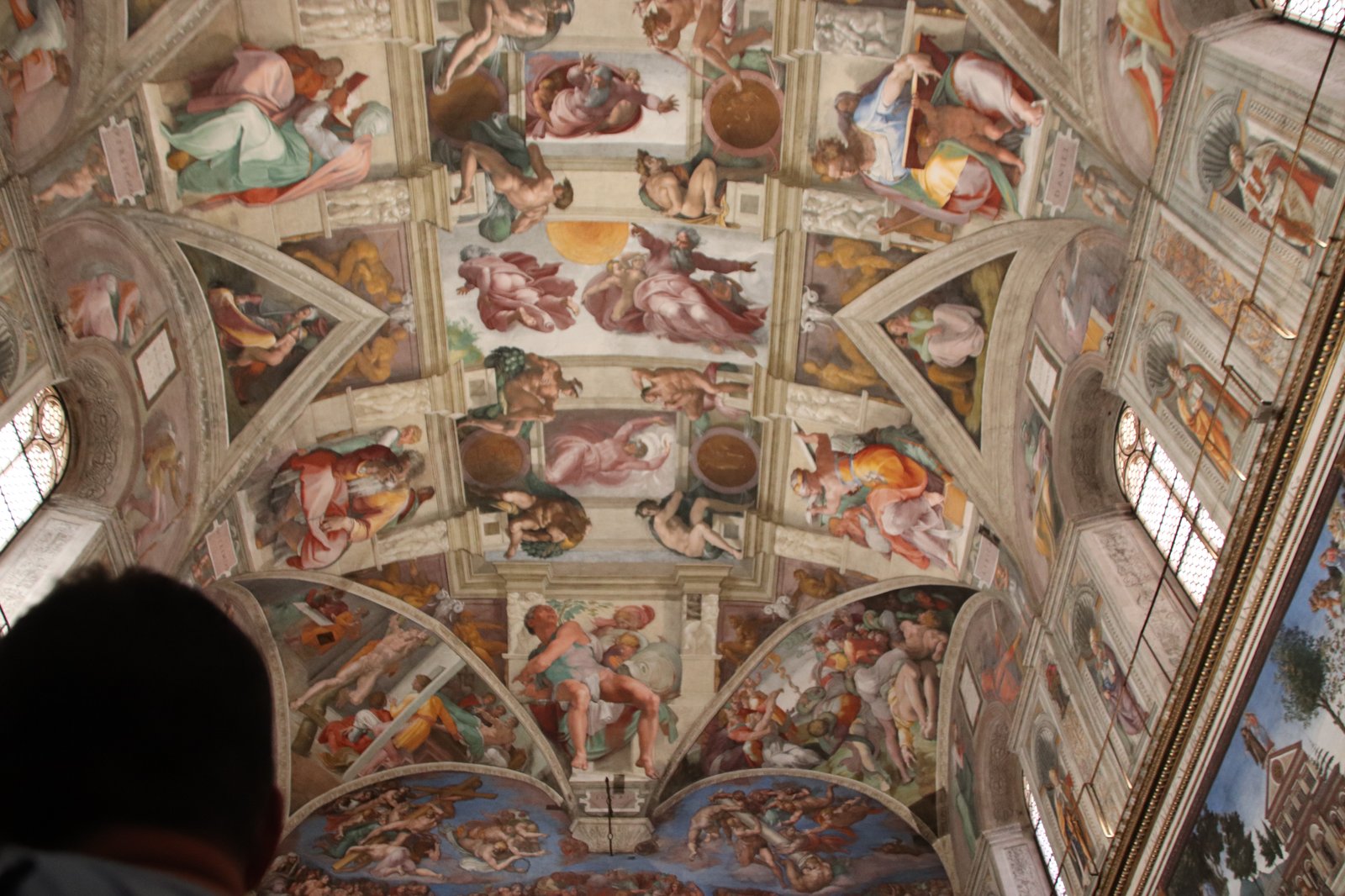
    The Sistine Chapel ceiling by Michelangelo — the room where the silence rule is enforced with quiet ceremony
    Sistine Chapel ceiling by Michelangelo (1508-1512). Photo by Gary Todd via Wikimedia Commons (public domain).

    Someone raises a phone. An attendant claps, once, and says silenzio. The phone comes down. By my count this happens roughly twelve times an hour inside the Sistine Chapel on a busy summer day, and by the third or fourth time you have watched it, the ritual stops feeling weird and starts feeling like a well-run church service. That is roughly the intended effect.

    The rules inside the Chapel are the strictest in the Vatican Museums. No photography of any kind. No video. No phones held aloft. Voices at a whisper or none at all. What confuses first-time visitors is that these rules are not posted at the door in ten languages. There is a small sign. Nobody reads it. The enforcement mechanism assumes you will find out by watching what happens when someone else forgets.

    Why the rules exist

    Two reasons, both practical, neither theological.

    First, the photography ban is a copyright artifact. Between 1980 and 1994, Nippon Television Network Corporation of Japan funded the fourteen-year restoration of the Chapel’s ceiling and the Last Judgement at a final cost of roughly $4.2 million. In exchange, NTV received exclusive photographic and film rights for three years after the completion of each phase — the Last Judgement rights, for example, expired in 1997. Those windows have long since closed, but the photography ban has stayed. It solves several practical problems at once: it stops the room from being permanently full of people photographing the ceiling instead of looking at it, and it keeps the visit moving at a walking pace. (The often-cited flash-damages-pigments argument is weaker than it sounds; conservation research does not show consumer flash at visitor distances measurably fading paint. Copyright legacy and crowd flow are the actual drivers.)

    Second, the silence rule exists because the Sistine Chapel is still a working chapel. The conclave — the College of Cardinals sealed in to elect a new pope — meets exactly beneath the ceiling you are looking up at. The most recent conclave was held in May 2025, following the death of Pope Francis, and elected Pope Leo XIV. Mass is celebrated here at occasional papal liturgies. It is not a museum room that used to be sacred and is now a display. It is a sacred room that is displayed the rest of the year. The whisper rule is downstream of that.

    Who enforces the rules

    The Sistine Chapel is patrolled by attendants of the Vatican Museums (formally the Directorate of Museums and Cultural Heritage of Vatican City State), not Swiss Guards. By observation, on a typical day between four and six of them are in the room at any moment, distributed along the walls and near the doors, wearing dark suits and museum lanyards. Rotations look to be on a roughly twenty-minute cycle, so nobody in the room ever loses focus. Their job is not to smile or greet you. Their job is to remind the room, gently but continuously, of the ritual it is expected to observe.

    Individually they are unremarkable. Collectively they run a room of up to two thousand people at any one time — the design load of the 2014 Carrier HVAC upgrade — with almost no friction. It is one of the more impressive feats of low-key crowd management in Europe.

    What actually happens when someone breaks the rule

    Watch closely and there is a specific sequence. It plays out roughly the same way every time.

    1. A phone comes up. Sometimes to photograph, sometimes to check a message.

    2. Within about four seconds, an attendant catches it. Their eye-scan of the room is continuous and they are trained to spot the vertical rectangle of an upheld phone against the horizontal rhythm of shoulders and heads.

    3. They clap once — a firm, dry clap, not aggressive, just loud enough to carry across the room. Sometimes the clap is enough on its own. Every head in that quarter of the chapel snaps toward the sound.

    4. If the clap has not landed, they add the word silenzio, or no photo, depending on the offence. Occasionally both, in the same breath, in the same tone that a schoolteacher uses on a class that has been warned three times.

    5. The phone comes down. In my observation, nine times out of ten this ends the incident. On the tenth, the attendant walks over to the visitor and delivers a short, quiet instruction that other tourists cannot hear. That is the final step. There is no ejection unless someone escalates, which almost never happens.

    The whole thing takes ten to twenty seconds and does not disturb the rest of the room. If you are looking up at the ceiling when it happens, you might notice a small ripple at floor level and go back to what you were doing.

    What to do instead of taking a photo

    The strongest response to a “no photos” rule is to work with it rather than against it. Two suggestions.

    Sit down on one of the stone benches integrated into the perimeter walls on the sides and the rear of the chapel. They are unmarked, discreet, and consistently under-used because first-time visitors do not realise they exist. Sitting changes the geometry of the ceiling above you completely. A cinema-seat view of Michelangelo is a different experience from the standing-with-head-tilted-back view most people take away.

    Give the room enough time. Ten minutes is a bare minimum. Twenty is when the room starts to reveal its structure — the nine central panels of Genesis, the twelve prophets and sibyls around the borders, the four corner scenes of Old Testament rescues. Fifteen years of Michelangelo’s life went into this room. Fifteen minutes of yours is not a large ask in return.

    How the Sistine compares to other rooms

    The photography ban does not apply anywhere else in the Vatican Museums. In the Gallery of Maps you can take as many photos as you like. In the Raphael Rooms photography is allowed. In St Peter’s Basilica photography is allowed except during Mass. The Sistine Chapel is the only enforcement zone.

    Some first-time visitors interpret this to mean that the Sistine is the most valuable room. It is not the most valuable in any measurable sense — the Vatican Pinacoteca has works by Leonardo, Caravaggio and Raphael that are equally significant. What the Sistine is, uniquely, is a room that has been decided to be treated as sacred first and looked at second. That decision cascades into every rule at the door.

    Practical preparation

    Before you enter:

    • Put your phone into your pocket, not your hand. If it is in your hand, the muscle memory of the last thousand museum visits will raise it. Removing that possibility is easier than resisting it.
    • Do not try to sneak a photo of the ceiling on the way out. Attendants stand at both doors. The exit-corridor photo is the classic “gotcha” moment; you will end up deleting the picture in front of a museum staff member with a full room watching. It is nobody’s favourite Vatican memory.
    • If you want the ceiling as a keepsake, buy a print at the Museums shop on the way out. The high-resolution photographs from the 1980s Nippon TV shoot are still the best-quality images that exist. A three-euro postcard beats a phone snap in every way that matters.

    Inside:

    • Walk to the far side wall from the entrance and find a bench. If they are all taken, wait five minutes; there is turnover.
    • Whisper only if you have something specific to point out. Silence is the default, not something you owe to a rulebook.
    • Look at the wall behind the altar too. The Last Judgement was painted by Michelangelo twenty-four years after the ceiling and it is the room’s other subject, not just decoration. Give it as long as the ceiling.

    Book the visit that lets you sit

    The only way to have time inside the Chapel is to arrive with time. The 08:00 skip-the-line slot gives you the Sistine at close to nine, when the room is populated but not packed and you can find a bench without waiting. Book that slot on our Vatican Museums & Sistine Chapel skip-the-line ticket. If you want a guide to walk you through the ceiling’s structure while you sit, our VIP early-entrance guided tour combines the same slot with a licensed guide who is very good at pointing without whispering.

    For the dress code that gets you through the door, see our Vatican dress code guide. And for the full rundown of hours in 2026, the opening hours page is kept current.

  • The First Hour at the Vatican Museums: What 8am Actually Feels Like

    The First Hour at the Vatican Museums: What 8am Actually Feels Like

    The Sistine Chapel ceiling by Michelangelo — the room the first hour at the Vatican Museums quietly builds toward
    Sistine Chapel ceiling by Michelangelo (1508-1512). Photo by Gary Todd via Wikimedia Commons (public domain).

    At 7:40 a.m. Viale Vaticano is a queue, a coffee cart, and a stone wall taller than it looks in photos. First thing you notice is the wall. It is the actual boundary of the Vatican, brick faced with travertine, unmarked, and up to twelve metres high. If you have a timed skip-the-line ticket for the 08:00 slot, you stand about halfway down the block from a gate marked Musei Vaticani. That queue is around fifty people this morning, which is normal for a Wednesday in July. Others already there have print-outs and phones held ready and, universally, more layers than they will need.

    The doors open at 08:00. First-slot ticket holders inside the queue are through security within a few minutes.

    The security queue is the actual filter

    Everyone talks about the ticket queue: the long snake outside on Viale Vaticano that skip-the-line ticket holders leapfrog. Fewer people mention that beyond the ticket gate is a security screening identical to any airport: coats and belts and cameras in bins, X-ray, walk through, collect. On a busy morning this can take twenty minutes even for the first slot. This one takes eight.

    Compound advantage of the first slot: the guards are fresh, the line is short, and nobody in front of you has forgotten they were carrying a Swiss Army knife.

    08:12: the atrium, and the first mistake most people make

    Past security, you are in a wide two-storey atrium with a floor of black-and-white marble tile and a set of very impressive escalators. Escalators go up. Everybody takes them up. This is fine.

    The first mistake most people make is going straight through the atrium and into the Cortile della Pigna, the Pinecone Courtyard, without looking around. There is a cloakroom on your left; if you have anything larger than a small handbag, it is mandatory. There are also the museum’s only real toilets before the 90-minute stretch through the galleries. Go now.

    On the way out I always look up at the ceiling of the atrium, which most people do not, because most people are already thinking about the Sistine Chapel. The ceiling is a Baroque conceit: painted architecture that pretends the roof is much higher than it is. It is not the highlight of the visit. It is the first hint that this place has been designed for one moment sixty minutes from now, and every other room is at some level a stage for it.

    08:20: the Pinecone Courtyard

    The Cortile della Pigna is an open-air rectangle roughly the size of a suburban swimming pool complex. Down one end is the enormous bronze pinecone from which the courtyard takes its name, a Roman piece cast in the first or second century that once decorated a fountain near the Baths of Agrippa. In the middle is the Sphere Within Sphere, a modern bronze sculpture by Arnaldo Pomodoro. Those two objects are a thousand years and about forty metres apart, and this is not a mistake. The whole Vatican Museums are structured around this exact rhythm: ancient objects placed next to Renaissance placements of ancient objects next to modern reflections on the whole apparatus. If you notice nothing else this morning, notice that.

    Also: this is the last outside air you will breathe for over an hour. Take a minute here.

    08:30: the Egyptian and Etruscan galleries (skip most of them)

    The standard route through the Vatican Museums begins with the Museo Gregoriano Egizio and the Museo Gregoriano Etrusco. They are not small collections. If you spent an unhurried hour in each, you would still be here for the museum’s closing announcement. On a first visit, walk. There is a Roman mosaic of an unswept floor (asaroton oikos) on the way, a joke of a mosaic that pretends to be crumbs and fish bones on the ground (look for it, it takes ten seconds), and then continue.

    This is the section a competent guide will move you through quickly, and the section a bad guide will bury you in. If you are self-guided, do not feel obliged to read each label. Mission of the first hour: arrive at the Sistine Chapel reasonably alert.

    08:45: the Gallery of Maps

    The next thing that happens is that you turn a corner and are inside a hall a hundred and twenty metres long, gilded ceiling to floor, with a series of forty large frescoed maps of Italy on the walls and a barrel-vaulted ceiling that appears to be paved in gold. This is the Galleria delle Carte Geografiche, painted by Ignazio Danti and his workshop in 1580–1583.

    People stop here. Even bored teenagers stop here. On a first slot morning you will have the corridor almost to yourself for a few minutes, small windows of unphotographed emptiness that will not repeat for the rest of the day. Whatever your photograph strategy is, this is where it earns its keep. By 10 a.m. the Gallery of Maps is a bottleneck.

    Two details worth knowing: the maps on the west wall are the territories washed by the Tyrrhenian Sea, and on the east wall those washed by the Adriatic. And the ceiling above your head is not one composition. It is dozens of small scenes, each linked to the map below it, showing miracles or historical events that happened in that region.

    09:00: the Raphael Rooms

    You emerge from the Gallery of Maps into a series of four smaller rooms that are, room-for-room, some of the most consequential paintings in Western art. These are the Raphael Rooms: private papal apartments frescoed by Raphael and, after his death in 1520, by his workshop between 1508 and 1524.

    Stanza della Segnatura is the third room in the visit sequence. It contains the School of Athens on one wall and the Disputation of the Most Holy Sacrament on the wall opposite. Every art history undergraduate can tell you the philosophers of the School of Athens by number. Fewer people know that Raphael painted himself into the far right of the fresco, watching the argument, wearing a small black beret. See if you can find him. It is the sort of thing this room rewards.

    The Raphael Rooms take fifteen or twenty minutes even at a walk. This is the point in the first hour when the visit shifts from architecture to argument: each fresco here is a specific theological or political statement, and being told what the argument is transforms the experience. If there was ever a moment to have an audio guide on, this is it.

    09:20: the door before the Sistine Chapel

    You leave the Raphael Rooms via a stairwell down and a short corridor, and you find yourself in front of a plain wooden door. There is a guard next to it. The guard is enforcing silence.

    The Sistine Chapel is not signposted the way famous rooms usually are. There is no dramatic threshold announcement. Just a door and a guard and a sign saying Cappella Sistina. This is by design. You are supposed to walk in unprepared and look up.

    09:22: the ceiling

    The first thing to know is that the Sistine Chapel is smaller than you expect. It is a rectangular room forty metres long and thirteen metres wide, a footprint roughly twice a tennis court. Michelangelo painted every square metre of the vaulted ceiling between 1508 and 1512, and returned twenty-four years later to paint the Last Judgement on the wall behind the altar. The chapel’s proportions are said to echo those the Old Testament gives for Solomon’s Temple, a claim popular in tour tradition though disputed by some scholars.

    On a first-slot morning you can find a bench along the side wall. Benches are numbered, discreet, and mostly ignored. Sit down. Look up. Give yourself ten minutes minimum.

    The rules inside are absolute and unnervingly well-enforced: no photography, no video, no phones held up, no talking above a whisper. When someone in the room raises a phone, the attendant says "silenzio!" and "no photo!" in the same breath, and every time in my experience, the guilty party puts the phone away. This works because the room is designed to intimidate a little. It is doing its job.

    09:35: back into the world

    You leave the Sistine Chapel one of two ways. If you are on the standard route, you turn right through a heavy curtained doorway and walk fifteen minutes through more galleries, downstairs, past a shop, and back into the atrium. If you are with a guide whose tour includes St Peter’s Basilica, there is a small door in the corner of the Sistine that leads through a private passage directly into the Basilica, a shortcut that saves the twenty-minute walk around the wall and the security queue at St Peter’s Square.

    Either way, you have been inside for about ninety minutes. You have looked at somewhere between one and three per cent of what the Vatican Museums contains. And you have been to the Sistine Chapel almost alone. That is the last time until the room closes at 18:00 that this will be possible.

    Practical notes for tomorrow morning

    • Book the 08:00 slot. Any later, the compound advantage evaporates. That skip-the-line ticket only skips the outside ticket-office queue. You still queue at security, so being at the front helps twice over.
    • Eat something before you arrive. There is a cafeteria inside, but the first two hours are not when you want to sit down.
    • Wear layers. Some galleries are cold. Sistine, packed with bodies later in the day, is not.
    • Check the 2026 hours before you go. The museum is closed most Sundays, and Wednesday mornings are the Papal Audience which does not affect the Museums directly but does affect the metro station and the walk from St Peter’s Square.
    • The Sistine Chapel dress code is enforced at the door: shoulders and knees covered. Full detail in our dress code guide.

    The rest of the visit, whatever else you see after the ninety-minute mark, will be quieter than the first hour was intense. That is the design. Get to the Sistine before nine-thirty; the rest of the day is yours.

  • 7 Things Nobody Tells You About Visiting the Vatican

    Most Vatican visits go one of two ways. Either the planning starts the morning before, the queue at Viale Vaticano turns out to be two hours, and half the day is gone before anyone gets inside. Or the planning was so thorough that the actual visit feels like a checklist and nothing catches you off guard. This is a guide for the middle: the seven things we tell friends before they go, the ones that don’t make the top of Google.

    None of these are secret exactly. They’re just the details that get lost between the official Vatican page (dense) and the top-ranking travel articles (identical to each other). Everything below is from official sources, our own guides at the entrance every week, or both.

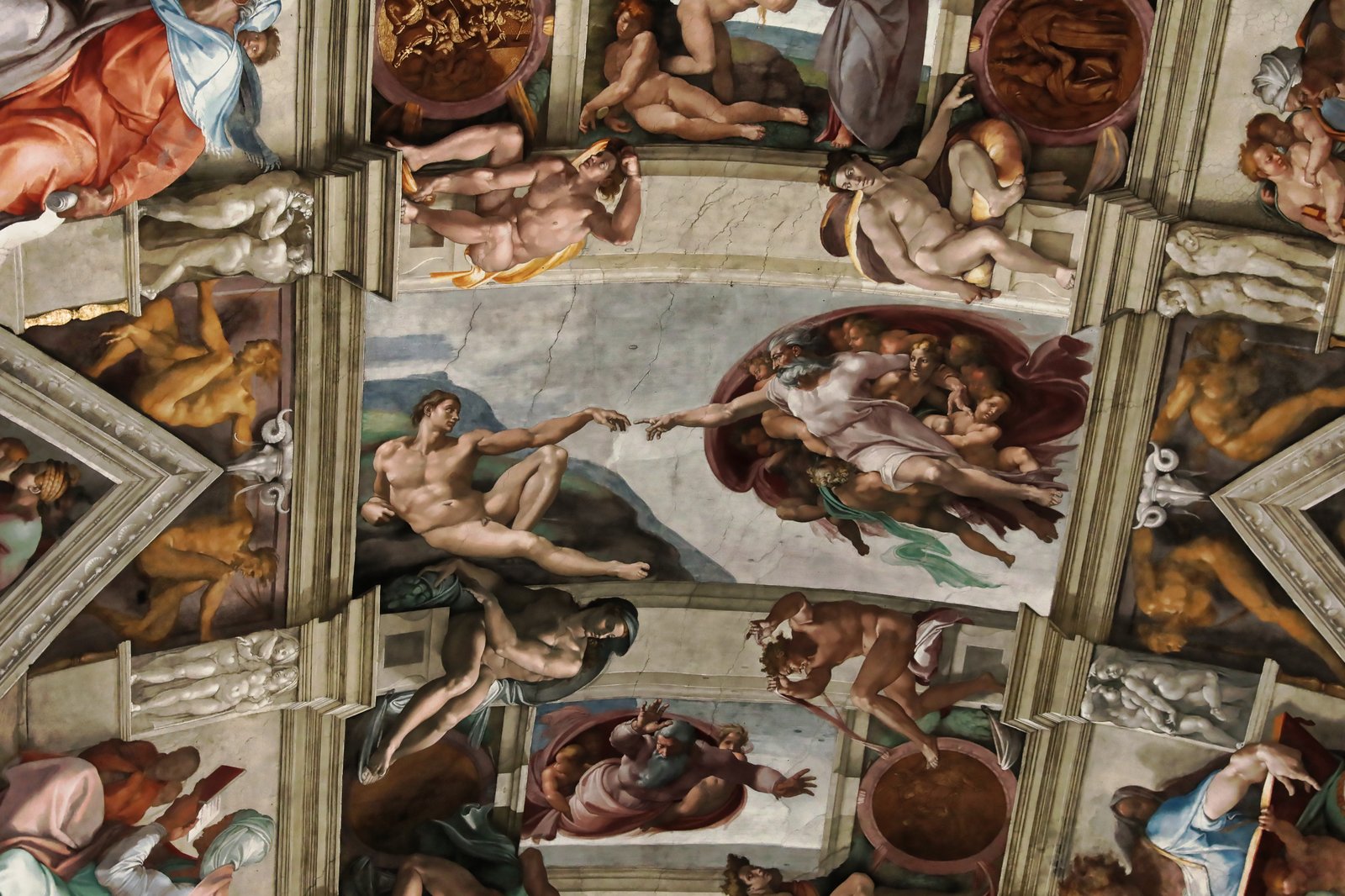
    The Creation of Adam by Michelangelo on the Sistine Chapel ceiling
    The Creation of Adam by Michelangelo (1508-1512), Sistine Chapel ceiling. Via Wikimedia Commons (public domain).

    1. The free Sunday is real, and it’s the wrong day to go

    Every last Sunday of the month, the Vatican Museums open free from 09:00 to 14:00. That’s a genuinely useful policy: no ticket, no reservation, walk up and go in. What the guides skip is the queue.

    That line forms at Viale Vaticano before 07:00. By 08:30 it stretches around the block. If you’re not inside the barrier by around 09:15 you’re looking at two hours or more before you clear security, which means most of your free-entry window goes to standing outside. On top of that the Sistine Chapel becomes densely crowded from about 10:30, because every free entrant is heading straight for it.

    Use it if you’re staying nearby and can be there by 07:30, or genuinely can’t spend money on tickets. Skip it if your Rome time is limited. A normal weekday morning ticket at 08:00 opening puts you in front of the Creation of Adam with room to look at it.

    2. Friday evenings, May to October, are the emptiest time of the week

    From late April through late October each year, the Museums stay open on Friday evenings until 23:00, with last entry at 21:30. Same regular ticket, online booking required.

    Almost nobody goes. Coach groups have finished for the day. Schools closed hours ago. Between 20:00 and 22:00 you can stand in the Sistine Chapel with fewer people around you than at any point on a normal morning. If you have one evening in Rome and want the closest thing to a private-tour experience without the private-tour price, book the last entry slot on a Friday and let the crowd from the earlier ticket window ebb out.

    The only inconvenience is dinner timing: you eat late, either before or after. Both work if you’re staying in the Prati neighbourhood right next to the Museums.

    3. St Peter’s Basilica is free (and it’s not the Vatican Museums)

    This one catches out more first-time visitors than any other. St Peter’s Basilica has no ticket, no admission fee, and no reservation required. You walk into St Peter’s Square, cross the colonnade, pass through security, and you’re inside. Free.

    Interior of St Peter's Basilica in an 18th-century print by Giovanni Battista Piranesi
    Interior of St Peter’s Basilica, 18th-century print by Giovanni Battista Piranesi. Via Wikimedia Commons (public domain).

    Vatican Museums, meanwhile, are a completely separate site. Different entrance (on the opposite side of the Vatican wall), different ticket, different hours. You can’t wander from one into the other. One official shortcut for regular visitors runs via a group-only exit inside the Museums that dumps you near the Basilica entrance, and it’s not something you can use walking around solo.

    What’s tempting to buy but usually isn’t necessary: paid “St Peter’s skip-the-line” tickets. That Basilica line is a security queue, not a ticket queue. The paid slot buys you a guaranteed entry time (useful in July and August when the security wait hits ninety minutes at midday), but there’s no admission fee saved because there wasn’t one to begin with. If you show up at 07:00 opening or after 16:30, the queue is short enough that a paid slot mostly isn’t worth it.

    4. No photos in the Sistine Chapel. None. Not even a phone.

    The Sistine Chapel photo ban is total. No cameras, no video, no phone shots, no selfies. Attendants call it out over the PA system every few minutes and enforce it individually: someone will walk over and ask you to put your phone away if it’s out.

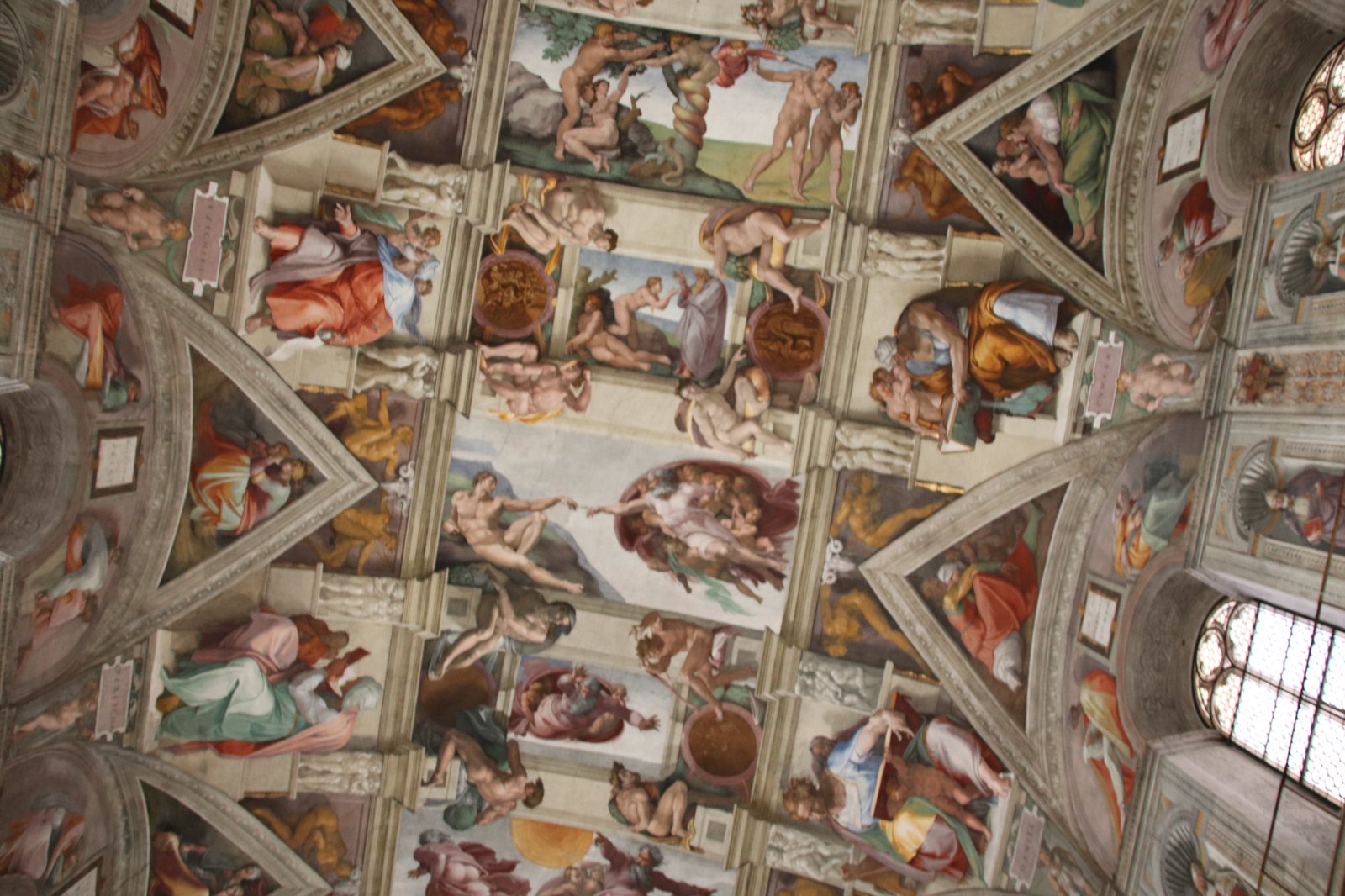
    Wide view of Michelangelo's Sistine Chapel ceiling
    Michelangelo’s Sistine Chapel ceiling (1508-1512). Photo by Gary Todd via Wikimedia Commons (public domain).

    The rule exists partly for preservation (Nippon Television Network of Japan funded the 1980-1994 restoration for roughly $4.2 million in exchange for three-year-per-phase photo rights that have since lapsed) and partly for crowd flow: silent, phone-free rooms move quicker. It works.

    What you can do: photograph everywhere else in the Museums without flash. The Gallery of Maps, the Raphael Rooms, the Pinacoteca. All fine. Just make sure your camera is packed away before you enter the Sistine, and expect a firm reminder if you forget.

    5. The dress code is enforced literally, not vibes-based

    Every guide mentions the dress code. Not many spell out what actually gets you sent back to buy a scarf. In practice, here’s what security stops at the door:

    • Bare shoulders. Tank tops, spaghetti straps, sleeveless dresses. Both sites.
    • Shorts above the knee. Bermuda-length shorts (to the knee) pass at the Museums, but men in shorts are commonly refused at St Peter’s Basilica as a matter of enforcement convention.
    • Miniskirts and short dresses. If it doesn’t cover you sitting down, it doesn’t get in.
    • Hats inside the Museums. Take them off before security. Straw hats, baseball caps, sun hats.

    In practice, the Basilica is stricter on the trousers question: for men, long trousers are the only safe choice; for women, trousers or a below-the-knee skirt. There are vendors selling €5-€15 cover-up scarves on the streets around the Vatican, but you lose your entry slot in the meantime, and on a summer afternoon that can mean rebooking two hours later. Pack a light scarf or thin cardigan and the whole issue goes away.

    6. Anything bigger than a small handbag goes in the cloakroom

    The Museums’ cloakroom (guardaroba) is mandatory, not optional. Anything larger than a small handbag gets taken from you at security: rucksacks, day packs, camera bags, shopping bags, laptop sleeves, umbrellas over a certain size. Photographic tripods and stands are prohibited outright. No cloakroom option, they don’t come in at all.

    This cloakroom is free but has its own small queue on the way in and (more painfully) on the way out. If you’re doing the Museums and then walking to St Peter’s Basilica for the afternoon, either travel with only a small over-the-shoulder bag or plan an extra 15 minutes at the end to collect a checked backpack.

    Inside the Basilica, backpacks and large bags aren’t allowed at all. No cloakroom option there, just small bags. If you’re combining both sites in one day, the small-bag rule wins: it’s the more restrictive of the two.

    7. The Vatican Grottoes are free: the Necropolis is a different thing entirely

    Two things below St Peter’s Basilica have similar names and totally different rules.

    The Vatican Grottoes are the crypt directly beneath the Basilica floor, where many of the Popes are buried. Free to enter, no ticket, just walk down the stairs inside the Basilica during regular Basilica hours. If you didn’t know this was open you could easily walk past the entrance without seeing it.

    The Vatican Necropolis (also called the Scavi tour) is the ancient burial ground beneath the Grottoes, where St Peter’s actual tomb is thought to sit. Access is by a small guided tour only: twelve people at a time, booked in advance through the Excavations Office (scavi@fsp.va), and often needs to be requested weeks or months out. It’s one of the most extraordinary experiences in Rome and not remotely on the tourist trail.

    If you want to see where Peter is buried, the Necropolis is the tour to book. If you’re happy to see the papal tombs and the underground level generally, the Grottoes are open and free, and most day visitors miss them.

    Planning a visit

    All of the above assumes you’re going. If you want a guide who can walk you through the Sistine ceiling scene by scene, or Bernini’s Baldachin without the crowd noise, browse our Vatican tours: small groups, licensed English-speaking guides, skip-the-line entry. For skip-the-line tickets without a guide, our Vatican Museums tickets page has the options. And for the timing and closure specifics for your trip dates, our Vatican Museums hours guide lays out the 2026 calendar. See also our dress code page and the wider Vatican FAQ.