Category: Uncategorized

  • What Happens to Vatican Tours During a Papal Conclave

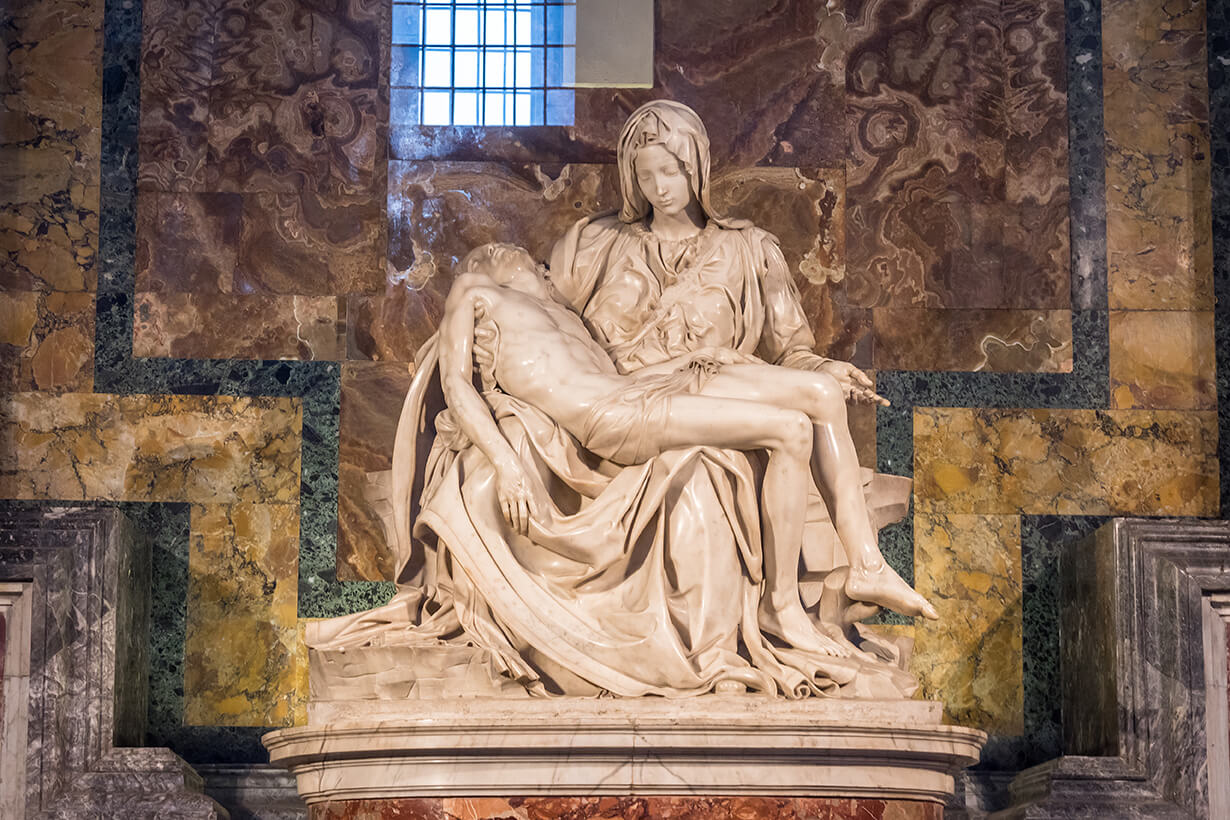
    Michelangelo’s Pietà in its marble setting inside St Peter’s Basilica
    Michelangelo’s Pietà, inside St Peter’s Basilica. Photo via Shutterstock.

    A conclave is a scheduling event before it is anything else. It closes one room, suspends two kinds of tours, and leaves the rest of the Vatican Museums running more or less as normal. That split, chapel closed, museums open, is easy to miss if you are booking a visit from abroad and only see headlines about the pope. Here is how it actually worked the last time it happened, in April and May 2025, and what to expect if you are holding a ticket dated near a future one.

    Sede vacante, defined in practical terms

    Sede vacante, “the seat being vacant,” is the formal name for the period between one pope’s death or resignation and the election of the next. Cardinals under eighty gather in Rome, and once assembled they are sealed into the Sistine Chapel for the vote itself, the conclave proper. The word conclave comes from the Latin for “with a key,” a reference to locking the electors in until they finish. That locking-in is precisely why the Sistine Chapel becomes unavailable to visitors before the voting starts: the room has to be cleared, prepared and secured days ahead of the cardinals’ arrival.

    What closed in 2025, and when

    Pope Francis died on 21 April 2025. A notice from the Vatican Museums, dated that same day, is specific about the sequence. First came a one-day closure tied to the funeral: “on Saturday 26 April 2025 the Vatican Museums and the Castel Gandolfo Museum Complex will be closed, as a sign of mourning, for the funeral of the Roman Pontiff Francis.” That was a single day, and the Museums reopened afterward.

    The second closure, the one that matters for planning around any future conclave, took effect two days later and lasted much longer. The same notice states: “The Sistine Chapel will be closed to the public from Monday 28 April 2025 for the requirements of the Conclave. All tours of the Vatican Gardens and the Necropolis of the Via Triumphalis are also suspended.” Three products went dark at once: the Sistine Chapel itself, guided Vatican Gardens tours, and the separate Necropolis of the Via Triumphalis tour, the ancient Roman burial ground beneath the Vatican’s parking area — a different site from the Scavi tour of the tomb beneath St Peter’s Basilica itself. None of those three has a fixed reopening date built into the notice. They stay closed for as long as the conclave’s logistics require, which in 2025 covered the setup period, the vote itself on 7 and 8 May, and the days immediately after while the new pope’s arrangements were finalised.

    What stayed open

    The rest of the Vatican Museums complex did not shut down. Travel and Leisure Asia, covering the period for travellers, reported that “the Vatican Museums will remain open, and other parts, including the Raphael Rooms,” continued to receive visitors while the Sistine Chapel sat closed. That is the core mechanic worth remembering: a conclave takes one room and two tour products offline, not the museum as a whole. Galleries, the Raphael Rooms, the Pinacoteca and the general collection routes kept running for anyone with a valid ticket, minus the final stretch of the standard route that normally ends in the Sistine Chapel.

    St Peter’s Square under conclave conditions

    Security at St Peter’s Square is not something a conclave invents from scratch. Its standing arrangement is described in plain terms by the Basilica’s own visitor FAQ: “access to the Basilica begins at the security checkpoints operated by the Italian State Police,” positioned in the square’s right hemicycle, facing the facade. That checkpoint runs on an ordinary Tuesday in November too. What changes during a conclave is volume and intensity rather than the basic setup: multiple outlets covering the 2025 conclave described added metal detectors and anti-drone measures around the square as crowds gathered for the white-smoke watch. Those crowd-scale and technology details come from press coverage rather than an official Vatican statement, so treat them as a reasonable expectation rather than a guaranteed checklist. What you can plan around with confidence is a slower, more heavily staffed checkpoint than usual, and a square that fills early on any day a vote is scheduled.

    If your ticket lands during a closure

    Vatican Museums tickets are governed by a standing policy, not a conclave-specific one, and it is unambiguous. The official pricing and terms page states plainly: “Tickets cannot be refunded.” That rule predates and postdates any conclave; it is the general condition every ticket is sold under. Standard admission is €20 full price, €10 reduced, and Skip the Line tickets booked online carry an additional €5 booking fee on top of the entry price.

    What that means concretely: if a Sistine Chapel closure overlaps your dated ticket, the Museums entry itself is very likely still usable for the rest of the route, while the Chapel portion is the part you would miss. We have not found an official Vatican statement laying out a rescheduling process specifically for tickets affected by a conclave-driven Sistine Chapel closure; what exists publicly is a scatter of differing policies from individual ticket vendors, none of them authoritative on the Vatican’s own terms. If you are booking during a period when a conclave looks plausible, the safest move is checking directly with whoever issued your ticket about their own change policy, rather than assuming a blanket refund exists.

    Does this pattern repeat every time?

    The 2025 sequence, museums open, Sistine Chapel and Gardens tours and Necropolis suspended, is precedent, not a codified rule that guarantees identical treatment in a future sede vacante. It is the clearest real example available, and it lines up with how the Vatican has generally handled solemn periods: close what the ceremony or security requirement demands, keep the rest running for the ordinary flow of visitors and pilgrims. A future conclave could differ in scope depending on how the College of Cardinals and Vatican security offices assess the moment. Treat the 2025 timeline as the best available guide, not a fixed script.

    Planning around it

    Outside of a sede vacante, the Museums run on their published schedule: Monday to Saturday 08:00 to 20:00 with last entry at 18:00, and the free last-Sunday-of-the-month opening from 09:00 to 14:00 with last entry at 12:30. Regular Sundays are closed, along with a short list of fixed holidays through the year. None of that changes because of a conclave; it only changes because a conclave is actively underway, and even then the closures apply to specific rooms and tour products rather than the whole complex.

    A conclave is a rare, short-lived event layered on top of an otherwise ordinary booking calendar, and most visitors will never plan a trip anywhere near one. If you want the full route through the Museums and the Sistine Chapel on a normal day, with entry timed to avoid the worst of the queues, our Vatican tickets and tours page has the current formats and departure times.

  • Why August Is Rome’s Emptiest Month for Everything Except the Vatican

    The Cortile della Pigna in the Vatican Museums, a courtyard on the standard visitor route
    The Cortile della Pigna, one of the open courtyards on the Vatican Museums route. Photo via Shutterstock.

    Every August I watch the same thing happen to my own street. My local bar puts up a paper sign, “Chiuso per ferie,” and doesn’t take it down for three weeks. My neighbour’s shutters stay down. Half the shops near my apartment go dark, and the ones that stay open move at the pace of a Sunday that never ends. Then I walk twenty minutes toward the river, cross into the Borgo, and the entire city reappears at once, minus the Romans and plus everyone else.

    That contrast is the real story of Rome in August, and it’s the one visitors ask me about most: is the Vatican crowded in August, or does the city’s famous summer exodus mean I’ll have Michelangelo to myself? The honest answer is that Rome empties and the Vatican fills, in the same weeks, for opposite reasons.

    Ferragosto sends Rome on holiday, not the tourists

    The 15th of August is Ferragosto, a public holiday that traces back to the Feriae Augusti, a rest period the emperor Augustus established in 18 BCE. It has outlived the empire by a wide margin. Wikipedia notes that the modern habit of leaving town for the day grew out of the Fascist period, when discounted “People’s Trains” in the 1920s put a short seaside trip within reach of ordinary workers for the first time. That custom stuck, and it grew: until 2010, roughly 90 percent of companies, shops and industries closed for the period around the holiday, not just the single day itself.

    That’s a pre-2010 figure and I won’t pretend to know this year’s exact number, but anyone who’s lived here in August doesn’t need a statistic to notice the pattern. Residents leave for the coast, the mountains, wherever relatives have a spare room, and they leave the historic centre to run on tourist traffic alone. My own trattoria closes for eleven days every year around the 15th. He’s run the place for as long as I’ve known him, and he’ll tell you plainly that half his usual customers have already left the neighbourhood by the time he locks up.

    Meanwhile the Vatican runs on a foreign calendar

    None of that applies across the river. Foreign visitors book August because it’s when school lets out, and the Vatican Museums are not closing for Ferragosto week the way the corner bar does. They post their regular hours as Monday to Saturday, “08.00 a.m. – 08.00 p.m.”, with the last entry two hours before that, and those hours hold for nearly the entire month. That break is genuinely narrow: the museums close on “14 and 15 August” and reopen on the 16th at the usual time. Two days off a thirty-one day month is not a lull, it’s a blip, and the crowd that was queuing on the 13th is back in force on the 16th.

    St Peter’s Basilica doesn’t even take those two days. Its posted summer schedule reads “Dal 1° giugno: dalle 07.00 alle 20:00”, from June 1st open seven in the morning to eight at night, with no listed August exception at all. So while Rome’s own residents are on a train to the coast, the basilica is open longer hours than at almost any other point in the year, absorbing visitors who have exactly one week in the city and no interest in adjusting their itinerary around a local holiday they’ve likely never heard of.

    Why the Vatican feels busier in August than in July

    Part of it is simple substitution. Rome’s population doesn’t vanish in August, it swaps. Residents leave, and a wave of foreign arrivals fills the vacuum, concentrated almost entirely in the handful of neighbourhoods a first-time visitor actually goes to: the historic centre, and the streets around St Peter’s. A local who avoided the Vatican area all year because it’s inconvenient for daily errands isn’t there to dilute the crowd. The people who are there are, overwhelmingly, people who flew in specifically to see it.

    Add to that the practical reality of European school calendars. Families from Germany, France, the UK and the US are all off at once in August, and a huge share of them build a Rome stop into a single big summer trip. It’s the one month when a family with school-age kids can travel together without pulling anyone out of class, so demand across the whole city stacks into these same four weeks. I don’t have a visitor count for this August specifically, and I’d be careful about anyone who claims to, but the queue outside the museum entrance most mornings tells you what the numbers would likely say anyway.

    The heat is real, but it’s not the whole story

    Ask a Roman why they leave in August and heat comes up before crowds do. It’s a fair complaint. At Ciampino, the 1991–2020 average high for August sits at “31.6 °C (88.9 °F)”, with humidity that makes the stone streets of the centre feel hotter than the number suggests. Worth noting, though: July runs almost as hot, just half a degree cooler on the Ciampino average (31.0 °C / 87.8 °F versus August’s 31.6 °C / 88.9 °F), so August’s reputation as the unbearable month is partly about who’s still around to complain, not a wide gap in the underlying numbers. Locals aren’t fleeing the single hottest month on the calendar. They’re fleeing the month when the heat coincides with a public holiday and a culture of taking the same weeks off.

    For a visitor, the heat matters most as a planning constraint rather than a reason to stay away. Midday sun on the walk from the museum entrance around the Vatican walls, or on the open expanse of St Peter’s Square, is genuinely draining by late morning in August. I tell people to treat the first two hours after opening as the whole point of the day and plan the rest around shade.

    What actually thins out, even in August

    One place has gone properly quiet, and it’s worth knowing about if you’re building a trip around this month specifically. Castel Gandolfo’s Apostolic Palace, open to the public as a museum since 2016, closed its doors to visitors starting in July 2026: Pope Leo XIV moved back in, restoring the complex to its traditional role as a papal summer residence rather than an exhibition space. It’s a useful reminder that “the Vatican” isn’t one single building with one single crowd pattern. The museums and the basilica in the city run near-full hours through August; a satellite site outside it can be closed to the public altogether.

    General audiences follow their own August logic too. Pope Leo XIV, elected in May 2025, paused the Wednesday catecheses over the summer, with the last one before the break falling on 24 June 2026. They resumed on 5 August 2026 with a session on “The Documents of the Second Vatican Council,” which means anyone visiting in the first days of August specifically should not assume an audience will be running, while anyone arriving from the second week onward has a reasonable chance of one being back on the calendar. I can’t confirm every subsequent Wednesday held through the rest of the month, so check current scheduling before you build a morning around it.

    What this actually means for your visit

    If you’re weighing an August trip against the crowd question, the pattern to plan around isn’t Rome’s calendar, it’s the Vatican’s own. The two fixed closure days, the 14th and 15th, are worth building a rest day or a day trip around rather than showing up and finding the gates shut. Every other day that month runs full hours, full crowds, and full heat by midday.

    None of this means August is a bad time to go. It means it’s a specific kind of visit: hot, busy, and running on a schedule that has nothing to do with what the rest of the city is doing around it. Book early entry, plan for the closure dates, and treat the crowd as a fixed feature of the month rather than something to route around. If you want a hand getting the timing right, our Vatican tours are built with exactly this month’s queues and hours in mind.

  • Is the Vatican Museums Open on Ferragosto (August 15)?

    Michelangelo’s Pietà in St Peter’s Basilica, which keeps its own opening calendar separate from the Museums
    Michelangelo’s Pietà in St Peter’s Basilica — the Basilica sets its own hours, separately from the Vatican Museums. Photo via Shutterstock.

    Walk up to the Vatican Museums entrance on the morning of 15 August and you will find a locked gate, a printed notice, and a small crowd working out what to do next. Walk five minutes south to St Peter’s Square and the basilica doors are wide open, tour groups moving through as usual. Same city block, same sovereign state, two completely different answers to “are you open today.” Understanding why takes a bit more than knowing it’s a holiday.

    What actually closes, and when

    The Vatican Museums’ own closure list does not name a single date for the Assumption. It groups two together: “14 and 15 August.” That detail trips people up every year, because Italy’s Ferragosto public holiday falls only on the 15th. That extra day catches people out: the Museums shut a full day earlier than the rest of the country, on a schedule set by the Vatican itself rather than borrowed from the Italian calendar. If you had 14 August pencilled in as a backup day because the 15th was booked out, it won’t work either.

    On every other day in the season, the doors run long. The published hours are “From Monday to Saturday 08.00 a.m. – 08.00 p.m.,” with the last ticket sold at 6:00 p.m. and a firm rule behind it: visitors “are required to leave the halls 30 minutes before museum closing time.” Build your Sistine Chapel afternoon around that half hour and you won’t be the group being waved out of the Raphael Rooms while the guards start switching off lights.

    Why two days, not one

    Ferragosto itself has a Christian layer most visitors never hear about. The holiday sits on 15 August because, centuries ago, the Church “moved the date of Ferragosto from the 1st to 15 August, the feast day of the Assumption of Mary, so as to integrate the pre-existing celebration into the cycle of the Christian year.” What began as an Ancient Roman festival became a Marian feast day, and Italy’s national holiday still rides on that religious foundation even for people who treat it as a beach weekend.

    The Vatican, however, is not simply following Italy’s lead here. It runs its own internal calendar of closures and observances, and the 14th–15th pairing is a decision made inside that calendar, not an automatic knock-on effect of the Italian public holiday next door. That distinction matters for planning, because it means Vatican closures don’t always line up neatly with the days Rome itself treats as holidays.

    St Peter’s Basilica keeps its own rules

    St Peter’s Basilica is a working church, and it is administered separately from the ticketed Museums complex. Its published hours simply state opening “From june 1st: from 7.00 am to 8:00 pm,” with no closure listed for mid-August. In practice the basilica stays open on the 15th, receiving Mass-goers and pilgrims exactly as it does most other summer days, security lines and dress-code checks included.

    Vatican paperwork even names this split calendar directly. Guided-tour hours for the basilica list separate slots for “Sundays and Vatican holidays,” running 1:30pm to 3:30pm rather than the weekday 9:30am–5:30pm slot. That phrase, “Vatican holidays,” is doing real work: it tells you the Holy See tracks its own set of observance days, distinct from Italy’s civic ones, and that different Vatican-run sites apply that internal calendar in their own way.

    A city-state with its own government

    None of this is bureaucratic quirk for its own sake. Vatican City is a sovereign state, not a neighbourhood of Rome with special planning rules. “The independent state of Vatican City came into existence in 1929 via the Lateran Treaty between the Holy See and the Kingdom of Italy,” and within its walls “the pope exercises principal legislative, executive, and judicial power over the State of Vatican City.” A closure notice posted at the Museums entrance is a decision by that government, not a courtesy extension of whatever Rome’s shops and offices are doing that week.

    That is the real answer to why the mechanics differ from a normal Italian public holiday. Italy closes for one civic day rooted in a religious feast; the Vatican, governing itself, has set its own two-day closure around the same feast, and there’s no requirement that the two match.

    Other Vatican sites, other schedules

    The pattern extends beyond the Museums and the basilica. The Necropolis of the Via Triumphalis, the ancient burial ground under the hill near St Peter’s, closes for the whole stretch from mid-July to early September rather than just a couple of August days. Castel Gandolfo, the papal residence in the hills outside Rome, runs partial afternoon closures of its own on selected August dates. Each site answers to the same city-state government but keeps a calendar suited to its own staffing and season, so “the Vatican is closed” is rarely a single, uniform fact.

    What we can’t confirm for this exact date

    It’s worth being honest about the gaps. Vatican audience listings for summer 2026 show a General Audience on 5 August with nothing published for the following week or two, matching the Pope’s usual summer recess, but that gap in a schedule page is not the same as official confirmation that nothing at all happens on the 15th. Whether Leo XIV, the 267th pope, has any public appearance, Angelus, or Mass planned specifically for that date hadn’t been confirmed at the time of writing. Exact 2026 ticket prices and Rome’s citywide transport arrangements for Ferragosto weekend were also unconfirmed from official sources, so treat those as things to check closer to the date rather than settled facts.

    Planning around the closure

    If your trip lands on either the 14th or 15th, the simplest fix is shifting the Museums visit to the day before or the day after; hours return to the normal Monday–Saturday 8am–8pm run as soon as the closure lifts. The basilica remains a fallback for those two days regardless, since it doesn’t follow the Museums’ calendar at all. Whatever the dates end up being, booking ahead removes the guesswork, and if you’d rather not track closure calendars yourself, our Vatican tickets page keeps current entry times and available dates in one place.

  • Vatican Museums Closure Calendar: Every Date They’re Shut in 2026

    The Cortile della Pigna in the Vatican Museums, a courtyard on the standard visitor route
    The Cortile della Pigna, one of the open courtyards on the Vatican Museums route. Photo via Shutterstock.

    Every year the Vatican Museums close on the same thirteen fixed dates, plus every Sunday except the last one of the month. None of it is Rome tourist folklore. It is a schedule set by the Governorate of Vatican City State, which administers the museums, and published on the museums’ own hours page, and it repeats with only Easter’s date shifting from year to year. Land in Rome on the wrong morning and you will find the entrance gates locked and a small crowd of confused ticket-holders reading a notice in three languages.

    The Full 2026 Closure Calendar at a Glance

    The official list, published on the Vatican Museums’ hours page, reads: “1 and 6 January / 11 February / 19 March / 6 April / 1 May / 29* June / 14 and 15 August / 1 November / 8, 25 and 26 December.” Add Easter Sunday itself, which the museums close as an ordinary Sunday and which the free-last-Sunday exception specifically excludes, and 2026 has fourteen fixed closure days.

    In calendar order: 1 January, 6 January, 11 February, 19 March, 5 April (Easter Sunday), 6 April, 1 May, 29 June, 14 August, 15 August, 1 November, 8 December, 25 December, 26 December. Bookmark the museums’ own hours page and its downloadable 2026 closure PDF before locking in flights. That page is the authoritative version, and it is the one that will carry any last-minute correction.

    New Year’s Double Closure — 1 and 6 January

    Most visitors expect 1 January to be dark, since almost every museum in Europe closes for New Year’s Day. What catches people out is 6 January, the Epiphany, which is shut too. In the Catholic calendar, 1 January is the Solemnity of Mary, Mother of God, and 6 January marks the visit of the Magi to the infant Christ. Both are holy days of obligation in Italy, and both are non-negotiable closures at the Museums. A trip planned for the first week of January should treat 2 through 5 January as the safe window, then watch the calendar again before assuming the 6th is fair game.

    Easter Weekend — 5 and 6 April 2026

    Easter Sunday falls on 5 April in 2026, and the museums’ own wording on this is worth reading closely. Their free-entry rule states: “Every last Sunday of the month (provided this does not coincide with Easter Sunday, 29* June Sts. Peter and Paul, 25 December Christmas Day, 26 December Feast of St. Stephen and 31 December Feast of St. Sylvester) 09.00 a.m. – 02.00 p.m.” Easter Sunday is named as an explicit exception, so even in a year where it fell on the last Sunday of a month, the museums would stay shut rather than open for free entry. In 2026 it closes for the simpler reason that it is a Sunday, and Sundays are closure days by default. Easter Monday, 6 April, sits separately on the fixed closure list, so the shutdown runs two consecutive days. The Wednesday and Thursday before Easter — 1 April and 2 April — keep normal hours, so a visit earlier in Holy Week still works well.

    Sts Peter and Paul — 29 June

    29 June is the Solemnity of Sts Peter and Paul, the patronal feast of Rome and of the Vatican, and it is a full closure. The official list marks it with an asterisk, “29* June,” both in the main closure roster and again in the last-Sunday exception clause. No footnote explaining that asterisk appears on the museums’ published page, so treat its precise meaning as unconfirmed; the closure itself is not in doubt. Rome’s civic calendar also treats the day as a local public holiday, so restaurants and shops in the historic centre often run reduced hours alongside the museum closure.

    The August Gap — 14 and 15 August

    This closure trips up the most trip planners, because it is easy to assume only Ferragosto itself, 15 August, is affected. The official list closes both 14 and 15 August, a full two days rather than one. 15 August is the Solemnity of the Assumption of Mary. 14 August closing alongside it gives staff, and the city, a genuine two-day break during Rome’s hottest, quietest week. If your itinerary places you in Rome for mid-August, route around both dates rather than the single one you would guess at. Separately, the Necropolis of the Via Triumphalis, a different ticketed site under Vatican administration, closes for its entire summer season, “15 July – 3 September.” Do not confuse that longer seasonal shutdown with the Museums’ two-day August closure. Castel Gandolfo’s Museum Complex runs its own tighter August restrictions too, on a schedule specific to that site.

    Autumn Into Christmas — 1 November to 26 December

    1 November is All Saints’ Day, and it is a full closure. Three more closures then cluster inside three weeks at year’s end: 8 December, the Immaculate Conception; 25 December, Christmas Day; and 26 December, the Feast of St Stephen. Visitors booking a Christmas-week trip often assume only the 25th is dark, then get caught out twice, once on the 8th and again on the 26th. A visit on 24, 27, 28, 29 or 30 December runs to normal hours. 31 December is open too, though it is separately named as an exception day for the free-last-Sunday rule in any year it falls on that Sunday.

    The Free Last Sunday Rule, and Where It Doesn’t Apply

    Outside these fixed dates, the museums are shut every Sunday of the year except the last one of the month, when entry is free and hours run “09.00 a.m. – 02.00 p.m.,” with “final entry 12.30 p.m.” It is a genuine bargain if your dates line up, though the museums also run more crowded on that Sunday than on almost any other day of the month, since Rome’s own residents use the free slot too. Regular Monday-to-Saturday hours are “08.00 a.m. – 08.00 p.m.,” with “final entry 06.00 p.m.” The free-Sunday exception has its own exceptions, as covered above: it does not apply when the last Sunday coincides with Easter Sunday, 29 June, 25 December, 26 December or 31 December. On each of those dates the museums close as normal instead of opening for free entry.

    Planning a Trip Around the Closures

    Once the fixed dates sit on your calendar, routing around them gets simple. Cross-check your travel dates against the list above before booking flights or a hotel, not after. If a closure lands mid-trip, shift the museum day rather than the whole itinerary. St Peter’s Basilica runs on its own separate schedule and stays open on most of these dates, so a closed museum morning can become a basilica and dome morning instead. Travelling through a closure-heavy stretch, such as the last week of December or the second week of August, calls for booking the museum slot on the day immediately before or after rather than leaving it to the final morning. That is the plan most likely to survive a schedule you did not check closely enough the first time.

    For exact opening times on the days the museums are open, including current final-entry cutoffs, our Vatican Museums hours page stays current with what is posted and is worth a check the week before you travel.

  • The Four Relics Kept Inside St Peter’s Dome Piers

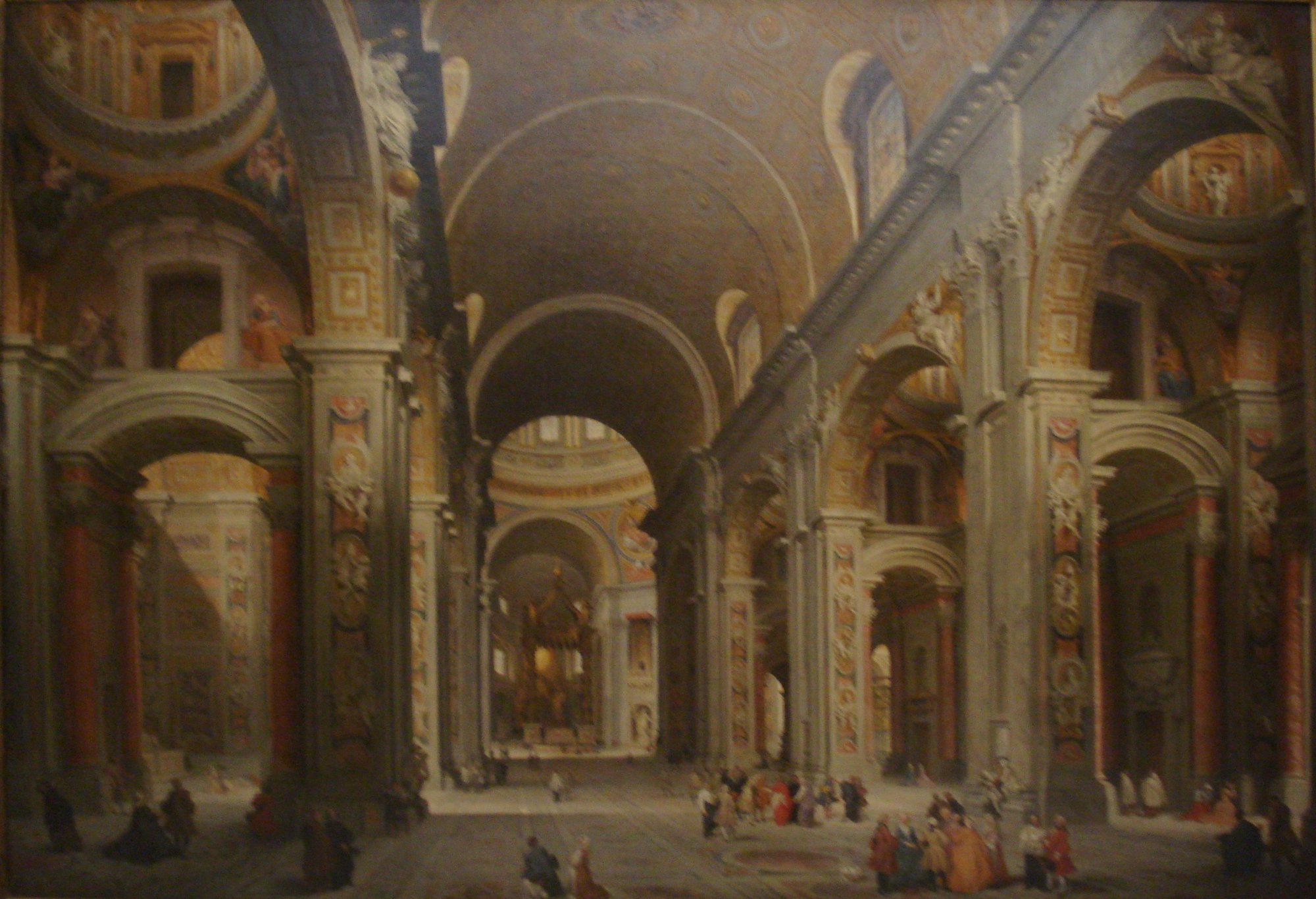
    Painting of the nave and Bernini's Baldachin in St Peter's Basilica, by Giovanni Paolo Panini
    Giovanni Paolo Panini’s painting of the nave and Bernini’s Baldachin in St Peter’s Basilica — the four piers this post is about stand at the crossing just beyond it. Public domain via Wikimedia Commons.

    Stand under Michelangelo’s dome and look at the four enormous piers holding it up. Each one has a niche the size of a small chapel, and in each niche stands a marble giant roughly four and a half metres tall. Most visitors photograph the statues and move on toward the Baldachin or the Pieta. Few realise that each of these four figures marks a specific relic, tucked into a hidden loggia carved directly into the stone above the statue’s head.

    One pier, one relic, one giant statue

    The pairing is deliberate and it has stayed fixed since the 1600s. As Wikipedia’s entry on the basilica puts it: “Set into the niches of the dome’s four gargantuan support piers are colossal statues representing the four major holy relics believed to be held in the basilica: St. Longinus with his spear, St. Helena with the True Cross, St. Veronica with her veil, and St. Andrew, whose skull was possessed by the Vatican until the 20th century.”

    Four sculptors, all working in the same decade, produced the figures: Gian Lorenzo Bernini carved Longinus, Andrea Bolgi carved Helena, Francesco Mochi carved Veronica, and François Duquesnoy carved Andrew. Bernini’s statue was the anchor of the scheme and the one that finished first, in 1638. It “sits in the north-eastern niche in the crossing of St. Peter’s Basilica,” diagonally opposite Helena, with Veronica and Andrew filling the remaining two corners.

    St Longinus and the Holy Lance

    Bernini’s Longinus grips the spear that, according to tradition, pierced the side of Christ on the cross. His arms are flung wide and his robes seem to catch a gust of wind that isn’t there, one of Bernini’s signature tricks for making static stone feel like a frozen instant.

    The relic itself has a stranger history than the statue. In 1492, Sultan Bayezid II sent a lance to Pope Innocent VIII, reportedly to pressure the pope into keeping Bayezid’s rival brother Cem in captivity. Rome was not the only city claiming a Holy Lance; competing versions existed in Paris, Nuremberg and Armenia, and doubts about authenticity go back to the object’s arrival. Whatever its true origin, the Vatican’s lance “has never since left Rome, and its resting place is at Saint Peter’s Basilica in a loggia carved into the pillar above the statue of Saint Longinus.”

    St Helena and the True Cross

    Across the crossing from Longinus stands Bolgi’s Helena, mother of the emperor Constantine and, by tradition, the woman who located the True Cross in Jerusalem in the fourth century. She holds a large cross and looks upward, completed between 1629 and 1639. The pier behind her is understood to hold a fragment of the cross she is credited with finding, though the exact size of the fragment and the precise chain of custody that brought it to this specific pier are not details we could confirm from primary sources, so we won’t invent them here.

    St Veronica and the veil nobody quite sees

    Mochi’s Veronica is the most dynamic of the four, caught mid-stride with the cloth billowing in her hands as though she is running to show it to someone just out of frame. Her relic is the veil said to bear the imprint of Christ’s face after she wiped it on the road to Calvary. It rests in “the chapel that lies behind the balcony in the southwest pier supporting the dome,” roughly above the statue.

    Once a year, on Passion Sunday, “three canons carry the heavy frame out on the balcony above the statue of St. Veronica holding the veil.” Anyone hoping for a clear glimpse of a face will be disappointed. Even from that balcony, “from this limited view no image is discernible and it is only possible to see the shape of the inner frame.” A nineteenth-century observer who examined the cloth up close described only “two large, faint rust-brown stains,” with any facial features “so vaguely drawn as to be nearly impossible” to make out. Wikipedia’s summary is blunt about it: “the provenance of this image is uncertain.” A 2025 display took place on 6 April; we couldn’t confirm the exact 2026 date at time of writing, so check the basilica’s own calendar closer to Lent if that ritual is what draws you.

    St Andrew, the pier with no relic left inside it

    Duquesnoy’s Andrew leans on the diagonal cross associated with his martyrdom, sculpted between 1629 and 1633 and installed in its niche by 1640. For centuries the pier behind him held the apostle’s skull, given to Pope Pius II in the fifteenth century and, in Wikipedia’s words, “enshrined in one of the four central piers of St. Peter’s Basilica in the Vatican.”

    It isn’t there anymore. “In September 1964, Pope Paul VI, as a gesture of goodwill toward the Greek Orthodox Church, ordered that the one relic of Saint Andrew held in Vatican City be returned to Patras.” The handover was formal: “Cardinal Augustin Bea, head of the Vatican’s Dicastery for Promoting Christian Unity, led a delegation that presented the skull to Bishop Constantine of Patras on 24 September 1964.” The statue still stands in its niche and the pier is still one of the four naming the crossing, but the relic that gave it meaning has been in Greece for six decades now. What, if anything, occupies that loggia today isn’t something we found documented, so we’re leaving it an open question rather than guessing.

    What you can actually see from the nave floor

    None of the four loggias is open to casual visitors as far as we could confirm, so the statues do most of the storytelling. Walk the full circuit of the crossing and you’ll notice how each figure’s pose points toward its relic: Longinus reaching outward with the spear, Helena raising the cross skyward, Veronica running with the veil, Andrew resting against his X-shaped cross. Bernini’s Baldachin sits in the middle of the four piers, so the whole arrangement is visible in one sweep if you stand roughly beneath the dome and turn slowly.

    If you’re planning around opening times, the basilica runs from 7am to 8pm from 1 June, though off-season hours outside that window weren’t separately confirmed on the official site, so it’s worth checking before an early or late visit. The dome climb itself keeps its own seasonal schedule, currently 7:30am to 5pm through late March 2026 and shifting to 7am–6pm from late March. None of this touches the Vatican Museums’ hours, which run Monday to Saturday from 8am to 8pm with final entry at 6pm, a separate ticket and a separate queue entirely.

    A detail worth pausing for

    Most people walk past all four piers on their way to somewhere else, usually the Pieta or the tomb beneath the altar. Knowing what’s supposedly inside changes the pace of that walk. You start reading the statues as labels rather than decoration, and the empty loggia behind Andrew becomes a small footnote in twentieth-century diplomacy rather than just another niche.

    If you’d rather have someone point out the piers, the loggias and the rest of the basilica’s layout in person, our St Peter’s Basilica tickets and guided tours cover the crossing along with the dome, the grottoes and the Pieta on the same visit.

  • The Sundial Line Cut Into St Peter’s Square You’ve Probably Stepped On

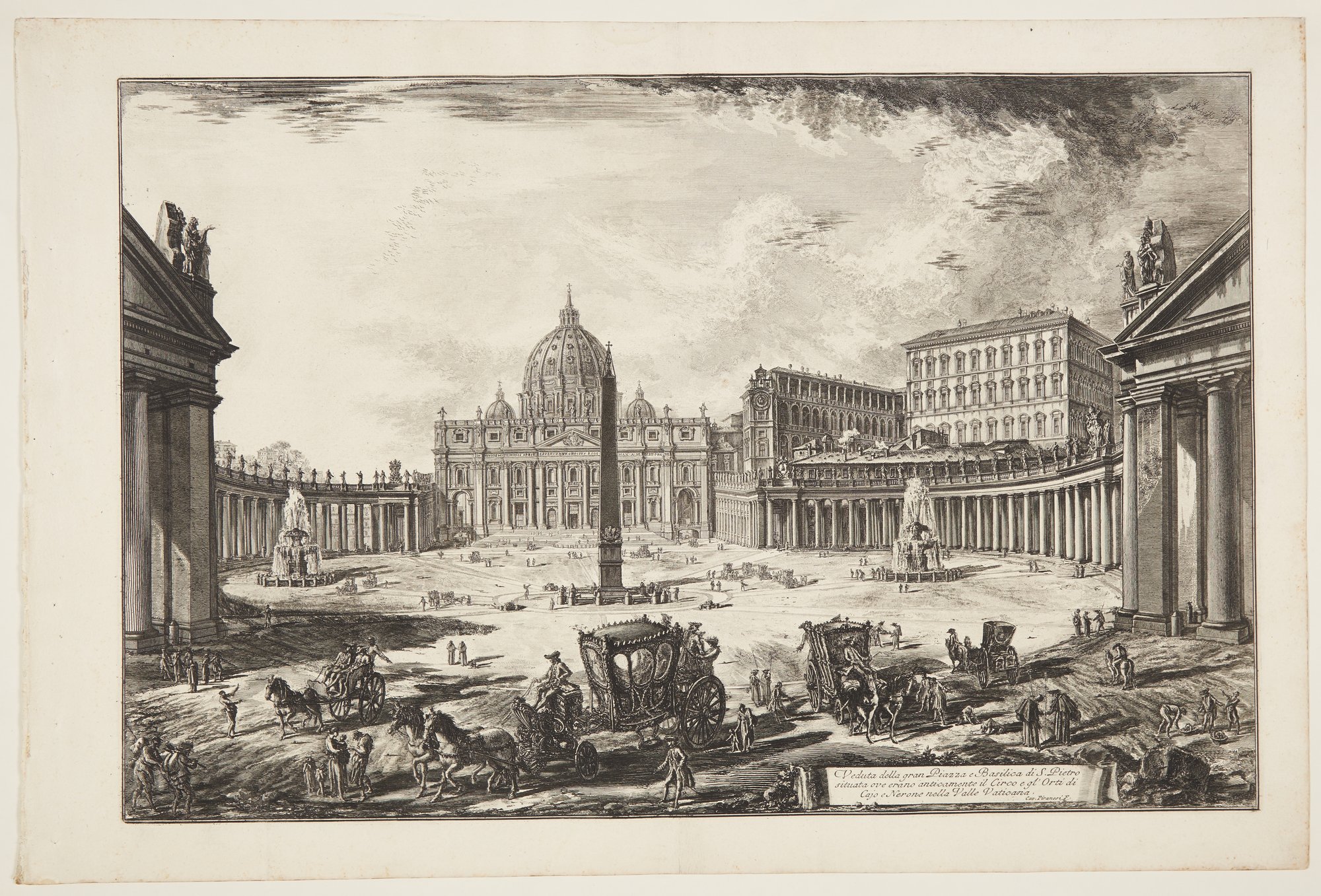
    St Peter's Square and Basilica facade with Bernini's colonnade, 1772 view by Piranesi
    St Peter’s Square and Bernini’s colonnade, an 18th-century view by Giovanni Battista Piranesi. Public domain via Wikimedia Commons.

    Most visitors cross St Peter’s Square looking up, at the dome or the colonnade, and never look down. That is a mistake, because the paving under their feet is doing something the facades are not: it is telling the time. Around the base of the obelisk at the centre of the square, stone markers set into the ground turn the whole monument into an instrument for reading the sun. This post is only about that one thing.

    An obelisk that was never built to tell time

    Nothing about the obelisk’s origin has to do with astronomy. It is a red granite shaft, 25.3 metres tall on its own, brought up to almost 40 metres once you count the bronze cross and the base it stands on. It started life in Heliopolis, Egypt, and Emperor Caligula shipped it to Rome in AD 40, where it first stood in the Circus of Nero, on roughly the spot where St Peter’s Basilica now rises. For over 1,500 years it stood a short distance from where you find it today.

    Moving it to the centre of the square was a sixteenth-century engineering job, not an ancient one. Architect Domenico Fontana relocated it on 10 September 1586, at Pope Sixtus V’s order, covering a distance of only 260 metres but requiring “thirteen months of preparatory work, 800 men, 160 horses and 45 winches.” It has stood upright ever since: “the only ancient obelisk in Rome that has never fallen,” a distinction none of the city’s dozen or so other obelisks can claim.

    Why a plain shaft makes a good sundial

    A vertical shaft with a flat, level surface around its base is, mechanically, all a sundial gnomon needs to be. As the sun moves through the sky, the obelisk casts a shadow whose tip traces a path across the pavement. At true solar noon, the shadow falls due north, and its length that day depends on the sun’s height, which changes with the season. Track where the shadow’s tip lands at noon across a full year and you have marked out, in stone, the sun’s annual cycle through the zodiac. That is exactly what happened here, more than two centuries after Fontana raised the shaft.

    The zodiac stones, added in 1817

    The record is specific about the date and the mechanism: “In 1817 circular stones were set to mark the tip of the obelisk’s shadow at noon as the sun entered each of the signs of the zodiac, making the obelisk a gigantic sundial’s gnomon.” Walk the paving on the right day and you are standing where the noon shadow once fell for that particular stretch of the calendar. Who specifically drew up the 1817 scheme is not something we can confirm from the sources checked for this piece, so treat any guide who names a designer with a pinch of caution.

    What is confirmed is the mechanism, and it is worth sitting with for a moment: nobody built a separate sundial in St Peter’s Square. Someone looked at an object already standing there for over two centuries and worked out how to read it.

    The compass rose and the paving lines

    Zodiac stones are not the only marking cut into the square. A compass rose is centred on the obelisk, and further out again: “the actual foci are marked in the paving by roundels of stone six or seven metres beyond the outer ring of the compass rose centred on the obelisk, on either side.” Stand on one of those roundels and look at the colonnade curving away from you: the four rows of columns line up into a single row, an optical trick that only works from that exact spot.

    The rest of the ground is not left as bare cobblestone either. As the record puts it, “the paving is varied by radiating lines in travertine, to relieve what might otherwise be a sea of setts.” Some of those lines connect to the sundial markers, others are purely decorative, and from ground level the distinction between the two is not always obvious. That is part of why the whole system goes unnoticed: it reads as ordinary paving pattern until you know what to look for.

    Finding the markers on the ground

    Start at the obelisk’s base and work outward in a slow circle. Zodiac stones sit close in, arranged around the shaft at roughly equal spacing. Beyond that, the compass rose forms a wider ring, and the paired roundels marking the colonnade’s optical foci sit further out again, on the north-south axis through the obelisk. None of it is roped off or labelled, which is exactly why it survives as a genuine discovery rather than a marked attraction: you have to know to look down.

    There is no fee to walk the square and no ticket required to see any of this. St Peter’s Square is a public piazza, open to anyone, separate from the Vatican Museums’ own admission and hours, which apply only inside the museum buildings themselves.

    Seeing it as part of a wider visit

    Ten minutes at the obelisk’s base, done properly, changes what the rest of the square looks like. The colonnade stops being background scenery and becomes a piece of geometry keyed to two stone roundels you can stand on. The paving stops being texture and becomes a calendar. If you are building a Vatican day around the Museums or the Basilica, it is worth arriving early enough to give the square that ten minutes before the crowds thicken, rather than treating it as a walkway between the two. For help putting a full Vatican visit together around that timing, our Vatican tours page lays out the guided options that make room for it.

  • St Peter’s Basilica Line: Morning or Afternoon, Which Actually Moves Faster?

    Skip-the-line entrance at St Peter's Basilica
    The skip-the-line entrance at St Peter’s Basilica, on the same side of the square as the security checkpoint most visitors queue at.

    “Go in the morning” is the one piece of Vatican advice every guidebook repeats, and for the Museums it holds up. For the Basilica on its own, that advice is borrowed from a building with a different problem. St Peter’s has no ticket booth to beat. Entry is free and self-guided. The thing that actually slows you down is a police checkpoint, and the crowd that forms there moves on a schedule that has nothing to do with sunrise.

    A different queue than the one you’re picturing

    Skip-the-line advice for the Museums works because you’re racing other people to a ticket window. That variable simply doesn’t exist here. According to the official site, “access to the Basilica begins with the security checks by the Italian State Police,” with the stations set up “in the right hemicycle of Saint Peter’s Square looking towards the Basilica,” and “at least four other gates available” for those controls. There is no admission fee to dodge and, for a plain visit without a guide, no booking to race against. A timed slot exists only for the Digital Audio Guide product, not for walking in unaccompanied.

    One fact changes the whole timing question once you sit with it. You’re not trying to beat a sellout, since nothing sells out. You’re trying to avoid standing behind whoever else decided to show up at the same hour you did, which is a very different problem to plan around, and it has almost nothing to do with what time the sun comes up.

    What the 7am opening actually buys you

    Current hours run “from 7.00 am to 8:00 pm” every day, with no shortened Wednesday schedule listed on the official page. Arrive at opening and the security line genuinely is short, but not for the reason most people assume. It isn’t early risers beating a crowd. It’s a structural gap: organised tour groups cannot register before 9:30am on weekdays, or 1:30pm on Sundays and Vatican holidays. A guide simply cannot walk a party of thirty through the portico desk before that desk itself opens for business. So the first ninety minutes after 7am belong almost entirely to individual visitors, and at that hour there aren’t many of those either. This is the one case where the reflexive morning advice happens to be right, though for a narrower reason than “crowds build steadily all day.” Enter at 7:15 and you’re beating a registration clock, not a sunrise.

    Where the standard advice falls apart

    Once the 9:30am registration window opens, it stays open until 5:30pm, with last registration accepted at 5pm. Any group of more than four people has to register at the Tour Desk in the portico, at €1.50 per visitor, capped at thirty visitors per guide. That’s a seven-hour stretch during which new groups can join the queue at almost any point, which is exactly why “afternoon is worse” doesn’t hold as a blanket rule. Nine-thirty is a floor for group traffic, not a ceiling, and it stays open for most of the operating day. Blaming a single half of the day misses where the real problem sits: the middle. By mid-morning, independent visitors are past the opening lull, and groups that registered near the desk’s early hours have already fed into the security queue behind them. Both streams peak around the same stretch of the clock, roughly late morning into early afternoon, and that overlap, not the calendar’s morning-versus-afternoon split, is the part worth avoiding if your schedule allows it. Nobody plans around a registration desk when they’re picking a visit time, which is exactly why this gap goes unnoticed.

    The late-afternoon window nobody plans around

    Here’s the part that runs against the usual script. Since new groups can’t register past 5pm on weekdays, or 3pm on Sundays, no fresh block of thirty visitors is joining the security line after that cutoff. Doors stay open until 8pm, though, so the stretch from roughly 5:30pm onward is structurally quieter on the group side, even while most visitors have already written off the afternoon as the busy half of the day. It won’t be empty. Individual footfall doesn’t vanish at 5:30. But it’s a genuinely different crowd mix from the one you’d meet at noon, worth weighing against a 7am alarm if you’d rather sleep in. Late risers, in other words, aren’t automatically punished here the way they are at the Museums.

    How to actually plan around it

    If your priority is the shortest possible wait and you don’t mind an early start, arrive at the security checkpoint by 7:30am, ninety minutes before groups can even register. Rewind that clock and skip mornings entirely if you’d rather sleep. If early rising isn’t realistic, don’t default to “early afternoon” out of habit. Aim instead for 5:30pm or later, after the last tour group has already checked in for the day. Roughly 10am to 2pm is the stretch worth avoiding if you have any flexibility at all, since that’s when independent and organised traffic overlap the most. None of this requires a booking for basic entry. It’s purely a question of which gate you’re standing behind, and when.

    The Wednesday wrinkle

    General Audiences resumed on 5 August 2026 after a full suspension through July, and they typically fall on Wednesday mornings when the calendar allows. There’s no official statement confirming whether or how an audience in the square reroutes the security line that day, so treat a Wednesday morning visit as an unknown rather than a fixed rule. Seating, barriers, and the flow of people arriving for the audience could plausibly change how the checkpoint queue behaves, but nothing on the record spells out how, and guessing wouldn’t help you. If your trip lands on a Wednesday and the timing matters to you, it’s worth checking that week’s audience schedule before locking in a 7am start, or simply building in extra time as a buffer rather than assuming the usual pattern holds.

    None of this replaces knowing your own itinerary. If you’d rather have someone else handle the timing and the entrance logistics, our St Peter’s Basilica tickets and tours page lays out the guided options that skip the guesswork entirely.

  • Michelangelo Never Saw His Dome Finished — Here’s What Changed After He Died

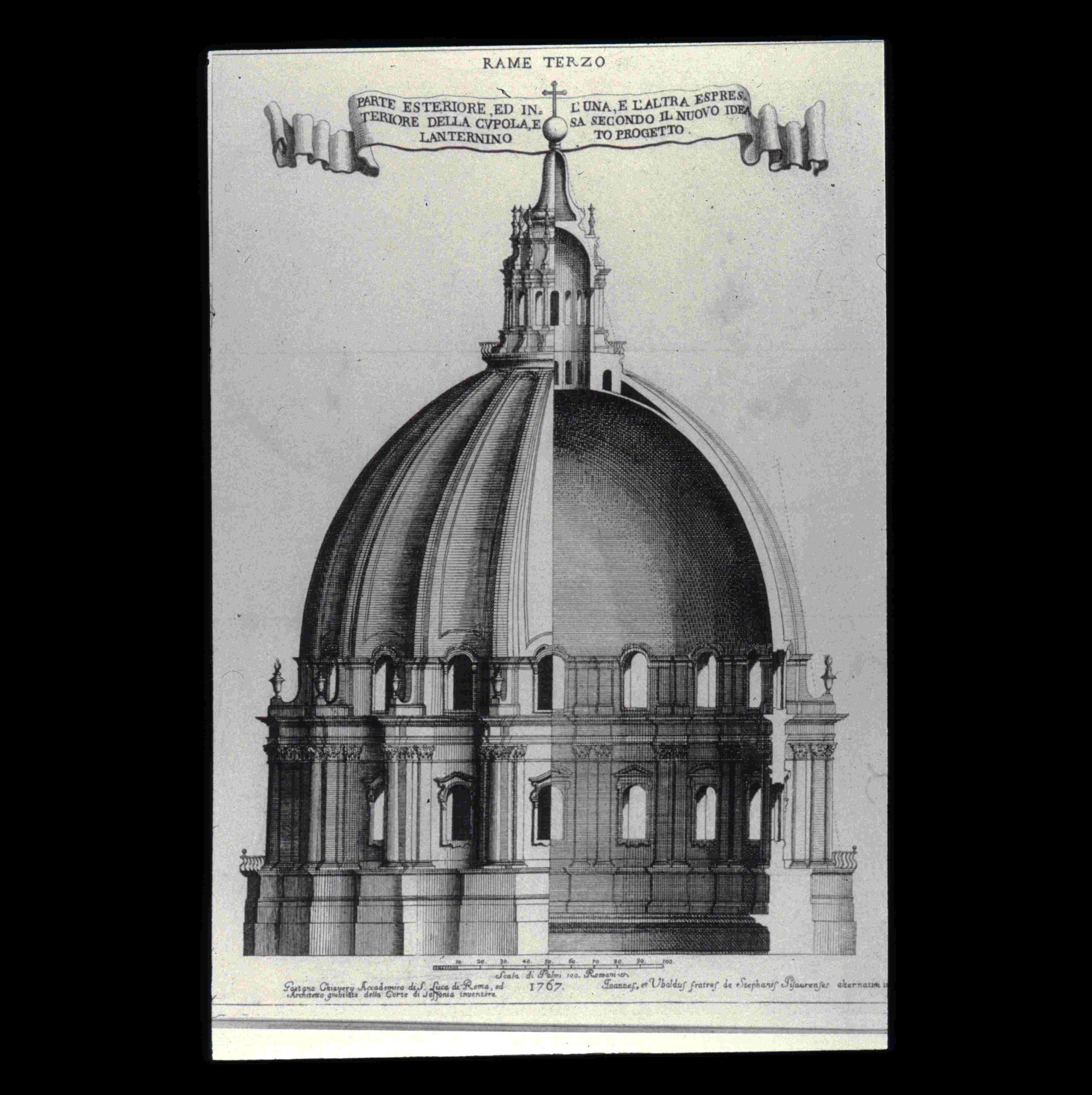
    Cross-section engraving of Michelangelo's dome (cupola) of St Peter's Basilica
    A cross-section engraving of the dome, showing the profile that took its final steep, ovoid form after Michelangelo’s death. Public domain via Wikimedia Commons.

    Every guide standing under the dome of St Peter’s says some version of the same line: Michelangelo designed this. It is not false, but it is not the whole shape of the truth either. Michelangelo drew the plan, argued for it against a papal bureaucracy for seventeen years, and died before a single course of the dome itself rose above the drum. What visitors actually look up at today was finished by another architect, working from an altered wooden model, twenty-six years after Michelangelo was in the ground. That steep, pointed profile you photograph from the piazza is not quite the curve he left behind.

    What Michelangelo actually finished

    Michelangelo took over as chief architect of New St Peter’s around 1547, inheriting a project that had already ground through Bramante, Raphael and Antonio da Sangallo the Younger, each with a different plan and a different set of half-built piers. He didn’t start from nothing. Wikipedia’s account is precise on this point: “Michelangelo redesigned the dome in 1547, taking into account all that had gone before.” He simplified Sangallo’s overbuilt scheme, strengthened the piers, and settled on a single unified dome plan that would guide construction for the rest of the century.

    He worked on it for the better part of two decades, into his late eighties, and he did not live to see it built. He died on 18 February 1564. By then the drum, the tall cylindrical base the dome sits on, was complete. The primary sources are direct on this: “Michelangelo died in 1564, leaving the drum of the dome complete, and Bramante’s piers much bulkier than originally designed, each 18 m across.” Nothing above the drum existed yet. What visitors picture as “the dome,” the great curved shell that shapes the skyline of Rome, was still just drawings, a wooden model, and an engraving.

    Five years of almost nothing

    What happened immediately after Michelangelo’s death is the part most walking tours skip, because not much did happen. His assistant, Jacopo Barozzi da Vignola, took over the practical work, and Pope Pius V appointed Giorgio Vasari specifically to police the site and make sure nobody drifted from Michelangelo’s intentions. Vasari knew the plans as well as anyone alive. It didn’t matter much. As the record puts it: “Despite Vignola’s knowledge of Michelangelo’s intentions, little happened in this period.” Construction stalled for the better part of two decades after the master’s death, not because anyone rejected his vision, but because nobody with the will or the money pushed it forward.

    That changed in 1585, when Pope Sixtus V appointed Giacomo della Porta as architect, with Domenico Fontana assisting. Sixtus reigned only five years, and the building “advance[d] at a great rate” in that window. Della Porta and Fontana are the two names actually responsible for turning Michelangelo’s drawings into standing masonry.

    The model that got altered

    Here is the detail that the flattened version of the story leaves out entirely. Michelangelo left behind a large wooden model, the way Sangallo had before him. Della Porta did not build from it unchanged. He altered it, in his own hand, before construction of the dome shell began in 1588. That change was not cosmetic tinkering; it went to the fundamental shape of the thing. In the words of the sourced account: “Giacomo della Porta subsequently altered this model in several ways. The major change restored an earlier design, in which the outer dome appears to rise above, rather than rest directly on the base.” Della Porta pushed the profile toward something steeper and more pointed, closer in silhouette to Brunelleschi’s dome in Florence than to a lower, more hemispherical curve resting flush on its drum.

    A separate Wikipedia entry on della Porta himself confirms the same shift from the architect’s side of the record: he “made a noticeable change in the bend curvature of Michelangelo’s projected design, building the dome steeper, similar to the Brunelleschi model.” Two independent article threads, describing the same alteration from opposite directions, agree on the mechanics of what changed.

    What actually stayed the same

    It is worth being precise here, because it would be easy to overcorrect into a different flattened story: that della Porta redesigned the whole dome from scratch. He didn’t. Its drum, the tall ring of paired Corinthian columns the dome rests on, was Michelangelo’s, finished under his own supervision before he died. Most of what della Porta touched after that was decorative rather than structural. The sourced list is short: “the adding of lion’s masks over the swags on the drum in honour of Pope Sixtus and adding a circlet of finials around the spire at the top of the lantern, as proposed by Sangallo.” Lion’s masks and finials are ornament. The curvature of the outer shell is engineering. Only one of those two categories changes how the dome carries its own weight, and it is not the lion’s masks.

    Who actually deserves the credit

    Even the profile change has a contested author, and it is worth sitting with the ambiguity rather than resolving it for a cleaner headline. Some scholars have floated the idea that Michelangelo himself, in his final days, reverted to the steeper, more pointed form, meaning the change could still trace back to his own late judgment rather than a later architect’s correction. But the more heavily cited account runs the other way. Historian Lees-Milne credits della Porta with the decision outright, recording that della Porta told Sixtus V directly that Michelangelo “was lacking in the scientific understanding of which he himself was capable.” That is a striking thing for one architect to say about another to a reigning pope, and it reads less like modesty than like a man staking a professional claim on the dome’s final form.

    Whichever version is closer to the truth, the plain fact remains that della Porta and Fontana are the two names on the finished structure. As one source summarises it: “Della Porta and Fontana had the merit of the technical execution of a firm that sanctioned an important stage of technological advances at the end of the sixteenth century.” The dome that exists today reached completion under their supervision in 1590, the drum under Michelangelo’s in 1564. Twenty-six years and two architects, not one continuous hand.

    What you are actually looking at

    The engineering behind the finished shape is worth knowing before you crane your neck at it. The dome is built from two brick shells, the outer one carrying sixteen stone ribs, twice the number Brunelleschi used in Florence but far fewer than Sangallo had originally proposed for St Peter’s. Its ovoid shape, rising steeply rather than sitting as a flat hemisphere, matters structurally as well as visually: it “exert[s] less outward thrust than does a hemispherical dome, such as that of the Pantheon.” That steeper profile, the same one della Porta pushed for over Michelangelo’s flatter alternative, is doing real mechanical work, not just aesthetic work. It is holding up 136.6 metres of brick and stone over your head, the tallest dome anywhere in the world, standing on a drum framed by sixteen pairs of Corinthian columns roughly fifteen metres each.

    Start to finish, the whole basilica took a hundred and twenty years: construction “began on 18 April 1506 and was completed on 18 November 1626.” Michelangelo worked on it for less than a fifth of that span, and none of his years overlapped with the dome actually rising.

    Standing under it now

    None of this makes the official framing wrong to use as shorthand. The basilica’s own booking site for the dome climb still describes the visit as a chance “to experience Michelangelo’s extraordinary vision,” and in the broad sense that’s fair. That much is his. The proportions, the drum, the basic ambition, all Michelangelo’s own decades of argument with popes and rival architects. What changed after 1564 was narrower and more specific than most retellings suggest: not the drum, not the basic footprint, but the exact bend of the curve rising above it, decided by a second architect who was willing to say, to a pope’s face, that he knew something Michelangelo didn’t.

    If you want to see the join between the two men’s work rather than just the finished silhouette, it helps to have someone point out where to look, since nothing on site marks the line between Michelangelo’s drum and della Porta’s shell. Our Vatican guides page covers the options for building that kind of detail into a basilica visit, including routes that take in the dome. Once you know where one architect’s work ends and the other’s begins, you stop seeing a single unbroken masterpiece and start seeing a hundred-year argument that happened to end in stone.

  • Why the Bronze Statue of St Peter Has One Foot Worn Smooth

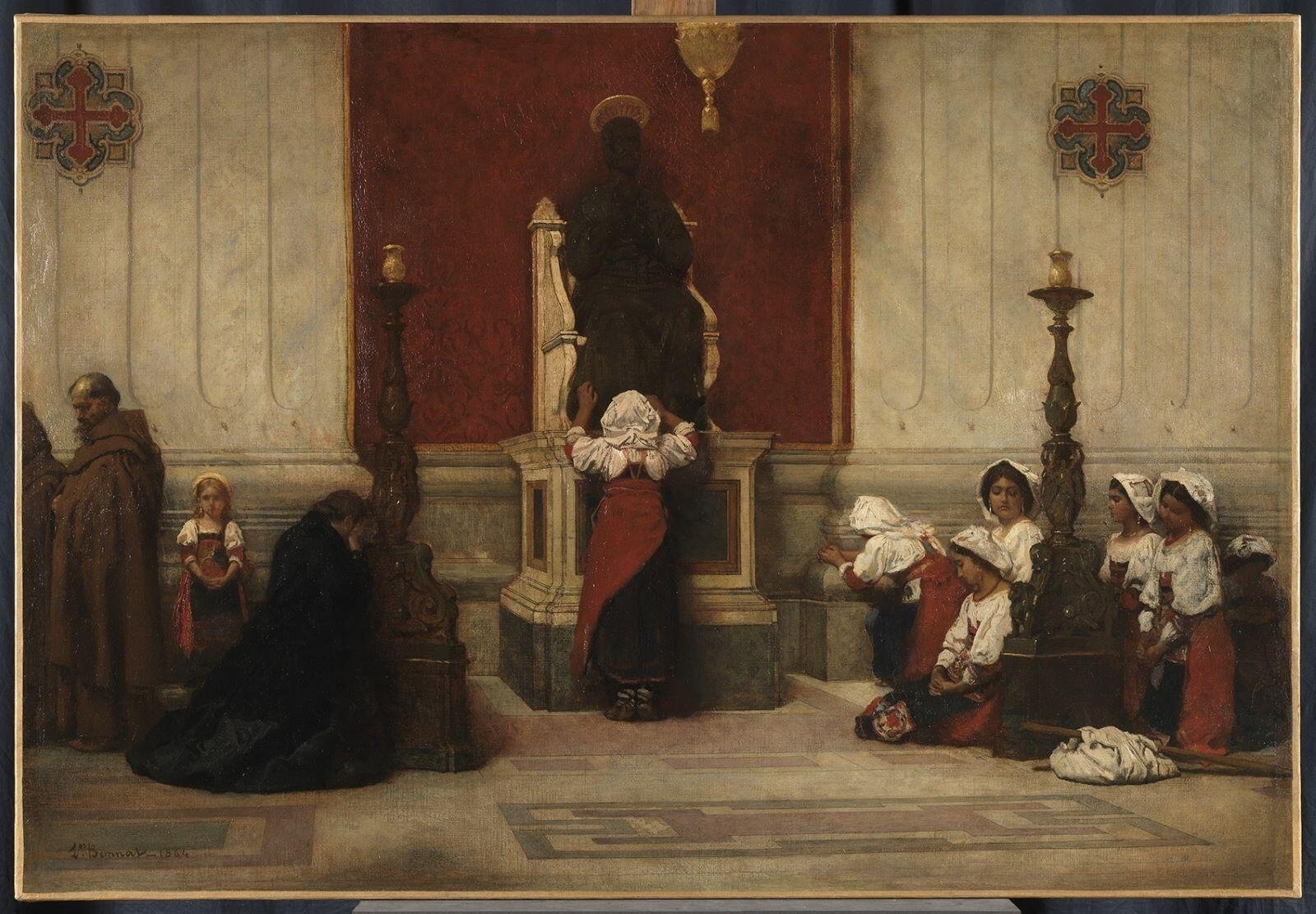
    Pilgrims gathered at the bronze statue of Saint Peter inside St Peter's Basilica
    Pilgrims at the bronze statue of Saint Peter inside St Peter’s Basilica. Public domain via Wikimedia Commons.

    Stand near the crossing of St Peter’s Basilica for ten minutes and you will watch a queue form without anyone organising it. A visitor steps up to a seated bronze figure, reaches for its right foot, presses a hand or a pair of lips to the metal, and moves on. The next person is already waiting. Look closely at that foot and you will notice something odd: the toes are not quite toe-shaped any more. They have been smoothed into soft, rounded lumps, the bronze polished bright by contact in a way the rest of the statue never sees.

    A gesture that predates the tour groups

    This is not a habit that started with modern tourism. According to stpetersbasilica.info, “in the Middle Ages pilgrims who reached Rome, touched and kissed the foot of the statue and prayed to St. Peter asking that he be merciful and open the gates of heaven for them if they died during the pilgrimage.” A journey to Rome in that period was slow and rarely cheap, and it carried real risk along the way. Plague took travellers. So did bandits, and so did roads that simply gave out underfoot. Touching the foot of the man holding the keys to heaven was not a photo opportunity. It was insurance, offered in the one currency a medieval traveller actually had: physical contact with something holy.

    That gesture never stopped. It simply picked up momentum, generation after generation, until it became one of the most reliable rituals inside the basilica. As stpetersbasilica.info puts it plainly: “Pilgrims who come to the Basilica traditionally touch and kiss its foot, so that it is literally worn thin.”

    Whose statue is it, really?

    The seated figure everyone reaches for shows St Peter enthroned, right hand raised in blessing, left hand holding the keys. For centuries it has been credited to the sculptor and architect Arnolfo di Cambio, active in Rome and Florence in the late 1200s, with a traditional dating of around 1300. The attribution rests partly on style: the “‘antique’ modules that are present, such as the so-called ‘snail’ curls of the hair and the beard are found in famous Arnolfian works,” notes stpetersbasilica.info.

    But the dating is genuinely contested, not just a footnote. The same source records that “some scholars have attributed it to Arnolfo di Cambio (1245–1302), but others believe that it is a V century casting” — meaning a bronze roughly eight centuries older than the Arnolfo attribution would suggest. Nobody has settled the question with certainty. What both camps agree on is simpler and more human: whoever cast it, people have been touching that same right foot for a very long time.

    Why bronze wears the way it does

    Bronze is not soft. It is an alloy of copper and tin, hard enough to hold a sharp casting edge for centuries indoors. That is exactly why the wear on the statue’s foot is worth pausing over: it is not decay, corrosion, or age doing the work. It is friction, applied by an enormous number of hands and lips, spread across an enormous number of years.

    Skin oils and the mild abrasion of repeated contact remove a few atoms of metal at a time — an amount too small to measure in any single touch, but cumulative across millions of visits. The basilica itself confirms the outcome rather than the mechanism: “On this ancient bronze statue, St. Peter has his right toes worn down by centuries of pilgrims who traditionally touch the foot.” A second passage describes the same effect from a different angle: “His right foot protrudes from the previously mentioned base, which is worn by the kisses of the devout.” The base is worn too, not only the toes — a detail that tells you the contact point has shifted slightly over the centuries as the crowd around it changed.

    Why the right foot specifically

    The statue sits with its right foot extended slightly forward, protruding from the base in a way that puts it within easy reach of anyone standing beside the pedestal. That physical accessibility, more than any specific instruction, is probably why the right foot became the target rather than the hand or the robe. A gesture repeated by enough people settles into the path of least resistance — the part of the sculpture a person can reach without climbing over a barrier or asking permission.

    Finding it inside the basilica

    The statue stands inside St Peter’s Basilica itself, near enough to the main flow of visitor traffic that almost nobody who does a full circuit of the interior misses it. You do not need a guide to find it; you need only follow the small, constant cluster of people pausing to touch something at knee height. If you arrive early, before the midday crowds build, you can usually get close enough to see the wear pattern clearly rather than glimpsing it over someone’s shoulder.

    Planning the visit

    From 1 June, the basilica opens “from 7.00 am to 8:00 pm,” which gives a long window to time your visit around quieter hours — mid-morning on a weekday tends to be calmer than the early afternoon rush. If you are combining the basilica with the Vatican Museums on the same day, note that the Museums run “08.00 a.m. – 08.00 p.m.” Monday to Saturday, with the last entry two hours before closing, and that “visitors are required to leave the halls 30 minutes before museum closing time.” The Museums close on ordinary Sundays, opening instead on the last Sunday of the month for free entry between 9am and 2pm, so build your itinerary around that pattern rather than around a normal weekend.

    Basilica entry itself is free, though guided access and skip-the-line arrangements make the visit considerably smoother during the busiest months of the year, when the queue outside can run long before the doors even open.

    Standing before that bronze foot, worn smooth by a thousand years of the same small gesture, is one of those moments where St Peter’s stops feeling like a monument and starts feeling like a place people have actually lived their faith in, one touch at a time. If you want to see it for yourself without losing half the morning to a queue, our St Peter’s Basilica tickets and tours are a straightforward way to get inside and find it.

  • What Actually Gets Confiscated at St Peter’s Square Security Check

    Piranesi's 1772 engraving of St Peter's Square and Bernini's colonnade, the square where today's security checkpoint operates
    St Peter’s Square and Basilica facade with Bernini’s colonnade, 1772 view by Piranesi. Public domain via Wikimedia Commons.

    Before you reach the Basilica doors, everyone walks through a checkpoint set up in the open air of St Peter’s Square. It looks informal compared to an airport line, folding tables and a metal detector arch under the colonnade, but it is the only real gate between the piazza and the church, and it decides how fast your morning goes. Get the basics right beforehand and the whole thing takes less time than buying a coffee. Get them wrong and you can lose twenty minutes arguing with an officer who has heard every excuse already.

    Who actually staffs it

    This is not a Vatican operation. As the Basilica’s own site puts it: “Access to the Basilica begins with the security checks by the Italian State Police: the stations are located in the right hemicycle of Saint Peter’s Square looking towards the Basilica.” That is a meaningful detail. St Peter’s Square itself is Vatican territory, but the Lateran Treaty hands Italian police ordinary crowd-control authority there, which is why State Police rather than Vatican personnel staff this checkpoint. The Vatican Museums entrance, a short walk away, carries no such carve-out. Two checkpoints, two different forces, and neither page names who staffs the other one.

    What won’t get past the check

    The Basilica’s rules for visitor conduct are short and specific. They prohibit using phones inside, smoking, eating or drinking, and bringing animals or bulky objects. None of that reads like an airport prohibited-items poster; there’s no itemised list of blades, liquids or lighters published for this particular checkpoint. What the guidance does say, clearly, is that anything bulky is a problem before you even reach the metal detector. If your bag looks like it belongs in an overhead locker rather than on your shoulder, expect a conversation with the officer on duty.

    Bag size: there’s no number, only advice

    Visitors often ask for a centimetre limit the way airlines publish one for carry-on luggage. No such number exists here. Basilica guidance reads instead: “we recommend traveling light and bringing only small backpacks or small personal bags.” That phrase is doing a lot of work. It tells you the standard is judgement, not measurement, so a slim day bag clears without comment while a full-size hiking pack invites a second look. Pack for the day the way you would for a museum, not for a flight, and you’ll rarely think about this once you’re through the tables.

    Dress code enforced at the same tables

    Officers at the checkpoint also act as the first line of the dress code, and the Basilica states it plainly: “Entry to the Basilica is permitted only with appropriate clothing for a place of worship. Excessively short clothing, sleeveless tops, or hats are not allowed.” Cover your shoulders, skip anything cut above the knee, and take hats off before you’re waved forward. A related standard, worded a little differently, governs the Vatican Museums next door, banning “sleeveless and/or low-cut garments, shorts above the knee, miniskirts and hats.” Bring a light scarf if you’re travelling in summer clothes. It solves the shoulders problem in ten seconds, and it works at both checkpoints without you having to remember which wording applies where.

    How it differs from the Museums entrance

    Walk about fifteen minutes north to the Vatican Museums and the published rules get far more granular. Its own advice page routes knives and scissors, plus metal tools generally, into a free cloakroom rather than past the door. It routes medium and large umbrellas into that same cloakroom, walking sticks aside, along with tripods, video cameras and banners. It also states flatly that “it is forbidden to bring any type of firearm and/or dangerous material into the Museums,” and names telescopic selfie sticks specifically as forbidden. Visitors are even asked to “remove inadmissible items from their hand baggage beforehand, and to inform staff in advance.” Nothing on the Basilica’s own pages runs to that level of detail. Whether that gap reflects a genuinely gentler check at the Square or simply a shorter published list is something no official source states, so treat it as a difference in paperwork rather than a guarantee of an easier line.

    Why checkpoint speed shapes your whole visit

    The Basilica is open, per its current hours, “from june 1st: from 7.00 am to 8:00 pm,” but the closing hour is softer than it sounds. A line buried in the announcement of that schedule is worth reading twice: “Last entry will be permitted by 7:15 p.m., subject to visitor flow and waiting times for security checks.” In other words, the checkpoint itself can shrink your window on a busy evening, cutting off entry before 7:15 if the queue is still moving through. Vatican Museums hours run on a fixed clock instead, admitting visitors Monday to Saturday until 6:00 p.m. against an 8:00 p.m. closing, with no equivalent note about security delays pushing that cutoff earlier.

    A five-minute checklist

    Sort the dress code out before you leave your hotel, not after you’re turned away at the tables. Carry a bag you’d call small without arguing the point. Finish any coffee or snack before you join the line, since food and drink aren’t allowed inside once you’re through. Leave the umbrella and the tripod at the hotel too; neither is named in the Basilica’s own rules, but both fit the description of a bulky object staff can turn away on sight. If you’re aiming for a late-afternoon visit, build in slack ahead of 7:15 p.m. rather than treating it as a deadline you can arrive at exactly. None of this takes long to plan, and it turns the checkpoint into thirty seconds of formality instead of the reason your visit gets cut short.

    If you’d rather have someone handle the timing and the entry logistics for you, our St Peter’s Basilica tickets and tours page lists guided options that get you to the doors with a plan already in place.