Category: Uncategorized

  • Why the Apollo Belvedere Became the Measure of Beauty for 300 Years

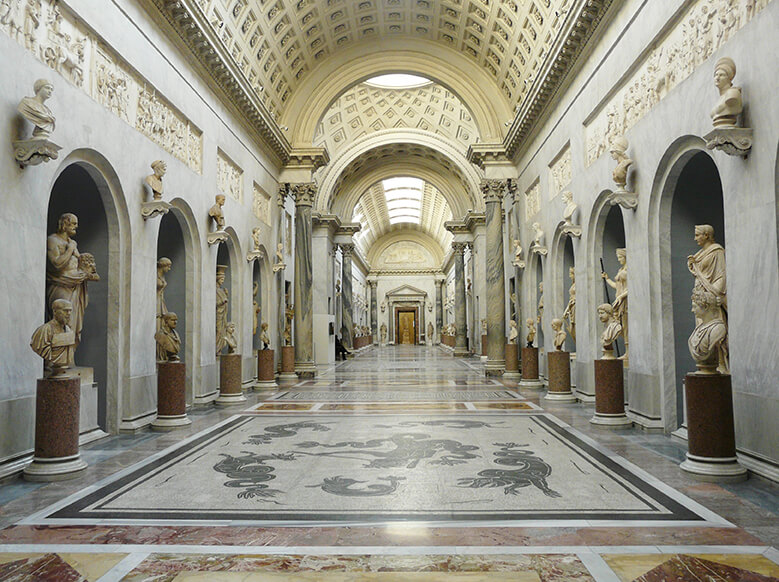
    A sculpture gallery inside the Vatican Museums, the kind of room the Apollo Belvedere stands in
    One of the Vatican Museums’ classical sculpture galleries. The Apollo Belvedere itself stands a short walk from rooms like this, in the Cortile Ottagono of the Museo Pio-Clementino. Photo via Shutterstock.

    Most people meet the Apollo Belvedere before they ever see it. It arrives first as a photograph in an art history textbook, or as a plaster cast in the corner of some 19th-century academy, captioned as the closest thing Western art has to a perfect male body. So when you finally round the corner into the Cortile Ottagono and find the actual marble, the first reaction is rarely awe. It is recalibration. The statue is smaller than its reputation, more weathered, and somehow more like a person standing in a courtyard than like an ideal. That gap between the myth and the object is most of what makes the Apollo Belvedere worth understanding before you go looking for its meaning in the Vatican Museums.

    A Roman copy of a Greek original nobody has seen in two thousand years

    Strictly speaking, the statue in the octagonal courtyard is not the famous Apollo. It is a copy of it, carved centuries after the original was lost. Precision here comes straight from the Vatican Museums’ own catalogue entry: it was made “by a copyist workshop that, active in Rome in the first decades of the 2nd century A.D., replicated a bronze masterpiece made in Greece around 330 B.C., probably by the Athenian Leochares, one of the most famous artists of the time, also known for working at the Mausoleum of Halicarnassus.” No trace of that bronze survives. Every Apollo Belvedere admirer for five centuries, Winckelmann included, has been responding to a Roman marble stand-in for a Greek sculpture nobody alive has ever laid eyes on.

    Apollo’s pose freezes him an instant after loosing an arrow. His bow, now missing, sat in the extended left hand; the right arm swings back in the follow-through. It is a picture of motion just completed, caught the way a photograph catches a tennis serve at its highest point. Knowing that the gesture is finished, not in progress, changes how the whole body reads. He is relaxed. He has already won.

    Found on the Viminal Hill, kept by a future pope

    According to the Vatican Museums’ own account, the statue “was discovered in Rome in 1489, among the ruins of an ancient domus on the Viminal Hill, and was immediately acquired by Cardinal Giuliano della Rovere.” Della Rovere was not yet pope. He became one in 1503, taking the name Julius II, and brought his marble Apollo with him. By 1508 it was installed in the Belvedere courtyard that eventually gave the statue its name, and it has effectively stayed on Vatican ground ever since.

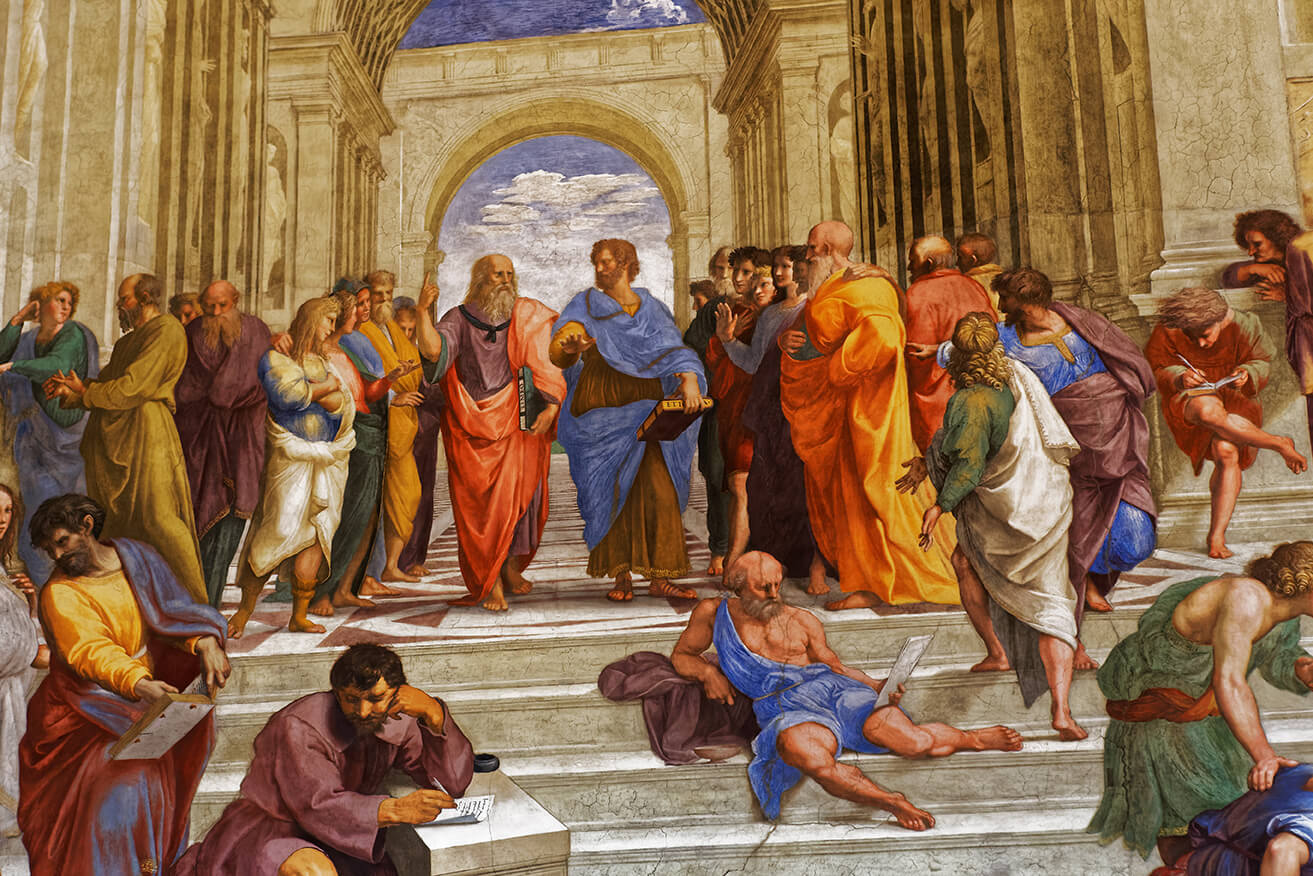
    That timing matters more than it looks. Julius II is the pope who commissioned Michelangelo’s ceiling and Raphael’s Stanze, all in the same building complex within a few years of each other. Apollo did not arrive as an isolated curiosity. It arrived as part of a single pontiff’s project to make the Vatican the centre of Renaissance taste, standing shoulder to shoulder with frescoes still being painted down the corridor.

    A missing hand and the sculptor who filled it in

    When it was found, the statue was largely intact but missing its left hand and the fingers of its right. For decades it stood incomplete, arrow-hand gesturing at nothing. In 1532–33, Giovannangelo Montorsoli, a pupil of Michelangelo, restored the missing sections: he completed the left arm, replaced the right forearm, and rebuilt the top of the tree-trunk support behind the right leg. For nearly five centuries afterward, most of what visitors admired as “the Apollo’s hand” was Montorsoli’s invention, not ancient marble at all.

    That detail rarely makes it into the reproductions. A plaster cast copied from a plaster cast just reads as Apollo, full stop, with no asterisk noting which parts came from a 2nd-century Roman workshop and which from a 16th-century restorer improvising a gesture. The statue that shaped three centuries of taste was, quite literally, part invention from the start.

    Winckelmann’s verdict, and why it stuck

    One name explains why the Apollo Belvedere outgrew every other antique statue in the Vatican’s collection: Johann Joachim Winckelmann, the German art historian whose writings on Greek art reshaped 18th-century taste across Europe. Vatican Museums credit him directly on the statue’s own catalogue page: it “owes its consecration to the inspired pages of Johann Joachim Winckelmann who considered it a sublime expression of Greek art, «the highest ideal of art among the ancient works that have been preserved to us so far».” That single line of praise, printed and reprinted through the Grand Tour era, did more to build the statue’s reputation than the marble itself ever could.

    Winckelmann never saw the lost Greek bronze, and neither has anyone else in two millennia. He was responding, like every visitor since, to a Roman copy with a restorer’s hand grafted on. He decided it was the summit of ancient art anyway, and Europe largely took his word for it.

    How one statue became the whole curriculum

    Once Winckelmann’s verdict circulated, the Apollo Belvedere stopped being a single object in a Roman courtyard and became a teaching tool. Grand Tour travellers scheduled Rome stops around seeing it. Plaster-cast workshops in London, Paris and Dresden reproduced it by the hundred for academies, where students learned to draw the male figure from a cast of a cast of a copy, several removes from anything Leochares ever touched. By the time photography arrived, the Apollo Belvedere was already the most familiar body in Western sculpture, known mostly through objects that were never in the same city as it.

    Paris, and back

    Its Roman residence was interrupted only once. Napoleon’s forces carried it off to Paris along with a great deal of other Roman art, and it did not return to the Vatican until 1816. On its return, the Vatican Museums credit the sculptor Antonio Canova with devising a support solution for the reinstalled statue, “a solution that had previously been adopted, no doubt by Antonio Canova, upon the return of the statue from Paris in 1816” — the same phrase the Vatican used, centuries later, to describe the logic behind its most recent structural repair.

    What stands there now

    Serious structural problems surfaced in December 2019. Conservators found the statue needed real intervention, not cosmetic cleaning, and the restoration that followed added a carbon-fibre support anchored into the plinth at the rear, invisible from the front but doing the load-bearing work that centuries of marble could no longer manage alone. The project also swapped Montorsoli’s 16th-century left hand for something closer to the ancient original: a cast taken from the “Hand of Baia,” a Roman-era plaster fragment itself copied from the lost Greek bronze. So the hand you see today is not Montorsoli’s invention and not the vanished original either. It is a plaster echo of a plaster echo, cast in the closest material anyone has to the god’s actual missing fingers.

    Stand in front of it now and none of that history is loud. What you notice is scale: a marble figure not far off human height, catalogued as no. 1015 in the Museo Pio-Clementino, standing quietly in a courtyard rather than looming over it. Five hundred years of reputation built a statue in most people’s heads that is taller, whiter, and more perfect than the one actually carved. Up close, the real Apollo has weathering on its surface, a visible seam where Montorsoli’s forearm meets ancient marble, and a support structure engineers had to design around. It looks like something that survived two thousand years, not something built to prove a theory about beauty.

    Seeing it for yourself

    The Apollo Belvedere is in the Cortile Ottagono, the Octagonal Court, inside the Museo Pio-Clementino, an early section of the Vatican Museums route that most first-time visitors reach within the opening stretch of their visit. It shares that courtyard with other famous antiquities, including the Laocoön group, so budget a few unhurried minutes rather than a single glance on the way past.

    Opening hours are straightforward: Monday to Saturday, 8:00 a.m. to 8:00 p.m., last entry 6:00 p.m. On the last Sunday of each month, entry is free from 9:00 a.m. to 2:00 p.m., last entry 12:30 p.m.; every other Sunday, plus a handful of fixed holidays through the year, the museums are closed. Standard adult tickets run €20 at the door, or €20 plus a €5 booking fee online, with a reduced €10 rate for eligible visitors. If you would rather skip the queue with a guide who can point out the seam in Montorsoli’s forearm on the way past, our guided Vatican tours route through the Pio-Clementino early, before the courtyard fills in.
  • The Belvedere Torso: A Broken Statue That Shaped the Sistine Ceiling

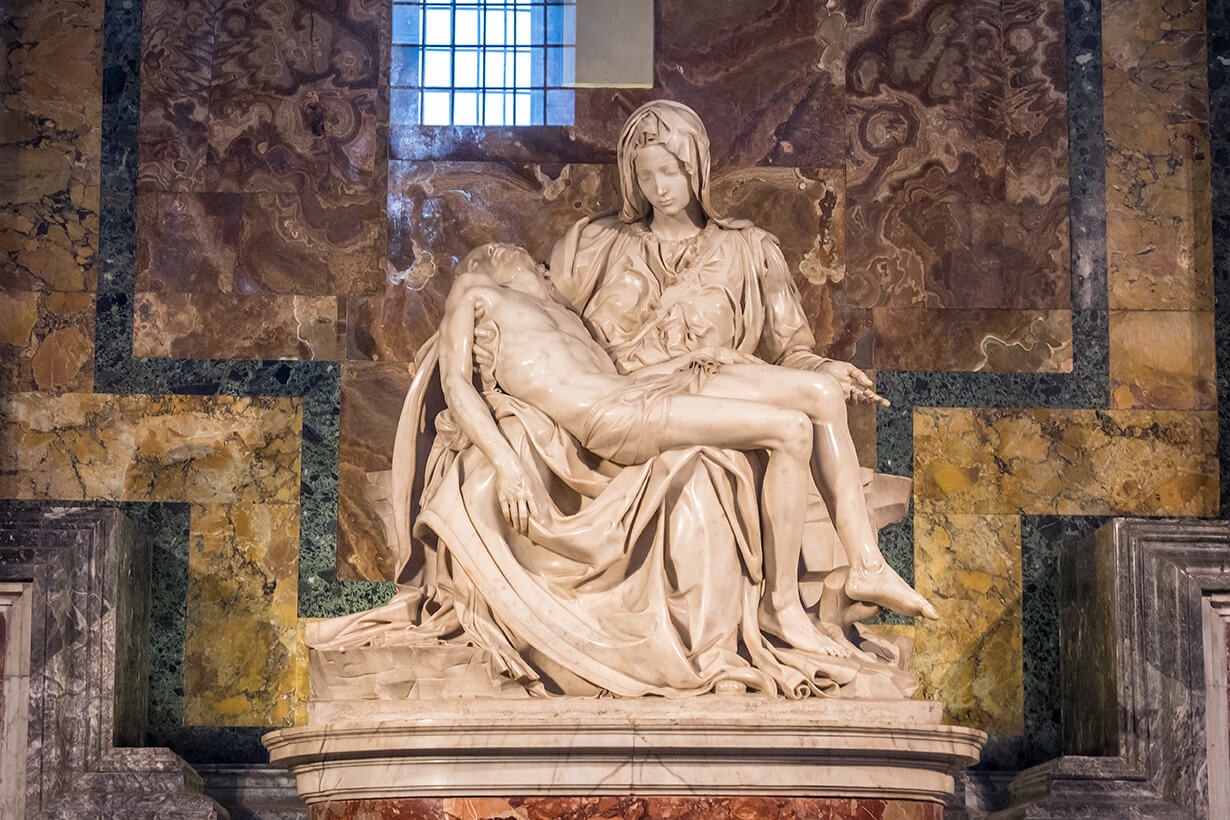
    Michelangelo's Pieta, the marble sculpture inside St. Peter's Basilica
    Michelangelo’s Pieta in St. Peter’s Basilica. The same sculptor studied the Belvedere Torso for decades.

    Most statues earn attention for what survives. The Belvedere Torso earns it for what is missing. No head, no arms, no legs below the knees, just a seated male trunk in marble, and it may be the single most studied fragment in the history of Western sculpture. Michelangelo returned to it for decades. You can trace its twisted spine and knotted back muscle across the Sistine ceiling and into the altar wall behind it, if you know where to look.

    What the fragment actually is

    The Torso stands 1.59 metres tall, a fragmentary marble statue believed to be a copy made in the 1st century BC or AD after an earlier Greek original from roughly the early 2nd century BC. It shows a muscular male figure seated on an animal skin, torso twisted at the waist, weight thrown onto one hip. Scholars still argue over who it depicts: Ajax contemplating suicide, Hercules at rest, Marsyas awaiting flaying, Philoctetes in pain. No inscription settles the question, because the only inscription on the piece names its maker, not its subject. It is signed on the front of the base by “Apollonios, son of Nestor, Athenian,” who is unmentioned in ancient literature. A sculptor confident enough to sign his work, and otherwise unrecorded by any surviving Greek or Roman text.

    Look closely at the surface and the loss stops feeling like a defect. The remaining torso and thighs carry an unusual density of anatomical detail, ribs, spine and abdominal muscle rendered with a precision that later artists studied at close range for exactly that reason. A complete statue tells you what a body looks like at rest. This one, stripped down to trunk and thigh, tells you what a body does under strain, which is a harder and rarer thing for a sculptor to show convincingly.

    How it reached the Vatican

    The Torso was not a dramatic excavation find timed for Michelangelo’s arrival in Rome. It was already a known object in the city’s collecting circles decades earlier. The statue is documented in the collection of Cardinal Prospero Colonna at his family’s palazzo in Monte Cavallo, Rome, from 1433. It entered the papal collections at some later point and has been displayed at the Vatican for centuries since, now in the Museo Pio-Clementino under inventory number 1192. By the time Michelangelo was working in Rome in the early 1500s, the Torso had already been part of the city’s visual culture for two generations of artists and antiquarians before him.

    The refusal Julius II never quite got

    The story most guides repeat is this: legend has it that Pope Julius II asked Michelangelo to complete the statue fragment with arms, legs and a face. He respectfully declined, stating that it was too beautiful to be altered. It is a good story, and it is worth being precise about what kind of story it is. The Wikipedia account that preserves it explicitly calls it legend, not documented biography, and no period source from Vasari’s or Condivi’s lives of Michelangelo has been located to confirm the exchange happened as described. Treat it the way you would treat a well-worn local anecdote: probably rooted in something real about how Michelangelo felt toward the piece, not necessarily an accurate transcript of a papal conversation.

    What is not in doubt is the intensity of his attention to the object itself. Whatever words passed between pope and sculptor, or did not, Michelangelo kept coming back to this broken trunk of marble for the rest of his working life, long after any commission required him to.

    Where the torsion shows up on the ceiling

    Wikipedia’s own account of the Torso’s influence is specific, and worth quoting exactly: Michelangelo used it as the inspiration for several of the figures on the Sistine Chapel ceiling, including the Sibyls and Prophets along the borders, and both the risen Christ and St. Bartholomew in The Last Judgement. Stand under the ceiling and look at any of the seated Sibyls or Prophets ringing the central narrative panels. Their weight sits unevenly on the bench, shoulders rotate one way while the hips rotate the other, and the whole pose reads as tension held in a body rather than a figure simply sitting still. That contrapposto spiral, spine twisting against itself, is the Torso’s signature move.

    The clearest case is the risen Christ on the altar wall, in the Last Judgment fresco painted decades after the ceiling. Christ’s torso rotates through the same axis as the ancient fragment, weight coiled rather than resting, a pose closer to an athlete mid-turn than to the calm, frontal Christs of earlier Renaissance painting. St. Bartholomew, seated below and to Christ’s right holding his own flayed skin, carries a comparable twist through the shoulders and back.

    A separate, related idea shows up constantly in guided commentary and gallery notes: that the twenty nude youths painted around the ceiling’s central panels, the ignudi, also derive from the Torso. That reading is plausible on visual grounds; several of the ignudi share the same knotted-muscle back and hip-driven rotation. But it is an art-historical interpretation rather than a claim documented in the primary sources checked for this piece, so hold it loosely rather than repeating it as settled fact. What is documented, in Wikipedia’s summary of the scholarship, is the Sibyls, Prophets, risen Christ and St. Bartholomew.

    Why it is called “the School of Michelangelo”

    The Torso carries a nickname among art historians and Vatican staff: the School of Michelangelo. Not because he taught from it in any formal sense, but because generations of later sculptors and painters treated his repeated study of the fragment as a lesson in itself, proof that a broken, headless trunk of stone could teach more about the human body under tension than a hundred intact statues. If you want to understand how a Renaissance artist actually learned anatomy and movement from antiquity rather than from a textbook, this is the object to stand in front of.

    Seeing it today

    The Torso is on display in the Vatican Museums’ Museo Pio-Clementino, the collection built specifically to house Rome’s great classical sculpture. It sits within a few minutes’ walk of the route toward the Sistine Chapel, so pairing the two makes sense on any single visit: look closely at the ancient fragment first, then walk to the ceiling and altar wall and try to find its echo yourself in the Sibyls, the Prophets, and the risen Christ.

    Vatican Museums opening hours run Monday to Saturday from 8.00 a.m. to 8.00 p.m., with last entry at 6.00 p.m. On the last Sunday of each month the museums open from 9.00 a.m. to 2.00 p.m. with free admission and last entry at 12.30 p.m.; on every other Sunday they are closed. Arrive early if you can. Crowds thicken through the late morning, and the Pio-Clementino galleries are far easier to study slowly before the main flow of tour groups arrives.

    A guided visit is worth considering specifically for this kind of piece. A standalone marble fragment with no obvious narrative can be easy to walk past in thirty seconds if nobody tells you why it matters, and the connection between the Torso and the ceiling above is exactly the sort of detail a good guide will point out in person, standing in front of both, rather than something you catch from a wall label written for a general audience. Self-guided visitors often reach the Sistine Chapel with no idea they walked past the object that shaped what they are about to see, then spend their time in the chapel looking at the wrong things.

    If you would like that guided context built into your visit, our Vatican tours page lists the formats currently available, including options that take in the Pio-Clementino sculpture galleries on the way to the Sistine Chapel. Fifteen minutes with the Torso beforehand changes what you notice on the ceiling for the rest of the visit.

  • How the Laocoön Was Found in a Roman Vineyard in 1506

    Classical statues and busts in the Vatican’s Braccio Nuovo gallery
    Classical sculpture in the Vatican’s Braccio Nuovo gallery. The Laocoön entered the same papal collection after Julius II bought it in 1506. Photo via Shutterstock.

    A vineyard worker’s spade hit stone on 14 January 1506, on a low hill near the Basilica of Santa Maria Maggiore in Rome. Within hours, the pope’s favourite architect and the sculptor of the Sistine ceiling were standing in the mud looking at one of the most famous statues ever carved. It had been buried for roughly thirteen centuries, and it never really left Rome again. Five hundred and twenty years later, it still stands in the Vatican Museums, in the room built specifically to hold it.

    A Vineyard Near Santa Maria Maggiore

    The land belonged to a Roman named Felice de Fredis, and the vineyard sat on the Esquiline Hill, in the general area once covered by the palace grounds of the emperor Titus. Workers digging that January uncovered a marble group nearly two metres high: three figures locked together, a father and two sons, wrapped in the coils of sea serpents. Word travelled fast. Pope Julius II, only two years into his pontificate and already obsessed with antiquities, sent men to the site almost immediately.

    Sangallo and Michelangelo Get There the Same Day

    Among those the pope dispatched was Giuliano da Sangallo, his chief architect. Sangallo brought his young son Francesco along, and picked up Michelangelo Buonarroti on the way, since Michelangelo happened to be nearby and Sangallo wanted a second set of expert eyes. Francesco da Sangallo later wrote an account of that morning, describing the three of them climbing down into the excavation pit together. His father recognised the group on sight, before it was even fully out of the ground, and said aloud that this had to be the Laocoön that Pliny mentioned. It is one of the few moments in Renaissance art history with an eyewitness on record, and the eyewitness was a child watching his father and Michelangelo argue over a hole in a vineyard.

    The Statue Pliny Had Described

    Sangallo’s guess held up. The Roman writer Pliny the Elder, in his first-century Natural History, had praised a sculpture of Laocoön and his sons kept in the house of the emperor Titus, carved by three sculptors from Rhodes named Agesander, Athenodoros, and Polydorus, calling it a work “to be preferred to any other production of the art of painting or of bronze.” Pliny gave no exact address, but the general location matched, and the subject matched: Laocoön was the Trojan priest who warned against dragging the wooden horse inside the city walls, then was crushed with his sons by serpents sent by the gods who favoured the Greeks. No other known ancient statue fit Pliny’s description this closely. Scholars still argue over whether it is the very marble Pliny saw or a later Roman copy of a lost Hellenistic bronze, but the identification as the Laocoön group has never seriously been in doubt.

    What struck Renaissance viewers most was not the identification but the emotion. Roman copies of Greek sculpture that had survived until 1506 tended toward calm, composed faces, even in violent scenes. Laocoön’s face was different: mouth open, brow knotted, a man registering pain rather than posing through it. Michelangelo had already been wrestling with how to carve strained, twisting bodies before that January morning. Seeing an ancient master do it with this much conviction, in a group unearthed a few streets from where he was living, changed how he approached muscle and torsion for the rest of his career, visible later in works like the ignudi on the Sistine ceiling.

    Julius II Buys It for the Vatican

    Julius II moved fast. He arranged to acquire the statue from de Fredis within weeks, reportedly granting him a benefice in exchange, and had it hauled to the Vatican before the year was out. It arrived to join a small, growing collection of ancient marbles the pope was assembling in a courtyard behind the Belvedere Palace. That space became known as the Cortile delle Statue, and later the Octagonal Court after Bramante gave it its eight-sided shape. The Laocoön was placed there under its own niche, near the Apollo Belvedere, in what amounted to the founding act of the Vatican’s antiquities collection. Everything the Vatican Museums would eventually become, room after room of classical sculpture, traces back to a pope who wanted this particular statue close at hand.

    An Arm Was Missing

    The group had not survived complete. Laocoön’s right arm was gone, snapped off somewhere in the centuries underground, along with a hand belonging to one of his sons. For a court obsessed with restoring antiquities to a presentable state, a headline sculpture missing a limb was a problem to be solved, not left alone. Within a few decades, workshops in Rome were producing replacement arms in wax and plaster so buyers and popes could see how the statue might look “completed.” The debate over what that arm had actually been doing became, for a while, one of the livelier arguments in Roman art circles.

    Michelangelo’s Guess, and the Wrong Fix

    Michelangelo, present at the discovery, reportedly argued the missing arm had been bent sharply back over Laocoön’s head, in a tense, straining pose that matched the anguish in the face and torso. Other artists and patrons preferred a version with the arm thrown outward and upward, more heroic and less contorted. In the 1530s, the sculptor Giovanni Angelo Montorsoli, who had trained under Michelangelo, was commissioned to add a permanent arm. He went with the outstretched version, not the bent one his own teacher had proposed. For more than four hundred years, that straight prosthetic arm was simply what the Laocoön looked like. It appeared that way in every engraving, every plaster cast sent to art academies abroad, every guidebook description written between the sixteenth century and the mid-twentieth.

    1957: The Fragment in Storage Was Real

    The correction came from an object that had been sitting in a Roman stonemason’s yard, then in storage, for decades. In 1906, the archaeologist and antiquities dealer Ludwig Pollak spotted a fragment of a marble arm, bent sharply at the elbow, near the original find site on the Esquiline. He thought it might belong to the Laocoön, based on the marble and the musculature, and gave it to the Vatican Museums. Because it did not match the arm everyone had grown used to seeing, it was catalogued and shelved rather than attached. It sat there for half a century. In 1957, Vatican Museums curators re-examined Pollak’s fragment against the original statue and confirmed it was genuine: the real right arm, bent back toward the head, essentially where Michelangelo had guessed it belonged in 1506. Restorers removed Montorsoli’s sixteenth-century limb and fitted the authentic piece in its place, giving the Laocoön the tighter, more twisted silhouette it has today, closer to the agony Pliny’s contemporaries would have recognised.

    Why It Still Sits in the Octagonal Court

    The Laocoön has never moved far. It remains in the Octagonal Court of the Pio-Clementino Museum, the same courtyard Julius II built for it, alongside the Apollo Belvedere and other marbles gathered in that first burst of papal collecting. Later popes expanded the Vatican’s holdings into dozens of galleries, but this particular room kept its founding sculpture. Napoleon’s troops did briefly take it to Paris in 1798, part of a wave of looted Italian art displayed at the Louvre; it came back to Rome in 1816 after the Congress of Vienna and went straight back into the same niche. That return trip is really the only time the statue has left the Vatican since 1506.

    Visitors reach the Octagonal Court early in a standard Vatican Museums route, not long after the entrance, before the long march toward the Sistine Chapel. That timing is worth using: the courtyard fills in fast once the mid-morning tour groups catch up, so a few extra minutes spent here before the crowd arrives buys a much clearer view. Two details reward a slower look. Check the serpents’ coils for the tool marks of the original carvers, still crisp enough in places to see individual chisel strokes. Then check the join line on the right arm, where the 1957 fragment meets the ancient torso, faintly visible if the light through the courtyard’s open roof catches it at the right angle.

    If you want time to actually study details like that instead of being swept past them, going with a guide who knows exactly where to pause helps more in the Octagonal Court than almost anywhere else in the museums. A guided Vatican tour will usually build in that pause before the group moves on toward the Sistine Chapel.

  • Why the Free Last-Sunday Slot Is the Worst Way to See the Vatican Museums

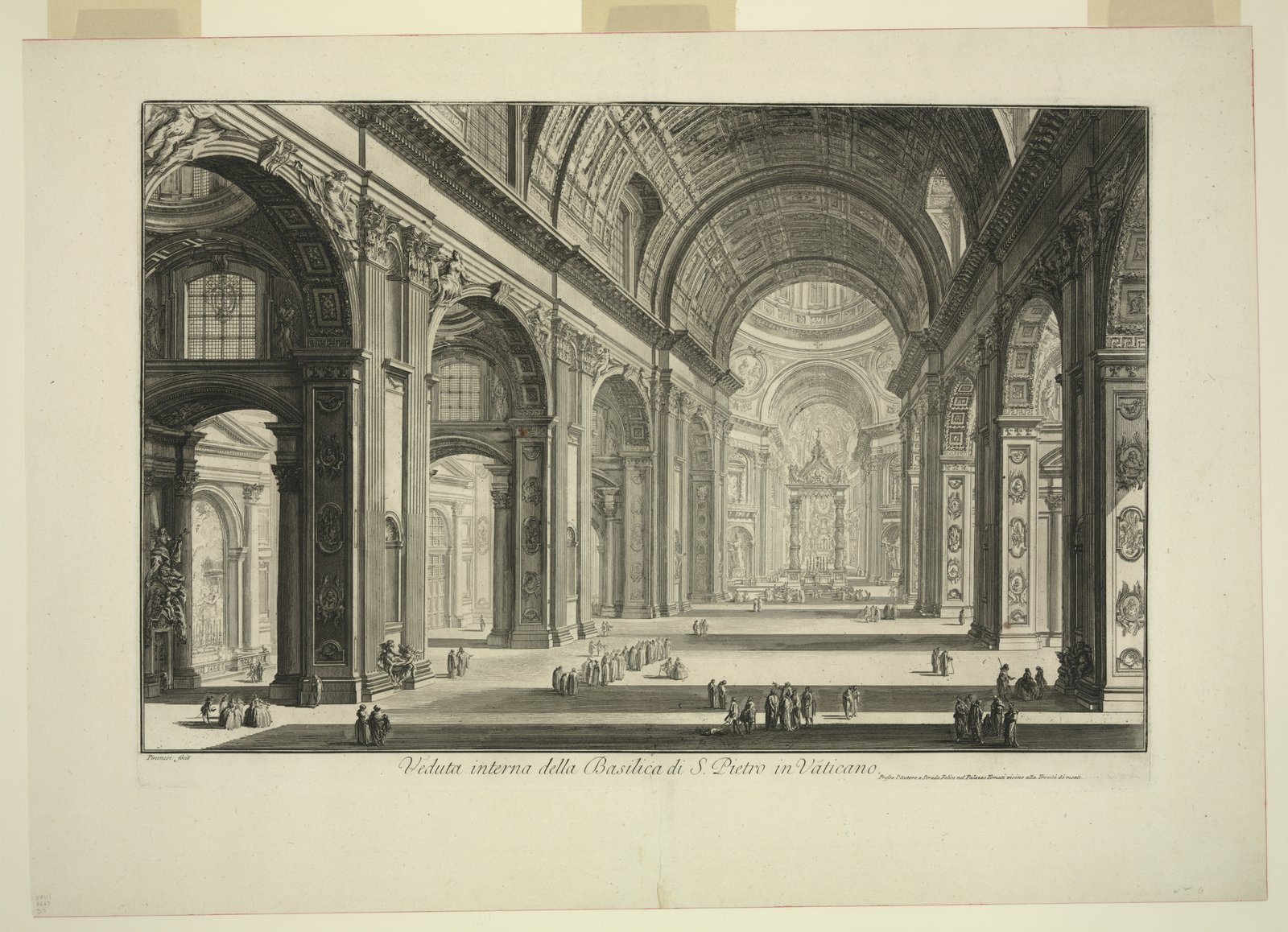
    Piranesi engraving of St Peter's Basilica interior — the destination that twenty thousand free-Sunday visitors are trying to reach in five and a half hours
    Interior of St Peter’s Basilica by Giovanni Battista Piranesi, 18th century. Via Wikimedia Commons (public domain).

    Every travel guide to Rome eventually recommends the free-entry last Sunday of the month at the Vatican Museums as the money-saving move. Skip the twenty-euro ticket, arrive early, walk in for free. It is a neat piece of advice, and for most visitors it is the worst possible visit. Here is why the math does not work, and what the actually-cheap alternative is that guides mostly ignore.

    The rule, exactly as the Museums publish it

    Vatican Museums publish two schedules on the same official hours page. Weekday operation, verbatim: “From Monday to Saturday 08.00 a.m. – 08.00 p.m.” with final entry at 18:00. Free-Sunday operation, verbatim: “Every last Sunday of the month 09.00 a.m. – 02.00 p.m.” with “final entry 12.30 p.m.” Admission on those Sundays is free of charge. All other Sundays the Museums are closed: “All Sundays except the last Sunday of each month” stay shut.

    Two numbers matter for the argument. On a weekday, the ticketed-entry window is ten hours (08:00 to 18:00 last entry). On a free Sunday, the entry window is three and a half hours (09:00 to 12:30 last entry). Three and a half hours to admit the year’s largest single-day surge of demand.

    Free Sundays are suspended without replacement when the last Sunday of the month falls on Easter Sunday, 29 June (Sts Peter and Paul), 25 December, 26 December, or 31 December — on those specific dates the Museums are closed entirely, not opened as a paid day.

    Free entry is walk-up only

    This is the fact the money-saving argument misses. Since January 2024 the Vatican Museums have used nominative tickets tied to timed slots for every online booking, with ID checked at the door. On a normal weekday morning the crowd is not “everyone who wants in today” — it is “the people whose name is on a ticket for this half-hour slot.” The security lanes absorb a smoothed, predictable flow.

    Free-Sunday admission is not sold online. There are no nominative tickets to check, no timed slots to distribute arrivals across, no way to pre-book. If you want to walk in free, you queue physically — you and every other visitor for whom the twenty euros mattered enough to trade several hours of a Sunday morning. Security lanes process arrivals sequentially at whatever the lane throughput is, and the queue grows to whatever length the demand pushes it to.

    Which is why the queues on free Sundays are what they are. No published Vatican measurement exists, but consistent reporting across guide sites and blog accounts puts the typical peak-season wait at two to four hours. Queue formation begins between 05:00 and 06:00 in high summer, well before the entrance staff arrive. The line extends along Viale Vaticano from the entrance, turns the corner, and continues up Via Leone IV. Guides that recommend the free-Sunday move almost always attach a note advising you to arrive by 07:00 or 07:30 to have a realistic chance of getting in before the 12:30 cutoff.

    The math

    Adult full entry at the Vatican Museums, verbatim from the current Tariffe page: “Full entry ticket – €20.00”. Online booking adds €5, so €25 online, €20 at the door on a weekday.

    Free-Sunday saves you the twenty euros. In exchange, you commit some number of hours to the queue. Take the middle of the reported range — call it three hours in the security queue on a peak-season free Sunday — plus an extra hour of pre-queue wait if you arrive at 06:30 for a 09:00 entrance. Four hours of a Sunday morning traded for twenty euros. Working out to five euros an hour of your holiday.

    The math gets worse when you look at what happens after you clear security. You now have three and a half hours to walk from the ticket office through the Egyptian Museum, the Pio-Clementino and Chiaramonti, the Belvedere courtyard, the three long parallel galleries of Candelabra and Tapestries and Maps, the four Raphael Rooms, and the Sistine Chapel (with the Pinacoteca as an optional detour off the main flow) — the same route a well-paced weekday visitor is given ten hours to walk. And you are walking it inside the year’s densest crowd, because everyone else in the queue is walking it at the same time, in the same one-way direction.

    The Sistine Chapel is the terminal choke point on any Vatican itinerary. On a free Sunday it is the terminal choke point with the year’s densest crowd feeding into it and a hard-cutoff staff sweep at closing time. What you get, in practice, is a hurried and squashed version of the exact experience that anyone with a timed-slot weekday ticket has more room to actually see.

    Who the free-Sunday still makes sense for

    Two categories of visitor for whom free-Sunday is a defensible choice.

    First, someone who genuinely cannot afford twenty euros and for whom four hours of a Sunday morning is available time rather than opportunity cost. That is a real person and the free-Sunday exists for them. Museums are explicitly free that day for anyone in that position.

    Second, someone whose whole trip to Rome is a rain-day itinerary shift and free-Sunday happens to be the day the weather makes them redirect indoors — the queue is bad but the alternative is worse. That is a narrow case.

    Everyone else — and this is the point — is trading four hours of holiday for twenty euros, then getting the worst-crowd version of the visit they came for. It is not a saving. It is a switch from money to time, at a bad exchange rate, plus a downgrade in experience.

    The actual cheap and pleasant option

    Two paths, depending on whether you qualify for the reduced-price ticket.

    Reduced entry, verbatim: “Reduced entry ticket – €10.00”. It applies to children ages seven to eighteen and to students up to and including twenty-five with a document from their school or university confirming current-year enrolment. Booked online it becomes €15 with the standard €5 booking surcharge. €15 for an eligible visitor at a booked afternoon slot on a shoulder-season Tuesday is genuinely cheap-and-pleasant. Children under seven, per the tariff page, enter “below the age of 7” free of charge, and visitors with “certified invalidity of at least 67%” enter free with a companion.

    For everyone not in those categories, the honest cheap-and-pleasant strategy is a booked €25 online ticket for an afternoon slot on a Tuesday or Thursday in shoulder season. October, November, mid-January to February, and early March all fit. Booking a 15:30 slot means you arrive after the coach-tour morning wave has cleared, walk the route in falling crowd density, and reach the Sistine somewhere around 17:00 when it is nowhere near as packed as it was three hours earlier. Total cost: five euros more than a free-Sunday visitor pays in queue time at five euros an hour.

    Summary

    Free-last-Sunday at the Vatican Museums operates on a three-and-a-half-hour entry window with no timed slots and no online booking. That combination guarantees a queue that costs most visitors two to four hours of a Sunday morning, in exchange for a €20 saving, then delivers the year’s densest crowd into a hurried visit of the same one-way route weekday visitors get ten hours to walk. The saving is only real if your time is genuinely free.

    For everyone else, a €25 online booking at a shoulder-season afternoon slot is what actually cheap-and-pleasant looks like. Our Vatican Museums opening hours guide for 2026 shows which weeks fit that shoulder-season window and which of them coincide with school-holiday spikes to avoid. The free-Sunday is not the money-saving move that guides claim. It is the money-for-time trade at a bad rate, dressed up as a hack.

  • Michelangelo’s Pietà Behind the Bulletproof Glass

    Piranesi engraving of St Peter's Basilica interior — the space that has housed Michelangelo's Pietà in the first chapel on the right since 1749
    Interior of St Peter’s Basilica by Giovanni Battista Piranesi, 18th century. Via Wikimedia Commons (public domain).

    On the morning of 21 May 1972 (Pentecost Sunday, at roughly 11:30 a.m.) a thirty-three-year-old Hungarian-born geologist named László Tóth vaulted the marble balustrade in the first chapel on the right of St Peter’s Basilica and struck Michelangelo’s Pietà fifteen times with a geologist’s hammer. His shouted phrase, recorded by bystanders and reported the same day, was: “I am Jesus Christ — risen from the dead.” Damage, in Wikipedia’s summary of the contemporary reporting: he “removed Mary’s arm at the elbow, knocked off a chunk of her nose, and chipped one of her eyelids.” By the time he was dragged off, he had done more physical harm to a Michelangelo in ninety seconds than time had done in four hundred and seventy-three years.

    Everything you see when you look at the Pietà today — the pale patched line across her nose, the seam under her eyelid, the way she sits behind a wall of glass — traces back to that Sunday.

    How the attack went

    Tóth had moved to Rome from Australia in June 1971, apparently obsessed with the Pietà. Contemporary accounts describe him climbing the balustrade so quickly no one intercepted him. Before the attack, the sculpture was displayed with only a low railing, and a visitor within arm’s reach could touch the marble. Fifteen blows landed before staff and other visitors pulled him off. Bystanders picked up dozens of chipped marble fragments from the chapel floor; some kept them as unwitting souvenirs, and the Vatican later issued a public appeal for their return, which recovered a startling amount of the debris.

    Tóth was arrested, judged insane, and confined to a Roman psychiatric hospital by an order dated 28 January 1973. He was released roughly two years later and deported to Australia on 29 January 1975. He never returned to Italy. He died, in Australia, in 2012.

    Restoration

    Deoclecio Redig de Campos, then director of the Vatican Museums’ restoration lab, led the reconstruction. Roughly a hundred marble fragments were reassembled: some recovered from bystanders in the days after, some found later in the chapel, some in a bag that had gone home with a tourist and was returned weeks later after the Vatican’s appeal. Reattached pieces were joined with adhesive and finished with Carrara marble powder mixed as filler paste; where a specific piece was lost, the missing volume was rebuilt from the sculpture’s own material. Mary’s nose, most famously, was reconstructed from a block cut from the marble at her back.

    Active restoration took about five months of workshop time. It was returned to public display in the Basilica in the spring of 1973, roughly ten months after the attack. It came back behind a curved bulletproof acrylic screen: the first time the Pietà had ever been physically separated from viewers by a barrier.

    Jubilee glass, installed November 2024

    That acrylic screen guarded the Pietà until November 2024, when it was fully replaced ahead of the 2025 Jubilee. A Fabbrica di San Pietro press release from 29 November 2024 describes the new protection with useful specificity: “The new protection is formed by 9 bullet-proof and anti-shatter glass panes of the highest quality for greater transparency.” The same release states the panes’ impact resistance, rated for “26 hammer/axe blows”, comfortably above what a determined attacker could deliver in the seconds it takes staff to intervene, and bullet resistance that “exceeds BR2/S level.”

    Practical effect for a visitor: glass is measurably clearer than the fifty-year-old acrylic it replaced, so the sculpture is visible in more detail than it has been since before the attack. Reflections are managed by a low-glare coating. Chapel lighting was upgraded at the same time. Those two Jubilee-year upgrades together are the reason a visit in 2026 gives you a cleaner look at the Pietà than a visit in 2020 did.

    Where to find it in the Basilica

    First chapel on the right as you enter the Basilica through the main portico, formally the Cappella della Pietà (also historically the Chapel of the Crucifix). It has stood there since 1749, during the pontificate of Benedict XIV, when it was moved from an earlier location; it did not move during the 2025 Jubilee works, and only the glass and lighting were upgraded.

    Viewing is from behind a low marble balustrade at some distance, through the nine-panel glass. Photography without flash is permitted throughout the Basilica, including at the Pietà, unlike the Sistine Chapel where any photography is forbidden. Flash, tripods, selfie sticks, and drones are not allowed. One strict no-photo zone inside the Basilica is the Chapel of the Blessed Sacrament, which is reserved for prayer and closed to non-praying visitors.

    What to look at through the glass

    Four things reward a slow look, and none of them are the ones a phone-snap tourist stops to see.

    Signature. Michelangelo carved his name on the sash that crosses Mary’s chest, in Latin: MICHÆLANGELVS BONAROTVS FLORENTINVS FACIEBAT, “Michelangelo Buonarroti, the Florentine, was making [this].” It is the only work he ever signed. Vasari tells the story in his Lives: Michelangelo, then twenty-four and unknown outside Florence, overheard visitors attributing the Pietà to a rival sculptor, Cristoforo Solari of Milan (nicknamed “Il Gobbo,” the hunchback). He returned to the Basilica at night with a chisel and carved the inscription. He is reported to have regretted the vanity of the act and vowed never to sign another work, a vow he kept.

    Mary’s youthful face. Mary appears younger than the adult Christ she holds, implausibly so if you count years. Ascanio Condivi, Michelangelo’s own biographer, records his explanation directly. It was a theological argument rather than a technical one: “Do you not know that chaste women stay fresh much more than those who are not chaste? How much more in the case of the Virgin, who had never experienced the least lascivious desire that might change her body?” Whether or not one is persuaded by the theology, the sculptural point stands: a wearied, aged Mary would have unbalanced the composition.

    Scale disparity. Christ is noticeably smaller in scale than his mother. If Mary were to stand up, she would be well over two metres tall; if Christ were sized proportionately to a life-sized standing Mary, he would not fit across her lap. Michelangelo’s compositional pyramid (mother’s head at the apex, drapery cascading over knees at the base) required this deliberate distortion. It is the kind of decision that no photograph reproduces well; you notice it only in person, and only if you know to look.

    Drapery. Mary’s cloak falls in dense folds across her thighs and pools around Christ’s body, and every fold does two things at once: it moves your eye toward the composition’s centre, and it fills what would otherwise be an unmanageable amount of empty space between two figures. Its handling — polished translucent skin against matt textured cloth — is the reason critics from Vasari onwards have described the Pietà as Michelangelo’s technical breakthrough. Nobody had made marble drapery look like fabric in quite this way before.

    A material question

    It has always been described as Carrara marble. Post-restoration scholarship has raised the possibility that Michelangelo used a block from Seravezza, in the same Apuan Alps but a different quarry system, and disliked its unpredictable veining enough to leave no purchase record. No definitive answer exists. If a guide says Carrara they are on standard-reference ground; if they say Seravezza they are on modern-scholarship ground; if they say “white marble from the Apuan Alps” they are on genuinely safe ground.

    It measures 174 centimetres tall by 195 wide. Its base is a low plinth that visually reads as the tomb slab Christ has just been lifted from.

    Getting in for a close look

    Basilica entry is free of charge. Security screening on the south hemicycle of Piazza San Pietro is the only real gatekeeper: 15 to 30 minutes at 07:15, an hour to ninety minutes at midday in peak season, then dropping again after 16:30. Pietà is one of the first things you reach after entering: the chapel is immediately to your right as you cross the threshold, which means a rushed visitor can see it without walking more than fifty metres into the Basilica.

    If you want to combine the visit with a guided walk through the Basilica interior (dome climb, apse, tomb of St Peter under the confessio), our St Peter’s Basilica tickets and tours page shows the guided formats available for 2026. A guide will not get you closer to the Pietà than a solo visitor (the glass is the same distance either way), but a guide will point out the signature, the scale trick, and the drapery details that ninety per cent of self-guided visitors walk past in under a minute.

    Pietà is thirty seconds of any Basilica visit and worth ten minutes of most of them. Nine-panel glass installed in 2024 is what makes the ten minutes actually pay off, because the sculpture is finally clear again through the barrier that has protected it for half a century.

  • Walking from the Vatican Museums to St Peter’s Basilica: The 15 Minutes Between

    Piranesi engraving of St Peter's Basilica interior — the destination the fifteen-minute walk from the Museums delivers you to
    Interior of St Peter’s Basilica by Giovanni Battista Piranesi, 18th century. Via Wikimedia Commons (public domain).

    You have just walked out of the Sistine Chapel, down the spiral ramp, and onto Viale Vaticano. St Peter’s Basilica is roughly a kilometre away around the outside of the Vatican wall, and unless you are on a specific kind of pre-registered guided tour, you are about to walk it. Google Maps calls it thirteen minutes; a fair-weather average is fifteen. Guided-tour marketing calls it “just a few minutes.” All three are true depending on which route and which body you have.

    Here is the walk in real time, with the queue at the other end and the one legitimate alternative that skips the whole thing.

    Minute 0: Museums exit

    Museums exit sits on Viale Vaticano roughly mid-way along the western Vatican wall. Turn LEFT (east and downhill). The wall runs to your right; the ordinary Roman street runs to your left. Straight ahead in the middle distance you can already see the trees at Piazza del Risorgimento.

    This is a wider pavement than the Vatican wall’s other flanks, and it is where the exit crowd disperses. Coach tours peel off toward parked buses, solo visitors head for Metro Ottaviano behind you, and the Basilica-bound flow continues east along the wall.

    Minute 3: Piazza del Risorgimento

    About three hundred metres of walk brings you to Piazza del Risorgimento. This square looks different now than it did before the 2025 Jubilee. It was rebuilt as part of the Jubilee-year works programme, with new limestone paving flush across the surface: per turismoroma.it, “the area 75 per cent pedestrianised towards the Vatican Walls.” Before the rebuild, Piazza del Risorgimento was a traffic-heavy junction where taxis and coaches idled and pedestrians dodged. Now it is almost entirely walkable, with buses and trams still using the eastern edge.

    If you are catching a bus rather than walking further, this is your stop. From the Vatican Museums’ own “Getting here” page: “32, 81, 982, stop at Piazza del Risorgimento” and tram “19”. None of these actually beats the walk once you count the wait for a bus, but they are useful if you are pushing a stroller or continuing beyond the Basilica.

    Minute 7: Via di Porta Angelica

    South of Piazza del Risorgimento the route becomes Via di Porta Angelica, which curves gently right and then hard right again to follow the north face of the piazza. Sidewalks are on both sides; a low stone wall runs on your right, with the Vatican interior invisible above it. This stretch is roughly two hundred metres of what feels like a normal Roman side street. The scale changes at the end when the road opens abruptly into the north colonnade of Piazza San Pietro.

    Minute 10: Into the piazza

    You enter Piazza San Pietro through the north colonnade. Bernini’s oval unfolds to your left; the facade of the Basilica is dead ahead across the open pavement. On a summer afternoon there will be tour flags, on a rainy afternoon there will be spread umbrellas, on any morning there will be at least a queue visible somewhere along the south colonnade.

    That queue is what you are looking for. Security screening is on the right hemicycle (the south side, looking toward the Basilica facade), not the north side you just walked in through. Verbatim from the official basilicasanpietro.va page: “Access to the Basilica begins with the security checks by the Italian State Police: the stations are located in the right hemicycle of Saint Peter’s Square looking towards the Basilica.” The same page confirms the redundancy: “Other visits access security controls by queueing on the same side of the hemicycle, with at least four other gates available for Italian State Police controls.”

    Meaning: walk diagonally across the piazza from the north colonnade to the south colonnade, and look for the queue. You will find it before you find the security scanners themselves.

    Minute 12-15: The security queue

    How long the queue takes is entirely a function of when you arrive.

    • 07:00 to 09:00: minimal, usually 15-30 minutes even in peak season. The Basilica opens at 07:00 and the queue does not really form until closer to 08:00.
    • 09:00 to 13:00: peak. In April to October this can be 60 to 90 minutes; occasionally longer when a cruise-ship crowd overlaps with a coach-tour crowd.
    • 13:00 to 16:00: still busy but the wait starts trending down as tour groups break for lunch.
    • 16:30 to 19:15: manageable, often 15 to 30 minutes even in peak season. This is the sweet spot for a solo visitor.
    • Winter (January to February): waits regularly drop under fifteen minutes even at midday.

    None of these numbers is Vatican-published. They are the consistent operator estimates across multiple guide sites and reflect a normal week; the Papal General Audience on Wednesday mornings and Sunday morning Masses both disrupt the pattern in their own ways.

    Basilica opening hours themselves are published straightforwardly. Verbatim from a June 2026 announcement: “The Basilica will be open from 7:00 a.m. to 8:00 p.m.” This extended the summer close by an hour compared to previous years. The same announcement adds: “Last entry will be permitted by 7:15 p.m., subject to visitor flow and waiting times for security checks.” The Basilica FAQ page states the year-round schedule as “Year-round: Opening 7:00 AM | Closing 8:00 PM.”

    The one alternative: the internal corridor

    There is a second door out of the Sistine Chapel, on the right of the altar wall, that leads via an internal passage directly to the narthex of St Peter’s Basilica. It saves you the ~15 minute walk and the security queue that follows. It also skips Piazza del Risorgimento entirely, which is either a loss or a gain depending on how you feel about being outdoors.

    That corridor is not available to individual ticket holders or audio-guide-only visitors. It is reserved for pre-registered guided-tour groups accompanied by a licensed guide, whose accreditation is checked at the door by a custode. The Vatican Museums do not publicly document the rule — it is enforced operationally at the doorway. There have been days when the corridor is closed at short notice for crowd-management reasons even to eligible groups, but the baseline rule since 2024 is: guide-led groups only.

    If your itinerary depends on ending inside the Basilica without the piazza walk and the security queue, you are booking a guided tour rather than a solo Museums ticket. Our VIP Early Entrance guided tour is one of the formats that uses this passage; the small-group Vatican Museums tours similarly bundle Basilica access. On a peak-summer Wednesday afternoon, the 15 minutes of outside walking plus the 90 minutes of security queue you skip is not a trivial saving.

    The wheelchair-accessible version

    Since Piazza del Risorgimento was rebuilt in 2024, the outside walk is step-free from Museums exit to Basilica security. Curb ramps run continuously along Viale Vaticano; the new limestone paving on Piazza del Risorgimento is flush surface (no kerb transitions); Via di Porta Angelica has walkable sidewalks on both sides.

    At the Basilica end there is a dedicated accessible entrance on the right colonnade with a mechanised ramp; Italian State Police staff there will assist wheelchair users through security. The Basilica interior floor is flat. The internal Sistine-to-Basilica corridor is not a wheelchair-accessible route: it is designed for standing groups and requires several changes of direction that a chair cannot execute smoothly. So the outside walk, counterintuitively, is often the more accessible option, not the shortcut.

    Piazza Pia and the pedestrianised approach

    One more Jubilee-year change is worth naming: Piazza Pia, at the Castel Sant’Angelo end of Via della Conciliazione, opened on 23 December 2024 as a permanent pedestrian plaza built by extending the Lungotevere in Sassia underpass beneath it. Roughly three thousand cars per hour now pass underneath rather than across the surface, and the plaza is described as the largest pedestrian-only area in central Rome.

    What that means for a visitor arriving via Castel Sant’Angelo (a very common approach): you can now walk from Ponte Sant’Angelo across Piazza Pia and straight down Via della Conciliazione into Piazza San Pietro without crossing any traffic. That is a change in walking experience from before the Jubilee. If you are combining a Vatican Museums morning with a Castel Sant’Angelo afternoon and want to walk the whole way, the route is genuinely pedestrian throughout now.

    Summary

    The walk from Vatican Museums exit to St Peter’s Basilica security is roughly one kilometre, about thirteen to fifteen minutes at an ordinary pace, along a route that is step-free and now largely pedestrianised since the 2025 Jubilee. Basilica security is on the south (right) hemicycle looking toward the facade, not the north side you enter from. Queue times range from fifteen minutes at 07:15 to ninety at midday in peak season, then drop again after 16:30.

    The one legal way to skip the walk is a pre-registered guided tour that uses the internal Sistine-to-Basilica corridor. Solo ticket holders will not be admitted at that door regardless of what they ask.

    Which means: if you are visiting solo, plan for the outside walk. If your day depends on ending inside the Basilica quickly, book a guided tour that bundles the corridor. The choice is real and the fifteen minutes plus queue time is what hangs on it.

  • How the Vatican Museums Move 20,000 People a Day Without Feeling Like an Airport

    Piranesi engraving of St Peter's Basilica interior — the same crowd-scale problem the Vatican Museums solve differently every day
    Interior of St Peter’s Basilica by Giovanni Battista Piranesi, 18th century. Via Wikimedia Commons (public domain).

    Carrier, the American HVAC company that engineered the Sistine Chapel’s climate-control system, describes the operating brief in one line: “Today, with daily visitor traffic of approximately 20,000 people, the new system is designed to accommodate up to 2,000 visitors at one time in nearly any weather condition.” Twenty thousand people through a set of galleries the size of a modest cathedral, converging on a chapel that is 40.9 metres long by 13.4 metres wide, and leaving through one of two exits. On a peak summer Tuesday the number tips into the mid-twenty-thousands. By comparison, Fiumicino handles roughly 140,000 passengers on an average day; Vatican Museums throughput is about one-sixth of that.

    Despite the scale, this does not feel like the airport. That is not an accident. Almost every element of the visit (the timed slot, the one-way route, the presence of custodi in every room, the specific way the Sistine Chapel is climate-controlled and silenced) is a choke-point that has been engineered rather than allowed to happen. Here is where the design shows.

    The timed slot is now a nominative ticket

    Since January 2024 the Museums no longer accept transferable tickets. Their own bulletin describes the change directly: “the introduction of the nominative ticket, accompanied by thorough checks of the holder’s identity.” Every ticket is booked in a specific person’s name; that name is checked against an ID at the security lane; the ticket cannot be resold if plans change. Same bulletin sets the guide-group ceiling: “each accredited tour guide can have a maximum of 20 visitors.”

    Neither the slot length nor the grace window is officially published anywhere on museivaticani.va. In operational practice, reported consistently across third-party ticketing partners, entry slots are thirty minutes wide, with about fifteen minutes of grace on either side of the printed time. Arriving before your window will get you a polite wait behind the barrier. Arriving more than fifteen minutes late puts you at the discretion of the door staff and, in practice, is treated as a no-show without a refund.

    That is the first choke-point: the crowd is not “the people who showed up today.” It is “the people whose name is on a ticket for this half-hour window.” Ticketed entry runs from opening through last-entry (a roughly eight-hour window, since the last slot is usually four hours before closing), so twenty thousand daily visitors move through the security lanes at a rate the lanes can absorb without a queue backing onto Viale Vaticano.

    The one-way route is designed, not enforced

    The official Useful Information page tells you to “consult the official map of the Vatican Museums when planning and personalising their visit.” That is deliberately permissive. There is no rule against walking the galleries in a different order, and staff will redirect rather than physically bar a wrong-way visitor. But the signage, the door widths, the placement of gift shops, and the position of every custode inside every room combine to funnel you along the same directional loop: up the escalator, into the Pinacoteca or Egyptian Museum, through the Belvedere and Chiaramonti sculptures, through the Pio-Clementino, along the three long parallel galleries of Candelabra and Tapestries and Maps, into the four Raphael Rooms, and finally into the Sistine Chapel.

    You are free to leave that route. Almost nobody does. Which means the choke-points along it (the Round Hall, the exit from the Gallery of Maps into the Raphael Rooms, the door into the Sistine) are handling something close to the entire twenty-thousand-person daily flow within a predictable four-hour window. It tolerates that load because the load is planned.

    The custodi

    Roughly seven hundred people work at the Vatican Museums, a figure that surfaced during the 2024 class action forty-nine of them brought over working conditions. Forty-seven of the forty-nine claimants were custodi: room attendants who watch every gallery, redirect visitors, staff the doors, and enforce silence in the Sistine Chapel. They wear dark suits with a lanyard ID rather than a uniform. They are quiet, and their presence is the reason a crowd of twenty thousand people flowing through the Museums does not need visible security-theatre.

    That distinction matters. Museum surveillance staff (vigilanza) handle gate and entry checks. The Corpo della Gendarmeria Vaticana is the armed Vatican police force and handles perimeter and incidents. Custodi handle rooms. A visitor who does not know these categories will assume every dark suit is the same office; almost every daily interaction inside the galleries is with a custode, not a guard.

    The Sistine Chapel is the choke-point everything else feeds

    Every one-way route, every timed slot, every custode-managed room ultimately delivers you into a chapel that is 40.9 metres long, 13.4 metres wide, and 20.7 metres high. Roughly 548 square metres of floor. Carrier’s 2014 climate-control redesign specifies the load explicitly: “In 1993, Carrier designed and installed the Sistine Chapel’s first air-conditioning system to accommodate a maximum load of 700 simultaneous visitors.” Twenty-one years later the Chapel needed to hold nearly three times that. Carrier’s own description of the new system: “Three times greater capacity” and “Twice as efficient than the previous system.”

    Its engineering brief is not “cool the room.” It is “consistent relative humidity, low air velocity, temperature stability and carbon dioxide concentration”: four variables held in a band because Michelangelo’s frescoes need all four to be stable at once. Setpoints, published in Carrier and Cooling Post coverage: “maintain temperatures between 20°C in summer and 25°C in winter at 55% rh +/- 5%.” Hardware: “two Carrier AquaForce 30XWV water-cooled chillers with Greenspeed intelligence, each with 580 kilowatts of capacity.”

    What that means for the visit: the Sistine Chapel is the one room in the loop whose maximum occupancy has been designed against a specific engineering ceiling (two thousand people at one time), and where a mistake in flow control shows up first. Which is why the second choke-point layer, the one the visitor actually feels, is not architectural. It is human.

    Silenzio

    Two rules are published on the Vatican Museums’ Useful Information page in the exact form the custodi enforce them:

    “During the visit to the Sistine Chapel visitors are kindly requested to observe absolute silence.”

    “In the Sistine Chapel it is forbidden to take photographs or films with any type of electronic equipment.”

    Enforcement is operational rather than signposted. Every few minutes a custode near the PA calls “Silenzio!” in Italian, followed by “No photo, no video” in English. Volume rises through a curve you can hear as you approach: quiet-quiet-quiet-quiet-SILENZIO-quiet-quiet, which turns out to be more effective than a constant murmur of enforcement would be. Photography compliance is patchier; phones come up, and the custode nearest the offender walks over and taps a shoulder. There is no seizure of a device, no argument, no fine. That tap works about ninety per cent of the time on the first try.

    Another reason the room is quieter than you expect: the Carrier system runs, deliberately, at a low enough air velocity that you cannot feel it or hear it. There is no HVAC hum. When the crowd goes properly quiet, which happens for stretches of thirty or forty seconds at a time, you can hear the fabric of a jacket against the perimeter bench.

    The two exits

    Two doors lead out of the Sistine Chapel, and which one you use decides the last ninety minutes of your day.

    One door leads back to the Vatican Museums route: you retrace the last few metres of corridor, descend the spiral ramp near the entrance, and are on Viale Vaticano within fifteen minutes. From Viale Vaticano to St Peter’s Square is another ten to fifteen minutes on foot around the Vatican wall.

    A second door, on the right of the altar wall, leads via an internal passage directly to the narthex of St Peter’s Basilica. That door is reserved for pre-registered guided-tour groups accompanied by a licensed guide. Individual ticket holders and audio-guide-only visitors are turned back at the custode who staffs it. Access has been erratic historically; the corridor is occasionally closed at short notice for crowd-management reasons even to eligible groups. Since 2024 the consistent rule is: guide-led groups only, and the guide must be the one whose accreditation the custode checks at the door.

    If your itinerary depends on ending inside the Basilica without the piazza walk-around, you are booking a guided tour, not a solo ticket. Our Vatican guided tour options page shows which formats include the Sistine-to-Basilica passage: usually the small-group and VIP-early-entrance itineraries, sometimes not the after-hours tours. If you are visiting solo, plan for the outside walk from Museums exit to Basilica entrance; do not plan on the shortcut.

    What the design costs, and what breaks it

    Engineered choreography works because visitors mostly do the thing the design assumes. Show up in your slot, keep to the loop, stay quiet in the Sistine, use the exit that matches your ticket type. Twenty thousand people move through the same sequence, in the same day, without any single choke-point ever backing up to the point of a visible queue.

    Failure modes are all human. A visitor who argues with the custode at the Basilica shortcut adds three minutes to the crowd behind them. A large phone raised in the Sistine draws two more phones from people who assumed the rule was theoretical. A late arrival at the entry gate compounds into a supervisor call. Individually, none of these matter. In aggregate, on a peak-summer Tuesday, they are the difference between the Museums feeling like a cathedral and feeling like an airport.

    Which is why the choice, from the visitor’s side, is smaller than it looks. Book the nominative ticket in the right name, arrive inside the window, walk the loop the design points you along, be quiet in the room the engineering was built to protect. It was designed to make the visit feel unhurried. It does that only if the visitor does not fight it.

  • A Rainy Day at the Vatican

    Piranesi's engraving of St Peter's Basilica interior — the marble floor that picks up rain differently than any other room in the city
    Interior of St Peter’s Basilica by Giovanni Battista Piranesi, 18th century. Via Wikimedia Commons (public domain).

    Everyone who writes about Rome eventually claims that a rainy day is the secret to seeing the Vatican Museums without the crowds. That claim is neat, it sounds insider-y, and it is largely wrong. Everyone with a five-day Rome itinerary who watches the forecast the night before also thinks it, and they all pivot their indoor day to the wet one. What actually happens, at least by observation on repeated visits: on a rainy Wednesday in November the Museums are as full as any other Wednesday in November, sometimes more so.

    Rain does change the visit. It just does not do the specific thing travel guides promise. Here is what the rain actually gives you at the Vatican, and what to plan around when the forecast turns.

    Where the rain does not help

    Inside the Museums it hardly matters. Route is the same, the timed slots are the same, the queue behind the ticket-office doors is drawn from the same crowd of pre-booked and walk-up visitors. Once you are through security, the corridor from the Pinacoteca down to the Sistine Chapel has the same choreographed flow as any dry day. Bottleneck around the Gallery of Maps between 10:00 and 13:00 is unchanged.

    Free last-Sunday-of-the-month entry, especially, does not empty out in rain. That queue still stretches around the block by 08:30. Free-entry visitors are largely locals and budget travellers who committed regardless of the sky, and they will queue in the wet for the ticket-free morning either way. Do not treat rain as an unlock for a free Sunday visit.

    Where the rain does help

    Outside the Museums. On the Piazza San Pietro at 15:00 in November rain, half the usual crowd has taken cover in the Basilica or scattered to a nearby café. Colonnade under the two curving arms is the natural shelter and is comfortably busy but not packed. Open middle of the piazza, the space you almost never see empty in tourist photographs, is walkable — you can stand at Bernini’s oval and see the facade with room around you.

    Vatican Gardens, which run on booked tours only, are similarly quieter in wet weather. Third-party operators reschedule or refund tours cancelled for “poor weather,” but light-to-moderate rain does not stop the walking-tour version, and that is when the Gardens are most themselves — the geometry of the Italian formal garden reads more clearly against a grey sky than against summer glare.

    And the walk from Ottaviano metro to the Museums, which in July is a slow-moving column of hats and phones, is a five-minute proper walk in November rain.

    The Sistine Chapel is the driest room in the city

    Somewhere in the middle of a rainy visit, you will walk into the Sistine Chapel and notice that the air is different. That is not imagination. The Chapel’s climate-control system, installed by Carrier in 2014 and designed for the specific problem of protecting Michelangelo’s frescoes from visitor breath and body moisture, holds the room in a “highly controlled microclimate” that manages temperature, humidity, air velocity, and even CO₂ together. Carrier’s own description: “highly controlled temperature and humidity levels […] minimize noise and limit air motion around the frescoes.”

    Which means that on a day when outdoor humidity is 90 per cent and rising, the Sistine is running around 55 per cent, at about 22°C, with air moving so slowly you cannot feel it on your face. It is arguably the most environmentally stable room you will spend time in that entire day. There is a small pleasure in noticing this — you are standing in a five-hundred-year-old ceiling that outlasts the weather outside because a modern HVAC system was designed specifically to make that possible.

    The travertine problem

    Bernini’s colonnade and Piazza San Pietro are paved in a vast field of sanpietrini basalt cobblestones (usually estimated in the millions) with radial travertine strips fanning out from the obelisk. All of that is beautiful and, in rain, dangerous. Travertine glazes over when wet more sharply than the basalt around it, and the smooth radial strips become genuinely slippery (worn basalt is not much better once really wet, but the travertine goes first). If you are visiting with anyone elderly or unsteady, do not cross the piazza at the diagonal — walk along one of the arcaded flanks under the colonnade where the surface is protected and grippier. Basilica staff put out sandwich-board wet-floor signs inside the narthex and portico on rainy days for the same reason.

    Nobody dies from this. Plenty of people twist an ankle.

    The umbrella rule

    The Vatican Museums cloakroom regulations are specific about what you carry inside. From the Museums’ own cloakroom regulations: “Full-length (non-folding) or medium and large sized umbrellas must be stowed in the cloakroom.” The cloakroom is free but on a busy morning has its own small queue on the way in and a slower queue on the way out.

    Practical translation: bring a collapsible pocket umbrella that fits in a small handbag. A full-length golf umbrella will be checked, and you will retrieve it in the wrong order, at the wrong time, and probably from behind the wrong window. Not a disaster, but the collapsible option removes an entire class of small friction.

    Does Rome flood?

    Tiber ran through Rome as a genuine flood risk for two millennia and destroyed a lot of the city in 1870. Response after that flood was the construction of the enormous embankment walls (the muraglioni) that still line both banks. Since then, central Rome — including the ground St Peter’s stands on, which sits above the historic Tiber flood line — has been protected against the Tiber overtopping. Recent decades have seen more frequent extreme rainfall in Rome, and hydrologists occasionally warn that another major flood is a question of when rather than if, but on any normal rainy day, and even on an unusually heavy one, the ground beneath St Peter’s is not at flood risk (the adjacent low-lying Borgo and Trastevere sit within the historical Tiber flood footprint and were inundated as recently as 1915).

    What you get instead on a heavy rainy day is localised street ponding on the low-lying streets immediately east of the Vatican — Via della Conciliazione and the Borgo medieval grid by observation, though it varies by drain-clearance and storm intensity. That kind of ponding clears within an hour of the rain stopping. There is no Venice-style acqua alta phenomenon in Rome.

    The honest rainy-day plan

    If your Vatican day happens to be a rainy one, do not expect an empty Museums. Do expect:

    • A quieter Piazza San Pietro, especially in the middle of the afternoon when tour groups have dispersed and only the umbrella-carrying stragglers remain.
    • A friendlier Vatican Gardens tour, particularly on the walking-tour version. Bring waterproof shoes, not just a jacket.
    • The Sistine Chapel at its most environmentally stable, which is a small perceptual pleasure once you know why.
    • Slippery travertine on the Piazza. Walk under the colonnade rather than across the middle.
    • Collapsible umbrella only if you want to keep it with you inside the Museums. Otherwise expect a cloakroom detour on both ends.

    For the 2026 opening calendar including which Wednesdays are free-entry Sundays and which weekdays are closed for religious holidays regardless of weather, see the Vatican Museums opening hours 2026 guide. If the rain shifted you off a planned Wednesday visit, our post on why Wednesday mornings are a bad time to visit the Museums explains the Papal Audience knock-on effects that compound with any weather.

    Rain does not make the Vatican empty. It makes it different. The difference is worth looking at, once you stop expecting the wrong thing from it.

  • Wheelchair Access at the Vatican Museums: The Real Route

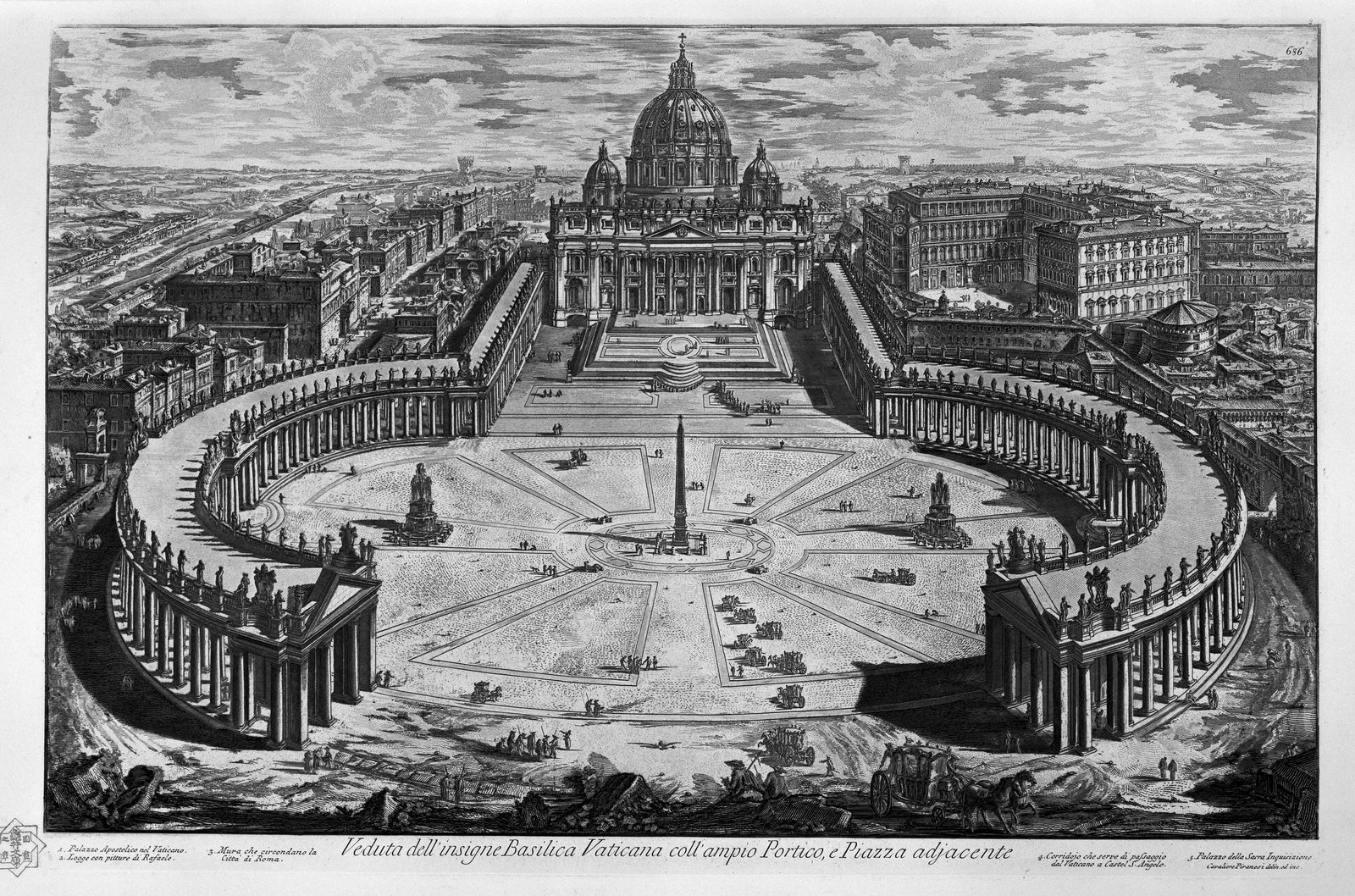
    Piranesi's engraving of St Peter's Square — the accessible entrance to the Basilica is under the right-hand colonnade as you face the facade
    St Peter’s Square by Giovanni Battista Piranesi, 18th century. Via Wikimedia Commons (public domain).

    The Vatican Museums are more accessible than most first-time visitors expect, and the parts that are not accessible are more clearly bounded than most guides admit. Almost the entire standard route — Pinacoteca, Gallery of Maps, Raphael Rooms, and the Sistine Chapel itself — is reachable in a wheelchair via a mix of ramps, lifts, and one dedicated wheelchair lift into the Sistine. Free admission for visitors with certified disability plus a companion is Vatican policy in writing. Two things are not accessible and it is worth naming them up front: the Scavi Necropolis tour below St Peter’s, and the final 320 steps of the Dome climb above it.

    Here is the specific route to plan for.

    Free admission for visitors with certified disability

    Verbatim from the Vatican Museums’ accessibility page: “The Vatican Museums offer free entry to all disabled visitors with certified invalidity of at least 67%. For visitors who are not self-sufficient, free entry is also extended to a companion.”

    How it works in practice: “The free entry tickets are issued upon presentation of a certificate of invalidity at the Special Permits and/or Welcome Desk desks in the hall of the Museums.” This means the free tickets cannot be booked online — you present documentation in person on arrival. Foreign disability documentation (UK Blue Badge, EU parking permit, national disability ID stating the visitor is registered disabled) is generally accepted as meeting the Italian legal threshold, though the Vatican itself does not publish a foreign-document policy. Bring the original certificate, not a photocopy, and a photo ID matching the name on it.

    Getting in: the entrance and welcome desk

    Vatican Museums have a single public entrance on Viale Vaticano, and it is step-free via a ramp. On arrival, do not queue at the standard ticket lanes — go directly to the Special Permits or Welcome Desk in the entrance hall on the left as you clear security. The desk is staffed by Guard Corps (Vigilanza) who will issue the free tickets and hand you an orientation for the accessible route.

    Ask specifically for the “visit itinerary without barriers,” which is the Vatican’s own name for its step-free path. Guard Corps staff will walk you through the first turn if you ask.

    Wheelchairs on free loan

    From the Museums’ accessibility page, again verbatim: “The Vatican Museums offer free wheelchair hire from the cloakroom (subject to availability).” The cloakroom sits just past security in the entrance hall.

    Two practical notes:

    • Free loan requires photo ID at the cloakroom and often a small deposit; both are returned on wheelchair return.
    • “Subject to availability” is real. On peak summer mornings the loaner fleet is out by 09:30. Arrive early or bring your own.

    Electric wheelchairs and mobility scooters

    The Museums accept these, with one important caveat. Verbatim: “The Museums are accessible also to visitors on mobility scooters and with electric wheelchairs. However, due to space limitations, access or use are not permitted in some museum areas. In this case, the visitor will be invited to transfer to a traditional wheelchair, which may be hired free of charge in the entrance hall.”

    The specific area where this comes up most often is the Sistine Chapel wheelchair lift, which has a footprint limit around 76 × 104 cm. If your scooter exceeds that, staff will hold it for you at the top of the lift and hand you a loaner for the Sistine visit itself.

    Inside the Museums: the step-free route

    The accessible visit follows the same one-way sequence as the standard tour, but via ramps and lifts:

    • Ground-level entry hall → escalator (with lift alternative to the right) up to the atrium.
    • Cortile della Pigna (the Pinecone Courtyard) is accessible at ground level from the atrium; the terraces around it are not, but you do not need them.
    • Egyptian and Etruscan galleries are largely accessible with a few narrow sections; the standard route skips most anyway.
    • Gallery of Maps: fully accessible along the 120 m corridor.
    • Raphael Rooms: reached via a lift; all four rooms are step-free once inside.
    • Sistine Chapel: accessed via a dedicated wheelchair lift near the standard entrance. Staff will escort you past the rope line. Standard practice on the way out is to return the same way and back-track to the Museums entrance; the group-only door into the St Peter’s narthex is not reliably available to individual wheelchair visitors (and recent reports say it now requires pre-registration and a fee even for tour groups). Plan to exit via Viale Vaticano and enter the Basilica separately via the piazza.

    The Pinacoteca (picture gallery), which is a detour off the standard route, is also fully accessible and worth including if you have the time — it houses works by Raphael, Caravaggio, and Leonardo.

    Bypassing the Momo staircase

    Every non-accessible visitor exits via the famous double-helix staircase Giuseppe Momo designed in 1932. It has no accessible route down it — it is a spiral of steps. There is a signed lift alternative back to the entrance hall; any Guard Corps officer will walk you to it if you ask. Total detour: perhaps three minutes. You exit onto the same Viale Vaticano forecourt as everyone else.

    St Peter’s Basilica: accessible entrance

    The Basilica’s own FAQ, verbatim: “St. Peter’s Basilica is accessible to visitors with disabilities through ramps and elevators.” The Vatican does not publish which side of the piazza the accessible entrance is on, but in practice it is under the right-hand (south) colonnade as you face the facade.

    The route: a mechanised ramp handles the colonnade step-up, an elevator lifts you from the piazza level to the atrium level, and a further ramp inside the portico brings you into the church itself. Wheelchair visitors and one companion use a dedicated security screening lane that is separate from the main queue. On a busy summer midday the main queue can be 90 minutes; the accessible lane is closer to 15 to 30 minutes. It is a separate line, not a bypass of the metal detector — everyone clears security including wheelchair users.

    Accessible toilets are by the cloakroom just after security. There are none deeper inside the church, so plan the visit accordingly.

    Dome climb: accessible to the roof terrace only

    From the Basilica’s Dome FAQ, verbatim: “Yes, a lift is available to take you up to the terrace level, from where you must continue on foot by climbing 320 steps.” And: “There are 551 steps in total to reach the top of the Dome. Using the lift, it is reduced to 320 steps.”

    Which means: a wheelchair visitor can take the elevator to the roof terrace itself and see the exterior view of Michelangelo’s cupola from the roof gallery, but cannot climb the further spiral to the lantern. The Vatican itself flags this: “The ascent to the Dome is physically demanding due to the presence of steps, narrow spaces and steep inclines. The visit is not recommended for people with heart or respiratory conditions, vertigo, claustrophobia or mobility difficulties, or for pregnant women.” The roof terrace itself is broadly flat and worth the ticket price for the view alone.

    The two things that are not accessible

    Named up front so nothing surprises you on the day:

    • The Vatican Necropolis (Scavi) tour under the Basilica. Verbatim from the official Necropolis FAQ: “No, unfortunately, the Vatican Necropolis is not accessible for people with disabilities due to steps at both the entrance and exit, as well as the uneven ancient pavement dating back to the first three centuries.” Same page also warns: “The underground Necropolis may have altered temperature and humidity conditions. Visitors with specific physical conditions or claustrophobia are advised against visiting.”
    • The Papal Grottoes (Grotte Vaticane, the free crypt below the Basilica floor). The Fabbrica does not publish a specific accessibility statement for the Grottoes. In practice access is inconsistent — the direct staircase from the Basilica floor is step-only; there is a side courtyard route with ramps but it is not always available. Treat as not reliably accessible: ask a Vigilanza officer on the day, and if the Grottoes are closed to wheelchairs that day, the papal tomb sight-lines are readable from the Confessio balustrade on the Basilica floor.

    Blue-badge parking around the Vatican

    No public parking exists inside Vatican City itself. Rome city rules govern the streets immediately outside. Holders of an Italian CUDE (Contrassegno Unico Disabili Europeo) or any equivalent EU or UK Blue Badge may:

    • Park free in yellow-striped disabled bays.
    • Park free in blue-striped paid bays when yellow bays are full.
    • Enter ZTLs (limited-traffic zones) provided the badge holder is in the vehicle and the badge visibly displayed.

    Foreign (non-Italian) Blue Badge holders should register their plate and badge with Roma Servizi per la Mobilità (romamobilita.it) before entering the ZTL, or an automatic camera will issue a fine. The closest paid-parking streets to the Museums (Via Leone IV and Via Sebastiano Veniero) generally include some yellow-striped disabled bays; verify current bay locations on Roma Mobilità’s interactive map before your trip. For the Basilica, Via della Conciliazione is the main approach street and disabled bays exist somewhere along it and in the Borgo side streets, but exact locations shift; check Roma Mobilità’s interactive map before your trip. Verify the specific location on Roma Mobilità’s interactive map before your trip.

    What to bring, and what to ask for

    • Original disability certificate or Blue Badge, plus photo ID matching the name on it.
    • Arrival before 09:00 if you want a loaner wheelchair — they run out on peak mornings.
    • Ask for the “visit itinerary without barriers” at the Welcome Desk — that is the Vatican’s own name for the accessible route.
    • Dress code applies as normally: shoulders and knees covered at all three sites (Museums, Basilica, Sistine); hats off inside. For details, see our Vatican dress code guide.

    For the standard 08:00 ticket that gets you into the Museums early (before the accessible lift queue lengthens), our Vatican Museums and Sistine Chapel skip-the-line ticket is the standard route. Note that free-admission tickets for visitors with certified disability are issued in person at the Welcome Desk and cannot be pre-booked online.

  • Skip the Line Is Real. No Wait at All Is a Marketing Lie.

    Skip the Line Is Real. No Wait at All Is a Marketing Lie.

    Piranesi's engraving of St Peter's Square — the piazza where Italian State Police, not Vatican staff, run the security check every visitor clears
    St Peter’s Square, engraved by Giovanni Battista Piranesi in the 18th century. Via Wikimedia Commons (public domain).

    Search “Vatican skip the line” and half the results promise “immediate entry” or “no waiting.” Both promises are false. A legitimate skip-the-line ticket for the Vatican Museums is a real, useful product — it saves you the ticket-office queue on Viale Vaticano that can run two hours in July. It does not, and cannot, save you the security screening at the entrance. Same rule at St Peter’s Basilica: no ticket at any price bypasses the Italian State Police security check on the piazza. Any marketing that promises otherwise is either misreading its own T&Cs or hoping you will not.

    Here is what actually happens on each side of the wall.

    What a Vatican Museums “skip the line” ticket really is

    The Vatican Museums sells timed-entry tickets through its own portal at tickets.museivaticani.va. Standard adult admission is reported at €20 at the on-site window and €25 online, with the €5 difference being the price of the guaranteed timed slot. That timed slot is what “skip the line” actually means: your booking has a fixed 30-minute entry window; you use Queue 2 (pre-booked lane) rather than the walk-up ticket-office queue.

    The Vatican itself never uses the phrase “skip the line” in its ticketing copy. Its FAQ describes the product as a timed reservation, and is explicit about what happens if you miss it: “Once you have purchased tickets for a specific date and time, you cannot change the selected access time. If you arrive at a different time, you will not be allowed entry.” That is the actual product — a slot reservation. The queue you skip is the walk-up ticket queue, not the security queue that everyone clears.

    Security screening is not skippable

    Past the ticket gate, every visitor — including holders of the €25 online booking, including holders of every third-party premium package, including anyone on a private tour — clears the same metal-detector-plus-bag-scan security check as everyone else. The Museums’ own “Useful information for visitors” page acknowledges this obliquely: “To facilitate and speed up security checks by metal detector, visitors are advised to remove inadmissible items from their hand baggage beforehand.”

    Peak-season security wait: 10 to 30 minutes even for pre-booked visitors. In practice this is the queue that actually matters for anyone with a first-slot booking — the Viale Vaticano ticket-office queue is 60 to 120 minutes in July for walk-ups, so booking online is worth every euro of the €5 surcharge. But the “no wait” claim collapses the moment you look at the metal detector line.

    Read the small print on any reseller and this admission is there. A common disclaimer, in one form or another: skip-the-line ticket holders are not exempt from the security queue. Another: “Skip-the-line tickets bypass the ticket queue, not the security scan (approx. 10 min).” And a third: “Seasonal delays may occur, even with priority entrance, and are beyond our control … during high season the wait at security may be up to 30 minutes.” Every one of these disclaimers directly contradicts the marketing headline that put you on the page in the first place.

    St Peter’s Basilica: the same trick, less to gain

    Entry to St Peter’s Basilica is free. Repeat that: no ticket is required to walk into the Basilica. The queue you see on the piazza is a security check run by the Italian State Police, not a ticket line. The Basilica’s own site confirms as much: access begins with security checks run by the Italian State Police, at stations under the right-hand hemicycle of St Peter’s Square as you face the facade.

    What does the paid Basilica “reservation” actually buy? Two things: a specific timed entry slot (useful when the security queue is 90 minutes at midday), and a digital audio guide bundle. That’s it. No admission fee is being saved because there was never an admission fee to save.

    Anyone marketing a “Basilica skip-the-line ticket” that costs more than a timed reservation is charging you for the timed slot and reselling it at a markup. Sometimes they add an escort to the priority lane, which is real but modest value. What none of them can do is skip the Italian police checkpoint.

    Third-party markups: same product, more expensive

    Get Your Guide, Tiqets, Viator, and similar aggregators list “skip-the-line Vatican Museums” packages at €28 to €35 or more. These are the Vatican’s own €25 timed-entry ticket resold with a markup, sometimes bundled with an escort or a minor audio-guide package. Same product. Same Queue 2. Same security scan. The premium buys you convenience of a slicker checkout and a phone-number to call if the booking has a problem; it does not buy you a different type of ticket than the Vatican itself sells.

    Nothing wrong with paying the markup if the convenience matters. Everything wrong with the marketing that implies the product is materially different from what the Vatican portal sells for €25.

    The one legitimate shortcut

    There is exactly one Vatican-authorized route that skips a security queue: the internal corridor from the Sistine Chapel exit down into the narthex of St Peter’s Basilica. It is real. It is not marketing spin. Independent visitors cannot use it; access is restricted to accredited guided groups whose operator has a paid arrangement with the Museums. If you are on a licensed private or small-group tour that specifically includes the “internal Sistine-to-Basilica exit,” that operator is delivering a genuine access class that a walk-in ticket cannot buy.

    Which is where the value of a guided tour actually sits. Not in “guiding,” which is easily replaced by an €8 audio guide inside the Sistine. In the physical shortcut that skips a real 90-minute security queue at the Basilica on a July afternoon. That is worth paying for, and reputable operators name the access explicitly on their tour pages.

    Refunds: worse than most people expect

    If you miss your slot, most tickets are non-refundable and non-reschedulable. The Vatican Museums’ portal terms are blunt: “There is NO right of withdrawal for this purchase.” The Basilica’s parallel: “The ticket and reservations for St. Peter’s Basilica and its areas (Dome, Museum, Necropolis, etc.) are non-refundable.” Third-party sellers vary — some offer 24-hour cancellation, most do not. Read the specific reseller’s terms before you book if there’s any chance of a schedule change.

    One narrow exception on Museums tickets: full refund if the Vatican Governorate itself closes the site (papal audiences do not count; specific closures for state funerals or unscheduled events do).

    How to read a Vatican ticket offer honestly

    • If the headline says “skip the line” and the T&Cs say “bypasses the ticket queue, not security,” that is an honest product with a dishonest headline. Treat the T&Cs as the real description and buy it if the price is fair.
    • If the headline says “no waiting” or “immediate entry” with no T&Cs disclaimer visible on the sales page, walk away — either the operator is careless with claims (which is a signal about their operational discipline) or hoping you will not read carefully.
    • If the offer specifies “internal Sistine-to-Basilica access” and lists a group size (typically 10-20), that is the legitimate shortcut. Worth the premium if you also plan to do the Basilica.
    • If the offer costs materially more than €25 (Museums) or the reservation-fee equivalent (Basilica) and does not add either a licensed guide or the internal shortcut, you are paying for markup on the same product the Vatican sells directly.

    Direct Vatican bookings are at our Vatican tickets page for the Museums + Sistine skip-the-line ticket, and St Peter’s Basilica tickets and tours for the Basilica reservation and Dome climb. For the guided tours that include the Sistine-to-Basilica internal exit specifically, our VIP early-entrance guided tour is the format that carries that access. That is the one product where the “skip the line” premium buys you access no walk-in ticket can.

    Everything else is a timed slot with a marketing headline.