Category: Uncategorized

  • The Confessio: Why Everyone Stops at the Empty Staircase Below the Altar

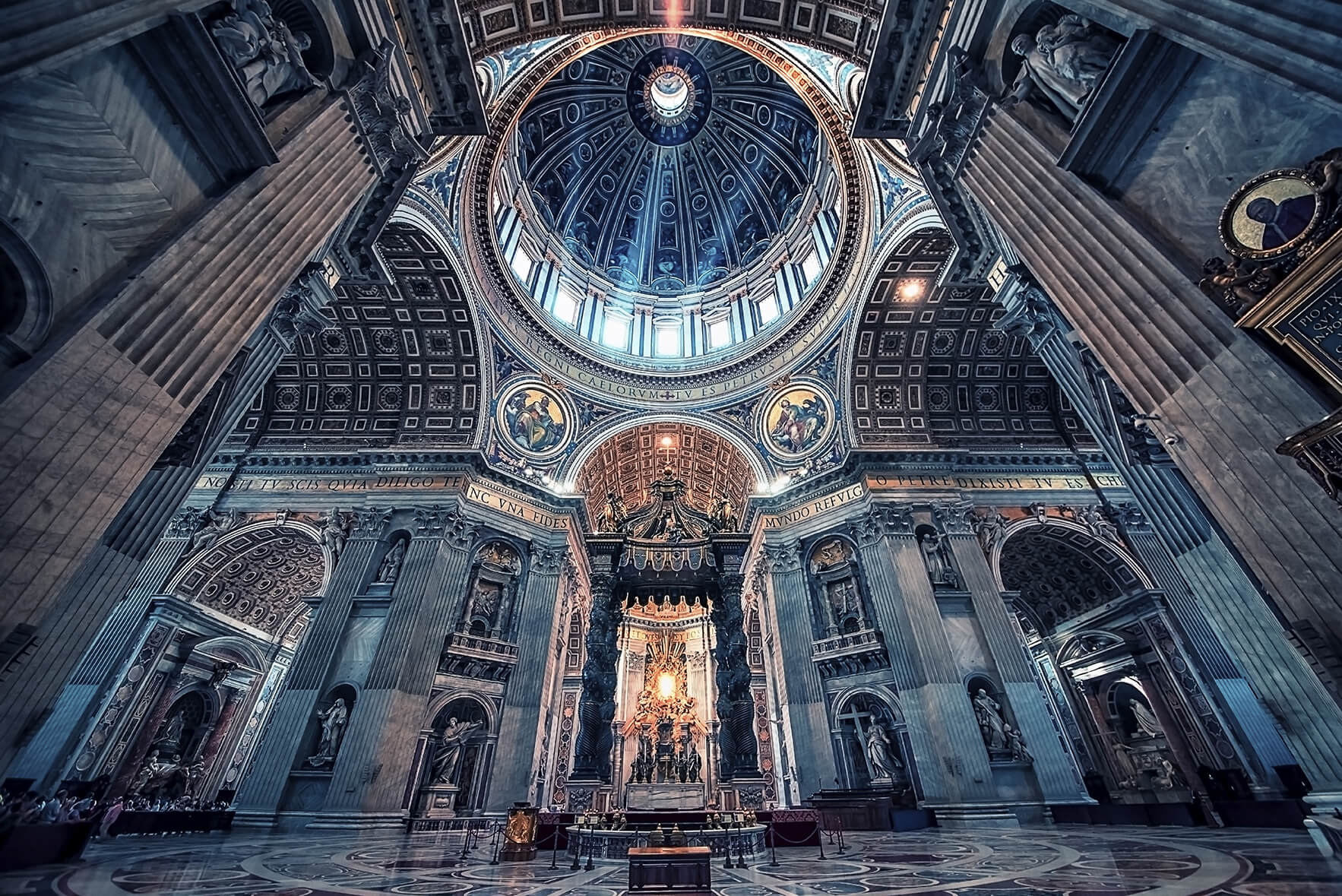
    The tomb of Saint Peter beneath the high altar of St Peter's Basilica, directly under the sunken Confessio
    The tomb of Saint Peter, the point the sunken Confessio above it is built to mark.

    Stand at the crossing of St Peter’s Basilica, under Michelangelo’s dome, and you will see a small crowd doing something odd. They are not looking up at the ceiling or across at the bronze canopy overhead. They are looking down, at a sunken horseshoe of marble ringed by a low balustrade, lit by rows of small gold lamps that never seem to go out. Almost nobody reads the plaque. Most people just stop, lean on the rail for a moment, and move on without knowing what they were looking at.

    That sunken space is the Confessio, sometimes called the Niche of the Pallia. It sits directly in front of the papal high altar, under Bernini’s baldachin, at the exact centre point of the basilica. Everything about its position is deliberate. Everything under your feet at that spot is the reason the entire building exists where it does.

    What the word “confessio” actually means here

    In early Christian architecture, a confessio is not a booth for confession. It is the space built around and above a martyr’s grave, marking the place where that person “confessed” their faith by dying for it. St Peter’s has one because the basilica was built, in the fourth century and then rebuilt from the sixteenth, directly on top of an existing Roman-era burial site believed since antiquity to hold the apostle’s grave. That grave came first, and the high altar sits exactly on top of it for that reason alone. A building this size grew up around a fixed point in the ground, not the other way round.

    What you see today, a sunken niche with a curved double staircase and bronze grille, dates to the early seventeenth century, when Carlo Maderno redesigned this part of the church for Pope Paul V. Pilgrims could descend a few steps and kneel closer to the site than the raised floor of the nave allowed.

    The eighty-nine lamps

    Ring the balustrade and look closely: gilt-bronze oil lamps have burned there continuously, day and night, since the seventeenth century — eighty-nine of them by the traditional count, though the exact number on any given day shifts slightly depending on whether the papal altar’s portable platform is in place over part of the niche. They are not decorative in the ordinary sense. An ever-burning lamp at a saint’s tomb is an old liturgical gesture, older than the current basilica, meant to say that veneration here does not pause for opening hours or seasons. That is one reason the space glows faintly gold even when the rest of the crossing sits in shadow, and it is usually the first detail visitors notice before they work out what they are looking at.

    The kneeling pope who used to be in the niche

    For a century and a half, the niche itself held a marble statue of a pope kneeling in prayer, facing the tomb rather than facing the nave: Pius VI, carved by Antonio Canova, one of the sculptor’s last works, after that pope died in French custody during the Napoleonic period. In 1979, Pope John Paul II had the statue moved down into the grottoes below, so that a new opening could let visitors on the grottoes route look directly onto the tomb the statue had spent so long facing. It is still there today, kneeling toward Peter’s grave from a few metres closer than the crossing above. Placing a pope permanently turned away from the congregation and towards the grave was, in its original spot and in its current one, a deliberate way of putting the entire papacy in a posture of prayer at the source of its own authority. Every pope since Peter is, in the Church’s own account, occupying a chair that traces back to this exact spot.

    Why it’s also called the Niche of the Pallia

    That second name comes from a specific object, not a general idea. A pallium is a narrow band of white wool, worn over the shoulders by archbishops as a sign of their office and their connection to Rome. Before a newly appointed metropolitan archbishop receives his pallium, the woollen bands are traditionally kept in a box near this spot, close to the tomb, so that they can be said to have rested at the grave of the apostle before being sent out to a diocese somewhere else in the world. Its second name is simply a record of that custom, still referenced on the Feast of Saints Peter and Paul each 29 June, when new pallia are blessed.

    What’s actually underneath

    Here is the part almost nobody realises while they are standing at the rail. This sunken niche is not the grave itself. It is a marker built several metres above the grave, and the real site sits deeper still, below the current basilica floor entirely.

    Excavations begun under Pope Pius XII in 1940 uncovered a Roman-era necropolis running underneath the whole nave, a street of family tombs cut into the hillside long before Constantine’s church was built over it in the fourth century. Directly beneath the high altar, archaeologists found a small second-century monument, a modest aedicula built against a red-painted wall, which ancient tradition and the surrounding graffiti connect to the burial of Peter. Bones recovered near that monument were examined for decades before the Vatican, in 1968, announced its conclusion that the relics were consistent with an apostolic-era male burial at that spot. Not every historian accepts that identification as settled, and the Vatican itself has always spoken of it with more nuance than headlines usually allow, but the archaeological sequence, the ancient graffiti, and the layout of the space are well documented and can be seen for yourself.

    You cannot see any of that from the crossing above. That necropolis and the aedicula within it sit under the current floor, reachable only on a separate, pre-booked excavations tour known as the Scavi, capped at small group sizes and run by the Vatican’s own office, not by the general basilica visit. What you get for free, just by walking up to the balustrade, is the marker: the lamps, the kneeling statue, and the geometry of a building that was planned around a single unmarked grave two thousand years ago.

    How to actually look at it

    Approach from either side aisle rather than pushing through the centre of the crossing, where the crowd around the baldachin is thickest in the late morning. Early entry, before the basilica fills up after nine, gives the clearest view down into the niche without a row of heads in front of you. Look for two things in order: the ring of ever-burning gilt-bronze lamps at balustrade height, and the bronze grille set into the marble that marks the point closest to the tomb the general public can reach without a separate booking. (The kneeling Pius VI that once faced the tomb from this niche was moved down to the grottoes in 1979 — that’s where to find him now.) Once you know what each element is doing, the pause everyone makes at that rail stops being a mystery and starts being the point of the whole visit.

    If you want the fuller picture, including the necropolis beneath the Confessio and the rest of the basilica’s major sightlines, it is worth booking ahead through our St Peter’s Basilica tickets and tours before you go, since the Scavi office in particular books out days in advance.
  • A Room-by-Room Walk Through St Peter’s Treasury Museum

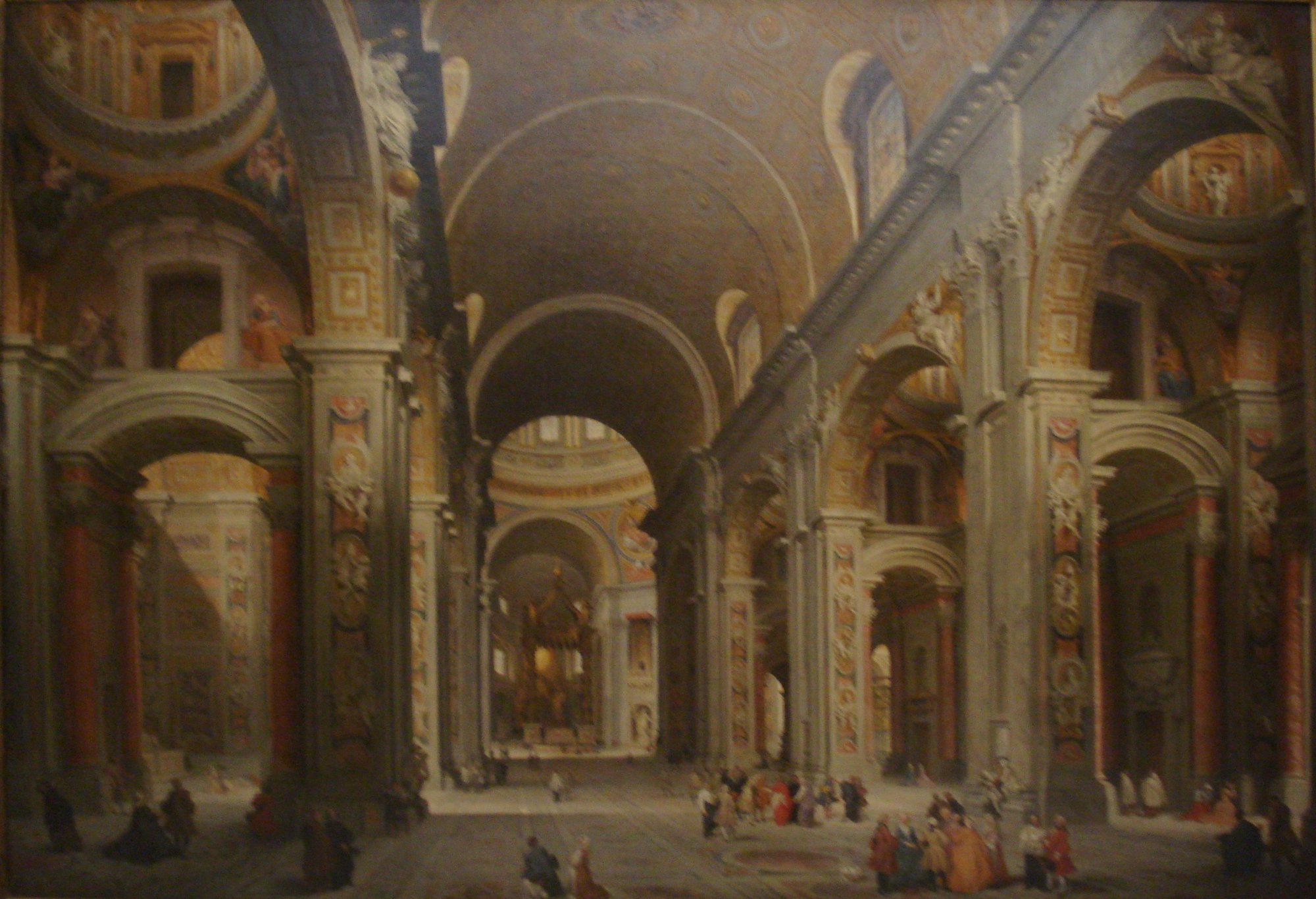
    Painted interior of St Peter's Basilica by Giovanni Paolo Panini, showing the nave and Bernini's Baldachin
    The Basilica interior painted by Giovanni Paolo Panini. Its Treasury Museum sits off this nave, through the sacristy, and is currently closed for a new-layout renovation. Public domain via Wikimedia Commons.

    Before anything else: at the time of writing, the Museo del Tesoro is closed. Its custodian, the Fabbrica di San Pietro — the body that runs St Peter’s Basilica and its Treasury, a separate authority from the Vatican Museums — says on its official booking pages that the closure is for a new-layout renovation: “Due to the continuation of work on the new layout, the Treasure Museum will be temporarily closed.” No reopening date has been published. Everything below is written as planning material for whenever it reopens, not as a same-day itinerary — so treat this as a briefing to have ready, not a map to follow this week.

    That caveat matters because the Treasury rewards planning more than almost any other stop inside the Basilica. It sits through a door off the north aisle, past the sacristy, and most people who find it are already tired from the nave, the dome queue and the crowd around the Pieta. They walk nine rooms in five minutes and remember a vague impression of gold. Before renovation, the building was designed as a sequence — one object leading logically to the next — and thirty unhurried minutes changes what you actually see.

    Why the rush happens

    The Treasury entrance sits at the end of the standard Basilica walk, not the start, which is the first problem. Visitors arrive at the sacristy door having already spent an hour on Michelangelo’s dome, the Baldachin and the Pieta, and their attention is running low exactly when the Treasury asks for more of it. Scale is the second problem: a cope and tiara at the entrance look, at a glance, like more of the same vestments seen in a hundred church museums across Italy. Nothing in the first room signals that a fifteenth-century bronze tomb monument or a fourth-century sarcophagus waits two rooms further in. Without knowing what’s ahead, there’s no reason to slow down.

    A third-party guide to the Basilica interior, stpetersbasilica.info, documents the pre-renovation layout as nine rooms, each with a distinct focus rather than a general vestment case. That sequence predates the current closure and the “new layout” mentioned in the official notice, so it should be read as background on how the collection has historically been organised, not as a guarantee of what visitors will find when the doors reopen.

    The bronze tomb that used to stand in Old St Peter’s

    The single object worth building a visit around, in that historical sequence, is the bronze sepulchral monument attributed to Antonio del Pollaiolo. Stpetersbasilica.info quotes the commission plainly: “Antonio Pollaiolo (1431-1498) was commissioned to make the sepulchral monument by Giuliano Della Rovere, later Pope Julius II.” The tomb was made for Sixtus IV, della Rovere’s uncle, and it belongs to a small, specific category of survivor. Per the Web Gallery of Art, “the two bronze papal tombs executed between 1484 and 1496 by the Pollaiuolo workshop for St Peter’s, Rome, were the grandest of the fifteenth century, and the only tombs to be transferred into the new basilica when Old St Peter’s was demolished in 1506.” Everything else from the old church, the one Constantine’s builders raised over the apostle’s grave, was cleared or dispersed. This piece made the crossing.

    That single fact is what turns a display case into a narrative thread. This bronze in front of you once stood in a building that no longer exists, inside a project — the new St Peter’s — that took over a century to finish.

    A twisted column with a legend attached

    Further into the historical sequence sits the Colonna Santa, a spiral marble column roughly 4.74 metres tall, catalogued by Wikimedia Commons as a “Solomonic column” and also known as the Colonna degli ossessi, the column of the possessed, after a medieval legend that it was used in exorcisms. It’s one of a set of ancient twisted columns salvaged from Old St Peter’s, and its shape alone explains why it drew stories: nothing else in the Treasury looks quite like it.

    Its exact age is where sources start to disagree. One guide to the layout separately describes “a fourth-century twisted marble column decorated with vine tendrils” among the Treasury’s holdings, without confirming that this is the same object as the Colonna Santa. Given that ambiguity, the honest version to tell a group is that this is an ancient spolia column tied to a genuinely old legend, rather than committing to a specific century you can’t source cleanly.

    Vestments, reliquaries and a Bernini model in clay

    The rooms around the Sixtus IV monument, per the historical layout, carry the material most people picture when they hear “treasury”: a red cope and tiara, the Stuart Chalice, the Vatican Cross, a Byzantine dalmatic, hand-warmers and reliquaries, a set of candelabra. One room is given to a fourteenth-century frame built to hold a Veronica relic. Another, easy to walk past, holds a small clay angel model attributed directly to Bernini himself — the kind of working sketch that rarely survives once a project is finished in marble or bronze. It rewards a slow look precisely because nothing about it announces its maker the way a finished sculpture would.

    The sarcophagus that closes the sequence

    The historical layout ends with the Sarcophagus of Junius Bassus, a fourth-century Roman work, carved not long after Christianity became legal under Constantine. Placing it last, after tiaras and papal bronzes, sets up a deliberate contrast: an object from the century the basilica’s story actually begins, seen only after everything built on top of that beginning. It’s a strong closing note for a room-by-room walk, whether or not the reopened Treasury keeps this exact placement.

    What to check before you plan a visit

    Because the Treasury has no announced reopening date, a few things are worth confirming close to any trip rather than assumed from this post. Check the Fabbrica di San Pietro’s own site first: its Italian and English booking pages both currently show the closure notice, and that’s where a reopening would first appear. Don’t check the Vatican Museums’ hours page for this; the Vatican Museums and St Peter’s Basilica are run by separate authorities with separate calendars, and the Treasury falls under the Basilica, not the museum complex on the other side of the colonnade. General hours for the Basilica itself are listed as “From june 1st: from 7.00 am to 8:00 pm,” though those figures don’t extend to any future Treasury opening times, which haven’t been published. Any ticket price you find quoted online for the Treasury from before the renovation should be treated as stale until the official site confirms otherwise.

    How to use the thirty minutes when it reopens

    Once the Treasury is open again, the practical fix for the five-minute problem is simple: walk it second, not last. If a guide or itinerary can route you through the sacristy door before the dome climb or the queue for the Pieta, you arrive with attention still in reserve. Read the first room’s labels properly rather than skimming toward the gold. Slow down deliberately at the Pollaiolo tomb and again at the Colonna Santa, since those are the two objects in the sequence with a documented story behind them rather than a generic “reliquary, sixteenth century” label. Thirty minutes, spent that way, covers the same nine rooms as the five-minute version. It just leaves you with something to say about them afterwards.

    Until a reopening date appears, the Treasury is best treated as one stop to plan around rather than one to chase on a single visit. If you’re mapping out the rest of the Basilica in the meantime, our guide to St Peter’s Basilica tickets and tours covers what’s actually open right now and how to book entry without wasting the morning in a queue.

  • The Vatican Grottoes: Where the Popes Are Actually Buried

    Interior of St Peter's Basilica's dome and Bernini's baldachin above the high altar, beneath which the Vatican Grottoes lie
    The dome and baldachin above St Peter’s high altar — the Vatican Grottoes lie just beneath this spot.

    Most visitors assume every pope of the modern era ends up in the same place beneath St Peter’s Basilica. That assumption is mostly right and, for the man who held the job most recently, completely wrong. Pope Francis, who died on Easter Monday 2025, was buried at the Basilica of Santa Maria Maggiore across the city, the first pope interred outside Vatican City since Leo XIII in 1903. His predecessor, Benedict XVI, went into the Grottoes in 2023 and lies there now. Understanding why one went one way and one went the other requires knowing what the Grottoes actually are, which is where most guidebooks get vague.

    A level, not a crypt

    The Vatican Grottoes sit roughly three meters below the current floor of St Peter’s Basilica, stretching from the high altar back to about halfway down the nave. Think of it less as a single burial chamber and more as a semi-underground floor sandwiched between two other levels: the basilica you walk through on a normal visit sits above it, and a much older, much deeper Roman-era necropolis sits below it. The Grottoes occupy the middle layer, built into the space created when the current basilica was raised over the older Constantinian one in the sixteenth and seventeenth centuries.

    That middle position explains the name confusion that trips up almost every first-time visitor. “Grottoes” and “necropolis” get used interchangeably online, but Vatican sources are explicit that they are not the same thing. Wikipedia’s summary states it plainly: “The Vatican Grottoes are not to be confused with the Vatican Necropolis, which is an ancient burial ground that dates back to the Roman times.” One is a papal burial gallery built centuries ago inside a Renaissance basilica. The other is a pagan and early Christian cemetery excavated in the twentieth century, several meters further down.

    Free floor, paid floor

    That distinction matters practically as well as historically. The Grottoes function as part of a normal basilica visit, reached by a staircase near one of the piers supporting the dome, and third-party travel sources consistently report there’s no separate charge to walk through them. I couldn’t confirm that free-entry claim on an official Vatican page during this research, so treat it as commonly reported rather than officially stated, though it fits how the space functions: an open pass-through rather than a ticketed attraction.

    The Necropolis, often called the Scavi, works entirely differently. It’s listed as a standalone bookable product on the official basilica site, alongside the Dome and the Treasury Museum, and it has to be reserved in advance through the Vatican’s own booking system rather than walked into on the day. I wasn’t able to verify a current ticket price or a minimum-age requirement from any official page reached this session, so don’t quote a figure to a client without checking it fresh. What the Vatican’s own description does confirm is the flavor of the experience: the necropolis, it says, “remained inaccessible and untouched for sixteen centuries” before excavation, and visiting it “reveals itself as a place that leads us to rediscover a world of the living” among the ancient Roman and early Christian tombs beneath the central nave.

    Ninety-one popes, one floor

    According to Wikipedia’s count, the Grottoes hold “the tombs of 91 popes,” a figure spanning centuries of burials as the basilica above it was rebuilt, expanded, and reorganized. That number covers everyone from early medieval pontiffs to several twentieth-century ones, arranged in niches and side chapels along the gallery rather than in one uniform row.

    Among the confirmed twentieth-century burials, Benedict XVI is the one worth knowing in detail, because his tomb has an unusual history attached to it. After he died on 31 December 2022, with his funeral held on 5 January 2023, he was placed “in the same tomb that had previously been occupied by Pope John Paul II’s body from his death in 2005 until his beatification in 2011.” John Paul II himself had rested in that same Grottoes niche for six years before his remains were moved up into the main basilica, to the Altar of St Sebastian, following his beatification. So the same physical spot in the Grottoes has now housed two different popes at two different points, decades apart.

    Several other twentieth-century popes are widely reported to be buried in the Grottoes too, among them Pius XII, Pius XI, Pius X, Benedict XV, Paul VI, and John Paul I. I didn’t independently re-verify each individual burial location against a primary source this session, so I’ll flag those six as generally accepted rather than freshly confirmed, and I’d want a guide checking a specific chapel name before stating it as fact on a tour.

    Why Francis broke the pattern

    Given all that, Francis is the fact that upends a visitor’s assumption fastest. He died on 21 April 2025, Easter Monday, and was buried not in the Grottoes but at Santa Maria Maggiore, “in the burial niche in the side aisle between the Pauline Chapel (Chapel of the Salus Populi Romani) and the Sforza Chapel of the Basilica.” It made him the first pope buried outside Vatican City in well over a century. If a guest on a tour asks whether Francis is downstairs with the others, the honest answer is no, and the reason is worth explaining rather than glossing over: he chose a different resting place entirely, breaking with the pattern nearly every other twentieth-century pope followed.

    What the Grottoes don’t include

    One thing the Grottoes visit does not give you is the tomb of St Peter himself. That sits deeper still, within the area of the Clementine Chapel behind the papal altar, accessible on the separate Scavi tour rather than the open Grottoes route. A basilica visit and a Grottoes walk-through will show you where popes from recent centuries are laid to rest. They won’t put you in front of the apostle’s own burial site; that requires the reserved, paid necropolis tour instead.

    Planning around basilica hours

    St Peter’s Basilica itself, which governs when the Grottoes staircase is open, publishes summer hours as “from 7.00 am to 8:00 pm” starting 1 June. I could not find an official page stating separate opening or last-entry times specifically for the Grottoes, so build in a buffer rather than assuming the whole basilica’s closing time applies right up to the last minute in the lower level. Security screening in St Peter’s Square adds its own queue before you even reach the basilica doors, and that queue is usually the longer wait of the two.

    Dress code applies underground exactly as it does upstairs: shoulders and knees covered for everyone, no exceptions made because the light is dimmer and the crowd thinner. Beyond that, treat the Grottoes as an extension of whatever basilica etiquette staff are enforcing that day rather than a separate set of rules; I found nothing official spelling out Grottoes-specific conduct beyond the basilica’s general standard, so follow the guidance of whoever is on duty at the staircase.

    Under Pope Leo XIV, elected in May 2025 as the first US-born pope, none of this access pattern has changed. The Grottoes remain what they’ve been for centuries: a working papal cemetery you can walk through on foot, distinct from both the basilica above it and the ancient necropolis below. If you’d rather see St Peter’s own tomb and the older excavated level rather than just the papal gallery, our St Peter’s tomb tickets and tours page covers how to book the reserved Scavi visit separately from a standard basilica entry.

  • Climbing St Peter’s Dome: The Three Stages Between Ticket and Rooftop

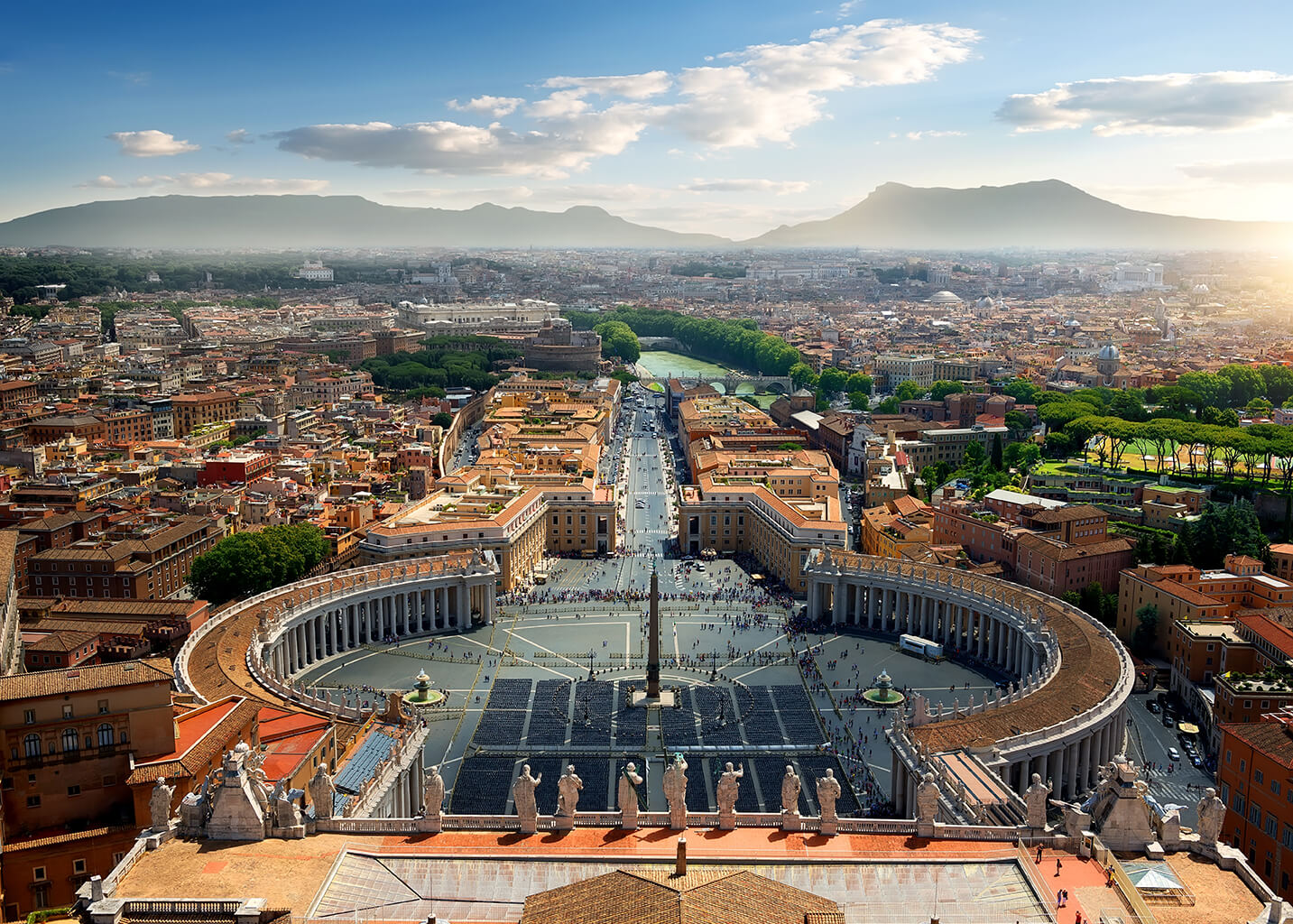
    View across St Peter's Square from the top of St Peter's Dome, the destination at the end of the three-stage climb
    The view from the top of St Peter’s Dome, looking down over St Peter’s Square — the payoff waiting at the end of all three stages.

    Nobody warns you that the climb has three distinct moods. Guidebooks flatten it into a single number, 551 steps, as if the walk were one uniform slog from ground floor to lantern. It isn’t. There’s a stretch you can skip with a lift, a stretch where you wander a flat terrace and forget you’re climbing at all, and a final stretch where the building itself leans into you and won’t let you stand up straight. Knowing which is which changes how you plan the visit, and it changes how the last twenty minutes feel in your legs.

    One thing worth clearing up before you start: the Dome is ticketed and run separately from the Vatican Museums. It’s sold through booking.basilicasanpietro.va, managed by the Fabbrica di San Pietro, not through museivaticani.va. That matters for hours. Dome hours and Museums hours are not interchangeable, and mixing them up is the single most common planning mistake we see.

    Two ticket types, one starting point

    The official product page lists two options: “The Dome with lift” and “The Dome with stairs.” Both include the same thing once you’re inside — a “Visit to the inner Ring and outer Ring of the Dome” — plus entry into the Basilica itself, scheduled before or after the climb “based on visitor flow” rather than at a fixed time. The difference between the two products is entirely in stage one. Pick lift and you skip the first block of stairs. Pick stairs and you don’t. Either way, the last stretch is identical for everyone, which is the part most people underestimate.

    Exact current pricing isn’t something we’ll pin down here, since the official booking page loads its fares dynamically and third-party sites quote figures that disagree with each other by a wide margin. Check the price at booking.basilicasanpietro.va when you book rather than trusting a number you saw on a blog.

    Stage one: the lift, or the first 231

    From the ticket desk, you’re routed toward the base of the Basilica’s roofline. If you bought the lift ticket, this part takes under two minutes: a slow, crowded elevator ride that deposits you on the roof terrace with almost no sense of having climbed anything. If you bought the stairs ticket, you’re on your feet for 231 steps of a fairly ordinary stone staircase, wide enough for two-way traffic, well lit, with landings every so often where slower visitors pause. It’s unglamorous. Think office-block stairwell, not cathedral.

    This is the stage that gives the ticket its name, and it’s also the only stage where the two products genuinely diverge. Everything after this point is on foot no matter which ticket you’re holding.

    The roof terrace: a pause you don’t expect

    Both routes converge here, at roof level, and the change in atmosphere is abrupt. You step out of a stairwell or an elevator car and you’re suddenly outdoors, on a flat expanse of roof with statues at eye level instead of far overhead. There’s a gift shop up here, restrooms, a water fountain, and a small refreshment stand — genuinely useful if you’ve timed your visit for midday heat. Most visitors treat it as a breather, and it functions as one: nothing about crossing the terrace resembles climbing.

    This is also where the inner Ring opens off to one side, the gallery inside the Basilica’s own dome that looks straight down into the nave, with the mosaics and the tiny figures of visitors crossing the floor a long way below. It’s worth five minutes on its own, and it’s easy to miss if you’re focused on getting to the top.

    Stage three: 320 steps that never let up

    From the terrace, a small door marks the start of the real climb. This is the part the lift ticket can’t get you out of: “the remaining 320 steps to the top must be completed on foot in any case,” as one dedicated dome-visiting site puts it. There is no shortcut past it, no second elevator, no option to turn back once the queue behind you has formed on a staircase built for one direction of traffic.

    What makes this stretch feel so different from stage one is the shape of it. St Peter’s dome is built as a double shell — an inner dome and an outer dome with a walkable gap between them — and the final staircase runs inside that gap, spiralling upward as the two shells converge toward the lantern. One source describes it precisely as “an increasingly narrow spiral staircase between the inner and outer dome shells.” The word “increasingly” is doing real work there. At the bottom of this stretch the passage feels almost normal. By the last few flights, the outer wall has tipped inward enough that you’re leaning your shoulder against sloped stone just to keep moving, and the handrail on the inner side curves with a slightly different radius than the one you’re gripping. Taller visitors duck. Anyone carrying a bag switches it to the side away from the wall.

    It isn’t dangerous so much as disorienting, the way a spiral staircase in a lighthouse is disorienting: your inner ear starts registering the turn before your eyes fully process it. Visitor-info sites describe the overall climb as “physically demanding due to the presence of steps, narrow spaces and steep inclines,” and that phrase earns its place squarely in this final third. The first two stages are mild. This one is the reason the ticket carries a health advisory at all.

    Who should sit this one out

    The same advisory turns up, in near-identical wording, across most visitor-information pages: the climb is “not recommended for people with heart or respiratory conditions, vertigo, claustrophobia or mobility difficulties, or for pregnant women.” Treat that as sound general guidance rather than a verbatim Vatican regulation, since nobody checks a medical form at the door. But it’s accurate to what stage three demands. A narrow, spiralling, sloped staircase with a one-way flow of foot traffic is a poor place to discover a fear of tight spaces, and there’s genuinely nowhere to sit down once you’re inside the shell.

    What’s waiting at the lantern

    The dome tops out at 136.6 metres, the tallest in the world, and Michelangelo’s double-shell design is precisely what makes that height survivable structurally and walkable practically. The final steps open onto a narrow walkway ringing the lantern, with Rome laid out in every direction: the straight line of Via della Conciliazione behind you, the Vatican Gardens off to one side, St Peter’s Square directly below with its colonnades reading as two curved arms from this height. It’s windier up here than the terrace, and there’s less room to linger, since the walkway is narrow and the queue behind you is still climbing.

    Planning the visit around the hours

    As of today’s schedule, the Dome runs on summer hours, 7am to 6pm, a window that holds through 25 October 2026 before reverting to the winter schedule of 7:30am to 5pm. The Basilica itself keeps longer hours in summer, “from 7.00 am to 8:00 pm” from the 1st of June — worth knowing if your dome ticket schedules Basilica entry for after the climb rather than before. Because dome tickets bundle Basilica entry, the standard Vatican dress code applies throughout: shoulders and knees covered, checked before you’re allowed anywhere near the ticket desk.

    Go early if you can manage it. The staircases are one-directional, so a busy midday climb means matching your pace to a queue rather than setting your own, and stage three is not where you want to be shuffling behind a large group.

    If you’d rather have someone handle timing and entry logistics rather than juggling the Dome’s separate booking system yourself, our St Peter’s Basilica tickets and tours page lays out the current entry options, dome climb included, for anyone planning around these three stages.

  • The Gift Shop You Walk Through on the Way Out of the Vatican Museums

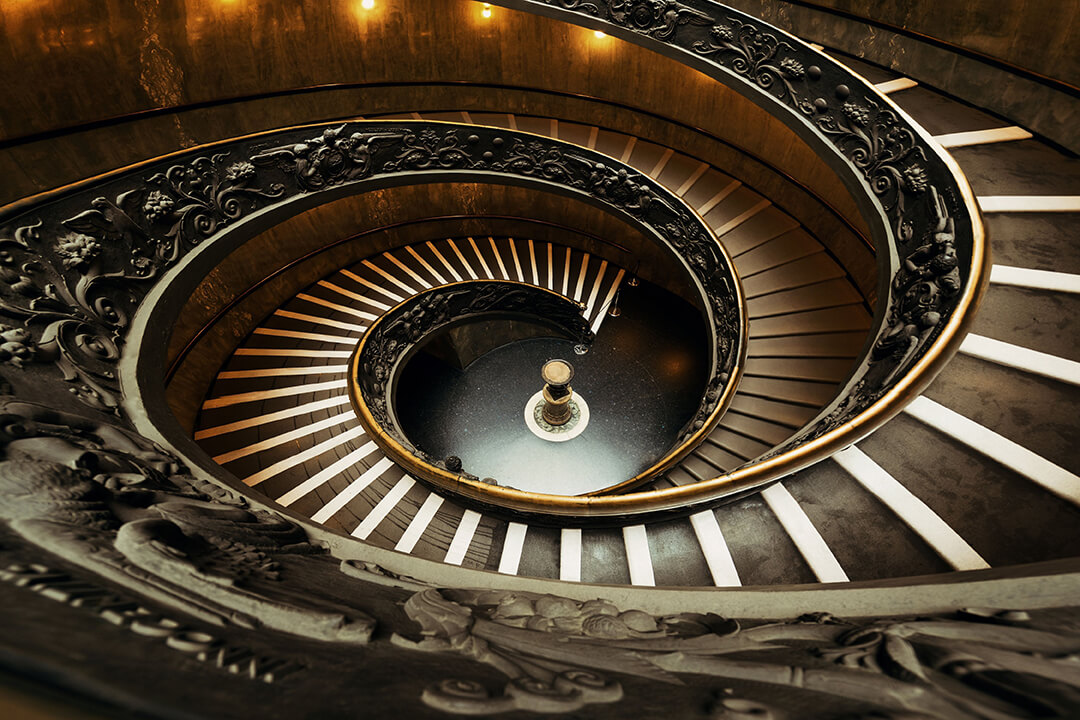
    Giuseppe Momo's spiral staircase at the Vatican Museums exit
    Giuseppe Momo’s 1932 double-helix staircase, the last landmark you pass before the museum lets you go.

    By the time you reach the end of the Vatican Museums, you have earned a certain glaze. Three or four hours of galleries, a hundred marble faces, the Sistine Chapel’s silence and the guards saying “shh” over the murmur of a thousand people trying to whisper at once. You come down a ramp, you round a corner, and there it is: shelves. Postcards. Rosaries in boxes. A wall of umbrellas with the Sistine ceiling printed on them. Nobody announces it. It just happens, the way the last ten minutes of a long flight happen, and you are standing in a shop before you have decided whether you meant to.

    The shape of the last room

    I want to be careful here, because it is easy to overstate what I actually know about the building. What I know from walking it, repeatedly, with groups: the descent from the Sistine Chapel funnels you toward retail space before it funnels you toward the street. Whether that is a deliberate architectural choice or simply where the available square footage happened to be, I cannot tell you with certainty, and neither can most of the guides who will assure you otherwise. What I can tell you is that it works, in the sense that a lot of tired people who had no intention of buying anything leave with a tote bag.

    Museum management does not pretend the visit is unstructured. The official rule is blunt about it: visitors are required to leave the halls 30 minutes before museum closing time. That is not a suggestion for latecomers, it is a clock built into the day itself, and it tells you something about the whole enterprise. This is not a building where you wander until you get bored. It is a route, timed, with a beginning and an end that someone else decided on. The gift shop, wherever exactly it sits in the plan, is just the last beat of that choreography rather than an accident bolted onto it.

    What is actually for sale

    Categories on the Vatican’s own store site read plainly enough: sculptures, publications, gift ideas, prints and posters, accessories, home decor. Reproductions of things you just saw, mostly, scaled down to fit a suitcase. A resin Pietà. A print of the ceiling you got a crick in your neck looking at. Rosary sets in presentation boxes, blessed or not depending on which shelf. None of it is trying to be subtle, and none of it needs to be, because the audience walking past has just spent an afternoon inside the actual object the postcard is copying.

    I have watched people who spent the entire visit resisting the gift-shop instinct — no photos of the ceiling, no interest in the museum map, arms folded through the Raphael rooms — stop dead in front of a shelf of small metal medallions near the end. It is not that the shop is persuasive. It is that four hours of intensity needs somewhere to land, and a €12 medallion is a cheap, portable way to end the day with something in your hand.

    The staircase that isn’t quite what people call it

    Most visitors leave past Giuseppe Momo’s spiral staircase, the double helix everyone photographs and half the internet calls “Bramante’s staircase.” It is not, strictly. Momo designed it in 1932; the real Renaissance staircase attributed to Bramante is a separate, older structure elsewhere in the complex, and the two get conflated constantly in guidebooks and on Instagram captions. What Momo built functions, in the words of its own description, as a stepped ramp rather than a true staircase — a continuous spiral you can descend without ever quite feeling like you are taking stairs, which is either an elegant piece of engineering or the last gentle nudge downward before the shop, depending on your mood that day.

    It is worth pausing on it regardless of what it is called. A wide, sunlit double coil, two ribbons of iron balustrade twisting past each other down four storeys, wide enough that two lines of visitors descend without touching. It is the kind of thing that photographs beautifully and empties a crowd efficiently, and those two facts are probably not unrelated.

    Why the exit works the way it does

    In 2024 the Vatican Museums took 6,825,436 visitors, second only to the Louvre among the world’s art museums. A number like that changes what “exit” means. You are not one person leaving a small gallery at your own pace. You are one unit in a continuous flow of thousands, moving through a fixed sequence of rooms toward a fixed set of doors, on a schedule the museum enforces down to the half hour. Retail at the end of that flow is not really a marketing decision so much as a logistics one: it gives the crowd something to do while it thins out, a soft buffer between the intensity of the Sistine Chapel and the sudden ordinariness of the street outside.

    I do not think that makes it cynical, exactly. Museums have sold reproductions of their holdings for as long as there have been museums, and a print of a fresco you cannot photograph properly anyway is not a bad souvenir. What strikes me more is how honestly it reveals the whole day for what it was: not a wander, but a route. You entered through a specific gate at a specific hour, moved through rooms in an order set by someone else’s floor plan, and left through a door timed to a clock you did not set. The shop is just the part of that route where the choreography finally shows itself.

    Practical notes if you would rather skip it

    There is no way to avoid walking past the retail area entirely; it sits on the standard route out. But you can shorten your exposure to it. Do not browse on the way in, if you enter that way for your group. Know before you arrive whether you actually want a souvenir, so you are not making that decision standing in a queue with a resin Pietà in your hand and a tour bus waiting. And remember that tickets, once bought, are non-refundable — the museum’s own policy is explicit that tickets cannot be refunded — so plan your day, including how much time you want to give the exit, before you commit to a ticket window.

    If you are booking in advance, the official full-price ticket runs €20.00 without online booking, or €20.00 plus a €5.00 booking fee if you reserve on the Vatican’s own website. Reduced tickets for students and pilgrimage groups are €10.00, or €10.00 plus €5.00 online. Whichever you choose, build in a little slack at the end of your visit rather than timing it to the minute — the last thing you want, thirty minutes before closing, is to be rushed past Momo’s staircase by a guard while you are still deciding whether you want the umbrella.

    The last ten minutes as a kind of honesty

    Under Pope Leo XIV, the first pope to have been born in the United States, the museums continue to run on the same institutional logic they always have: enormous holdings, enormous crowds, a route designed to move both through efficiently and safely. The gift shop at the end is not separate from that logic. It is the moment the logic stops pretending to be invisible. Every other room asked you to look. The last one asks you to remember, and offers to sell you the means to do it.

    None of this needs to sour the visit. It is worth going in with your eyes open, the same way it is worth knowing the hours, the closure days, and the fact that you will be moved along well before the doors actually shut. If you want the fuller picture of how to plan the day around all of it, from entry time to what to see before you are funnelled toward the exit, our Vatican Museums guides lay out the route in more detail than any shop display ever will.

  • What Happens If You’re Late for Your Vatican Museums Entry Slot

    Aerial view of the Cortile della Pigna courtyard at the Vatican Museums, with St Peter's Basilica dome in the background
    The Cortile della Pigna, one of the courtyards inside the Vatican Museums complex. Photo via Shutterstock.

    Your taxi is stuck behind a delivery van on Via Aurelia. Your booking confirmation says 10:00. It’s 10:04 and you’re still four hundred metres from the entrance on Viale Vaticano, phone in hand, watching the minutes tick past a time you paid for. This happens to someone in almost every queue at the Vatican Museums, most days of the year. Here’s what’s actually true about it, not what forums guess about it.

    There Is No Published Grace Window

    People will tell you the cutoff is ten minutes, or fifteen, or thirty. None of them are quoting an official source, because there isn’t one. Nothing on the Vatican Museums’ own hours page, prices page or visitor-services pages addresses a grace period for a timed-entry ticket holder who arrives after their slot. What you get instead is staff discretion at the turnstile, and that varies with how busy the morning is and who happens to be checking tickets that day. Treat any number you hear online as folklore, not policy.

    What the Gate Actually Enforces

    The rule the Museums do publish concerns the other end of your visit, not the start. Exit signage and the official 2026 calendar both state it in capital letters: “EXIT FROM THE GALLERIES STARTS 30 MINUTES BEFORE CLOSING TIME.” On the hours page the same idea appears in plain language: “Visitors are required to leave the halls 30 minutes before museum closing time.” That’s a documented, enforced rule. It tells you when you’ll be moved toward the exit, not what happens if you show up late for your entry. These two situations get confused constantly, and they’re governed by completely different logic.

    Your Realistic Options If You’ve Missed It

    If you’re only a few minutes past your slot and the queue at the entrance is short, walking up and explaining calmly often works, because staff can see for themselves that you’re not trying to jump ahead of anyone. If you’re later than that, or the entrance is busy, expect to be asked to wait, join a different line, or in the worst case come back another day. None of this is guaranteed either way. The single most useful thing you can do in the moment is call the ticket office directly on +39 06 69883145, or email info.musei@scv.va, since a phone call to the people actually managing that day’s entries beats any advice a website can give you, including this one.

    Why You Can’t Just Get a Refund

    Whatever happens at the gate, don’t count on your money back. The official prices page is unambiguous: “Tickets cannot be refunded.” Entry tickets are also valid only on the day printed on them, so a missed 10:00 slot on a Tuesday isn’t valid for Wednesday, or for a later slot the same day, unless someone at the door specifically lets you through. Budget for that possibility before you book, especially if your itinerary that morning depends on trains, connecting flights or a group tour bus with its own schedule. Travel insurance sometimes covers a missed non-refundable booking caused by a delayed transfer, so it’s worth checking your policy wording before you assume the loss is total.

    Check the Hours Before You Panic

    Knowing the day’s closing time changes how much room you actually have. Monday to Saturday the Museums run 8:00 a.m. to 8:00 p.m., with final entry at 6:00 p.m. On the last Sunday of the month, when entry is free, the hours compress to 9:00 a.m. to 2:00 p.m. with final entry at 12:30 p.m. A ten-minute delay against a 6:00 p.m. cutoff is a different problem to a ten-minute delay against a 12:30 p.m. one, and the Museums are also closed entirely on most Sundays and on a list of Italian and Vatican holidays through the year, including 1 January, 6 January, 11 February, 19 March, 6 April, 1 May, 29 June, 14–15 August, 1 November, and 8, 25 and 26 December. Check the date against that list before you assume you’re simply running late rather than showing up on a closure day.

    What to Do With the Rest of the Day

    If the Museums genuinely won’t take you today, St Peter’s Basilica is a separate building with its own entrance and its own rules, and it doesn’t require a timed Museums ticket at all. From 1 June the Basilica’s official hours run, in its own words, “from 7.00 am to 8:00 pm,” and general entry to the nave is free. Security-line waits there vary by day and time and aren’t published anywhere, so it isn’t a certainty, but it’s a legitimate way to salvage the visit rather than losing the whole morning to a missed slot. St Peter’s Square itself, the colonnade and the steps are open to anyone regardless of ticket status, so even a delayed morning still leaves you somewhere worth standing.

    The Better Fix Is Earlier, Not Faster

    None of this is really about running quickly enough. It’s about the buffer you build in before you leave the hotel. Rome traffic near the Vatican walls is unpredictable at the best of times, and the walk from a taxi drop-off to the actual turnstile can eat ten minutes on its own once you account for security screening. Booking a slot with some slack before it, rather than the earliest one that technically works on paper, is the difference between a stressful sprint and a normal Tuesday morning. A skip-the-line Sistine Chapel tour also puts a guide between you and the clock, someone whose job is tracking entry times so you don’t have to watch them yourself.

  • How Free Entry for Children Actually Works at the Vatican Museums

    Family on a guided tour inside the Vatican Museums
    A family group inside the Vatican Museums, the kind of visit the museum’s own child pricing bands are built around.

    Parents booking a Vatican Museums visit usually have one question buried under all the others: how old does a child need to be before I stop paying for them, and how old before the discount runs out too? Museum pricing pages answer both directly, in plain language, with no vague “children” category doing double duty. Two distinct age bands apply, each with its own price, plus a scam warning worth reading before anyone types their card details anywhere.

    The two age cutoffs, stated plainly

    The Vatican Museums’ official tariff page draws the line at seven. Its exact wording: “Children below the age of 7” enter free. Full stop, no ticket to buy, no fee attached to that line item.

    Above that age, a second band takes over. The reduced-ticket detail page defines it as “Children between the ages of 7 and 18 years.” So a six-year-old pays nothing. A seven-year-old moves into the reduced-price tier the day of that birthday, and stays there until the eighteenth.

    What the reduced ticket actually costs

    The reduced ticket for the 7–18 band runs €10.00 if bought at the door, or €15.00 online — that’s the €10 ticket plus the €5 online booking fee, the same fee charged on the standard adult ticket (school and seminary group tickets use a smaller €2 online fee instead). For comparison, the standard adult ticket is €20.00 at the door or €25.00 online. A family with two teenagers is looking at roughly half price per child versus what the parents pay, not a token discount.

    One detail worth flagging because it’s easy to miss on a fast read: the free under-7 line doesn’t carry that “+€5.00” online surcharge that sits next to every paying category. No ticket, no fee.

    Do you need to bring proof of age?

    This is where a lot of advice online gets speculative, so it’s worth being precise about what the museum’s own pages actually say and don’t say. Documentation requirements on the reduced-ticket page apply to exactly two categories, and neither one is a child age band. One is clergy: “Individual priests, men and women religious, seminarians and novices (upon presentation of valid documentation).” The other covers current or retired staff of the Holy See and Vatican City State, who must show an identity document. Neither the free child band nor the 7–18 reduced band carries that documentation clause on the official page.

    That’s not the same as a guarantee nobody will ever ask. Gate staff can and do use judgment, and a child who looks well past eighteen claiming the reduced rate could reasonably be asked to confirm it. But as a matter of stated policy, the museum doesn’t publish an ID requirement tied to the age bands the way it does for the two documented categories. Bringing a passport or ID card for anyone who looks close to a cutoff is sensible practice, not a rule spelled out on the site.

    Booking mechanics: what’s confirmed, what isn’t

    The only official channel for buying ahead is tickets.museivaticani.va. The museum is blunt about why that matters: “Please beware of potential scams and websites that use domains similar to the official one, which may charge significantly higher prices.” A search for “Vatican Museums tickets” turns up plenty of lookalike domains, so checking the address bar before you pay is worth the ten seconds.

    What isn’t confirmed, because the booking cart itself sits behind JavaScript that renders differently depending on the visit date and doesn’t expose a static rulebook: whether a free child ticket still needs its own line in the online cart with a nominal handling charge, or whether it can be added at the door without having been reserved at all. If a family is booking everyone else online, the safe approach is to add the child as a ticket line in the same cart rather than assuming they’ll simply be waved through — cart interfaces for museums this size tend to want a headcount even for zero-cost entries.

    A family tariff that isn’t for the Rome museums

    Searching around the tariff page turns up a “family tariff” for a two-parent household with two or more children aged 7 to 18, or students up to 25. It sounds like exactly what a family visiting the Vatican Museums would want. It isn’t. That tariff applies to the Papal Palace and Gardens of Castel Gandolfo, the Pope’s summer residence south of Rome — a separate site with its own ticketing, unrelated to the museum complex in Rome. Don’t plan a family day around it expecting it to cover the Sistine Chapel or the main galleries.

    Museum hours and the free Sunday

    Regular opening hours run Monday to Saturday, “08.00 a.m. – 08.00 p.m.,” with last entry at 6:00 p.m. and visitors required to exit thirty minutes before closing. The last Sunday of each month runs shorter, “09.00 a.m. – 02.00 p.m.,” with last entry at 12:30 p.m. and free admission for every visitor, both adult and child alike. That’s not a child-specific offer, but it’s worth knowing if a family is trying to keep costs down across the board. This free Sunday doesn’t apply on Easter Sunday, June 29, December 25–26, or December 31.

    Full closures happen on a fixed list of dates each year: January 1 and 6; February 11; March 19; April 6; May 1; June 29; August 14–15; November 1; and December 8 and 25–26. It’s worth checking that list against your travel dates before locking in flights.

    Getting around with strollers and young kids

    The museum states directly that it welcomes “families with children and strollers in tow,” and that guard staff will direct visitors to dedicated elevators for easier access through the galleries. Baby-changing and nursing facilities are available on site. None of that changes the ticketing rules above, but it’s useful context for anyone weighing whether a visit with a toddler and an older sibling is manageable in practice — the museum has clearly built for that mix of ages, not just adult tour groups.

    Putting the numbers together for a typical family

    Take a family of four: two adults, a nine-year-old, and a five-year-old. Online, that’s €25 plus €25 for the adults, €15 for the nine-year-old on the reduced rate, and nothing for the five-year-old — €65 total rather than €100 if every ticket were priced as an adult’s. Swap the nine-year-old for a seventeen-year-old and the maths doesn’t change; the reduced band covers the full 7–18 span at the same €15 online price regardless of where in that range the child falls.

    If you’d rather have the age bands, the booking fee and the entry logistics handled for you rather than double-checking them against the official tariff page yourself, our Vatican Museums ticket options lay out the current prices for every age group side by side.

  • Does a Vatican Museums Ticket Include St Peter’s Basilica?

    St Peter's Basilica facade seen from St Peter's Square, a separate building with its own free entrance from the ticketed Vatican Museums
    St Peter’s Basilica facade seen from St Peter’s Square. This is a separate building, run by a separate office, with its own free entrance well away from the Vatican Museums turnstiles.

    No, it does not. A Vatican Museums ticket buys entry to the Museums, the Raphael Rooms and the Sistine Chapel, and nothing beyond them. It does not buy entry to St Peter’s Basilica. The Basilica is a working church with its own door, its own security checkpoint and its own booking site, and walking in costs nothing at all.

    Why people expect otherwise

    The mix-up is understandable once you see where it comes from. Both buildings sit inside the same small city-state, a short walk apart across a shared square, and most first-time visitors see them on the same morning. That proximity gets read as a bundle when it isn’t one. A persistent rumour claims there’s a shortcut connecting the Sistine Chapel directly to the Basilica for a lucky few. We could not confirm from official sources whether such a passage exists or, if it does, whether it is ever open to the general public rather than closed groups, so treat it as folklore rather than a plan.

    Two ticket offices, two buildings

    The clearest proof is structural. Vatican Museums tickets are sold only through the Museums’ own portal, which states plainly: “The only official site for purchasing tickets online is https://tickets.museivaticani.va.” Its product list runs to four items: Museums and Vatican Collections, Vatican Gardens, Castel Gandolfo Museum Complex, and Necropolis of the Via Triumphalis. St Peter’s Basilica appears nowhere on it.

    That’s because the Basilica runs an entirely separate operation at basilicasanpietro.va, with its own separate lineup of bookable products: a digital audio guide simply called “The Basilica,” plus “The Dome,” “The Treasury Museum,” “The Necropolis,” a digital experience called “Pétros ení,” and guided-tour options on top of those. Different organisation, different website, different tickets. If a Vatican Museums booking included Basilica admission, you would expect at least one of these two sites to say so somewhere. Neither does.

    What a Vatican Museums ticket actually gets you

    Inside that ticket sits genuine value: the sculpture courts, the Gallery of Maps, the Raphael Rooms and Michelangelo’s Sistine Chapel ceiling, none of which you can see from the Basilica side of the wall. Opening hours run Monday to Saturday “08.00 a.m. – 08.00 p.m.,” with “final entry 06.00 p.m.” On the last Sunday of most months, when admission is free, hours shrink to “09.00 a.m. – 02.00 p.m.” with “final entry 12.30 p.m.” Whichever day you go, remember that “visitors are required to leave the halls 30 minutes before museum closing time,” so the last entry slot is not the last useful slot.

    What Basilica entry involves instead

    There’s no turnstile at the Basilica door, and as far as we can find in its own product list, no price attached to simply walking in. What replaces a ticket is a security checkpoint: “Access to the Basilica begins with the security checks by the Italian State Police: the stations are located in the right hemicycle of Saint Peter’s Square looking towards the Basilica,” with “at least four other gates available for Italian State Police controls” on busy days. That queue, not a ticket window, is the real bottleneck for a free-entry building. From June, the nave itself is open “from 7.00 am to 8:00 pm.”

    Money only enters the picture if you want more than the nave. The Dome climb runs “7.30am – 5pm” over winter and “7am – 6pm” in summer, and the Treasury Museum and Necropolis both charge separately, alongside the paid audio guide and the Pétros ení experience. Even those extras carry listed exemptions for children up to their sixth birthday travelling with a parent and for visitors with certified invalidity over 74%, which tells you something about who the fee structure is designed around: it isn’t basic access to the church.

    Dress code, and it’s stricter than you’d guess

    The Basilica enforces this hard, regardless of ticket type: “Entry to the Basilica is permitted only with appropriate clothing for a place of worship. Excessively short clothing, sleeveless tops, or hats are not allowed inside the church.” Once inside, quiet is expected in a way most museum galleries don’t demand: “It is therefore important to speak only when necessary, in a low voice, keep phones on silent mode, and avoid any behavior that may cause disturbance.” Food, drink and smoking are barred, and simply: “Pets are not allowed.”

    Fitting both into one visit

    Treat them as two separate stops with two separate lines, because that’s what they are. Book Museums entry for a fixed time slot, since the Vatican controls flow through timed tickets there. For the Basilica, arrive early or late if you can; the state-police checkpoint backs up worst around midday, especially in high season, and eases off first thing in the morning and again once the tour-bus crowds thin toward evening. Walk between the two across the piazza rather than hunting for a back-door route through the Sistine Chapel exit. It won’t save you the checkpoint, and depending on the group you’re with, it may not exist at all.

    A cheap mistake worth avoiding

    The practical cost of this myth is small but real. People arrive at the Basilica’s security line clutching a printed Vatican Museums confirmation, expecting a staff member to wave them past because they already “have a ticket.” They don’t; the officer checking bags has no record of that booking and no reason to care about it, because the two systems never talk to each other. Others skip the Basilica entirely on a short trip, assuming they’ve already covered it inside the Museums admission, and only realise the mistake on the flight home. Knowing the two are unrelated fixes both problems before they happen: budget museum time for the Museums, and budget separate time, in a separate queue, for the church.

    If you’d rather have someone else handle the timing on the Basilica side, our St Peter’s Basilica tickets and tours page covers the Dome, the Treasury and the Necropolis together, and flags which format gets a small group through the security checks fastest.

  • Where Photography Is Actually Banned Inside the Vatican Museums

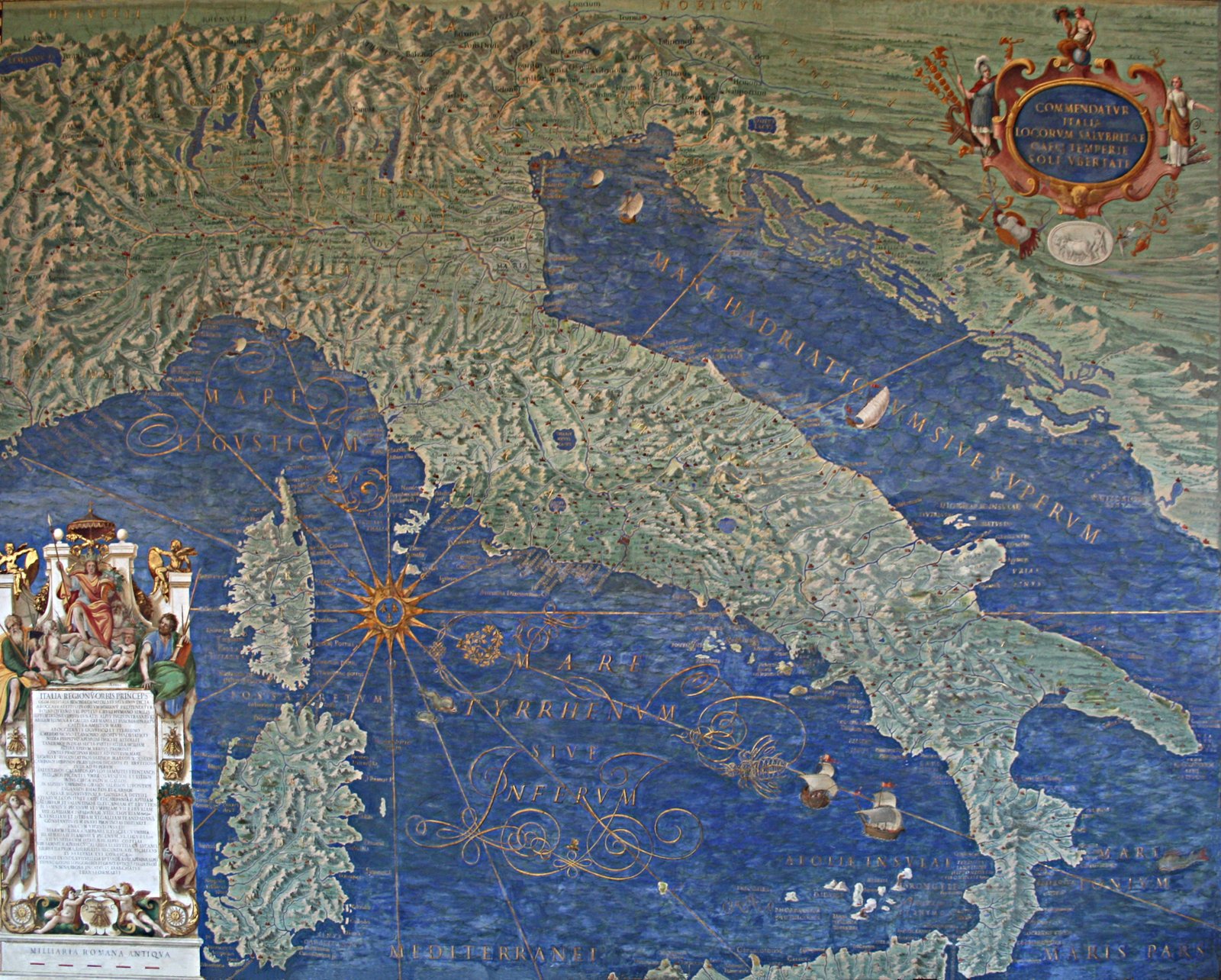
    Ignazio Danti's painted map of Italy, Corsica and Sardinia, one of the 40 panels lining the Vatican Museums' Gallery of Maps, one of the rooms where photography without flash is allowed
    One of the 40 painted panels in the Gallery of Maps, camera-friendly and flash-free. Public domain via Wikimedia Commons.

    Guides get the same three questions on almost every tour: can I take a photo here, can I use flash, and why did that guard just wave a phone away. That answer turns out simpler than most visitors expect. It changes exactly once, at exactly one door.

    One rule covers most of the visit

    From the entrance turnstiles through the Pinecone Courtyard, the Gallery of Tapestries, the Gallery of Maps, and the Raphael Rooms, the Vatican Museums’ own visitor guidance is direct: “It is permitted to take photographs, for personal and domestic use only, of the works in all areas of the Vatican Museums, apart from the Sistine Chapel.” Personal use means a phone or a small camera for your own memories, not a commercial shoot. Nobody checks what you do with the file afterwards, and posting a shot of the Gallery of Maps to social media later is not an issue. It is the moment of shooting the rule cares about, not downstream use.

    What is not allowed anywhere in that same stretch is flash. Five words cover it: “Flash photography is strictly forbidden.” That applies whether you are photographing a Raphael fresco, a marble bust in the Chiaramonti corridor, or the gilded ceiling above the maps. Conservators worry about cumulative light exposure on centuries-old pigment, and a room full of visitors firing flashes hundreds of times an hour is exactly the kind of exposure a fresco does not need. Turn your flash off before you walk in, not when a guard tells you to.

    Equipment that needs a permit

    Tripods and monopods are out unless the Directorate has cleared them in advance: “The use of tripods, stands, drones and/or professional equipment is not allowed; any eventual use must be authorised by the Directorate of the Museums and Cultural Heritage.” That authorisation exists for accredited press and film crews working with the Museums directly, not for a visitor after a steadier shot of the Sistine ceiling. Drones fall under the same line, which should be obvious given the airspace above the Vatican, but visitors have tried.

    Selfie sticks get their own sentence, and it is unambiguous: “The use of telescopic selfie sticks is forbidden.” In practice this is less about photography policy and more about crowd safety. A corridor with two hundred people in it and a dozen extended poles at head height is a hazard the Museums would rather not manage, and staff will ask you to collapse or put away a stick well before you reach any restricted room.

    Where it stops completely: the Sistine Chapel

    Everything above describes the general galleries. Inside the Sistine Chapel the rule changes completely, and it is not a stricter version of the same one. It is a total ban. Guidance for the Chapel reads: “In the Sistine Chapel it is forbidden to take photographs or films with any type of electronic equipment.” No flash exception, no personal-use exception, no quiet quick shot while a guard looks the other way. A second line covers the device itself, not just its camera: “The use of mobile phones is forbidden in the Sistine Chapel.”

    Visitors sometimes assume the rule is really about flash, since that is the concern everywhere else in the Museums, and try a single shot with flash disabled. It does not matter. That ban covers the camera function entirely, silent shutter or not, screen brightness at zero or not. Staff inside the Chapel watch for the act of raising a phone, not the result on the sensor.

    Why the Chapel is treated differently

    Guides often point to the Chapel’s 1980s–90s restoration, when Nippon Television Network Corporation of Japan funded the multi-year cleaning project in exchange for exclusive filming rights during that period. Wikipedia records the deal in plain terms: “In 1980, the decision to undertake a total restoration was taken. Nippon Television Network Corporation of Japan provided major funding of US$4.2 million in exchange for the exclusive reproduction rights.” That arrangement is well documented, and it is tempting to treat it as the origin story for today’s photo ban. No official Vatican source actually draws that line. That exclusivity deal is a matter of historical record; whether it explains why the ban still stands decades later is a popular claim rather than a confirmed one. Conservation concerns over flash and crowd behaviour are the reasons the Museums themselves give in current guidance, and that is the safer line to repeat on a tour.

    How the ban gets enforced in the room

    There is no scanner at the door and no app checking your phone. Enforcement is a person: Vatican Museums guard staff stationed inside the Chapel, watching the crowd and stepping in when a phone comes up. Their authority is specific: “The guard staff is authorised to request the immediate cancellation, in their presence, of video or photographic material produced in contravention of this rule.” In plain terms, if you are caught, a guard asks you to delete the photo on the spot, in front of them, before you leave the room. Not a fine, not a confiscation, just a delete request staff expect immediate compliance with.

    Size and lighting are exactly why enforcement leans on staff rather than technology. A large, dim, usually packed room still lets guards positioned around the perimeter spot a raised phone from across the space, and the Chapel’s echo carries a verbal “no photos, please” a long way. Travelling with a licensed guide helps here too, since most remind the group just before entering, which avoids the awkward moment inside.

    Planning the visit: hours and tickets

    Standard Museums hours run “From Monday to Saturday 08.00 a.m. – 08.00 p.m.”, with final entry at 6:00 p.m. Once a month there is a free-admission opening: “Every last Sunday of the month 09.00 a.m. – 02.00 p.m.”, with final entry at 12:30 p.m. That last-Sunday slot is also the most crowded few hours of the month, so a calm, unhurried look at the ceiling before you have to put your phone away for good is more likely on a weekday morning.

    Standard admission is €20 walk-up or €25 with an online skip-the-line booking; reduced tickets run €10 walk-up or €15 online, and children under seven enter free. Tickets are valid only for the day printed on them and are not refundable, so lock in a date once you know it rather than treating the booking as flexible.

    A room-by-room recap

    Boiled down to what actually matters as you walk the route: camera out, flash off, from the courtyard through the tapestries, the maps, and the Raphael Rooms. Keep a tripod, drone, or selfie stick in the bag the entire way. Then, at the Sistine Chapel doors, put the phone away entirely, no exceptions, until you come out the far side into the corridor leading toward St Peter’s Basilica. Cameras-fine-but-no-flash flips to cameras-off-completely, and it happens at one door in the whole route.

    If the Sistine Chapel is the part of the visit you care most about getting right, timing the entry matters more than any camera setting. Our Sistine Chapel tickets page lays out the entry options for 2026, including the early-access slots that get you into the room before the crowds Nippon Television once had exclusive access to film.

  • Do You Need a Printed Ticket for the Vatican Museums?

    Skip-the-line entrance to the Vatican Museums
    Skip-the-line entrance to the Vatican Museums.

    Someone in your group will ask this the night before. Do we print these tickets, or is the phone enough? It is a fair question. A dead battery at the gate is the kind of problem that ruins a morning. Here is what actually holds up at the door, and what to do if the screen won’t cooperate.

    What the ticket is, technically

    A Vatican Museums ticket is a timed entry slot tied to a QR code. Staff at the gate scan that code. The system checks it against your booked window, and you walk through. The code is the ticket. Paper and phone screen are just two surfaces for showing the same code. A scanner reads it off a screen the way it reads it off a page, provided the screen is bright and clean.

    Museivaticani.va and its booking portal, tickets.museivaticani.va, do not publish a line stating “mobile tickets accepted, no printing required.” The checkout flow is a script-driven booking app rather than a static page, so there is no official sentence to quote either way. What we can tell you is how the gate scanners behave in practice, which matters more than a missing policy line.

    Does the phone actually work at the scanner

    Yes, most of the time. The gate readers are ordinary optical scanners built for this job. Hold the phone flat, brightness turned up, close to the scanner lens. Staff wave people through fast during busy hours. A clean phone scan is no slower than paper.

    The trouble starts when the scan is not clean. A cracked screen with the break running through the code. Glare from a screen protector under the entrance lights. Auto-brightness dimming the display in direct sun. A screenshot saved small enough that the code blurs on zoom. None of these happen often. Each one turns a five-second scan into a longer conversation with staff while the queue behind you grows.

    The backup plan if your phone dies or won’t scan

    Bring a printed copy anyway. Not because it is required, but because one sheet of paper removes the biggest failure point in your morning. A printout has no battery to run out. It needs no signal. It does not care how bright the sun is outside the Vatican walls at nine in the morning.

    No printout, and the phone won’t cooperate? Start with the confirmation email. Vatican Museums bookings are tied to your email address, so pulling up the original message on a different device, or having a companion forward it, usually works. Tickets.museivaticani.va also runs a “Manage existing bookings” section where a booking reference can retrieve the order. We could not confirm from the official pages what identifying details that lookup requires, so do not treat it as a guaranteed fix if you are standing at the gate with nothing else.

    One thing we did not find published anywhere official: a stated fallback for a screen that simply refuses to scan under any lighting. There is no confirmed statement that staff carry a manual override. There is no confirmed statement that a printed copy becomes mandatory in that scenario either. Assume you are dealing with a person doing their best on a busy morning, not a documented process. Plan around that before you need to.

    Screenshot it before you leave the hotel

    Take a screenshot of the QR code the night before. Not because a screenshot scans any differently from the live confirmation page, but because it does not depend on the booking site loading over hotel wifi or Italian mobile data at the gate. If the confirmation arrived as a link rather than an image, open that link once and screenshot the rendered code. Now you have a copy that works with the phone in airplane mode. The streets around Piazza San Pietro carry heavy phone traffic during peak months, and a slow-loading page at the worst possible moment is avoidable.

    Buy from the right seller first

    None of this backup planning matters if the ticket was never valid. Museivaticani.va states plainly that theirs is the only authorised outlet: “The only official site for purchasing tickets online is https://tickets.museivaticani.va.” Tickets bought through resellers outside that channel carry real risk of failing to scan at all. That is a different problem than a screen being too dim, and it is worth confirming with any seller, licensed tour operators included, that access is sourced through the authorised route.

    Note also that “tickets cannot be refunded.” A mis-scan you cannot resolve at the gate is not something you simply cancel and rebook on the spot. One more reason to carry a paper backup rather than trust the phone as your only copy.

    The Sistine Chapel changes the calculation

    Once you are past the entrance, the phone stops being useful anyway. “The use of mobile phones is forbidden in the Sistine Chapel,” so whatever got you through the turnstile goes back in a pocket well before Michelangelo’s ceiling comes into view. That is worth knowing because it reframes how much battery you actually need for the day: enough to show one QR code at the start, not enough to last through the whole visit.

    A short checklist for entry day

    Charge the phone the night before, and screenshot the QR code so it works offline. Print a paper copy too. One folded page never runs out of battery. Keep the confirmation email accessible from a second device. Check hours before you leave: Monday to Saturday runs “08.00 a.m. – 08.00 p.m.” with “final entry 06.00 p.m.” The last Sunday of the month runs “09.00 a.m. – 02.00 p.m.” with “final entry 12.30 p.m.” Confirm your date is not on the closure list, which covers “1 and 6 January, 11 February, 19 March, 6 April, 1 May, 29 June, 14 and 15 August, 1 November, 8, 25 and 26 December.” Dress for the door check too. “Sleeveless and / or low-cut garments, shorts above the knee, miniskirts and hats are not permitted,” a rule enforced no matter how smoothly your ticket scans.

    If a ticket genuinely will not scan and nothing above resolves it, the Museums list a contact line, “+39 06 69883145,” and an email, info.musei@scv.va. Expect that route to take longer than simply having a second copy ready.

    Bottom line

    A phone QR code works at the Vatican Museums scanner the same way a printed one does, most of the time. The gap is not the technology. It is everything that can go wrong with a single device on a busy morning: a flat battery, a cracked screen, glare, a page that won’t load. Carry a screenshot and a printed page, and the format question stops mattering. If you would rather have that sorted before you land, our Vatican tickets come with clear entry instructions, so the only thing left to decide on the day is which gallery to see first.