Category: Uncategorized

  • Taking a Stroller Through the Vatican Museums: What Actually Works

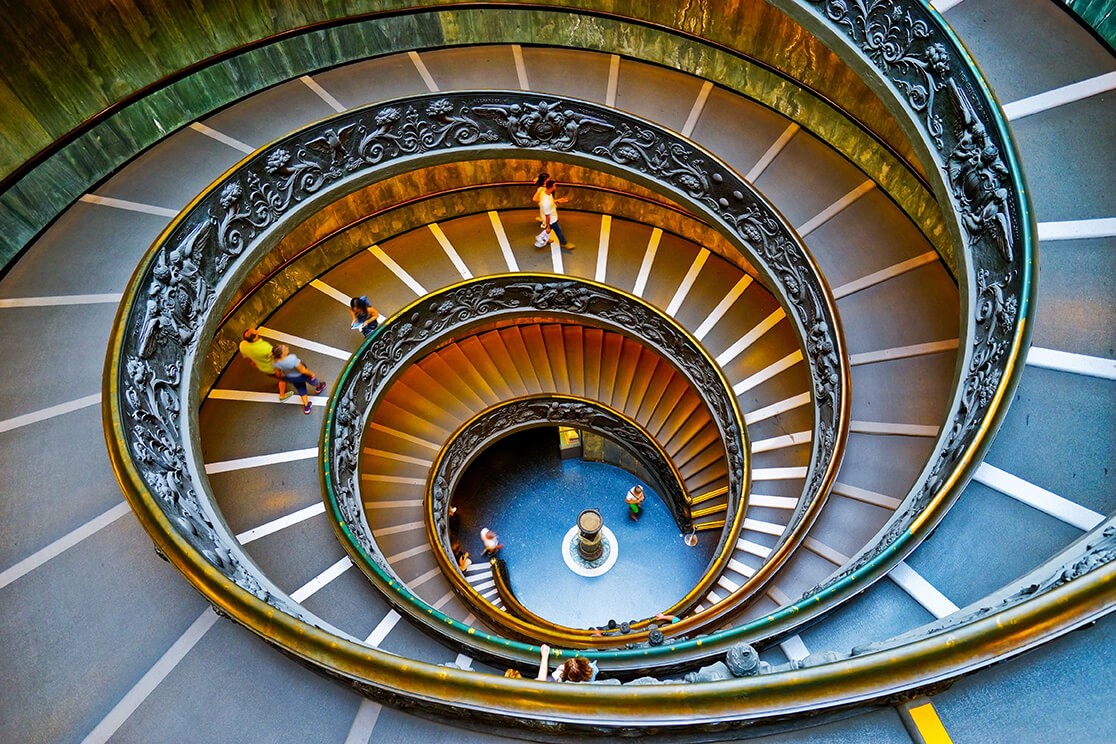
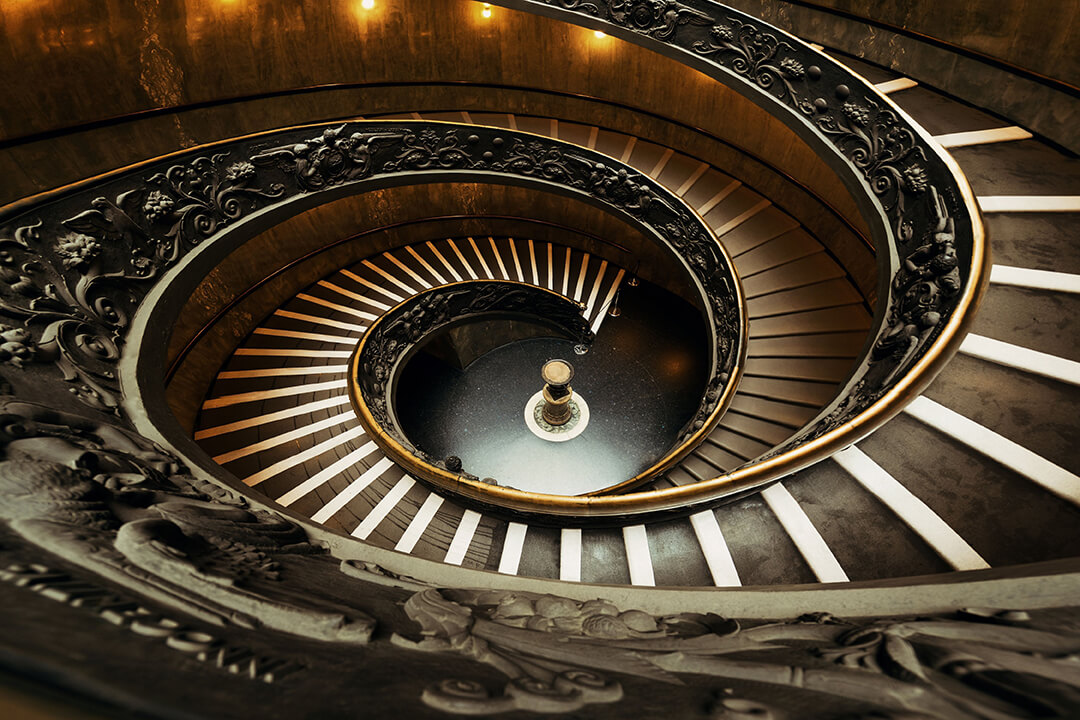
    Giuseppe Momo's spiral staircase at the Vatican Museums exit, an example of the stairs strollers cannot use
    Giuseppe Momo’s spiral staircase at the museum exit — one of several staircases in the complex a stroller simply cannot take.

    Parents ask about strollers more than almost any other logistics question we get, and the honest answer is that it depends which part of the museums you mean. Some stretches are wide open and genuinely stroller-friendly. Others narrow into single-file corridors or drop down a flight of stairs with no ramp in sight. Knowing which is which before you queue up saves you from folding a pram in a crowd of four hundred people.

    There is no official published stroller policy handed out at the door, and no sign banning them outright either. What decides whether you’re pushing or carrying is the architecture itself: some of this building is a nineteenth-century museum extension with wide flat floors, and some of it is a sixteenth-century papal apartment that was never meant to take wheels.

    Where strollers are genuinely fine

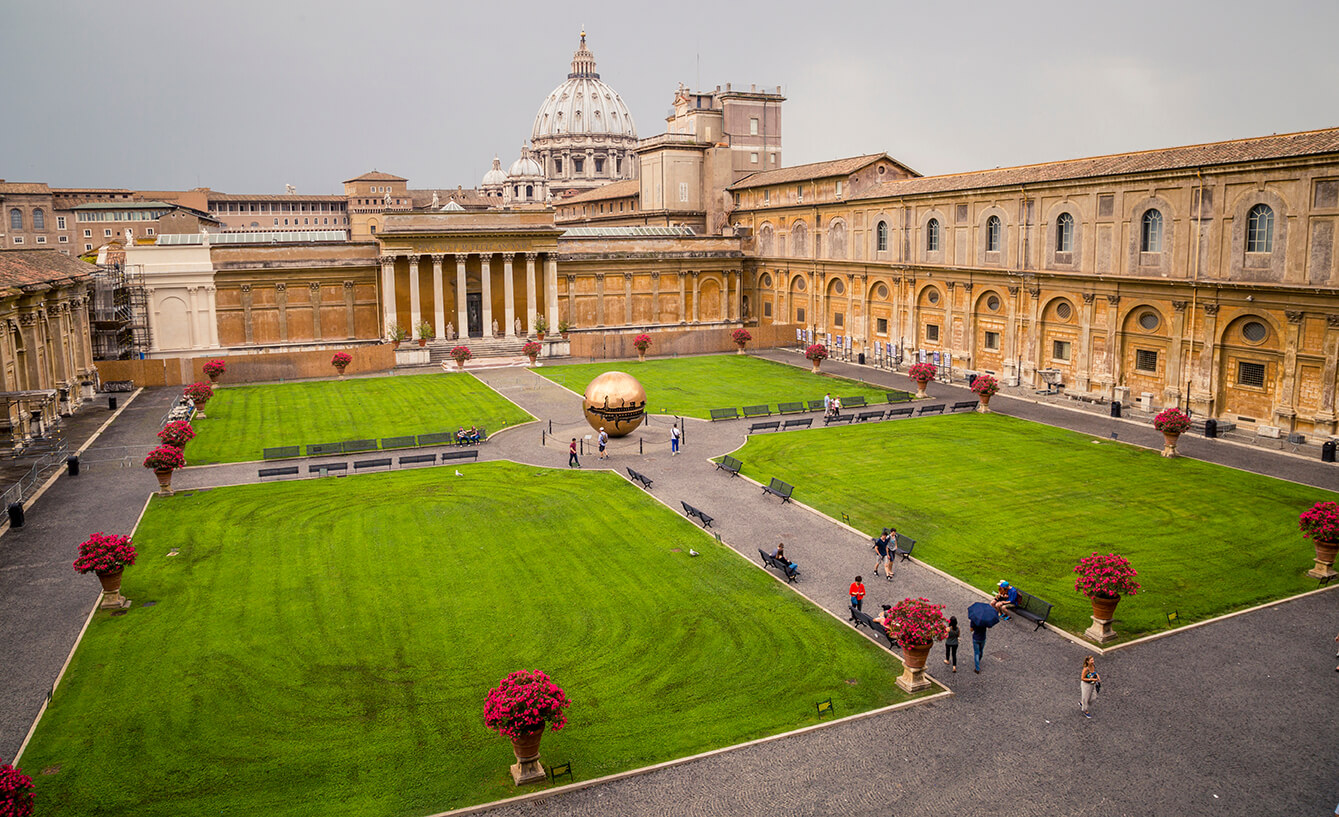
    The route from the entrance through the Pinecone Courtyard, the Gallery of Maps and most of the long picture galleries is paved and wide enough for a standard pram. Staff are used to seeing them here and won’t wave you off. If your child is likely to nap through the walk, this stretch is where it happens — the corridors are long, the pace is steady, and the noise is more of a murmur than a roar.

    Lightweight umbrella strollers cope best on this route. Anything with a large wheelbase or a bulky frame becomes a liability the moment the crowd thickens, which it will, particularly from mid-morning onward. If you’ve packed a jogging stroller for the trip, this is the section where it earns its keep and the last section where it will.

    Where they stop working

    The Raphael Rooms are the first real pinch point. The doorways between them are original, centuries old and not built with wheels in mind. You can usually get a folded stroller through if someone carries the child, but pushing one through in a moving queue is impractical.

    The Sistine Chapel is the hard stop. There is no stroller access into the chapel itself, and the final approach involves stairs. A staff-operated wheelchair lift covers that stretch, but it’s for accessibility needs, not a general stroller shortcut. This is also where security checks tighten and staff are actively managing crowd flow, so a stroller becomes an obstacle rather than a convenience right at the point where the museums are busiest.

    The stairs problem in general

    Vatican Museums staircases are not a single design. Some sections use ramps or gentle slopes; others, like the exit route past Giuseppe Momo’s spiral staircase, are stairs with no wheeled alternative built into the historic structure. Assume that any staircase you meet along the way is stairs only unless you can see a ramp running beside it. Don’t rely on finding a lift — they exist for accessibility needs but aren’t set up as a general stroller shortcut, and during peak hours they’re often reserved for wheelchair users.

    This catches out families who assume the whole complex was renovated to a single modern standard. It wasn’t. A museum this old grew in stages over five centuries, and each stage kept its own floor levels. A ramp solving one step can still leave you facing three more a few metres later, so treat every staircase on its own terms rather than assuming the last one you found tells you anything about the next.

    What parents actually do at the bottleneck

    Most families we see solve this the same way: one adult carries the child in a soft carrier or on a hip for the fifteen or twenty minutes it takes to clear the Raphael Rooms and the Sistine Chapel, while the other folds and carries the stroller. If you’re travelling with two adults, this splits cleanly. Travelling solo with a toddler is harder, and a soft carrier that folds into a bag is worth packing even if you plan to push a stroller for most of the visit.

    A second, simpler option: leave the stroller folded against a wall in a low-traffic side gallery just before the Raphael Rooms, carry the child through the chapel, and collect it on the way back out through the same corridor if your route allows it. This only works if you’re confident about doubling back, so check your ticket type before you commit to it.

    Cloakroom and storage options

    The museums have a cloakroom near the entrance where bulky items, including strollers, can usually be left for the duration of your visit. This removes the carrying problem entirely but means your child either walks the whole route or rides on a shoulder. For toddlers who tire quickly, weigh this against how long your ticket slot gives you — a private or early entrance tour moves faster than a general admission morning, which matters when you’re managing a tired child on foot.

    Timing makes the difference more than gear does

    An early entrance, ideally the first hour after opening, changes this whole calculation. Corridors that are impassable with a pram at midday are simply quieter at 8am, and the Sistine Chapel stairs are far easier to negotiate with a child on your hip when there isn’t a wall of tour groups behind you. If strollers are a real concern for your visit, booking the earliest available slot does more for you than any packing decision.

    What to bring instead of a full-size stroller

    A compact umbrella stroller that folds one-handed, or a soft structured carrier for children under three, covers almost every situation the museums throw at you. Skip the all-terrain or double strollers entirely — there is nowhere in the complex where the extra size earns its keep, and several places where it becomes the reason you’re stuck. Pack the carrier even if your child mostly walks; tired legs at the two-hour mark are common, and a carrier folds flat into a bag in a way a stroller never will.

    Nappy changes and short breaks

    There are baby-changing facilities near the main restrooms inside the complex, but they’re not on every corridor, so plan a stop before you commit to the Sistine Chapel run. Once you’re in the sequence of Raphael Rooms leading to the chapel, doubling back for a change is awkward and slow given the one-way crowd flow most days enforce. A quick check before that point costs you two minutes; needing one in the middle of it costs considerably more.

    If you’re weighing up entrance times or want a slot with shorter queues before the Sistine Chapel crush builds, you can compare Vatican Museums tickets and pick an early entry that gives a stroller-carrying family more room to move.
  • Where to Store a Suitcase Before a Vatican Museums Visit

    Priority entrance to the Vatican Museums
    The Vatican Museums entrance — decide where your suitcase is going before you reach this point.

    Every year a small number of visitors arrive at the Vatican Museums straight from the airport, carry-on in tow, and only discover the problem at security. There is a cloakroom inside, and it is free, but it is built for coats, day bags and small backpacks, not for wheeled suitcases. Plan the suitcase first. Queue for tickets second.

    Why the Vatican Museums won’t hold a suitcase

    A cloakroom does exist, described on the museums’ own visitor-services page as “a free service made available by the Vatican Museums not only to make your visit more comfortable, but most of all to guarantee the safety of visitors, as well as the museum spaces and the entire artistic patrimony they house.” That framing matters. Security screening and gallery protection sit behind the service, not a general left-luggage counter, and staff apply that logic strictly at the door.

    Their advice for visitors is direct about what gets refused: “all luggage, suitcases, rucksacks, packages and containers not considered suitable by staff on account of their size or nature.” A rolling cabin case is exactly the kind of item that description was written for. Staff make the call on the spot, so a bag that squeaked through last month is not a guarantee for this one.

    What the free cloakroom actually takes

    You reach it “from the entrance hall after passing through the metal detector,” and you collect your things afterwards at the exit, “reached from the exit hall, at the foot of the Momo helical staircase.” Between drop-off and pickup, the route works well for what it is designed to hold: a daypack, an umbrella, a coat, a tripod, a small shoulder bag. Anything larger runs into the size judgement above, and a two-hour queue behind you is not the moment to find out where that line sits.

    A compact backpack almost always clears it. A proper suitcase, cabin-sized or larger, is a maybe rather than a plan.

    Leave it at the hotel first

    For most visitors the simplest fix is also the cheapest: ask your hotel. Many properties near the Vatican will hold a bag before check-in or after check-out even for guests staying only that one night, and some will do it for a booked guest arriving early or leaving late without charging anything extra. Policies differ by property, so this is worth a quick message the evening before rather than an assumption on the morning of your visit. If your hotel sits within walking distance of Ottaviano or Cipro, the two metro stops nearest the museums on Line A, dropping the case there before heading in adds only a short detour.

    Roma San Pietro station, if you’re arriving by train

    Visitors coming straight off a regional or long-distance train sometimes head for Roma San Pietro, the station on the western side of the city closer to the Vatican than Termini. Some Italian stations of this size run a staffed deposito bagagli desk. Whether Roma San Pietro currently does, and at what hours and price, is the kind of detail that changes without much notice, so check the station itself, its signage or the ticket office on arrival rather than relying on anything written in advance. Directions published by the museums don’t route visitors through this station at all; they name Ottaviano and Cipro on the metro and bus 49 as the standard approaches, so treat the train option as a personal itinerary choice, not the recommended route.

    Paid luggage lockers near the walls

    A handful of shops and booking apps around the Vatican offer paid short-term storage, charging by the bag and by the hour or day. These open and close with some regularity, and rates shift, so rather than naming one here and risking a stale address, search “luggage storage Vatican” on the app or map of your choice the morning of your visit and compare what is currently listed near Ottaviano, Cipro or the Vatican walls themselves. Read the cancellation terms before you pay. Some charge for the full day regardless of how early you return, which matters if your visit runs shorter than planned.

    What to carry in instead

    Once the suitcase is parked somewhere, decide what actually needs to come with you. Water, a phone charger, tickets on your phone or printed, sunglasses for the courtyards, and a light layer for the air-conditioned galleries along the route, since the Sistine Chapel itself tends to run warm and crowded rather than cool. A day bag well under backpack size clears security fastest and never becomes a conversation with cloakroom staff. Leave valuables at the hotel too, ideally in a room safe, since a museum visit is not the moment to be minding a wallet, a passport and a camera bag all at once through crowded rooms.

    Building the morning around this

    Full-price entry runs “€ 20.00 (without online booking),” or “€ 20.00 + 5.00” with skip-the-line booking on the official site, so factor the storage stop into the same morning as ticket collection rather than treating them as separate errands. Opening hours run “From Monday to Saturday 08.00 a.m. – 08.00 p.m.,” with last entry two hours before closing, and on the last Sunday of most months a shorter free session runs from “09.00 a.m. – 02.00 p.m.” with last entry at 12.30. Every other Sunday, plus fixed closure dates through the year including January 1 and 6 and the days around Easter and Christmas, the doors stay shut. A suitcase problem on one of those mornings compounds a wasted trip rather than causing one.

    The short version

    A daypack or small backpack clears the free cloakroom without drama. A wheeled suitcase is a coin flip at best, and the safer move is to leave it somewhere before you arrive: your hotel first, since it usually costs nothing and takes one message the night before, then a station desk or paid locker near the walls if the hotel option isn’t available. Don’t count on the museums as your backup plan. Sort the bag out first, and the rest of the morning runs the way it’s supposed to.

    Once the suitcase is out of the way, it’s worth pinning down the rest of the morning too. Our Vatican Museums hours guide covers current opening times, the last-Sunday free session and the closure dates in full, so you can line up drop-off, ticket collection and entry without any of the three running late.

  • What Actually Fails the Bag Check at the Vatican Museums Security Line

    The skip-the-line entrance lane at the Vatican Museums
    The skip-the-line entrance lane at the Vatican Museums, which leads toward the security checkpoint before the ticket hall. Photo via Shutterstock.

    Search “Vatican Museums bag size limit” and you will find dozens of blog posts quoting a precise figure in centimetres, as if the Museums had published a locker-sized cutoff the way an airline publishes cabin-baggage dimensions. They have not. Its official site never states a measurement. What it states instead is a rule about staff judgement, and that distinction matters more than any number you might memorise before your visit.

    There is no published size limit, and that is the actual rule

    The Museums’ own “Useful information for visitors” page puts it this way: “Before entering the exhibition spaces, visitors are required to leave in the cloakroom all luggage, suitcases, rucksacks, packages and containers not considered suitable by staff.” Read that again slowly. It does not say 40x35x15cm, or any other figure. It says “not considered suitable by staff,” which means the person standing at the X-ray belt on any given morning is the actual rule, not a laminated chart on the wall. A soft daypack that sails through at 8:15am might get pulled aside at 11am when the queue is longer and the officer on duty is more cautious. That inconsistency is not a bug in the system. It is the system.

    For travellers who like a hard number to plan around, this is frustrating. But it also means the safest strategy is not memorising a dimension, it is packing light enough that the question never comes up.

    What actually gets sent to the cloakroom

    Large bags are the obvious case, but they are not the only one. The official guidance also names specific categories of item that must be checked rather than carried in: “Medium and large umbrellas (or standard non-telescopic umbrellas), sticks (apart from those used for walking), tripods and stands for photography, video cameras, banners and signs of any type must all be left in the cloakroom.” A collapsible travel umbrella tends to pass. A golf umbrella does not. A monopod for your phone is a grey area that often gets treated the same as a tripod, so do not count on talking your way past it.

    None of this means the item is confiscated. It means it goes into storage for the length of your visit, and the Museums are explicit that this service costs nothing: “The cloakroom service is free of charge.” Anything left uncollected by the end of the day gets handed to the Vatican Gendarmerie, so do not treat the cloakroom desk as optional storage you can skip on the way out.

    Sharp objects and metal tools

    This is the category most visitors do not think about until they are standing at the belt with a Swiss Army knife or a pair of nail scissors in their day bag. Guards see it constantly. The policy is direct: “The Vatican Museums require all knives, scissors and/or metal tools of various types to be stored in the cloakroom.” A pocketknife counts. So does a corkscrew with a blade, or a multitool you carry for hiking. All of it goes to the cloakroom rather than through the checkpoint in your bag. It is a checked item, not a banned one, so you will get it back at the end of your visit. Just do not expect the guard to explain that calmly if there is a queue building behind you. Twenty seconds spent digging through a bag for a forgotten pocketknife feels much longer when a tour group of forty is stacked up behind it.

    Weapons are the one category with zero discretion

    Everything above involves a judgement call. Weapons do not. The rule reads: “It is forbidden to bring any type of firearm and/or dangerous material into the Museums.” The Museums go further than most venues on this point, specifically barring “armed visitors (including those holding a valid license)” — meaning an off-duty police officer with a service weapon and a valid carry permit is turned away exactly like anyone else. There is no cloakroom exception here. If security flags something in this category, you are not getting a bag-check compromise, you are not getting in.

    Alcohol and food: two different rules people confuse

    These get lumped together in most packing-list articles, but the Vatican treats them differently, and it is worth knowing which is which. Alcohol cannot be carried into the exhibition spaces: “It is not permitted to bring alcoholic and super alcoholic beverages inside the Vatican Museums (these must be left in the cloakroom for the duration of the visit).” So that bottle of wine you picked up for later is not confiscated — it is checked at the cloakroom like an umbrella or a pocketknife, and you collect it again on your way out.

    Food and non-alcoholic drink work differently. The rule there is a consumption ban, not a possession ban: “It is forbidden to consume food and drink inside the exhibition halls.” In practice this means a sandwich or a water bottle in your bag is not the problem — eating it in front of the Sistine Chapel ceiling is. If a guard does flag food at the entrance, it typically gets sent to the cloakroom with everything else non-weapon, rather than thrown out.

    The dress code checkpoint runs alongside the bag check

    Bag rules get the attention, but the same entrance also enforces appearance, and it catches people off guard just as often. The official wording: “Entry to the Vatican Museums, the Sistine Chapel, St. Peter’s Basilica and the Vatican Gardens is permitted only to appropriately dressed visitors.” Specifically barred: “Sleeveless and / or low-cut garments, shorts above the knee, miniskirts and hats.” The site also flags “visible personal objects as well as similarly visible distinctive personal signs (such as, for example, tattoos) that may offend Catholic morality,” which is vaguer still and left to whoever is staffing the door that day. If you are travelling in August heat and packing for both the Museums and a beach afternoon, put the tank top and short shorts in a separate bag you are not bringing that morning — there is no cloakroom fix for the wrong outfit, only a walk back to your hotel to change.

    Quick answers for the morning of your visit

    Is there an official bag-size limit in centimetres? No. Staff judge each bag as it reaches the belt. Can I bring a water bottle? Yes. You just cannot drink from it inside the exhibition halls. Will my Swiss Army knife get confiscated? No. It goes into the free cloakroom and you collect it on the way out. What about a selfie stick? Expect it to be treated like a tripod and checked at the door. Can an off-duty police officer carry a firearm inside? No. The weapons ban applies regardless of licence. Is the cloakroom safe for valuables? It is staffed and free, though passports and cash are best kept on your person rather than in a checked bag.

    Why the checkpoint moves faster for some visitors than others

    The Museums’ own advice hints at the fix: they ask visitors to “remove inadmissible items from their hand baggage beforehand” specifically to keep the metal-detector line moving. That single sentence tells you almost everything about how the checkpoint actually runs — it is a walk-through metal detector paired with an X-ray belt for bags, staffed by people making real-time calls with a queue of a few thousand people behind you on a busy morning. Anyone who arrives with an already-empty pocket and a bag with nothing borderline in it clears the line in seconds. Anyone who arrives with a pocketknife, a bottle of wine and a golf umbrella becomes the reason the line behind them stalls.

    The practical takeaway is not a tape measure, it is a mental checklist the night before: no blades, no alcohol, no full-size umbrella or tripod, no bare shoulders or short shorts, and a bag small enough that “is this suitable” never becomes a question a guard has to ask. If you would rather not think about any of it on the morning itself, a guided visit with a licensed operator through Vatican Museums tickets and skip-the-line entry gets you a set arrival time and someone who already knows what clears the checkpoint without a second look.

  • The Order Michelangelo Painted the Sistine Ceiling, and Why It Shows

    Wide view of Michelangelo's Sistine Chapel ceiling
    Michelangelo’s Sistine Chapel ceiling, the subject of this piece. Public domain via Wikimedia Commons.

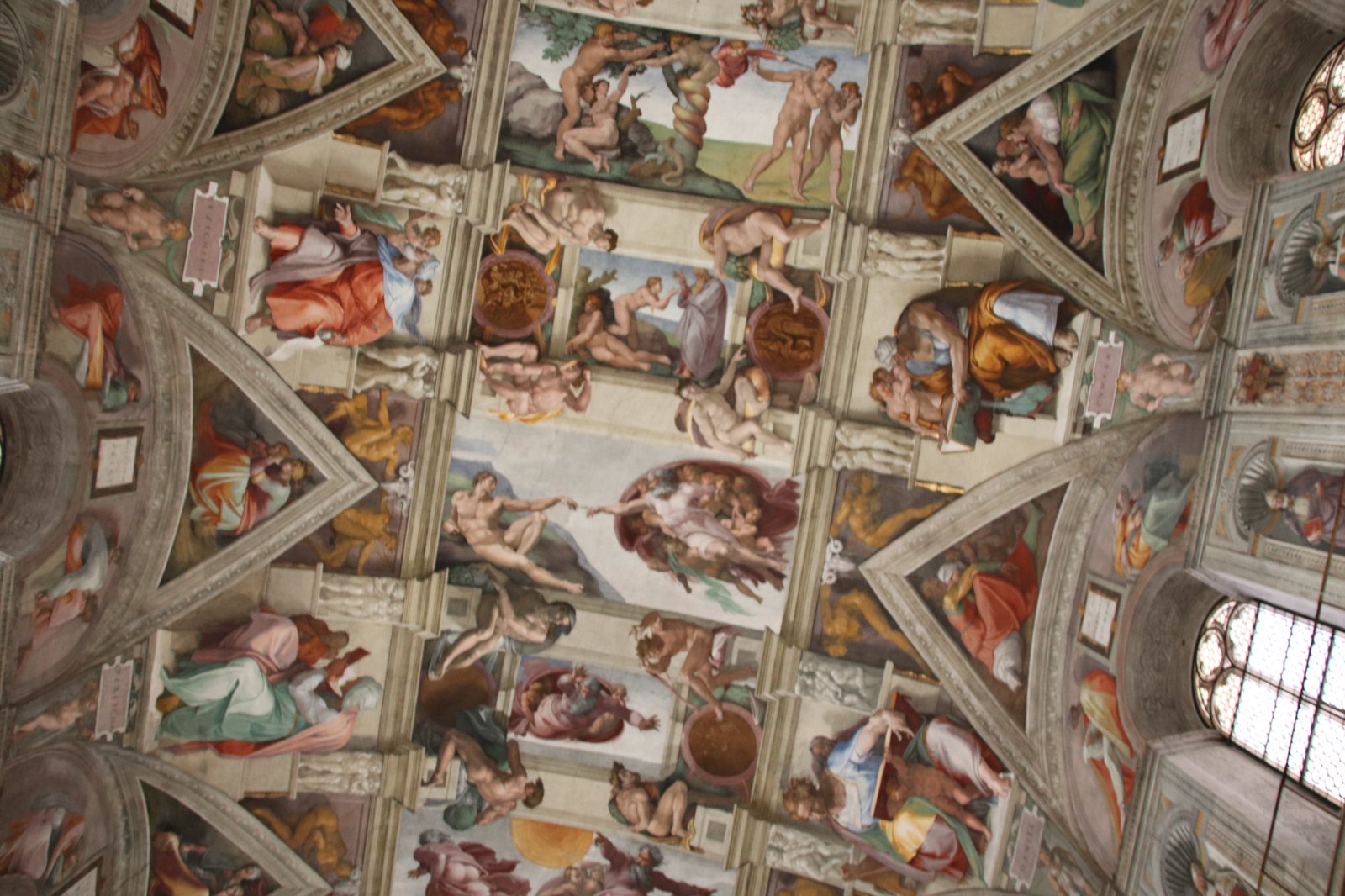
    Walk into the Sistine Chapel, stop under the entrance wall, and look up at the far end near the altar. Then look at the panel directly overhead. You are standing at the point where Michelangelo was least sure of himself, staring toward the point where he was most sure of himself, four years later. He painted the ceiling in the reverse order of the Genesis story it tells, and the gap between his first panel and his last is visible if you know where to put your eyes.

    A contract for twelve apostles

    Pope Julius II commissioned the work, and the surviving contract is oddly modest next to what ended up overhead — the Vatican Museums’ own account of the commission puts it plainly: “On 8 May 1508, the artist signed the contract which foresaw the painting of twelve apostles in the pendentives and ornamental motifs in the rest.” Twelve seated apostles and some decorative filler was the job Michelangelo actually signed up for. What he delivered instead, with Julius’s approval somewhere along the way, was the full Genesis cycle: nine narrative scenes running from the Creation to the drunkenness of Noah, with prophets and sibyls filling the spaces between and ancestors of Christ in the lunettes below. That scope grew mid-project, worth remembering every time a guide describes the ceiling as a single unified plan handed down from day one. It was not. It was renegotiated in the artist’s head as he went.

    Scaffolding of his own design

    Julius’s architect, Donato Bramante, had proposed scaffolding hung from ropes threaded through holes drilled in the ceiling itself. Michelangelo rejected the design outright and had the builder Piero Roselli construct freestanding scaffolding instead, rising from the floor rather than hanging from the ceiling it was meant to protect. Roselli’s crew also roughcast the plaster surface Michelangelo would paint on. It is a small detail with a large consequence: a hanging scaffold moves and sways as workers shift their weight on it, and painting a fresco on a moving surface at speed is a very different task from painting on one bolted to the floor below.

    Starting at the wrong end, on purpose

    Here is the detail that makes the ceiling worth reading in order. Michelangelo began at the end of the chapel farthest from the altar, above the main entrance, with a scene that comes last in the biblical story: “Michelangelo soon began his work, starting at the west end with the Drunkenness of Noah.” Wikipedia’s summary of the project puts the logic even more directly: “The work commenced at the end of the building furthest from the altar with the last chronological part of the narrative and progressed towards the altar with the scenes of the Creation.” Read the ceiling from the altar toward the entrance and you get Genesis in order: Creation first, Noah last. Michelangelo painted it the opposite way. His first working day was Noah’s disgrace; his final months were spent on the instant God separates light from darkness.

    Painted in the order Michelangelo actually worked, the nine central panels run: the Drunkenness of Noah, the Great Flood, the Sacrifice of Noah, the Fall and Expulsion from Eden, the Creation of Eve, the Creation of Adam, the Separation of Land and Water, the Creation of the Sun, Moon and Plants, and the Separation of Light from Darkness. Read that list backward and it is the Book of Genesis. Read it forward and it is a four-year record of a painter getting better at his own commission, panel by panel, in real time.

    Phase one: small figures, crowded frames

    Three panels nearest the entrance wall — Noah drunk in his tent, the Flood, and Noah’s sacrifice — are the most densely populated on the ceiling. Among them, the Great Flood is the most crowded, packed with struggling, huddled figures scaled well below the size Michelangelo would later use, refugees crammed onto a rock and a makeshift boat in a composition closer to a battle scene than to the spare, monumental images most visitors expect from this artist. That crowding was not a stylistic choice he stuck with. Working this high above the floor, without having yet seen how a finished panel actually reads from below, he had misjudged the scale. Smaller figures packed tighter felt safer from up on the scaffold. From roughly sixty-five feet down, they read as clutter.

    Phase two: figures grow, and Michelangelo learns to trust the drop

    By the time he reached the Fall and Expulsion and the Creation of Eve, the correction shows. Wikipedia’s account of the technical shift is specific about the cause: “Michelangelo painted the figures at a larger scale than in the previous section; this is attributed to the artist’s ability to effectively judge the foreshortening and composition from ground level for the first time.” He could finally walk the floor of the chapel, look up at his own finished work, and see what a viewer sees. Fewer figures, held bigger, read more clearly at that height, and every panel after this point commits to the lesson. A firm marker for how far he had gotten by this stage comes from the Vatican Museums’ own record: “Michelangelo completed the first half of the Ceiling, that is from the entrance wall to the Creation of Eve, in August 1510.” Five panels down, four to go, roughly two years into a project that would run four.

    Phase three: the Creation panels, at the grandest scale of the ceiling

    The Creation of Adam belongs to this final stretch, not to the finale itself. Michelangelo painted it alongside the three remaining panels down at the altar end, in what Wikipedia identifies as the ceiling’s third and boldest phase: “The figures of the third phase, at the east end, were at still grander scale than the second; The Creation of Adam and the other Creation panels were finished at this stage, which took place in 1511.” Fewer figures again, bigger still, and brushwork loosened to match. “As the scale of the work got larger, Michelangelo’s style became broader; the final narrative scene of God in the act of creation was painted in a single day.” Last panel of the nine, nearest the altar, went up that fast. Four years of practice, compressed into a single day’s work.

    Finished by Halloween, and Mass said the next morning

    Whole ceiling was done by 31 October 1512, and the Vatican Museums’ record of the finish is unusually precise about how we know it: “The work must have been completed by 31 October 1512, as the Pope celebrated Mass in the Chapel on 1 November.” A pope does not say Mass under scaffolding, so the last board must have come down the day before. Modern restoration work carried out between 1980 and 1994 gave scholars a way to check this whole phase-by-phase story against physical evidence rather than guesswork: conservators counted the individual giornate, the day-sized patches of fresh plaster a fresco painter completes in a single working session, and the pattern of those patches lines up with the progression described above. “This thesis is supported by the discovery during the modern restoration of the exact numbers of the giornate employed in the frescoes.” Plaster does not lie about how fast or slow a hand was moving across it.

    What to actually compare, overhead

    Skip the guidebook instinct to stare only at the Creation of Adam and move on. Start instead at the entrance wall, directly beneath the Drunkenness of Noah and the Flood, and count how many bodies are crammed into that space. Then walk the length of the chapel toward the altar and stop under the Creation of Adam. Two figures, held at a scale you can read clearly from the floor, arms almost touching across an empty field. That gap, from a crowd of small huddled bodies to two enormous ones with room to breathe between them, is four years of a working painter solving a problem he did not fully understand on day one. It is a more honest way to look at the ceiling than treating it as one flawless vision delivered whole.

    Bring binoculars or a zoom lens if you can. Hours are straightforward: “From Monday to Saturday 08.00 a.m. – 08.00 p.m.,” with “final entry 06.00 p.m.” On the last Sunday of each month it opens free of charge, “Every last Sunday of the month 09.00 a.m. – 02.00 p.m.,” though that slot draws the heaviest crowds of the month and gives the least room to stand still and compare panels. A quieter weekday morning suits this kind of looking far better than a free Sunday does.

    If you would rather have a guide point out the Noah-to-Adam progression in person, without spending the visit hunting for it yourself, our Sistine Chapel tickets page lists the entry formats and guided options currently running.

  • The Sistine Chapel Restoration Controversy, Thirty Years Later

    Wide view of Michelangelo's Sistine Chapel ceiling showing the bright colours revealed by the 1980-1994 restoration
    This is the ceiling as it looks today, its colours the subject of a fight that started before the scaffolding came down. Public domain via Wikimedia Commons.

    Stand under the Sistine Chapel ceiling today and a guide will eventually say some version of the same sentence: this was not always this bright. That much is true. What comes next, usually delivered as settled fact, is that a Vatican-sponsored cleaning in the 1980s and early 1990s stripped away centuries of Michelangelo’s own shading and left the frescoes looking cartoonish. That claim has had thirty years to calcify into common knowledge. That claim deserves a harder look than it usually gets.

    A claim that will not die

    Ask around and you will hear a version of it from people who have never read a conservation report: the restorers scrubbed off Michelangelo’s final layer of shadow, the layer he added in dry plaster after the wet fresco had set, and what tourists see now is a flattened, candy-coloured imitation of the original. It is a tidy story. It also skips past what conservators actually found on the ceiling and why they removed it, and it treats a genuine, well-documented scholarly argument from the 1980s as though it were still unresolved. It mostly is not.

    What the project actually was, and was not

    The restoration now argued about ran in stages. Preliminary tests began in 1979. Lunette sections above the windows were cleaned first, from June 1980 to October 1984. Work on the main ceiling vault finished in December 1989, and the whole ceiling, together with Michelangelo’s Last Judgement on the altar wall, was unveiled by Pope John Paul II on 8 April 1994. That fourteen-year project is the one this controversy is about.

    A separate campaign followed: cleaning the fifteenth-century wall frescoes below the ceiling, by artists including Botticelli and Perugino. That phase was approved in 1994 and unveiled in December 1999. It is a different job with a different set of painters, and popular writing about “the Sistine restoration” often blurs the two together. Keep them apart, because the colour argument is almost entirely about the ceiling and the Last Judgement, not the wall cycle.

    What Colalucci’s team actually scraped off

    Chief restorer Gianluigi Colalucci and his team documented what five centuries had deposited on the plaster. Candle smoke, burned in the chapel for public Masses and conclaves since the 1500s, had left a film of soot and amorphous carbon across the whole ceiling. Earlier restorers, working long before modern conservation science, had rubbed animal fat and vegetable oil into the surface to mask salt staining, and that oil had itself darkened with age. Crystalline saltpetre had bloomed on the plaster in patches. On top of all that sat layers of glue-varnish, applied during previous restoration campaigns in roughly 1625 and again in 1710 to 1713, that had gone cloudy and yellow over three centuries.

    None of that is Michelangelo’s paint. It is grime, old varnish, and other restorers’ fixes, and removing it is what a cleaning is supposed to do. Whether the ceiling was dirty was never really the dispute. It was about whether, underneath all that soot and varnish, some of what looked like Michelangelo’s own final touches had been scraped away along with it.

    Critics who said stop

    That question had a real, named opponent, not an anonymous internet grumble. Columbia art historian James Beck, who founded the watchdog group ArtWatch International, argued publicly and repeatedly that the cleaning was too aggressive, and he later co-wrote a book on the dispute, Art Restoration: The Culture, the Business and the Scandal, with Michael Daley in 1995. Beck put his objection memorably: “In the rhetoric of this conversation, they say that the previous restoration was no good — now we’re going to make a really good one. It’s like having a facelift. How many times can people go through one without their poor faces looking like an orange peel?”

    He was not alone in raising the alarm while the work was still in progress. New York dealer Ronald Feldman organised a petition asking John Paul II to halt the cleaning, signed by fifteen artists, including Robert Motherwell and Andy Warhol. The petition made the New York Times. It did not stop the project, and the Vatican’s own restoration team continued to defend its methods against Beck’s objections for years afterward.

    Funding and photographs behind the cleaning

    One detail rarely makes it into the popular version of the story: Nippon Television Network Corporation of Japan funded the restoration with a $4.2 million grant, in exchange for exclusive rights to photograph and reproduce the work as it happened. New York Times critic Michael Kimmelman noted in 1991 that some of the loudest criticism was fed by Nippon TV’s own reluctance to release its documentation photographs, which were the clearest available evidence of exactly how the cleaning had been done. Outside scholars arguing about whether too much had been removed were, for long stretches, arguing without access to the images that would have settled the argument fastest.

    A different verdict: colour restored, not invented

    Set against Beck’s warning is the judgement of scholars who worked from the restored ceiling itself rather than from memory of the grimy one. University of Victoria art historian John Osborne told Queen’s Quarterly in the late 1990s that “every book on Michelangelo will have to be rewritten” because of what the cleaning revealed about his palette and technique. Pope John Paul II, at the 1994 unveiling, put it in more devotional terms: “Lovers of art and beauty have then given proof of their sensitivity by their concrete and remarkable contribution towards the restoration of the Chapel’s original bright colours.” Neither of those is proof that Beck was wrong on every point. Conservators today generally accept that some retouching by later hands was, in places, removed along with the grime it was covering. But the dominant material stripped from that ceiling was soot; old animal-fat dressing; saltpetre; and darkened varnish, not Michelangelo’s brushwork, and the bulk of independent art-historical opinion since 1994 has sided with the restorers on the broad question of what the colours underneath actually were.

    Judging it yourself, standing under it

    You do not have to take either side’s word for it. That ceiling is still there, and you can test the argument yourself if you know where to look. Compare a figure lit head-on, like the Libyan Sibyl near the altar end, against one of the darker corner pendentives, where restorers left sections deliberately uncleaned decades ago as reference patches against which the rest of the work was checked. That contrast is the whole dispute in miniature.

    Vatican Museums hours run Monday to Saturday, 08:00 to 20:00, with last entry at 18:00, and the halls clear thirty minutes before closing, so plan around that if you want unhurried time under the ceiling rather than a last-minute rush. On the last Sunday of most months entry is free from 09:00 to 14:00, last entry 12:30, though that exception does not apply when the date falls on Easter, 29 June, or the Christmas period, and the museums close entirely on a set list of religious and civil holidays through the year. Early in the day, before tour groups stack up in the Sistine Chapel itself, is the easiest window for actually studying the paint rather than shuffling past it.

    Bring the argument with you rather than a verdict. Look at where the colour sits warm and where it sits cool, notice how the shadow falls differently on figures Michelangelo painted at different points in the four years he spent on the scaffolding, and decide for yourself whether what you are seeing looks scrubbed flat or simply cleaned. Most visitors who go in expecting a ruined ceiling leave surprised by how much modelling and shadow is still there once you know where to look.

    If you would rather spend that morning looking at the ceiling than standing in a queue for it, our Sistine Chapel tickets get you past the entrance line so you can start comparing those panels for yourself.

  • Why Michelangelo’s Nudes in the Last Judgment Wear Painted Drapery

    Wide view down the Sistine Chapel toward the altar wall, showing Michelangelo's ceiling frescoes and the Last Judgment
    The Last Judgment fills the altar wall beneath the ceiling Michelangelo painted three decades earlier. Photo via Shutterstock.

    I always tell people to look at the loincloths before they look at anything else. Not because they are the most interesting part of the Last Judgment, but because once you notice them, you cannot stop noticing them: painted swags of grey and ochre cloth draped across bodies that were clearly not painted to wear any. Michelangelo built this fresco out of nearly four hundred figures twisting and falling and rising in the nude. A later hand went back in and dressed some of them. Once you know that, the wall stops looking like one artist’s vision and starts looking like an argument that never fully resolved.

    A wall of naked bodies, unveiled in 1541

    Michelangelo worked on the Last Judgment for roughly five years and unveiled it in October 1541, more than two decades after he had finished the ceiling above it. He was in his late sixties, painting for a Church that was, at that exact moment, under attack from the Reformation and in no mood to look complacent about sin. The composition he delivered showed nearly everyone nude, including the saints and martyrs standing closest to Christ, and it drew a reaction from inside the Vatican before it drew one from the wider public. According to Giorgio Vasari, the papal Master of Ceremonies, Biagio da Cesena, objected to the fresco while it was still being finished, calling it disgraceful that “in so sacred a place there should have been depicted all those nude figures, exposing themselves so shamefully,” and adding that it belonged in “the public baths and taverns” rather than a papal chapel. Vasari wrote that account decades after the fact, so treat it as the story Rome told about itself rather than a transcript, but the outline of it, an official objecting to the nudity on the spot, is not in serious dispute.

    Minos, donkey ears, and a joke that stuck

    Michelangelo’s answer to that complaint is one of the better-known stories in Renaissance art, and it is worth repeating because you can still find it on the wall. He painted Cesena’s face into the lower right corner of the fresco as Minos, mythological judge of the underworld, wearing donkey’s ears and standing in Hell with a serpent biting his exposed body. Cesena appealed to the pope to have it removed. Paul III is said to have replied that his authority did not reach into Hell, so the portrait would have to stay. It has stayed. Restorers cleaning the fresco in the twentieth century found that the snake was biting Minos in the genitals, a detail centuries of grime had obscured. I like this story less for the joke than for what it says about how differently Michelangelo and the Church weighed an insult against a body. Cesena’s complaint was about flesh. Michelangelo’s revenge was about a face, painted permanently into damnation, and it is telling that the face survived every later round of censorship without anyone ever proposing to paint it out.

    The order that came after Michelangelo’s death

    The complaint that eventually succeeded was not Cesena’s. It came from the Council of Trent, which met in stages through the middle of the sixteenth century to answer the Protestant Reformation with reforms of its own, including new rules for religious art. In its final session in December 1563 the council ruled that sacred images should carry no “beauty exciting to lust” and that anything obscene in a church should be covered or removed. Pope Pius IV acted on that instruction directly: on 21 January 1564 he ordered the nudity in the Last Judgment covered. Michelangelo died less than a month later, on 18 February 1564, and never saw what was done to the fresco in response. It is worth sitting with that timing for a moment. The order came while its own author was still alive to argue against it, and it went ahead anyway once he no longer could.

    Il Braghettone, the breeches-maker

    The job of covering the fresco went to Daniele da Volterra, a painter who had trained under Michelangelo and admired him enough that, by most accounts, he took no pleasure in the assignment. Work did not begin until 1565, and by several accounts Daniele painted in strips of cloth and drifting fabric with as light a touch as the commission allowed, adding only what he had to and reportedly having to be pushed to add more. He was still working through it, in fits and starts, when Pius IV died at the end of 1565 and the scaffolding had to come down in a hurry. Daniele himself died on 4 April 1566, only months later. History remembers him by a nickname that has outlived almost everything else he painted: il Braghettone, the breeches-maker.

    Not every fix he made was a painted scrap of fabric. Two figures beside Christ, Saint Blaise and Saint Catherine of Alexandria, had originally been arranged so that Blaise appeared to be looking directly at Catherine’s naked body from behind, in a pose some viewers read as suggestively intimate for two people about to face judgment. Rather than paint drapery over the problem, Daniele chiselled away the plaster and repainted the greater part of Catherine and the whole of Blaise from scratch, turning Blaise’s gaze upward toward Christ instead. It is the one place on the wall where censorship did not just add cloth. It rebuilt the fresco underneath it.

    The censors who came after him

    Daniele’s death did not end the covering-up. Further rounds of overpainting followed under later popes, including Pius V, Gregory XIII, and probably Clement VIII, and these later additions tended to be cruder than his. By the time the practice more or less stopped, close to forty figures on the wall had gained some form of painted drapery beyond the two that Daniele had physically reworked. Some of that later paint was applied by artists with far less regard for Michelangelo’s original lines than Daniele had shown, and it shows in the clumsier folds and flatter shading if you know where to look. Each pope who ordered another round was, in effect, deciding again that the fresco was still not modest enough, decades after the argument had supposedly been settled. Nobody drew a line under the project. It simply stopped getting attention once the fashions and anxieties that drove it moved on to other targets.

    What the 1980s restoration undid, and what it left alone

    The long cleaning of the Sistine Chapel that ran through the 1980s and into the early 1990s, and that unveiled the restored Last Judgment on 8 April 1994, gave conservators a chance to reconsider four centuries of added cloth. They did not strip it all away. Working figure by figure, the restoration team removed roughly half of the accumulated overpainting, concentrating on the additions made after 1600, while deliberately leaving the sixteenth-century layer, Daniele’s own work, in place. The reasoning was straightforward: Daniele’s drapery was close enough in time and in touch to Michelangelo’s own hand that removing it would mean guessing at brushwork nobody alive had ever seen, while the later, cruder additions had no such claim on the fresco’s history.

    That decision is why the wall you see today is not the wall Michelangelo painted, and also not the wall the Council of Trent’s censors left behind. It is something in between: a compromise a restoration committee reached in the 1990s about how much of a compromise reached in the 1560s deserved to survive.

    Standing in front of it now

    None of this is hidden information. It is printed in guidebooks and repeated by every guide who has stood under that wall more than a few times. What changes, once you actually know the sequence, is how you read the bodies themselves. A figure with cloth wrapped tightly and awkwardly around the hips was probably touched by a later, less careful hand. A figure with a thinner, more naturalistic swag closer to the body was more likely Daniele’s own, working under pressure from a friend’s memory rather than a stranger’s disapproval. The fresco carries its own editorial history on its surface, in different handwriting, if you look at it as a document rather than just an image.

    I find that the loincloths are, in the end, more interesting than a version of the fresco without them would have been. They are proof that the wall was fought over, by a painter who kept a promise to his teacher’s memory and by others who did not much care about it. If you want to work that out for yourself rather than take a guide’s word for it, our Sistine Chapel tickets get you into the room, where the differences in that painted cloth are still there to compare in person.

  • Dalí, Chagall, and Bacon: The Vatican’s Modern Religious Art Collection

    A Vatican Museums gallery corridor on the long walk toward the Sistine Chapel, the same route that passes the Collection of Modern Religious Art
    A Vatican Museums gallery corridor on the route toward the Sistine Chapel — the Collection of Modern Religious Art sits along a version of this same walk, in the rooms below.

    Most visitors reach the Sistine Chapel having seen almost nothing but antiquity and the Renaissance for two hours straight. Roman busts, then Raphael, then more Raphael, then suddenly Michelangelo overhead. So when a guide mentions that the Vatican Museums also hold works by Salvador Dalí, Marc Chagall and Francis Bacon, people tend to assume they misheard. They didn’t. Since 1973 a long run of rooms beneath the Sistine Chapel, most of them the old Borgia Apartments, has held one of the more overlooked parts of the entire complex: the Collection of Modern Religious Art.

    Why Paul VI built it

    Pope Paul VI opened the collection in June 1973, and the timing was deliberate. The Church had just come through the Second Vatican Council, which spent real energy asking how faith should speak to the present rather than only to the past. Paul VI’s own answer, in part, was to invite living artists into the same institution that already owned Raphael and Michelangelo. He wrote to artists directly, asking for a renewed alliance between the Church and the people who make images. Hundreds of them responded with donations and loans, and the result was installed across 55 rooms, corridors and passages that had mostly sat unused since the Borgia family stopped living there in the 1500s.

    It’s worth sitting with how unusual that decision was. This is an institution whose reputation rests almost entirely on works that are four, five, six hundred years old. Adding a wing of 20th-century painting and sculpture to that story was a statement about what the Church thought it was for: not a museum of a finished past, but a patron that intended to keep going.

    The Borgia Apartments as a setting

    The rooms themselves are not neutral white cubes. They were decorated by Pinturicchio in the 1490s for Pope Alexander VI, with painted ceilings, gilded stucco and frescoed lunettes that are Renaissance masterworks in their own right. Walking through them, you’re looking at a 15th-century interior with a Bacon or a Rouault hung on the wall in front of it. That collision is part of what makes the collection worth the detour. Curators didn’t strip the rooms back to make them look contemporary. The modern pieces sit inside a Borgia-era shell, which means the eye is doing two jobs at once: reading Pinturicchio’s ceiling and reading a 20th-century canvas hung a few metres below it.

    That layering explains why the collection can feel disorienting on a first pass. Nothing here is trying to match the room. A stark, angular crucifixion can hang under a gilded coffered ceiling built for a Borgia pope, and the museum makes no attempt to soften the contrast.

    What’s actually in the rooms

    The collection runs to several hundred works, and it isn’t a themed survey of “Christian art” in the devotional sense. Much of it is simply 20th-century art on religious or existential subjects, gathered from artists who weren’t necessarily believers. Dalí is represented, along with Chagall, whose relationship to biblical imagery ran through most of his career regardless of the setting he painted it for. Francis Bacon appears too, and his presence is often the one that stops people, since his figures are about as far from Raphael’s calm as painting gets. Georges Rouault, Henri Matisse and Odilon Redon show up in various rooms, alongside sculpture and works on paper by a long list of artists who donated pieces directly to Paul VI’s project rather than having them acquired later.

    The mix is genuinely uneven, as any collection built from donations tends to be. Some rooms have real weight. Others feel like minor pieces by major names, included because the artist offered them rather than because they were the strongest possible choice. That unevenness is worth knowing about going in, mostly so it doesn’t read as a flaw unique to this one museum. Almost every donated collection has the same texture.

    What it’s like to walk through after the old masters

    By the time most people reach these rooms, on the route many tours take toward the Sistine Chapel, they’ve already spent an hour or two absorbed in classical sculpture and Renaissance fresco. The shift is genuinely physical. Colour palettes change, subject matter loosens, and the pacing of the paintings themselves changes, since 20th-century work often asks to be looked at quickly and reacted to, rather than studied slowly the way a fresco cycle does. Some visitors find the change a relief, a chance to look at something that isn’t asking for art-historical homework. Others walk through without really registering it, still processing the Sistine ceiling they’re heading toward or have just left.

    Guides who linger here tend to do it for a specific reason: the Bacon room, or a strong Rouault, gives a natural pause point in a day that’s otherwise front-loaded with famous names. It’s also one of the few stretches of the museum where a group can stand in front of something without a wall of other visitors doing the same, since most people move through quickly on their way to the Sistine Chapel.

    Why it doesn’t fit the Vatican’s usual story

    The Vatican Museums exist, broadly, to hold what the papacy has collected and commissioned across roughly five centuries, and the collection’s public identity leans hard on that depth. A 20th-century wing sits slightly outside that narrative, which is probably why it gets far less attention than the Sistine Chapel or the Raphael Rooms in most guidebooks and most tour itineraries. It doesn’t photograph as a single unmissable image the way the ceiling does, and it doesn’t have one work that functions as a headline. What it has instead is an argument: that a museum built on the Renaissance was still willing, in 1973, to say that religious art hadn’t stopped being made.

    Practical notes if you want to see it

    The Collection of Modern Religious Art is included in the standard Vatican Museums ticket, so there’s no separate charge and no separate booking. The rooms sit along the route toward the Sistine Chapel, which means almost every visitor passes near them without necessarily knowing they’re there, since signage inside the museum can be easy to miss when a group is focused on reaching the ceiling. If you want to actually stop and look rather than walk past, budget an extra twenty or thirty minutes into your visit and ask your guide, if you have one, to slow down through the Borgia Apartments specifically. On a self-guided visit, the collection is easiest to find by following signs for the Borgia Apartments rather than for “modern art,” since that’s still the name most staff and maps use for the space.

    If you’d rather have someone point out the Bacon room and explain why a Pinturicchio ceiling sits above it, that kind of detour is exactly what a guided visit is for — you can see our Vatican tours for options that build in time for the rooms most people walk straight past.

  • Is the Vatican Carriage Pavilion Worth the Extra Walk?

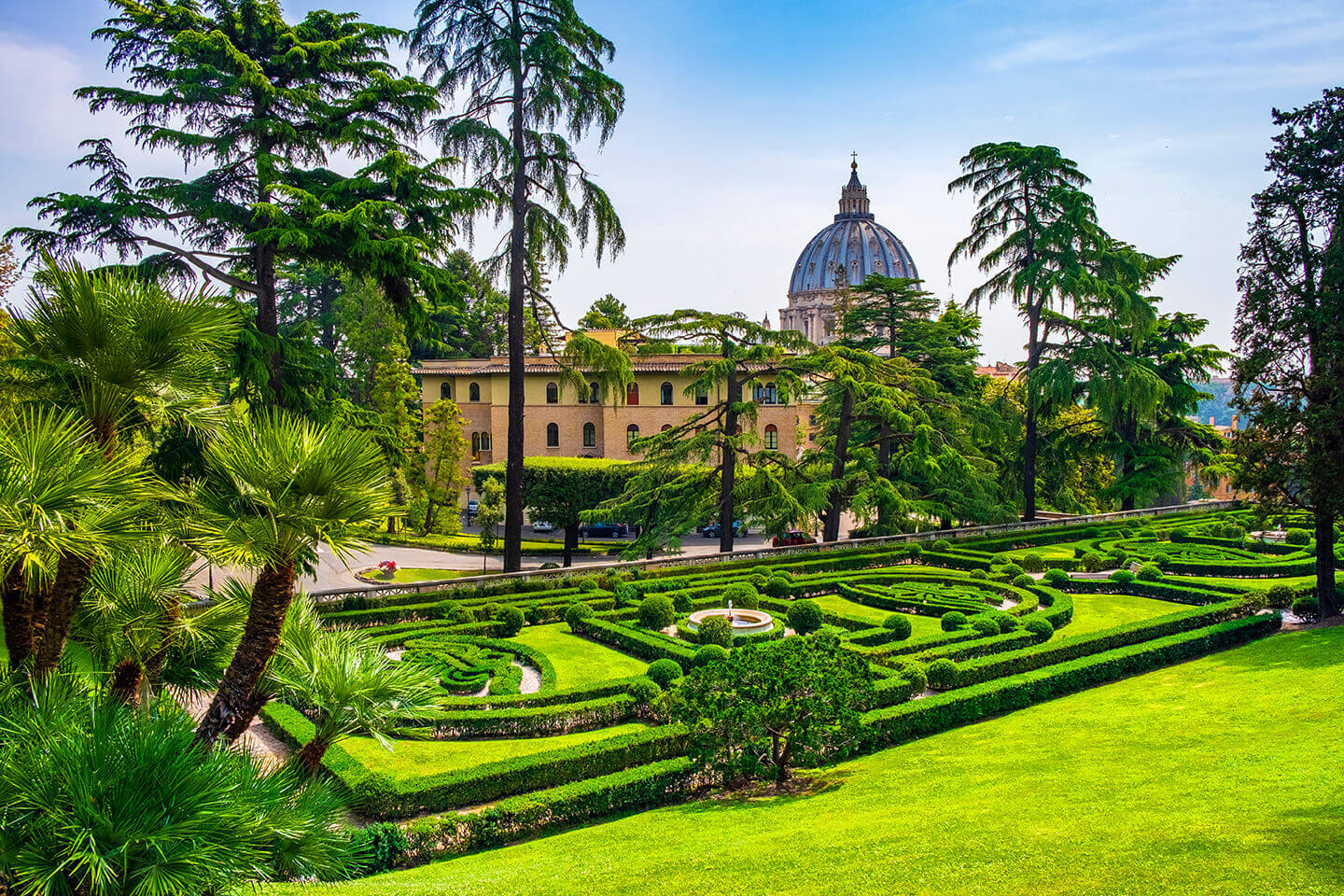
    The Vatican Gardens with the dome of St Peter's Basilica behind them; the Carriage Pavilion sits underground in a smaller garden courtyard inside the museum complex, not in this open parkland
    The Vatican Gardens, with St Peter’s dome behind them. The Carriage Pavilion itself sits underground, in a smaller garden courtyard inside the museum complex, not in this open parkland.

    Almost nobody touring the Vatican Museums for the Sistine Chapel ever sees a single carriage, a single popemobile, or the car connected to the 1981 shooting of John Paul II, because none of it sits anywhere near the main route. The Padiglione delle Carrozze, the Carriage Pavilion, is a separate underground room built into a garden courtyard within the museum complex. Reaching it takes a deliberate choice rather than a lucky glance sideways. Here is what is actually inside, how to find the entrance, and who should honestly leave it off the list.

    What’s Actually Inside the Padiglione delle Carrozze

    The centrepiece is the Grand Gala Berlin, built in Rome in 1826 and still the pavilion’s most photographed object. Around it sit a Berlin belonging to Cardinal Luciano Bonaparte, a second Gala Berlin fitted with a throne, travelling carriages including one that belonged to Ferdinand II, a Landau, and the sedan chairs once used by Leo XIII and John XXIII.

    Motorised vehicles make up the other half: a Graham Paige Type 837, a Citroën Lictoria C6, a Mercedes-Benz 460 Nürburg, a Mercedes-Benz 300 SEL, a Fiat 1107 Nuova Campagnola, a Volkswagen Beetle, a Renault 4, and an odd inclusion visitors always ask about, a Ferrari Formula 1 steering wheel, model MT 867/B. Popemobiles from several decades round out the display. Official wording for the motoring collection is plain enough to quote directly: “The Vatican Museums’ ‘fleet’ of automobiles also includes the Mercedes 300 Sel, the Fiat Campagnola linked to the assassination attempt against John Paul II in St. Peter’s Square in 1981.”

    The Car Linked to the 1981 Attack on John Paul II

    That Fiat Campagnola is the reason many visitors seek this room out specifically. It is the open-topped vehicle John Paul II was riding in St Peter’s Square on 13 May 1981, the day Mehmet Ali Ağca opened fire and hit him twice. Its official description confirms the identification directly: the Fiat 1107 Nuova Campagnola on display is the car “on which Pope John Paul II was hit by two shots in the attack on his person of 1981,” a phrase echoed almost word for word by the independent guide site romanmuseums.com. Standing in front of it lands differently than reading about the event ever could. It is a plain white utility jeep, unarmoured, exactly the sort of open car the Vatican stopped using in daily papal appearances after that afternoon.

    Popemobiles, Old and New

    The pavilion’s popemobiles span several pontificates, and romanmuseums.com’s plain summary of their purpose still holds: they are “papamobili that allow the pope to be seen and to be able to greet the crowd in short trips from one place to another.” The vehicle the current pope actually rides isn’t part of this historical line-up. Leo XIV, born Robert Francis Prevost, was elected on 8 May 2025 as the 267th pope; the Vatican’s own biography records the milestone with characteristic brevity as “Beginning Pontificate 8,18.V.2025.” Whatever he currently rides in belongs to daily papal logistics, not to a museum case.

    How to Actually Find It

    A lot of online advice gets vague here, so it’s worth being precise about what could and couldn’t be verified. No official confirmation exists of a dedicated shuttle bus to the Carriage Pavilion, despite that being a common assumption. A separate, paid Vatican Gardens open-bus tour does exist, roughly forty-five minutes with a multilingual audioguide, but nothing ties that bus route to this room, so don’t book the gardens tour expecting it to drop you at the carriages. Foot access is the only description that could actually be verified, from the independent visitor guide site italy-sights.info: “The Pope’s carriage pavilion can be reached by walking to the right from the entrance and going down a staircase to the basement in the accessible part of the museum garden.” Same source calls it “somewhat hidden in the huge museum complex,” and less crowded than the rest of the Museums as a result. Treat this as a walking detour near the start of your visit, not a mid-tour stop reachable by transport.

    How Much Extra Time and Walking It Costs

    No exact minute count for the detour could be confirmed, and any figure you see quoted online without a source should be treated with suspicion. What can be said with confidence is smaller and more useful: the pavilion is a single room, not a wing, so once you’re standing in it the visit itself is quick. Most visitors move through in under fifteen minutes unless carriages or classic cars genuinely hold their attention. Walking there and back, plus the staircase down and up, is the real cost, not time spent looking. Budget half an hour for the round trip if you want a comfortable margin rather than a rushed one.

    Tickets and Whether You Need a Separate One

    The official pricing page was unreachable at time of writing, so treat this as secondary-source consensus rather than a confirmed figure. Multiple independent ticket and guide sites converge on roughly €20 at the door and €25 online including a booking fee, the same range as standard Vatican Museums admission, and those same sources describe the Carriage Pavilion as included with no extra charge. That inclusion couldn’t be verified on an official page, so if a separate line item appears at the entrance, don’t assume it’s an error; just confirm before queueing for anything extra.

    Who Should Skip It

    Skip it if your time is tight and the Sistine Chapel is the only real priority, or if you’re travelling with young children who won’t sit still for parked vehicles behind rope barriers. Go if you or anyone in your group has a genuine interest in classic cars, in the mechanics of papal transport, or in the specific history of the 1981 attack; standing in front of that Fiat carries more weight than any photograph of it. Go, too, if the main galleries have left you tired of paintings and you’d rather spend twenty quiet minutes somewhere the crowds haven’t found.

    Hours, Closures, and When to Go

    The Vatican Museums open Monday to Saturday “08.00 a.m. – 08.00 p.m.,” with last entry at 18:00, so the Carriage Pavilion keeps the same window as everything else in the complex. On the last Sunday of most months the Museums open free of charge, but only from “09.00 a.m. – 02.00 p.m.,” with last entry at 12:30; that morning is also the single most crowded slot of the month, so it suits a determined early riser more than someone hoping for a quiet look at the carriages. Ordinary Sundays are closed too, along with a fixed list of dates each year, including 14 and 15 August, so check the calendar before building a mid-August itinerary around this room. Per the official Vatican Museums page, the pavilion itself was “inaugurated on 19 April 1973 by Paul VI,” which makes 2026 its fifty-third year on display.

    Is the Vatican Carriage Pavilion worth visiting for every itinerary? No. Is it worth the walk for anyone with an afternoon to spare and a soft spot for old machines and papal history? Almost certainly. If you’d rather have a guide who already knows the staircase and can fold the detour into a tighter overall route, our Vatican tours page lists the guided options that can plan that kind of stop around your schedule.

  • Inside the Octagonal Court: Why the Vatican’s Greatest Statues Cluster Here

    A gallery of classical sculpture inside the Vatican Museums
    A sculpture gallery inside the Vatican Museums. Rome’s most famous ancient marbles cluster one room over, in the Octagonal Court. Photo via Shutterstock.

    Walk through the entrance halls of the Vatican Museums and the crowd thins for a moment as you step outside, into an open, eight-sided courtyard ringed with niches. Five ancient statues stand here, and two of them, the Laocoön and the Apollo Belvedere, are among the most copied and argued-over sculptures ever pulled out of the Roman soil. They did not end up together by chance. A pope put them here on purpose, and the room’s shape still decides how you experience them five centuries later.

    A pope who wanted his own antique Rome

    Pope Julius II della Rovere, who reigned from 1503 to 1513, spent his papacy trying to rebuild something of classical Rome around himself. Part of that project was a courtyard for the statues he collected, later known by a name that describes exactly what it held. The Vatican Museums’ own page on the room notes that it “used to be known as the Cortile delle Statue. It was home to the first nucleus of antique classical statues in the pontifical” collections. Everything that came after, the museum wings, the galleries, the long march toward the Sistine Chapel, grew outward from this one courtyard of statues.

    That octagonal shape came later. Under Pope Clement XIV, whose short papacy from 1769 to 1774 founded what became the Museo Pio-Clementino, the architect Michelangelo Simonetti reworked the space, described in the historical record as having “redesigned the Cortile Ottagono, situated between the casino and Pirro Ligorio’s nicchione in Donato Bramante’s Cortile del Belvedere.” So the room you walk through today is an eighteenth-century remodel of a courtyard Julius II had already been using for statues nearly three hundred years earlier.

    The two-month statue and the century-long wait

    The Laocoön’s route into papal hands was fast by any standard. A group of labourers found it in February 1506, buried in a vineyard on the Oppian Hill near the old Sette Sale cisterns. Julius II acquired it within weeks, on 23 March 1506, and rewarded the finder, Felice De Fredis, with a post as a scribe and a share of gate-customs revenue. According to the record of its discovery, “by August the group was placed for public viewing in a niche in the wall of the brand new Belvedere Garden at the Vatican,” though it did not get a formal base until 1511.

    Apollo Belvedere moved slower, but it moved with the same man. It had been dug up around 1489, near Anzio or Grottaferrata, and belonged to Julius II before he was pope, back when he was still Cardinal Giuliano della Rovere. Once he had the throne, he brought it with him: he “transferred the prize in 1511 to the small sculpture court of the Belvedere,” which is why some older guidebooks still call the statue the Apollo of the Cortile del Belvedere rather than the Apollo Belvedere. Napoleon’s troops carted it to Paris between 1798 and 1815, and it came back afterward to the same courtyard.

    Not every statue got that treatment. The Belvedere Torso, the muscular fragment Michelangelo studied for decades, is often assumed to stand alongside the Laocoön and the Apollo. It does not. Its own path into the collection was slow and contested, summed up bluntly in one line of its history: “the Laocoön took two months from unearthing to Belvedere canonization; the Torso took a hundred years.” Today it sits several rooms further along the Pio-Clementino route, in the Hall of the Muses, which only opened to the public in 1784. If a guide tells you the Torso is in the Octagonal Court, they have not checked recently.

    Three courtyards, one confusing name

    Before there was an Octagonal Court, Julius II had already “moved his growing collection of Roman sculpture here, to an enclosed courtyard” designed by the architect Donato Bramante, a long rectangular space meant to link the old papal palace to a garden villa on the hill above it. That original Bramante courtyard is not the octagon you visit today. Pope Sixtus V split it with a cross-wing between 1585 and 1590, and the two halves picked up the names still used for other parts of the Vatican grounds: the Cortile del Belvedere below and the Cortile della Pigna above, home to the giant bronze pine cone. The statues stayed put in their own separate court, tucked into the museum wing that grew up around them, which is why three different spaces on the same hill can all fairly be called “Belvedere” in one guidebook or another.

    What actually stands in the octagon today

    Five works occupy the courtyard’s niches now: the Apollo Belvedere, the Laocoön, the Belvedere Hermes, a river god statue known as the Arno, and Antonio Canova’s neoclassical Perseus Triumphant. That last one is the outlier by a wide margin, carved in the early 1800s while everything else around it had already been standing for three hundred years. Walk the perimeter slowly and the age gap shows in the marble itself; Canova’s surface has a crispness the older pieces lost to weather and reworking long before they ever reached the Vatican.

    Why the room becomes a choke point

    The Octagonal Court sits early in the standard visitor route, right after the Cabinet of the Apoxyomenos and before the museum funnels you onward through the Hall of Animals, the Gallery of Statues, and eventually the Sistine Chapel. That position alone does most of the work. Everyone entering the Pio-Clementino museum passes through this one room, and it happens to hold two of the most photographed statues in the entire complex, in a space shaped like an octagon rather than a long gallery you can simply walk past. There is no official crowd-count data published for this specific room, so treat any number you hear as a guess, mine included. What is not a guess is the layout: a compact courtyard, several major draws, and a single main route funnelling everyone through it at the same point in their visit. That combination is what slows people down here more than almost anywhere else before the Sistine Chapel.

    Getting a clearer look

    Timing matters more than any trick of navigation. The Vatican Museums open Monday to Saturday from 8am to 8pm, with last entry at 6pm, and “visitors are required to leave the halls 30 minutes before museum closing time.” The museums are closed on ordinary Sundays; the exception is the last Sunday of each month, open 9am to 2pm with free admission, which sounds appealing until you remember free entry pulls in a much bigger crowd than a normal Tuesday morning. If your priority is actually seeing the Laocoön’s face rather than the back of someone’s phone, an early weekday morning beats a free Sunday every time. Standard adult entry runs €20 at the door, or €20 plus a €5 online booking fee if you want to skip the walk-up queue at the entrance gate; that booking fee buys you a fixed entry slot, not a shortcut through the Octagonal Court itself, so the timing choice still matters more than the ticket type.

    Knowing which room fills up first, and why, changes how you plan the rest of the visit. If you would rather have that timing worked out for you than guess at it on the day, our guided Vatican Museums tours route around the Octagonal Court’s busiest hours and go straight for the statues Julius II collected five hundred years ago.

  • The Chiaramonti Museum’s Corridor of a Thousand Busts: Worth More Than a Walk-Through

    A Vatican Museums gallery lined with rows of classical marble sculpture
    A Vatican Museums sculpture gallery — not the Chiaramonti corridor itself, but the same density of ancient marble that fills its full length. Photo via Shutterstock.

    Most guides treat the Chiaramonti corridor as dead space between the good parts. You arrive from the Pinecone Courtyard, the group bunches up, someone says “just marble busts, keep moving,” and ninety seconds later you’re in the next room without having looked at a single face. That habit is understandable given the volume on the walls. It’s also a waste of a gallery that was deliberately organised, not simply stacked with overflow.

    A Hallway That Isn’t Really a Hallway

    The Chiaramonti Museum sits inside what the Vatican Museums’ own site calls “the long loggia which joins the small Palace of the Belvedere to the Vatican Palaces.” That’s a corridor in the architectural sense — long, narrow, built to connect two buildings — but it was never meant to be walked through blind. Pope Pius VII, born Barnaba Chiaramonti, established the museum here in the early 19th century and gave it his family name. He wasn’t filling spare hallway space with spare statues. He was building a gallery, and he put someone specific in charge of how it would read.

    The Loggia’s Older Bones

    The structure itself predates Pius VII by three centuries. Its lineage runs back to Donato Bramante’s Cortile del Belvedere project for Julius II in the early 1500s, when Bramante raised the long corridor-like wings that closed in the courtyard. Those wings, as the historical record on the Cortile puts it, are the same wings that “now house the Vatican Museums collections” today. No single Vatican source states in plain terms that Bramante personally designed this exact loggia rather than the courtyard scheme more broadly, so treat the connection as strong but not a direct quote — the corridor you’re walking is Renaissance construction wearing an early-19th-century installation.

    Canova Put a System in the Room

    The arrangement is the part visitors skip past fastest and the part that actually explains why the busts sit where they sit. The Vatican’s own description is direct: “Esso fu allestito e ordinato da Antonio Canova” — the gallery was set up and arranged by Canova, the most sought-after sculptor in Europe at the time. He didn’t just supervise placement. On his commission, painters from the Accademia di San Luca decorated the gallery itself, so the ceiling and wall treatment above the sculpture rows were also part of one coordinated scheme rather than accumulated decoration. Walking past that as filler skips the one name most likely to make the room click into place once you know it’s there.

    “Almost a Thousand Sculptures,” Not a Thousand Busts

    Here’s where the nickname does visitors a disservice. Vatican Museums describes the Galleria Chiaramonti as displaying “quasi mille sculture antiche di ogni tipo” — almost a thousand ancient sculptures of every kind. Every kind, not exclusively portrait busts, and that distinction matters more than it sounds like it should. Mixed into the long run of heads are relief fragments, sarcophagus panels, architectural pieces and full or partial figures, and separating them from the busts as you pass is a faster way to make sense of the wall than trying to register a thousand faces at once. That “thousand busts” shorthand is close enough to be useful for finding the room on a map, and useless for telling you what you’re actually looking at once you’re standing in front of it. Knowing the room mixes genres, rather than repeating a single format nine hundred times, changes how you scan it.

    Two Rooms People Mix Up With This One

    Confusion compounds because two adjacent spaces get folded into the same mental picture. Braccio Nuovo, a later wing designed by Raffaele Stern and finished by Pasquale Belli, opened in 1822 off the Chiaramonti gallery and holds the Augustus of Prima Porta, a Doryphoros copy and a colossal Nile river god. None of those pieces belong to the corridor proper, so if a guide points at the Augustus statue while describing “the thousand busts room,” that’s two different galleries being narrated as one. Galleria Lapidaria, meanwhile, holds a separate collection of over three thousand inscribed pieces, arranged by Gaetano Marini in the same period. It’s part of the wider Chiaramonti complex on paper, but it’s accessible only with special permission for academic study, so general visitors on a standard tour will never set foot in it. Neither room is what you’re walking through when your guide says “Chiaramonti corridor,” and knowing the boundary saves you from crediting the wrong hallway for the wrong statue.

    What Actually Rewards a Ten-Second Stop

    Nobody needs to catalogue every bay to get something out of this room, and there’s no need to slow the whole group down. A few things are worth catching with a glance as the line moves:

    Scan the bases, not just the faces. Many busts sit on inscribed pedestals, and a name or title carved underneath tells you in two seconds whether you’re looking at a magistrate, a private citizen or an unidentified head — three very different reasons for a piece to have survived two thousand years.

    Watch for the shift from idealised to individual. Some faces in this run are stock types repeated across the Roman world; others are unmistakably particular, with asymmetries and wrinkles a sculptor had no reason to invent. That contrast is the whole point of Roman portrait sculpture, and it’s visible from a walking pace if you know to look for it.

    Notice where the ceiling decoration changes above a run of busts. Since Canova had the whole space treated as one design, shifts in the painted scheme overhead often mark where the arrangement below shifts register too — worth a glance up as you glance along the wall.

    When to Have More Than Ten Seconds

    If the corridor deserves more than a glance on your first pass, the fix is arrival time, not itinerary surgery. Vatican Museums opening hours run Monday to Saturday from 08.00 a.m. to 08.00 p.m., with final entry at 06.00 p.m., and regular Sundays are closed to visitors entirely. One exception: the last Sunday of each month opens 09.00 a.m. to 02.00 p.m. with free entry and final admission at 12.30 p.m., though that day draws its own crowds and isn’t the quiet option it sounds like. Fixed closures also apply through the year, including 14 and 15 August, so check the calendar before building a morning around a specific date. Earlier entry on an ordinary weekday generally means a thinner corridor and enough breathing room to actually stop and look.

    If you’d rather have a guide point out where Canova’s arrangement changes register and where the Chiaramonti corridor ends and the Braccio Nuovo begins, that’s exactly the kind of detail built into our guided Vatican tours, timed to get you through the busy stretches with room to actually look.